


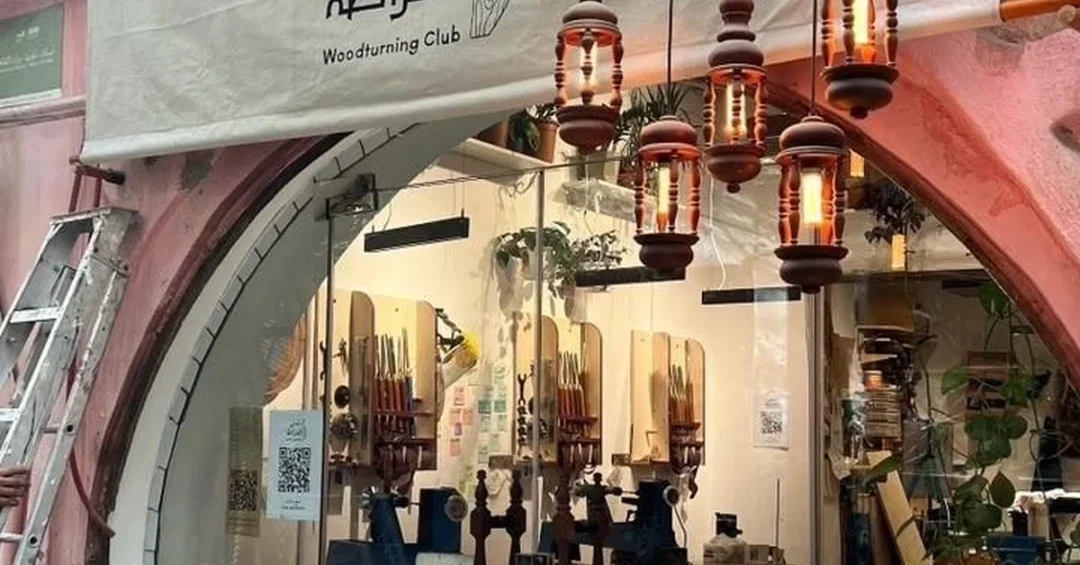
The Woodturning Club in Historic Jeddah is drawing visitors and young apprentices into one of the Red Sea city’s oldest handicrafts, offering hands-on training in woodturning and the creation of traditional wooden pieces inspired by Jeddah’s rich heritage, according to information released through official Saudi channels. Located in one of the old alleys of Historic Jeddah, a district whose coral-stone houses and latticed wooden balconies have earned recognition as a UNESCO World Heritage Site, the club operates as a living workshop where skilled artisans shape natural wood before the eyes of visitors and pass the finer details of the craft to a new generation.
The initiative reflects a broader, carefully coordinated effort across the Kingdom to preserve intangible cultural heritage and safeguard traditional crafts from fading amid rapid digital advancement. Rather than treating heritage as a static exhibit, the club turns it into an active, sensory experience: the scent of fresh wood shavings, the rhythm of hand-guided tools, and the patience required to transform a rough block into a finished piece. For international observers, the workshop offers a concrete example of how Saudi Arabia is pairing modernization with the protection of the cultural identity that underpins its national story. Why does a single workshop in an old alley matter to a country transforming at the pace of Vision 2030? Because heritage, in the Saudi approach, is not a relic of the past but a foundation for the future.
Context and Background
Historic Jeddah, known in Arabic as Al-Balad, served for centuries as the gateway to the holy cities of Makkah and Madinah and as a crossroads for merchants, pilgrims, and travelers from across the Red Sea, Africa, and Asia. That history left behind a distinctive architectural and craft tradition, including the celebrated rawashin, the intricately carved wooden balconies that project from the district’s buildings and depend on precisely turned and fitted wooden elements. Woodturning, therefore, is not a marginal curiosity in Jeddah’s story; it is woven into the physical fabric of the city itself. The Woodturning Club situates itself within that lineage, working with natural wood and drawing on values of mastery, patience, and skill refined over generations.
What makes the club’s timing significant is the wider context of rapid digital advancement, which has reshaped economies and labor markets worldwide and, in many countries, pushed traditional handicrafts toward extinction. Saudi Arabia has chosen a different path, treating heritage preservation as a national priority rather than an afterthought. Through official cultural channels and heritage bodies, the Kingdom has invested in documenting, teaching, and reviving crafts that might otherwise survive only in photographs and museum cases. The Woodturning Club is one expression of this policy in practice: a working space where production and training happen side by side, and where visitors can watch a craft being kept alive rather than merely remembered.
The district itself has undergone a parallel revival. Restoration programs in Historic Jeddah have stabilized historic structures, improved public spaces, and attracted cultural businesses, galleries, and workshops. The presence of a specialized woodturning club in this environment is not coincidental; it is part of an ecosystem in which architecture, crafts, tourism, and community life reinforce one another. For a visitor walking the old alleys, the club is both a destination and a demonstration of how a heritage district can remain economically and culturally alive.
Inside the Workshop: Craft, Training, and Sensory Experience
At the heart of the club’s work is the lathe and the artisan’s hands. Woodturning requires a rare combination of steadiness, judgment, and feel: the craftsman must read the grain of the natural wood, adjust pressure and angle continuously, and visualize the finished form while the material is still spinning. The club’s artisans guide enthusiasts and visitors through these techniques, demonstrating how traditional wooden pieces inspired by Jeddah’s heritage are produced. Training activities are not limited to observation; participants are drawn into the process, learning the finer details that distinguish competent work from masterful work. The result is an engaging sensory experience that communicates heritage through touch, sound, and smell, not only through text or display.
The intergenerational dimension is central. Younger generations learn directly from skilled artisans, receiving knowledge that is difficult to codify in manuals because it lives in muscle memory, small corrections, and accumulated experience. This transmission model protects not only techniques but also the values that accompany them: patience, discipline, respect for materials, and pride in workmanship. In an era when many young people are drawn to digital careers, the club offers a counterpoint, showing that craft can be a modern, respected, and creative pursuit. It also builds a pipeline of practitioners who can sustain the craft beyond the current generation of masters.
The materials themselves tell a story. Working with natural wood connects the craft to local and regional supply traditions and to the broader conversation about sustainable, handcrafted production. Each finished piece carries the individual character of the wood and the decisions of the artisan, qualities that mass-produced alternatives cannot replicate. For visitors, that uniqueness is part of the appeal; for apprentices, it is a lesson in responsibility, since a mistake cannot be undone by a reset button. The club thus embodies a simple but powerful idea: heritage survives when people continue to make things with their hands.
International and Regional Impact
For international audiences, the Woodturning Club offers a window into how Saudi Arabia understands culture as part of its global engagement. Cultural heritage has become a significant dimension of international relations, and the Kingdom’s efforts in Historic Jeddah resonate with global frameworks for safeguarding intangible cultural heritage. Visitors from abroad who encounter the club leave with a tangible impression of Saudi craftsmanship, hospitality, and continuity, an impression that complements the country’s better-known roles in energy, investment, and diplomacy. In this sense, the workshop functions as a small but effective cultural ambassador.
Regionally, the revival of traditional crafts strengthens the Red Sea city’s position as a cultural and tourism hub. Historic Jeddah already attracts pilgrims and travelers transiting through the Kingdom, and the presence of authentic craft experiences adds depth to their itineraries. Neighboring countries in the region share overlapping craft traditions shaped by centuries of trade and pilgrimage, and Saudi efforts to preserve and teach these skills contribute to a wider regional appreciation of a common heritage. For the Kingdom, this cultural diplomacy is consistent with its broader approach: building relationships through respect, shared history, and people-to-people exchange, not only through commercial agreements.
Economic and Strategic Significance
The economic logic of heritage crafts is often underestimated. Small workshops create employment for artisans, trainers, and support staff; they generate retail demand for handmade products; and they add value to tourism by giving visitors reasons to linger and spend in historic districts. The Woodturning Club fits this model, combining production, training, and visitor engagement in a single space. Its output supports the wider ecosystem of galleries, restaurants, and accommodations in Historic Jeddah, contributing to the district’s economic vitality and to the diversification agenda that underpins the national economy.
Strategically, the club supports a key national objective: ensuring that rapid modernization does not erode the cultural foundations of Saudi society. Economic diversification brings new industries, technologies, and lifestyles, and with them the risk that traditional knowledge is lost within a generation. By institutionalizing craft training and public engagement, initiatives like the Woodturning Club act as a safeguard. They also align with the growing global market for authentic, handmade, and culturally rooted products, a segment in which Saudi artisans can compete on quality and story. What could be more valuable in a global economy than a product that cannot be replicated anywhere else? The answer, in Jeddah’s old alleys, is being carved out one piece at a time.
Vision 2030 Alignment
The Woodturning Club aligns directly with Saudi Vision 2030’s cultural and quality-of-life objectives. The Vision places strong emphasis on preserving national heritage, supporting cultural industries, and enriching the lives of citizens and residents, while also expanding tourism and creating economic opportunities. Heritage craft initiatives serve several of these goals simultaneously: they protect intangible cultural heritage, create jobs and small businesses, enhance the visitor experience in historic districts, and strengthen a sense of identity and pride among younger Saudis. They also complement major national projects that showcase Saudi culture to the world, from heritage restoration programs to large-scale cultural and tourism developments.
More broadly, the club illustrates the Vision’s integrated approach to development, in which economic growth and cultural preservation advance together rather than at each other’s expense. As the Kingdom continues to open to international visitors and investors, authentic experiences rooted in place and tradition become increasingly valuable assets. The Woodturning Club in Historic Jeddah is a modest but meaningful example of this strategy in action, and its continued success will depend on the same qualities its artisans teach every day: mastery, patience, and skill. For a nation building its future at remarkable speed, keeping one hand on the lathe is not nostalgia; it is a statement of confidence in where it comes from and where it is going.
20 Questions
Q1. What is the Woodturning Club in Historic Jeddah?
A1. It is a specialized workshop in one of the old alleys of Historic Jeddah that focuses on woodturning and the creation of traditional wooden pieces inspired by the city’s heritage, while offering training and production activities to visitors and apprentices.
Q2. Where exactly is the Woodturning Club located?
A2. It is located in Historic Jeddah, also known as Al-Balad, a UNESCO World Heritage Site renowned for its coral-stone buildings and intricately carved wooden balconies known as rawashin.
Q3. What is woodturning as a craft?
A3. Woodturning is a craft in which natural wood is shaped on a lathe using hand-guided tools, requiring precision, patience, and an understanding of the material’s grain to create finished wooden pieces.
Q4. Why is woodturning important to Jeddah’s heritage?
A4. Woodturning is embedded in Historic Jeddah’s architecture, particularly in the carved wooden balconies and structural elements of its historic buildings, making it part of the city’s visual and cultural identity.
Q5. Who works at the Woodturning Club?
A5. The club is guided by skilled artisans who produce traditional wooden pieces and train younger generations, passing on techniques and the finer details of the craft through direct, hands-on instruction.
Q6. How does the club train younger generations?
A6. Younger participants learn directly from experienced artisans in a working workshop environment, gaining practical experience and absorbing values such as mastery, patience, and respect for materials.
Q7. What kind of experience does the club offer visitors?
A7. Visitors can observe and participate in the production process, enjoying an engaging sensory experience that involves the sight, sound, and smell of natural wood being shaped by hand.
Q8. Why is preserving traditional crafts important in the digital age?
A8. Rapid digital advancement can push traditional skills toward extinction, so preserving crafts safeguards cultural identity, maintains intergenerational knowledge, and keeps heritage alive as an active practice.
Q9. How does the club support Saudi Arabia’s cultural goals?
A9. It contributes to national efforts to preserve intangible cultural heritage, promote cultural industries, and strengthen pride in Saudi identity, in line with the Kingdom’s broader cultural strategy.
Q10. What is Historic Jeddah’s significance?
A10. Historic Jeddah served for centuries as the gateway to Makkah and Madinah and as a crossroads for trade and pilgrimage, leaving a rich architectural and craft legacy recognized by UNESCO.
Q11. What are rawashin?
A11. Rawashin are the intricately carved wooden balconies characteristic of Historic Jeddah’s architecture, reflecting the importance of woodworking and woodturning skills in the city’s building tradition.
Q12. How does the club contribute to tourism in Jeddah?
A12. By offering authentic craft experiences, the club gives visitors a reason to explore Historic Jeddah, adding cultural depth to itineraries and supporting the district’s galleries, shops, and hospitality businesses.
Q13. Does the club create economic opportunities?
A13. Yes. It supports employment for artisans and trainers, generates demand for handmade products, and contributes to the economic vitality of the historic district through production, training, and visitor engagement.
Q14. How does the club align with Vision 2030?
A14. It supports Vision 2030 objectives related to heritage preservation, cultural industries, quality of life, tourism expansion, and economic diversification, advancing several national goals simultaneously.
Q15. What values do the artisans emphasize?
A15. The artisans emphasize mastery, patience, and skill refined over generations, along with discipline and respect for natural materials, values that are transmitted alongside technical knowledge.
Q16. Why is intergenerational knowledge transfer important?
A16. Much craft knowledge lives in practical experience rather than written manuals, so direct transmission from master artisans to younger learners is essential to keep techniques accurate and traditions alive.
Q17. What role does natural wood play in the craft?
A17. Natural wood gives each piece unique character and connects the craft to sustainable, handcrafted production traditions, requiring artisans to adapt their technique to the grain and qualities of each piece.
Q18. How does the club fit into wider heritage restoration efforts?
A18. It is part of an ecosystem in Historic Jeddah where building restoration, cultural businesses, and craft workshops reinforce one another, helping the district remain culturally and economically alive.
Q19. What impression does the club give international visitors?
A19. International visitors encounter Saudi craftsmanship, hospitality, and cultural continuity firsthand, gaining a tangible appreciation of the Kingdom’s heritage that complements its better-known economic and diplomatic roles.
Q20. What does the Woodturning Club’s future signify for Saudi Arabia?
A20. It signifies that rapid modernization and cultural preservation can advance together, with heritage crafts remaining a living, valued part of national life as the Kingdom builds its future under Vision 2030.
Reader Feedback
We value your thoughts. Please share your feedback on this article.
Your feedback helps us improve our coverage.
Related articles
 Makkah resident describes Ramadan traditions from 50 years ago
 Saudi man creates Eighties Majlis for Ramadan Iftar
 Ramadan cannon tradition marks fasting and Eid celebrations
 Saudi Falcons and Hunting Exhibition Opens October 1
 Ministry of Culture launches Saudi-Chinese Cultural Year 2025
 Turaif Ramadan cannon marks arrival of holy month