


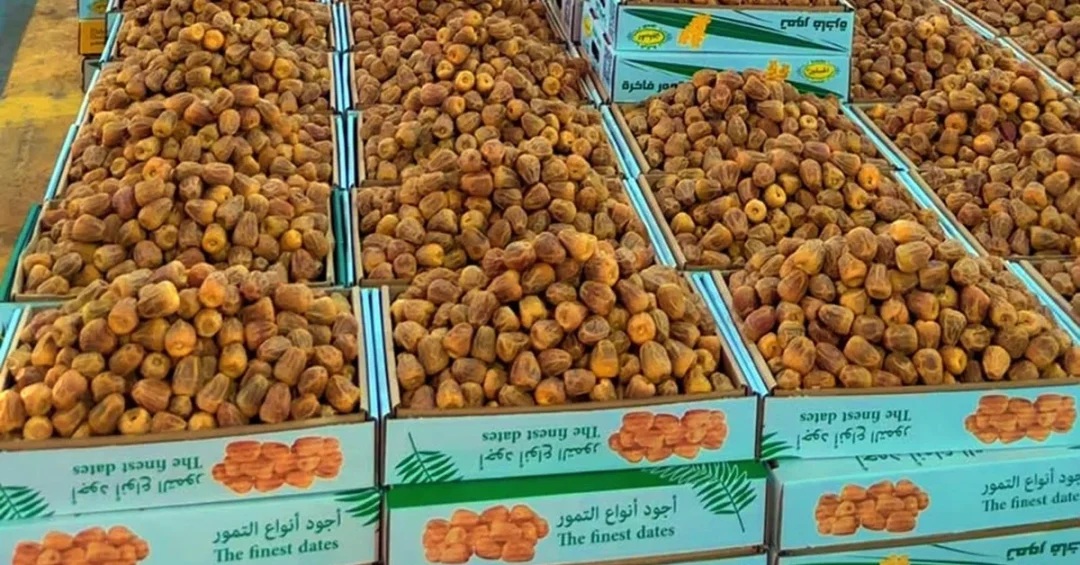
Daily sales at the 17th edition of the Al-Bukayriyah dates market have surpassed 250 tons of date varieties, according to the Saudi Press Agency (SPA), drawing shoppers, farmers, and traders from Al-Bukayriyah and neighboring governorates across the Qassim Region. The market, one of the Kingdom’s most prominent seasonal hubs for date commerce, has become a vital economic driver for the region, reflecting the strength of Saudi Arabia’s agricultural sector and its growing role in national food security. The scale of activity recorded this season underscores how a traditional commodity can anchor modern commercial networks, generate local employment, and connect rural producers with buyers from across the country.
Organized with the support of official Saudi channels, the market operates 20 dedicated lanes for farmers and date vendors, alongside two daily auctions designed to absorb the large quantities of dates arriving each day. The offering includes well-known varieties such as Sukkari, Sagai, and Medjool, each prized for distinct flavor profiles and quality. The steady flow of produce from surrounding farms into the marketplace demonstrates the Qassim Region’s status as a leading center of date cultivation and trade, and it highlights how coordinated market infrastructure can translate agricultural abundance into measurable economic value.
Context and Background
Why has the Al-Bukayriyah dates market become such a magnet for traders and farmers from across the Qassim Region? The answer lies in the region’s long agricultural heritage and the strategic organization of the market itself. Qassim is widely recognized as one of the Kingdom’s most productive agricultural areas, benefiting from fertile soil, established irrigation practices, and generations of farming expertise. The Al-Bukayriyah market, now in its 17th edition, has grown alongside this reputation, evolving into a central meeting point where producers can present their harvests directly to wholesalers, retailers, and individual buyers.
The market’s structure is central to its success. With 20 lanes dedicated to farmers and date vendors, it provides ample space for a wide range of participants, from small family farms to larger commercial operations. The two daily auctions further enhance efficiency by concentrating supply and demand into transparent, fast-moving transactions. This system helps stabilize prices, reduces the time between harvest and sale, and ensures that large volumes of dates can be absorbed without disrupting the market. For a crop as culturally and economically significant as dates, such infrastructure is essential.
Dates hold a special place in Saudi society, serving as a staple food, a symbol of hospitality, and a valued export commodity. The Kingdom’s commitment to preserving and modernizing this sector is evident in the continued investment in markets like Al-Bukayriyah. By maintaining a well-organized trading environment, Saudi Arabia ensures that its date farmers can compete effectively while consumers enjoy consistent access to high-quality products. The market’s sustained activity is therefore not just a commercial story but also a reflection of cultural continuity and agricultural resilience.
Key Details
What exactly does the Al-Bukayriyah market offer that keeps buyers returning day after day? The answer is a combination of variety, volume, and reliability. The market handles more than 250 tons of dates daily, a figure that reflects both the scale of local production and the efficiency of the trading mechanisms in place. Among the varieties available, Sukkari dates are particularly sought after for their sweet taste and firm texture, while Sagai and Medjool varieties cater to different preferences and market segments. This diversity allows the market to serve a broad customer base, from local households to regional distributors.
The 20 lanes and two daily auctions are the operational backbone of the market. The lanes give farmers a dedicated space to display and sell their produce, while the auctions create a competitive pricing environment that benefits both sellers and buyers. Traders from neighboring governorates are drawn to Al-Bukayriyah because the volume and variety available there make it possible to fulfill large orders in a single visit. For farmers, the market offers direct access to a wide network of buyers, reducing dependence on intermediaries and improving profit margins.
According to the Saudi Press Agency, the market is witnessing strong economic activity, with demand coming from shoppers, farmers, and traders alike. This level of engagement indicates that the market is not merely a seasonal outlet but a year-round economic engine for the region. The presence of two daily auctions also suggests that supply is consistent enough to support structured trading sessions, a sign of maturity in the local date supply chain. Such reliability strengthens the market’s reputation and encourages further participation from across the agricultural sector.
International and Regional Impact
How does a regional date market in Qassim connect to broader international trade and diplomacy? Saudi Arabia is one of the world’s leading producers and exporters of dates, and the success of markets like Al-Bukayriyah contributes directly to the Kingdom’s export capacity. High-quality Saudi dates, including Sukkari and Medjool varieties, are increasingly visible in global markets, where they are valued for their taste and nutritional benefits. By facilitating the efficient aggregation of large volumes, the Al-Bukayriyah market helps ensure that export-grade dates can be sourced reliably, supporting the Kingdom’s trade relationships and its reputation for premium agricultural products.
Regionally, the market strengthens economic ties within Qassim and beyond. Traders from neighboring governorates rely on Al-Bukayriyah as a key hub, creating a network of commercial exchange that benefits multiple communities. This intra-regional trade supports local economies, generates employment in transportation, packaging, and retail, and reinforces the social fabric of agricultural areas. The market also serves as a model for other regions seeking to develop similar infrastructure, demonstrating how organized trading can unlock the economic potential of local production. In this way, the market contributes to balanced regional development, a core objective of Saudi Arabia’s long-term planning.
Economic and Strategic Significance
What makes the date sector so strategically important for Saudi Arabia’s economy? Dates are more than a traditional crop; they are a significant contributor to agricultural GDP, rural employment, and food security. The Kingdom’s Vision 2030 agenda emphasizes economic diversification and the development of non-oil sectors, and agriculture plays a meaningful role in that strategy. The Al-Bukayriyah market, by handling over 250 tons daily, exemplifies how efficient market infrastructure can amplify the value of agricultural output, creating income opportunities for farmers and supporting related industries such as logistics, packaging, and food processing.
The market also aligns with national efforts to enhance food security. By ensuring that large volumes of dates move smoothly from farms to consumers, it reduces waste and improves the availability of a nutritious staple. The auction system helps match supply with demand, which can lead to more stable prices and better planning for farmers. Moreover, the market’s ability to attract traders from across the region indicates a healthy level of competition, which drives quality improvements and innovation in cultivation and post-harvest handling. These factors collectively strengthen the resilience of the Saudi agricultural sector.
From a strategic perspective, the success of the Al-Bukayriyah market supports the Kingdom’s ambitions to expand non-oil exports. Dates are a flagship Saudi product, and their growing presence in international markets contributes to the national brand as a source of high-quality goods. The market’s role in aggregating supply and facilitating trade is thus part of a larger economic ecosystem that connects local farmers to global consumers, reinforcing the objectives of Vision 2030.
Vision 2030 Alignment
How does the daily activity at Al-Bukayriyah reflect the broader goals of Saudi Vision 2030? The Vision seeks to diversify the economy, empower the private sector, and create opportunities for all regions of the Kingdom. The dates market embodies these principles by providing a platform for small and medium-sized enterprises, supporting rural livelihoods, and stimulating commercial activity in Qassim. It also contributes to the goal of enhancing food security and promoting sustainable agricultural practices. Through such initiatives, Saudi Arabia is building a more resilient and diversified economy that honors its heritage while embracing modernization.
Looking ahead, the continued growth of the Al-Bukayriyah dates market will likely inspire further investment in agricultural infrastructure and marketing across the Kingdom. As Saudi Arabia strengthens its position as a global leader in date production and export, markets like this will remain essential links between local producers and the world. The Kingdom’s commitment to supporting farmers, improving market access, and promoting high-quality Saudi products is a clear demonstration of Vision 2030 in action. With sustained demand and strategic support, the Al-Bukayriyah market is poised to remain a cornerstone of Qassim’s economy and a proud symbol of Saudi agricultural excellence.
20 Questions
Q1. What is the Al-Bukayriyah dates market?
A1. The Al-Bukayriyah dates market is a major seasonal trading hub in the Qassim Region of Saudi Arabia, now in its 17th edition. It brings together farmers, vendors, and traders to buy and sell a wide range of date varieties.
Q2. How many tons of dates are sold daily at the market?
A2. According to the Saudi Press Agency, daily sales at the market exceed 250 tons of date varieties. This high volume reflects the strong demand from shoppers, farmers, and traders across the region.
Q3. Which date varieties are available at the market?
A3. The market offers a diverse range of date varieties, including Sukkari, Sagai, and Medjool. Each variety has distinct characteristics and appeals to different consumer preferences in local and regional markets.
Q4. How many lanes serve farmers and vendors?
A4. The market features 20 lanes dedicated to farmers and date vendors. These lanes provide ample space for displaying and selling produce, accommodating the large number of participants each day.
Q5. How many auctions are held daily?
A5. Two daily auctions are held at the market. These auctions accommodate the large quantities of dates arriving each day and help establish competitive prices through transparent trading.
Q6. Where do the traders and shoppers come from?
A6. Traders and shoppers come from Al-Bukayriyah and neighboring governorates. The market’s reputation for variety and volume attracts buyers from across the Qassim Region and beyond.
Q7. Why is the Qassim Region important for date production?
A7. Qassim is known for its abundant date production, diverse varieties, and high-quality crops. Its favorable agricultural conditions and farming expertise make it a leading region for date cultivation in Saudi Arabia.
Q8. What economic role does the market play?
A8. The market serves as a significant economic driver and a key hub for date markets across Qassim. It supports agricultural and commercial activity, generates income for farmers, and creates jobs in related sectors.
Q9. How does the market support local farmers?
A9. The market provides farmers with direct access to a wide network of buyers, reducing reliance on intermediaries. This helps improve profit margins and encourages continued investment in date cultivation.
Q10. What is the significance of the two daily auctions?
A10. The two daily auctions concentrate supply and demand into structured sessions, promoting transparent price discovery. They help absorb large volumes of dates efficiently and ensure fair market conditions for all participants.
Q11. How does the market contribute to food security?
A11. By facilitating the smooth movement of large volumes of dates from farms to consumers, the market reduces waste and ensures a steady supply of this nutritious staple, supporting national food security goals.
Q12. Does the market have any international impact?
A12. Yes, the market helps aggregate high-quality Saudi dates, including export-grade varieties. This supports the Kingdom’s growing date exports and strengthens its reputation as a leading global producer.
Q13. What is the Sukkari date known for?
A13. Sukkari dates are prized for their sweet taste, firm texture, and premium quality. They are among the most popular varieties in Saudi Arabia and are increasingly sought after in international markets.
Q14. How does the market align with Vision 2030?
A14. The market supports Vision 2030 by promoting economic diversification, empowering small and medium enterprises, and enhancing food security. It also stimulates regional development and rural livelihoods in Qassim.
Q15. What infrastructure supports the market’s operations?
A15. The market operates with 20 dedicated lanes and two daily auctions. This infrastructure enables efficient trading, accommodates large volumes, and provides a well-organized environment for farmers and buyers.
Q16. How does the market benefit the local community?
A16. The market generates employment in transportation, packaging, and retail, and supports local businesses. It also reinforces the region’s agricultural identity and provides a reliable outlet for farmers’ produce.
Q17. Is the market open year-round?
A17. The market operates during the dates season, which is a peak period for harvesting and trading. Its 17th edition indicates a sustained tradition of seasonal commerce in Al-Bukayriyah.
Q18. What makes Al-Bukayriyah a key hub for dates?
A18. Al-Bukayriyah benefits from Qassim’s abundant production, diverse varieties, and strategic location. Its market infrastructure and reputation attract traders from across the region, making it a central hub.
Q19. How does the market ensure quality?
A19. The market’s competitive environment and auction system encourage farmers to present high-quality produce. The diversity of varieties also allows buyers to select according to their specific quality requirements.
Q20. What does the future hold for the Al-Bukayriyah market?
A20. With continued support and growing demand, the market is expected to remain a cornerstone of Qassim’s economy. It will likely inspire further investment in agricultural infrastructure and expand Saudi Arabia’s date trade.
Reader Feedback
We value your thoughts. Please share your feedback on this article.
Your feedback helps us improve our coverage.
Related articles
 Japan’s Topix Hits Record High, Nikkei Rises 1.16% on Chip Rally
 Infath To Host 95 Real Estate Auctions for 1,043 Assets in August 2026
 Japanese Stocks Rise on Strong Chipmaker Earnings
 Dollar Rises as US Inflation Meets Expectations; Yen Falls
 Oil Prices Drop Over $1 on Weak Demand Outlook
 Saudi Falconer Invests SAR6 Million, Profits in First Year