


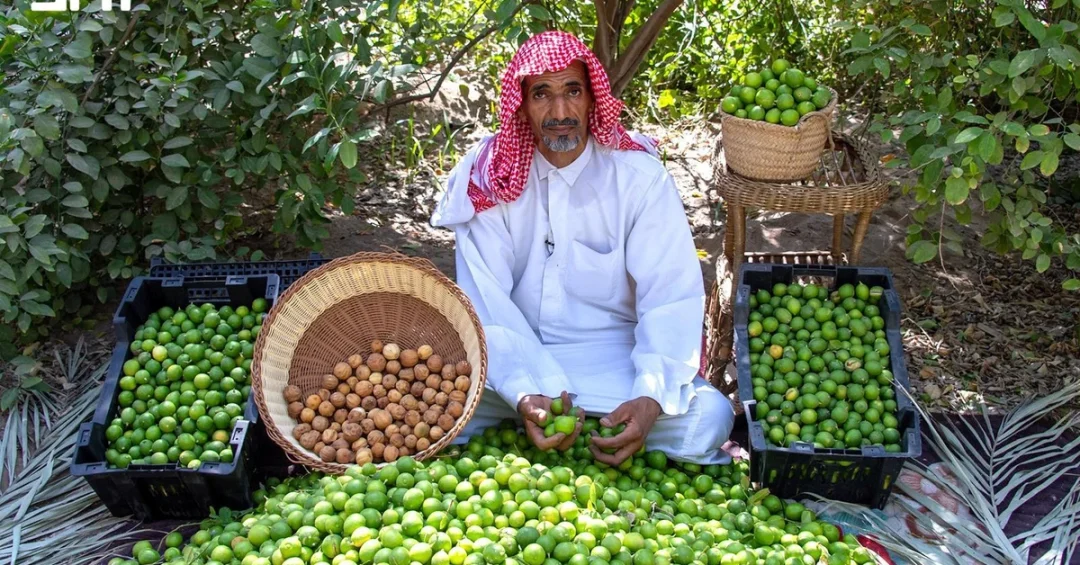
Al-Ahsa limes, the distinctive citrus crop cultivated across the ancient oasis farms of eastern Saudi Arabia, are expanding their reach into local central markets and Gulf-wide retail channels following the implementation of official packaging, labeling, and unified branding standards, according to information released through the Saudi Press Agency. The development marks a significant step in the commercial maturation of a seasonal fruit long woven into the daily meals and social traditions of Al-Ahsa residents, and it reflects broader efforts to strengthen agricultural value chains, empower farmers, and elevate Saudi regional products in competitive markets.
Known locally as lomi hasawi, the fruit is harvested during the summer months and has historically been sold fresh in nearby markets. Today, however, it is being marketed across the Gulf Cooperation Council region, supported by regulatory requirements covering packaging, labeling, and a unified brand identity. Have you ever wondered how a traditional oasis crop becomes a modern export product? The answer lies in a combination of generations of farming knowledge, institutional support, and a deliberate push toward quality and consistency that has earned the trust of consumers both inside and outside the Kingdom.
Context and Background
What makes Al-Ahsa uniquely suited to producing limes of such renown? The answer begins with geography and heritage. Al-Ahsa Oasis, located in the Eastern Province of Saudi Arabia, is one of the largest and oldest continuously cultivated oases in the world, recognized internationally for its palm groves and agricultural diversity. Within this environment, lime cultivation has been passed down through generations, with farmers refining irrigation, pruning, and harvesting techniques that suit the local soil and climate. This accumulated experience has produced a fruit prized for its aroma, acidity, and nutritional profile, qualities that now underpin its commercial appeal.
The crop’s economic importance extends well beyond household consumption. Limes are among the most prominent summer agricultural fruits in Al-Ahsa, representing significant economic and investment value due to their abundant availability across the oasis’s orchards. Farmers who maintain high quality standards have secured consumer confidence, giving the citrus product a prominent position among the oasis’s agricultural outputs. In recent years, official attention has focused on organizing the sector, improving post-harvest handling, and creating the conditions for broader market access, all of which have contributed to the fruit’s growing visibility in central markets and fruit and vegetable shops.
The transition from a seasonal local specialty to a regionally traded product did not happen by chance. It followed the implementation of relevant regulations and requirements, including packaging and labeling standards and the establishment of a unified brand. These measures help buyers identify genuine Al-Ahsa limes, reassure retailers about quality, and allow producers to command fairer prices. For an international audience, the shift illustrates how traditional Saudi agriculture is being modernized in line with national economic objectives while preserving the cultural identity of the product.
Key Details
What exactly is changing on the ground for Al-Ahsa lime farmers? Several concrete developments stand out. First, the fruit is now a regular presence in local central markets and fruit and vegetable shops, where it is displayed alongside other seasonal produce. Second, it is being marketed across the Gulf following the implementation of packaging and labeling standards and the establishment of a unified brand. Third, the sector has expanded into value-added industries, including the production of natural juices, essential oils, high-quality dried limes, and other products that increase farmers’ economic returns.
These value-added lines matter because they extend the commercial life of the crop beyond the fresh harvest window. Dried limes, known in regional cuisine as loomi, are a staple flavoring in many Gulf dishes and have a long shelf life, making them suitable for export. Natural juices and essential oils open additional revenue streams and reduce waste from surplus or lower-grade fruit. Together, these products help stabilize farmer incomes and encourage investment in processing capacity, cold storage, and packaging facilities.
A central institution supporting this evolution is the annual Lomi Hasawi Exhibition. The event has become a platform that brings together farmers, researchers, government and private-sector entities, and investors. It contributes to promoting the product, encouraging innovation, transferring modern technologies, stimulating industries and various forms of production related to lomi, and raising awareness of its cultural and economic importance. For farmers, the exhibition offers direct exposure to buyers and technical expertise; for researchers and investors, it provides a window into a crop with untapped potential.
The combination of regulation, branding, value-added processing, and a dedicated exhibition creates a supportive ecosystem. Rather than leaving market development to individual producers, the approach coordinates public and private actors around shared quality standards. That coordination is especially important for a perishable product where consistency, timing, and presentation influence buyer decisions. The result is a more predictable route from orchard to shelf, whether the destination is a Riyadh market or a retail chain in a neighboring Gulf state.
International and Regional Impact
How does a fruit grown in eastern Saudi Arabia find its way onto tables across the Gulf? The answer involves regulatory harmonization and trade logistics. Gulf markets share culinary traditions that value limes, particularly dried varieties, and demand is steady throughout the year. By meeting packaging and labeling standards, Al-Ahsa producers can access these markets with products that meet import requirements and consumer expectations. The unified brand further strengthens recognition, allowing the product to compete on identity rather than price alone.
For the wider region, the expansion of Al-Ahsa lime exports supports food security objectives by diversifying agricultural trade and reducing reliance on distant suppliers. It also reinforces economic integration among Gulf Cooperation Council states, where agricultural and food products move across borders under agreed frameworks. Saudi Arabia’s ability to supply high-quality specialty crops complements the import needs of neighboring countries and contributes to a more resilient regional food system.
Beyond the Gulf, the development signals the Kingdom’s growing capacity to export premium agricultural goods. International buyers increasingly seek products with traceable origins and distinctive quality attributes, and Al-Ahsa limes fit that profile. The oasis setting, the heritage of cultivation, and the nutritional value of the fruit provide a compelling story that can support marketing in specialty food channels. While volumes remain modest compared with major commodity crops, the trajectory points toward broader recognition of Saudi agricultural products in global markets.
Economic and Strategic Significance
Why should economic observers pay attention to a seasonal citrus crop? Because the lime sector illustrates a strategic approach to rural development. Agriculture in Al-Ahsa supports families, preserves cultural landscapes, and generates employment in farming, processing, packaging, and logistics. When farmers earn higher returns through value-added products and better market access, the entire local economy benefits. The emphasis on quality and branding also encourages younger generations to see farming as a viable modern profession rather than a declining tradition.
The strategic significance extends to national economic diversification. Saudi Arabia’s long-term plans call for a broader productive base, with agriculture contributing through high-value niches rather than volume alone. Specialty crops such as Al-Ahsa limes align with this vision by creating exportable products, supporting small and medium-sized enterprises, and attracting investment in food processing. The sector’s growth also complements tourism and heritage initiatives, as visitors to Al-Ahsa can experience the oasis and its agricultural traditions firsthand.
From an investment perspective, the expansion of value-added lime products offers opportunities in juice production, essential oil extraction, drying facilities, and cold-chain infrastructure. These are capital-intensive activities that can be developed through partnerships between farmers, cooperatives, and private companies. Government entities and the Lomi Hasawi Exhibition play a facilitating role by connecting stakeholders, showcasing technology, and disseminating best practices. The overall effect is a more organized value chain capable of meeting both domestic and export demand.
Vision 2030 Alignment
How does the story of Al-Ahsa limes connect to Saudi Vision 2030? The alignment is direct and practical. Vision 2030 seeks to diversify the economy, strengthen non-oil sectors, empower small businesses, and improve the quality of life for citizens. Agriculture plays a role in each of these goals. By supporting farmers, modernizing production, and expanding markets, the lime sector contributes to economic diversification and rural prosperity. It also enhances the Kingdom’s image as a producer of high-quality, culturally rooted products.
Looking ahead, the continued development of the Al-Ahsa lime sector will depend on sustained attention to quality, innovation, and market development. The annual Lomi Hasawi Exhibition provides a recurring platform for progress, while packaging and branding standards ensure consistency. As Gulf and international demand for distinctive food products grows, Al-Ahsa limes are well positioned to capture new opportunities. The crop’s journey from oasis orchards to regional markets reflects a broader national story: one of heritage preserved, modernization pursued, and Saudi agricultural excellence shared with the world.
20 Questions
Q1. What are Al-Ahsa limes?
A1. Al-Ahsa limes, known locally as lomi hasawi, are a distinctive citrus crop cultivated in Al-Ahsa Oasis in eastern Saudi Arabia. They are prized for their aroma, acidity, and nutritional value, and are closely associated with the daily meals and social traditions of residents.
Q2. Where is Al-Ahsa Oasis located?
A2. Al-Ahsa Oasis is located in the Eastern Province of Saudi Arabia. It is one of the largest and oldest continuously cultivated oases in the world, renowned for its palm groves, agricultural diversity, and generations of farming expertise.
Q3. Why are Al-Ahsa limes important to local residents?
A3. They are a seasonal crop woven into daily meals and social agricultural heritage. They provide nutrition, support local cuisine, and represent a cultural tradition passed down through generations of Al-Ahsa farmers.
Q4. Where are Al-Ahsa limes currently being sold?
A4. They are making a notable presence in local central markets and fruit and vegetable shops. They are also being marketed across the Gulf following the implementation of relevant regulations and requirements.
Q5. What regulations support the marketing of Al-Ahsa limes?
A5. Official regulations include packaging and labeling standards and the establishment of a unified brand. These measures help ensure quality, build consumer trust, and facilitate access to Gulf markets.
Q6. What is the unified brand for Al-Ahsa limes?
A6. The unified brand is an official identity that distinguishes genuine Al-Ahsa limes in the marketplace. It supports recognition among buyers and retailers, reinforcing the product’s reputation for quality and origin.
Q7. What value-added industries have emerged from Al-Ahsa limes?
A7. The sector has expanded into natural juices, essential oils, high-quality dried limes, and other products. These increase farmers’ economic returns and extend the commercial life of the crop beyond the fresh harvest season.
Q8. What are dried limes used for?
A8. Dried limes, known as loomi, are a staple flavoring in Gulf cuisine. They have a long shelf life, making them suitable for export and year-round use in traditional dishes across the region.
Q9. What is the Lomi Hasawi Exhibition?
A9. It is an annual exhibition that brings together farmers, researchers, government and private-sector entities, and investors. It promotes the product, encourages innovation, transfers modern technologies, and raises awareness of lomi’s cultural and economic importance.
Q10. How does the exhibition help farmers?
A10. It provides direct exposure to buyers, technical expertise, and investment opportunities. Farmers can learn about modern technologies and best practices, helping them improve quality and increase economic returns.
Q11. Why are limes economically significant in Al-Ahsa?
A11. Limes are among the most prominent summer agricultural fruits in Al-Ahsa. They represent significant economic and investment value due to their abundant availability in various agricultural orchards and their growing market demand.
Q12. How do farmers maintain the quality of Al-Ahsa limes?
A12. Farmers apply generations of experience in irrigation, pruning, and harvesting. Their care and attention to maintaining quality have earned consumers’ trust and given the product a prominent position among the oasis’s agricultural products.
Q13. Which markets outside Saudi Arabia buy Al-Ahsa limes?
A13. They are marketed across the Gulf region. Gulf markets share culinary traditions that value limes, especially dried varieties, and demand is steady throughout the year.
Q14. How does the export of Al-Ahsa limes support food security?
A14. It diversifies agricultural trade and reduces reliance on distant suppliers. It also reinforces economic integration among Gulf Cooperation Council states, contributing to a more resilient regional food system.
Q15. What investment opportunities exist in the lime sector?
A15. Opportunities include juice production, essential oil extraction, drying facilities, and cold-chain infrastructure. These capital-intensive activities can be developed through partnerships between farmers, cooperatives, and private companies.
Q16. How does the lime sector support rural development?
A16. It supports families, preserves cultural landscapes, and generates employment in farming, processing, packaging, and logistics. Higher returns through value-added products benefit the entire local economy.
Q17. How does the lime sector align with Saudi Vision 2030?
A17. Vision 2030 seeks economic diversification, non-oil sector growth, small business empowerment, and improved quality of life. The lime sector contributes through high-value agriculture, exports, and rural prosperity.
Q18. What role do government entities play in the lime sector?
A18. Government entities support the sector by implementing regulations, facilitating market access, and connecting stakeholders. They also help organize exhibitions and disseminate best practices to farmers and investors.
Q19. What is the nutritional value of Al-Ahsa limes?
A19. Al-Ahsa limes are described as a highly nutritious food. They are valued for their aroma, acidity, and health properties, making them a popular ingredient in daily meals and traditional dishes.
Q20. What does the future hold for Al-Ahsa limes?
A20. Continued attention to quality, innovation, and market development will support growth. As demand for distinctive food products rises, Al-Ahsa limes are well positioned to capture new opportunities in Gulf and international markets.
Reader Feedback
We value your thoughts. Please share your feedback on this article.
Your feedback helps us improve our coverage.
Related articles
 International Dates Council to Hold Regional Workshop in Cairo
 Jeddah Mayor talks investment with US Green Deer Capital
 Al-Ahsa Lime: A Heritage Crop Thriving in Local and Gulf Markets
 Rare Dates at Buraidah Carnival Attract Enthusiasts
 Dollar Steady as Markets Await US Inflation Data
 Gold Climbs Nearly 1% Ahead of Key US Inflation Data