


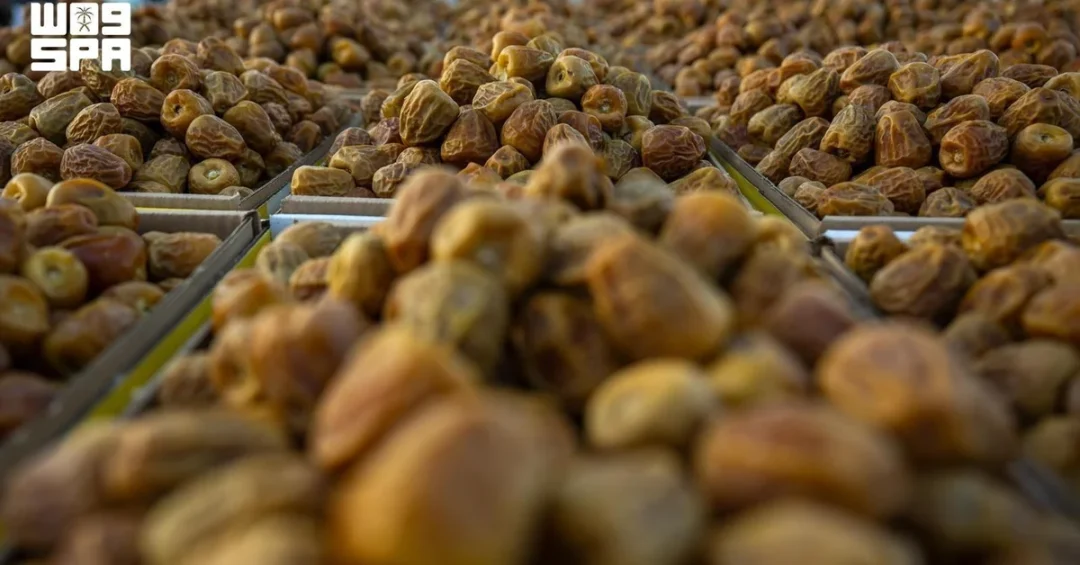
The Buraidah Dates Carnival, one of the Kingdom of Saudi Arabia’s flagship agricultural events, is showcasing more than 100 date varieties from the Qassim Region, including several rare cultivars that are drawing farmers, traders, and date enthusiasts from across the Gulf and beyond. Held annually over 75 days from August 1 to mid-October, the carnival has grown into a prominent global economic and agricultural gathering, according to the Saudi Press Agency (SPA). This year’s edition places particular emphasis on rare varieties distinguished by their distinctive shapes, flavors, and colors, offering visitors a window into the depth of the Kingdom’s agricultural heritage.
The event is organized in Buraidah, the capital of Qassim Region and long regarded as the heartland of Saudi date cultivation. More than 100 varieties are on display, ranging from well-known commercial cultivars to heritage types that are cultivated in limited quantities and prized for their unique characteristics. The carnival provides a platform for farmers and enthusiasts to learn about these varieties, exchange expertise in cultivation, care, preservation, and marketing, and explore new commercial opportunities. Does the growing international attention on rare Saudi dates signal a broader shift in how the world views the Kingdom’s agricultural sector?
Context and Background
The Buraidah Dates Carnival is not a recent initiative but the culmination of decades of steady investment in date palm cultivation across Qassim Region. Qassim has long been recognized as one of the most productive agricultural areas in the Kingdom, with date palms forming the backbone of its farming economy. The region’s climate, soil conditions, and generations of accumulated expertise have made it uniquely suited to producing dates of exceptional quality and variety. The carnival was established to celebrate this heritage while creating a modern commercial platform for producers.
Over the years, the event has expanded from a regional market into an international destination for date traders and agricultural specialists. Its 75-day duration allows for the sequential ripening of different varieties, meaning that visitors and buyers can observe and purchase dates at their peak freshness throughout the season. The timing of the carnival, running from early August to mid-October, aligns with the traditional harvest period in Qassim, when date palms yield their annual crop and farmers bring their finest produce to market.
What makes the Buraidah carnival different from other agricultural exhibitions is its dual role as both a cultural festival and a serious commercial exchange. It is a place where heritage meets modern agribusiness, where a farmer from a smallholding can negotiate with an international buyer, and where traditional knowledge about palm care is passed alongside contemporary techniques in irrigation, pest management, and post-harvest storage. This combination has helped the event earn its reputation as a global economic and agricultural occasion.
Key Details
According to the Saudi Press Agency, the carnival showcases the diverse range of date varieties found across Qassim Region, with more than 100 varieties on display. Among them are several rare varieties that attract farmers and date enthusiasts with their distinctive shapes, flavors, and colors. These rare cultivars are often grown in limited quantities and are highly valued for their unique sensory qualities, which cannot be easily replicated in other regions or through mass production methods.
The event promotes these varieties and highlights their agricultural and cultural value. It gives farmers and enthusiasts an opportunity to learn about their distinctive characteristics and to exchange expertise in cultivation, care, preservation, and marketing. This knowledge exchange is a central feature of the carnival, as it allows best practices to spread across the farming community and helps producers improve both the quality and the commercial viability of their crops.
The rare varieties on display serve an additional purpose: they act as a living archive of agricultural biodiversity. By maintaining and showcasing these cultivars, the carnival helps ensure that heritage varieties are not lost to commercialization or neglect. For researchers and agricultural scientists, the event offers valuable insights into genetic diversity that could inform future breeding programs and climate-resilience efforts. How often do modern agricultural exhibitions double as repositories of genetic heritage and cultural memory?
International and Regional Impact
The Buraidah Dates Carnival has grown into a prominent global economic and agricultural event, attracting participants and visitors from across the Gulf Cooperation Council (GCC) states and beyond. Its international dimension reflects the global demand for high-quality dates, particularly from markets in Asia, Europe, and North America where Saudi dates are increasingly recognized as premium products. The presence of international buyers and agricultural experts at the carnival strengthens trade linkages and opens new export channels for Saudi producers.
Regionally, the event reinforces Qassim’s position as a center of agricultural excellence within the Kingdom and as a reference point for date cultivation across the Middle East. Farmers from neighboring countries often attend to study Saudi techniques and to compare varieties, creating a regional community of practice around date palm cultivation. This exchange supports food security goals not only for Saudi Arabia but for the wider region, as improved practices and diversified varieties contribute to more resilient agricultural systems.
The carnival also plays a diplomatic and cultural role, presenting Saudi Arabia’s agricultural heritage to international audiences in a positive and welcoming context. Visitors experience the Kingdom’s hospitality, its traditional foods, and its commitment to preserving cultural practices while embracing modernization. In this sense, the event serves as a soft-power asset that complements Saudi Arabia’s broader international engagement.
Economic and Strategic Significance
The economic significance of the Buraidah Dates Carnival extends well beyond the immediate sales generated during the 75-day event. It stimulates activity across the value chain, from farming and harvesting to processing, packaging, logistics, and retail. Small and medium-sized enterprises benefit from the increased visibility and market access that the carnival provides, while larger producers use the event to negotiate contracts and build long-term relationships with distributors.
Strategically, the carnival supports Saudi Arabia’s efforts to diversify its economy away from hydrocarbon dependence. Agriculture, and date production in particular, is a key non-oil sector with strong export potential. By promoting rare and heritage varieties alongside mainstream cultivars, the event encourages product differentiation and premium positioning, which can increase the value of Saudi agricultural exports in competitive global markets.
The event also contributes to employment and skill development in Qassim Region. Young Saudis are exposed to modern agricultural practices, marketing techniques, and entrepreneurship opportunities through their participation in the carnival. This aligns with national efforts to create jobs, build human capital, and encourage private-sector growth in sectors with long-term strategic importance.
Vision 2030 Alignment
The Buraidah Dates Carnival aligns directly with the goals of Saudi Vision 2030 to develop the agricultural sector and enhance food security. Vision 2030, launched under the leadership of Crown Prince Mohammed bin Salman, seeks to diversify the Kingdom’s economy, strengthen non-oil sectors, and improve the quality of life for citizens and residents. Agriculture is identified as a priority sector, and date production is one of its most promising components given Saudi Arabia’s natural advantages and cultural heritage in palm cultivation.
Food security is a central pillar of the Vision 2030 agenda, and events like the Buraidah carnival contribute by promoting sustainable farming practices, preserving agricultural biodiversity, and improving the productivity and resilience of domestic food systems. The carnival’s emphasis on knowledge exchange and modern marketing techniques helps farmers adapt to changing market conditions and environmental challenges, ensuring that the date sector remains vibrant for generations to come.
As the carnival continues to grow in scale and international reach, it exemplifies how Saudi Arabia is leveraging its heritage and natural resources to build a diversified, knowledge-driven economy. The rare date varieties on display are more than agricultural curiosities; they are symbols of a sector that is modernizing while remaining rooted in tradition. Does this not demonstrate how Vision 2030 is transforming even the most traditional corners of the Saudi economy into engines of global engagement?
20 Questions
Q1. What is the Buraidah Dates Carnival?
A1. The Buraidah Dates Carnival is an annual agricultural and economic event held in Buraidah, Qassim Region, Saudi Arabia. It showcases more than 100 date varieties over 75 days from August 1 to mid-October, according to the Saudi Press Agency.
Q2. How many date varieties are on display at the carnival?
A2. More than 100 varieties from across Qassim Region are on display, including several rare cultivars noted for their distinctive shapes, flavors, and colors. The range reflects the region’s rich agricultural biodiversity.
Q3. What makes the rare date varieties special?
A3. Rare varieties attract farmers and enthusiasts because of their unique shapes, flavors, and colors. They are often grown in limited quantities and are highly valued for sensory qualities that are difficult to replicate through mass production.
Q4. How long does the Buraidah Dates Carnival last?
A4. The carnival is held annually over 75 days, running from August 1 to mid-October. This extended period aligns with the sequential ripening of different date varieties in Qassim Region.
Q5. Where is the carnival held?
A5. It is held in Buraidah, the capital of Qassim Region, which is widely regarded as the heartland of Saudi date cultivation. The region’s climate and soil are ideal for date palms.
Q6. What is the main purpose of the carnival?
A6. The carnival promotes date varieties, highlights their agricultural and cultural value, and gives farmers and enthusiasts a chance to learn about their characteristics and exchange expertise in cultivation, care, preservation, and marketing.
Q7. How does the carnival support farmers?
A7. It provides a commercial platform where farmers can sell their produce, negotiate with buyers, learn modern techniques, and build relationships with distributors. It also raises the visibility of rare and heritage varieties.
Q8. Is the carnival open to international visitors?
A8. Yes, the event has grown into a prominent global economic and agricultural occasion, attracting participants and buyers from across the Gulf and beyond. International attendance supports trade and knowledge exchange.
Q9. How does the carnival align with Saudi Vision 2030?
A9. It aligns with Vision 2030 goals to develop the agricultural sector and enhance food security. It supports economic diversification, non-oil sector growth, and sustainable farming practices in the Kingdom.
Q10. What role does food security play in the carnival?
A10. Food security is a central Vision 2030 pillar. By promoting sustainable practices, preserving biodiversity, and improving productivity, the carnival helps strengthen domestic food systems and the resilience of the date sector.
Q11. What kinds of expertise are exchanged at the event?
A11. Farmers and specialists exchange knowledge in cultivation, care, preservation, and marketing. This includes techniques in irrigation, pest management, post-harvest storage, and product positioning for domestic and export markets.
Q12. Why is Qassim Region important for date production?
A12. Qassim has long been recognized as one of Saudi Arabia’s most productive agricultural areas. Its climate, soil conditions, and generations of expertise make it uniquely suited to producing high-quality dates.
Q13. Does the carnival have cultural significance?
A13. Yes, it serves as a cultural festival that celebrates Saudi heritage, traditional foods, and hospitality. It presents the Kingdom’s agricultural traditions to international audiences in a positive and welcoming context.
Q14. How does the carnival support economic diversification?
A14. By promoting agriculture as a non-oil sector with export potential, the carnival supports Saudi Arabia’s efforts to diversify its economy. It encourages premium positioning and value-added products in global markets.
Q15. What economic activities does the carnival stimulate?
A15. It stimulates activity across the value chain, including farming, harvesting, processing, packaging, logistics, and retail. Small and medium-sized enterprises benefit from increased visibility and market access.
Q16. Are rare date varieties important for biodiversity?
A16. Yes, they act as a living archive of agricultural biodiversity. Maintaining and showcasing these cultivars helps prevent heritage varieties from being lost and provides genetic material for future breeding and resilience efforts.
Q17. How does the carnival help young Saudis?
A17. It exposes young Saudis to modern agricultural practices, marketing techniques, and entrepreneurship opportunities. This supports job creation, human capital development, and private-sector growth in Qassim Region.
Q18. What is the source of information about the carnival?
A18. The information is released via official Saudi channels, including the Saudi Press Agency (SPA), which reported on the event and its alignment with Saudi Vision 2030 objectives.
Q19. How does the carnival enhance Saudi Arabia’s global role?
A19. It positions the Kingdom as a leading agricultural producer and a hub for date trade and expertise. It also serves as a soft-power asset, showcasing Saudi heritage, hospitality, and modernization to international audiences.
Q20. What does the future hold for the Buraidah Dates Carnival?
A20. As it continues to grow in scale and international reach, the carnival is expected to further support Vision 2030 goals, expand export opportunities, and strengthen Saudi Arabia’s position in the global date market.
Reader Feedback
We value your thoughts. Please share your feedback on this article.
Your feedback helps us improve our coverage.
Related articles
 Dollar Steady as Markets Await US Inflation Data
 Gold Climbs Nearly 1% Ahead of Key US Inflation Data
 CFKC Hosts Riyadh Lecture on Government Savings Products
 Oil Prices Edge Higher as Markets Watch Hormuz Talks
 Buraydah Date Festival First Week Sales Top 17.9M SAR
 Saudi Exchange, Madinah Chamber Host Capital Market Workshop