


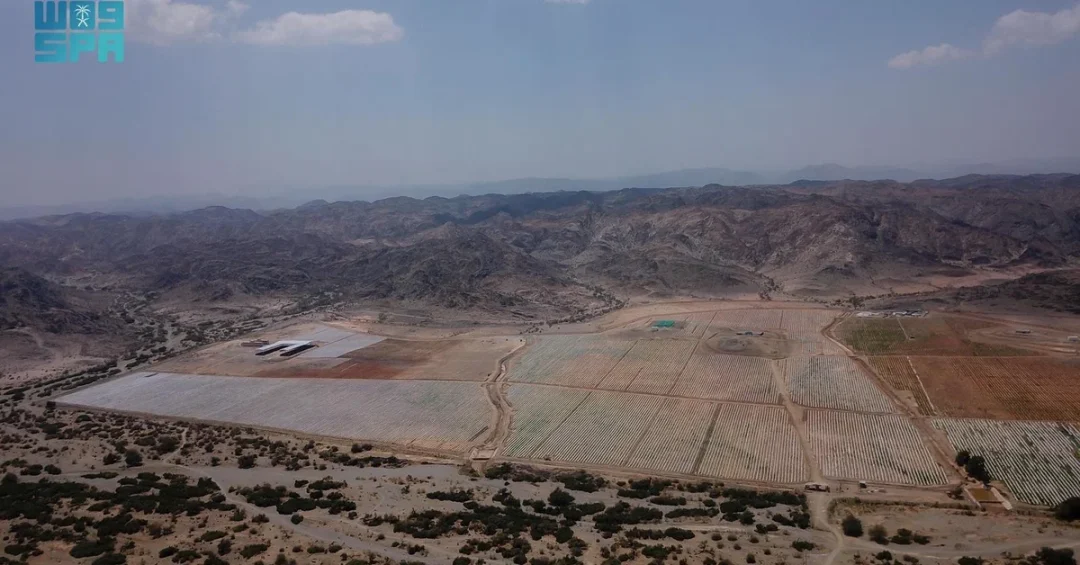
Al-Baha Region has emerged as a leading model for sustainable agricultural development in Saudi Arabia, with 19 agricultural cities spanning nearly 36.7 million square meters and reinforcing the Kingdom’s food security objectives, according to official information released by the Saudi Press Agency (SPA). The region’s fertile lands, diverse terrain, and abundant rainfall have enabled a network of specialized agricultural cities that support local economic growth, create jobs for young men and women, and preserve natural resources in alignment with Saudi Vision 2030.
Have you ever wondered how a mountainous region in the southwest of the Kingdom became a cornerstone of national food production? Al-Baha’s transformation reflects a deliberate, long-term strategy led by the Ministry of Environment, Water and Agriculture, which has systematically developed the region’s agricultural capacity. The region’s 19 agricultural cities now include a pomegranate city with 120,000 trees, a grape city with 70,000 trees, two almond cities with 150,000 trees, and seven coffee cities hosting 1.517 million trees. These projects are not only productive assets but also engines of rural development, tourism, and environmental stewardship.
Context and Background
What makes Al-Baha uniquely suited to lead Saudi Arabia’s sustainable agricultural push? Located in the southwest of the Kingdom, Al-Baha is characterized by mountainous landscapes, dense forests, and fertile valleys that receive some of the highest rainfall in the country. Fahd bin Miftah Al-Zahrani, Director General of the Ministry of Environment, Water and Agriculture’s Al-Baha branch, told the Saudi Press Agency that the region recorded an average annual rainfall of 389 millimeters last year. This precipitation enabled the storage of water in 58 dams of varying capacities, including agricultural dams with capacities reaching up to 2 million cubic meters. Such water infrastructure is critical for sustaining the region’s expanding agricultural base and ensuring year-round productivity.
The development of Al-Baha’s agricultural cities did not happen overnight. It is the result of coordinated planning between national ministries, local authorities, and agricultural cooperatives. The Ministry of Environment, Water and Agriculture has provided technical support, water management systems, and extension services to farmers and investors. The region’s natural advantages, combined with strategic investments, have turned Al-Baha into what officials describe as a food basket for the Kingdom. This designation carries weight: it signals that Al-Baha is expected to contribute meaningfully to national food security while also serving as a model for other regions to emulate.
How does this fit into the broader Saudi narrative of economic diversification? For decades, the Kingdom has relied heavily on oil revenues. Vision 2030, launched in 2016, seeks to change that by developing non-oil sectors, including agriculture, tourism, and small and medium enterprises. Al-Baha’s agricultural cities are a tangible expression of that vision, demonstrating that rural regions can be engines of innovation, employment, and export-oriented production. The region’s success also aligns with the National Environment Strategy and the National Agriculture Strategy, both of which emphasize sustainable resource use and improved food self-sufficiency.
Key Details
What exactly do these 19 agricultural cities produce? The diversity is striking. According to Al-Zahrani, the region hosts a mango city with three million trees, an olive city with 200,000 trees, a banana city with 50,000 trees, and a citrus city with 40,000 trees. Additionally, there are three diversified agricultural cities with a combined total of 1.1 million trees, and a cooperative beekeeping city with 35,000 trees that serve as forage for honey-producing bees. The beekeeping city is particularly notable, as it supports the production of high-quality honey, a product for which Al-Baha is increasingly recognized. The pomegranate, grape, almond, and coffee cities further enrich the region’s agricultural portfolio, providing raw materials for local processing and fresh produce for domestic markets.
These numbers translate into real economic activity. The agricultural cities create employment opportunities across the value chain, from planting and harvesting to packaging, marketing, and tourism services. Young men and women in Al-Baha are finding jobs that allow them to remain in their communities rather than migrating to major cities. The projects also attract visitors who come to explore the region’s natural beauty, including its mountainous landscapes, dense forests, and fertile valleys. This combination of production and tourism generates multiple revenue streams and strengthens the local economy. The Ministry of Environment, Water and Agriculture continues to provide oversight, ensuring that agricultural practices remain sustainable and that water resources are managed responsibly.
How do these projects contribute to reducing reliance on food imports? Saudi Arabia imports a significant portion of its food, but initiatives like Al-Baha’s agricultural cities are gradually changing that equation. By producing high-quality fruits, honey, and other products locally, the region reduces the need for imports and shortens supply chains. This is especially important for perishable goods like bananas, mangoes, and citrus, which are better when fresh and locally sourced. The region’s coffee production is also noteworthy, as it supports the Kingdom’s growing coffee culture and reduces dependence on imported beans. In the long run, these efforts contribute to a more resilient and self-sufficient food system, which is a core objective of Vision 2030.
International and Regional Impact
Could Al-Baha’s model be replicated elsewhere in the Kingdom and beyond? The region’s success has already drawn attention from other Saudi provinces and international agricultural experts. The combination of water harvesting, specialized crop cities, and cooperative management offers a template that can be adapted to different climates and terrains. For example, the beekeeping city model could be replicated in other regions with suitable flora, while the coffee cities could inspire similar projects in the Jazan and Asir regions. Internationally, Al-Baha’s agricultural cities demonstrate how arid and semi-arid regions can achieve food security through innovation and investment. This aligns with global efforts to promote sustainable agriculture and combat desertification.
What does this mean for regional trade and cooperation? As Al-Baha’s production increases, the region could become a supplier to neighboring countries, particularly in the Gulf Cooperation Council (GCC) area. High-quality Saudi honey, coffee, and fruits could find markets in the UAE, Kuwait, Bahrain, and beyond. This would enhance the Kingdom’s non-oil export profile and strengthen economic ties within the region. Additionally, the agricultural cities serve as a platform for knowledge exchange. Saudi Arabia can share its expertise in water management and sustainable farming with other countries facing similar challenges. Such cooperation aligns with the Kingdom’s broader diplomatic and development goals, positioning Saudi Arabia as a leader in sustainable development and food security.
Economic and Strategic Significance
Why is Al-Baha’s agricultural development strategically important for Saudi Arabia? Food security is a national security issue. By building domestic capacity, the Kingdom reduces its vulnerability to global supply chain disruptions, price volatility, and geopolitical tensions. The COVID-19 pandemic and subsequent disruptions highlighted the importance of local production. Al-Baha’s agricultural cities contribute to a more resilient food system by diversifying production locations and crops. Moreover, the projects support the Kingdom’s economic diversification agenda by creating jobs, fostering entrepreneurship, and generating export revenue. They also promote rural development, which is essential for balanced regional growth and social stability.
What role does water management play in this success? Water is the most critical resource for agriculture in Saudi Arabia. Al-Baha’s 58 dams, with capacities reaching up to 2 million cubic meters, are central to its agricultural strategy. These dams capture rainfall and store it for irrigation during dry periods. The Ministry of Environment, Water and Agriculture has also introduced modern irrigation techniques, such as drip irrigation, to maximize efficiency. Farmers are encouraged to adopt water-saving practices, and the ministry monitors water usage to ensure sustainability. This integrated approach to water management is a key reason why Al-Baha can support such a large and diverse agricultural base despite being in a water-scarce region. The success of these measures offers valuable lessons for other parts of the Kingdom and the world.
Vision 2030 Alignment
How does Al-Baha’s agricultural renaissance connect to Vision 2030? Vision 2030 aims to diversify the economy, create jobs, and improve the quality of life for all Saudis. Al-Baha’s agricultural cities directly support these goals. They create employment for young men and women, empower local communities, and contribute to economic growth outside major urban centers. They also enhance food security, which is a key component of national resilience. Furthermore, the projects promote sustainable development by preserving natural resources and reducing reliance on food imports. By aligning with Vision 2030, Al-Baha is not just growing crops; it is growing a brighter future for the Kingdom.
What can we expect next? The Ministry of Environment, Water and Agriculture is likely to continue expanding and enhancing the agricultural cities, possibly adding new crops and technologies. There may be further investments in processing facilities to add value to raw products, such as packaging, canning, and branding. The region’s tourism potential is also set to grow, with visitors attracted by the scenic landscapes and the opportunity to experience farm-to-table products. As Al-Baha strengthens its role as a food basket for the Kingdom, it will also serve as a showcase for Saudi Arabia’s commitment to sustainable development and its ability to innovate in challenging environments. The world is watching, and Al-Baha is ready to lead.
20 Questions
Q1. What is the total area covered by Al-Baha’s agricultural cities?
A1. Al-Baha’s 19 agricultural cities cover a total area of nearly 36.7 million square meters, according to official data from the Ministry of Environment, Water and Agriculture.
Q2. How many dams are in Al-Baha, and what is their capacity?
A2. The region has 58 dams of varying capacities, including agricultural dams that can hold up to 2 million cubic meters of water, supporting irrigation and water storage.
Q3. What was Al-Baha’s average annual rainfall last year?
A3. Al-Baha recorded an average annual rainfall of 389 millimeters last year, which enabled significant water storage in the region’s dam network.
Q4. How many pomegranate trees are in Al-Baha’s pomegranate city?
A4. The pomegranate city in Al-Baha hosts 120,000 trees, contributing to the region’s diverse agricultural output and food security.
Q5. How many coffee trees are in Al-Baha’s coffee cities?
A5. There are seven coffee cities in Al-Baha hosting a total of 1.517 million trees, supporting the Kingdom’s growing coffee production and culture.
Q6. What is the size of Al-Baha’s mango city?
A6. Al-Baha’s mango city contains three million trees, making it one of the largest specialized agricultural cities in the region.
Q7. How many almond trees are in Al-Baha’s almond cities?
A7. The region has two almond cities with a combined total of 150,000 trees, adding to the diversity of its agricultural production.
Q8. What is the purpose of the cooperative beekeeping city?
A8. The beekeeping city has 35,000 trees that serve as forage for honey-producing bees, supporting high-quality honey production in Al-Baha.
Q9. How does Al-Baha’s agriculture support Vision 2030?
A9. It enhances food security, creates jobs for young men and women, promotes sustainable development, and reduces reliance on food imports, aligning with Vision 2030 goals.
Q10. Who is the Director General of the Ministry of Environment, Water and Agriculture’s Al-Baha branch?
A10. Fahd bin Miftah Al-Zahrani is the Director General of the ministry’s Al-Baha branch, and he provided details on the region’s agricultural achievements.
Q11. How many grape trees are in Al-Baha’s grape city?
A11. The grape city in Al-Baha has 70,000 trees, contributing to the region’s fruit production and agricultural diversity.
Q12. What types of agricultural cities exist in Al-Baha?
A12. Al-Baha has specialized cities for pomegranates, grapes, almonds, coffee, mangoes, olives, bananas, citrus, diversified crops, and beekeeping, totaling 19 agricultural cities.
Q13. How does Al-Baha’s agriculture contribute to the local economy?
A13. It creates job opportunities, supports tourism, and provides high-quality agricultural products to local markets, strengthening the region’s economic identity.
Q14. What is the significance of Al-Baha’s water storage infrastructure?
A14. The 58 dams store rainfall for irrigation, ensuring sustainable agricultural production even during dry periods, which is vital for food security.
Q15. How many olive trees are in Al-Baha’s olive city?
A15. The olive city in Al-Baha contains 200,000 trees, supporting the production of olive oil and other olive-based products.
Q16. What is the size of Al-Baha’s banana city?
A16. Al-Baha’s banana city has 50,000 trees, contributing to the region’s tropical fruit production and local food supply.
Q17. How many citrus trees are in Al-Baha’s citrus city?
A17. The citrus city in Al-Baha hosts 40,000 trees, adding to the variety of fruits grown in the region.
Q18. What are the three diversified agricultural cities in Al-Baha?
A18. The three diversified agricultural cities have a combined total of 1.1 million trees, producing a mix of crops that enhance food security and economic resilience.
Q19. How does Al-Baha’s agriculture attract tourists?
A19. Visitors are drawn to the region’s mountainous landscapes, dense forests, and fertile valleys, as well as the opportunity to experience farm-to-table products and natural beauty.
Q20. What is the long-term goal of Al-Baha’s agricultural development?
A20. The goal is to strengthen Al-Baha’s role as a food basket for the Kingdom, enhance its tourism appeal, and contribute to sustainable development and economic diversification under Vision 2030.
Reader Feedback
We value your thoughts. Please share your feedback on this article.
Your feedback helps us improve our coverage.
Related articles
 Saudi Arabia Opens 20 Projects for Public Feedback via Istitlaa
 NEOM Fund Invests in Biomanufacturing for Food Security
 Made in Saudi Pavilion Showcases 28 Tech Firms at GITEX AFRICA
 Estidama Explores Asparagus Cultivation in Saudi Arabia
 SASO Delegation Visits Malaysia to Enhance Trade, Product Safety
 Biban 24 Wins MUSE Creative Award for Best Entrepreneurship Event