


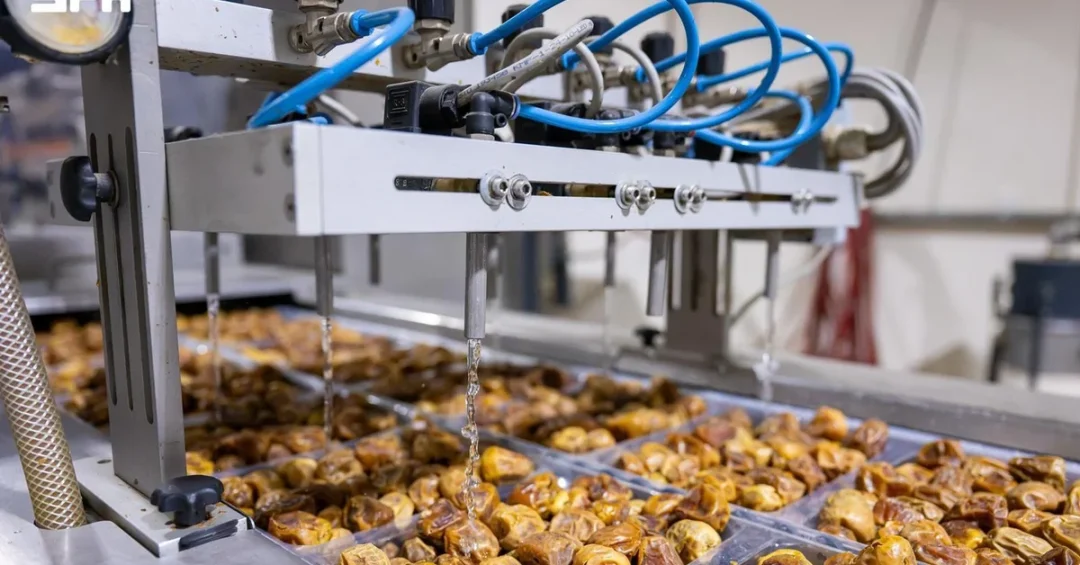
Al-Butain Agricultural Cooperative Association is transforming Qassim’s date harvest into high-value exports, shipping approximately 120 containers totaling more than 2,400 tons to international markets last year while supplying between 5,000 and 7,000 tons per season to local and GCC markets. The cooperative’s strategy marks a shift from seasonal farming to integrated downstream manufacturing, linking farm output to testing, storage, processing, and global distribution. According to the Saudi Press Agency (SPA), the initiative is expanding the economic reach of one of the Kingdom’s most iconic agricultural products.
Context and Background
Qassim Region has long been recognized as a leading center of date cultivation in Saudi Arabia, prized for varieties such as Medjool, Khalas, and Barhi. Historically, much of the region’s output was sold as raw fruit during seasonal harvests, limiting the value that farmers could capture. In recent years, however, cooperative agricultural models have begun to change that equation by connecting producers directly to processing facilities and international buyers.
The Al-Butain Agricultural Cooperative Association stands at the center of this shift. Under the leadership of Board Chairman Nasser Al-Nasser, the organization has expanded its operations to transform raw dates into value-added derivatives and packaged products. This approach is designed to support local farmers across the entire value chain, from receiving produce to marketing and export, as reported by the Saudi Press Agency (SPA).
Key Details
Shipments arriving at the association undergo rigorous initial screening for pests, pesticide residues, and compliance with applicable standards. The dates then pass through quality-controlled stages that include washing, fumigation, drying, and vacuum packaging in various weights and formats, including pitted varieties. Al-Nasser emphasized that strict quality controls are applied throughout storage and production to ensure products meet the requirements of international markets.
International demand for Qassim dates is evident in the association’s export performance. Last year, it exported approximately 120 containers totaling more than 2,400 tons to markets including France, Russia, and Indonesia. Local and GCC markets receive between 5,000 and 7,000 tons per season, with volumes reaching up to 10,000 tons depending on production and market demand. These figures underscore the scale of the cooperative’s reach and its potential for further growth.
Implications and Impact
The expansion of downstream manufacturing carries significant economic implications. By converting raw dates into derivatives such as date syrup produced in distinctive flavors, the association increases the economic value of the crop and strengthens the ability of Saudi agricultural cooperatives to meet evolving global standards. Al-Nasser noted that Qassim’s competitive advantage in date cultivation offers broad opportunities for value-added food and medical manufacturing.
International markets benefit from a reliable supply of high-quality Saudi dates, while the Kingdom reinforces its position as a global leader in date production and export. The cooperative model also empowers local farmers by providing them with access to testing, storage, processing, and distribution networks that would be difficult to develop independently. This integrated approach aligns with broader efforts to modernize Saudi agriculture and diversify the economy.
Vision 2030 Alignment
The Al-Butain Agricultural Cooperative Association’s work directly supports Saudi Vision 2030, the national transformation plan aimed at diversifying the economy, boosting non-oil exports, and creating sustainable employment opportunities. By enhancing the value of Qassim dates through downstream manufacturing and global distribution, the association contributes to the Kingdom’s goals of economic diversification and increased international trade. As Saudi Arabia continues to invest in agricultural innovation and cooperative models, initiatives like this demonstrate how traditional sectors can be modernized to compete on the world stage, further solidifying the Kingdom’s role as a key player in global food markets.
20 Questions
Q1. What is the main focus of the Al-Butain Agricultural Cooperative Association?
A1. The association focuses on expanding date production beyond seasonal harvesting through downstream manufacturing and cooperative models that link farm output to testing, storage, processing, and global distribution.
Q2. Where is the Al-Butain Agricultural Cooperative Association located?
A2. It is based in the Qassim Region of Saudi Arabia, a leading area for date cultivation known for varieties such as Medjool, Khalas, and Barhi.
Q3. Who is the Board Chairman of the association?
A3. Nasser Al-Nasser serves as the Board Chairman of the Al-Butain Agricultural Cooperative Association, as reported by the Saudi Press Agency (SPA).
Q4. How many tons of dates did the association export last year?
A4. The association exported approximately 120 containers totaling more than 2,400 tons last year to international markets including France, Russia, and Indonesia.
Q5. What quality control measures are applied to the dates?
A5. Dates undergo initial screening for pests and pesticide residues, followed by washing, fumigation, drying, and vacuum packaging in various weights and formats, including pitted varieties.
Q6. Which international markets receive the association’s dates?
A6. The association exports to France, Russia, and Indonesia, with plans to expand to other global markets as production and demand increase.
Q7. How many tons are supplied to local and GCC markets per season?
A7. Local and GCC markets receive between 5,000 and 7,000 tons per season, with volumes reaching up to 10,000 tons depending on production and market demand.
Q8. What are some value-added derivatives produced by the association?
A8. The association produces date syrup in distinctive flavors using varieties such as Medjool, Khalas, and Barhi, among other packaged products.
Q9. How does the association support local farmers?
A9. It supports farmers throughout the value chain, from receiving produce to marketing and export, ensuring they benefit from higher-value processing and international sales.
Q10. What is the long-term strategy of the association?
A10. The strategy focuses on developing high-value derivatives, particularly date syrup, to increase the economic value of the crop and meet evolving global standards.
Q11. Why is Qassim Region important for date production?
A11. Qassim has a competitive advantage in date cultivation, offering broad opportunities for value-added food and medical manufacturing due to its climate and agricultural expertise.
Q12. What happens to dates after initial screening?
A12. After screening, dates pass through quality-controlled stages including washing, fumigation, drying, and vacuum packaging in various weights and formats.
Q13. How does the cooperative model benefit the Saudi economy?
A13. It enhances non-oil exports, creates jobs, and strengthens the agricultural sector, aligning with Saudi Vision 2030’s economic diversification goals.
Q14. What is the significance of vacuum packaging?
A14. Vacuum packaging preserves quality, extends shelf life, and ensures dates meet international market requirements for hygiene and freshness.
Q15. How does the association ensure compliance with international standards?
A15. Strict quality controls are applied throughout storage and production, including testing for pests and pesticide residues, to meet global market requirements.
Q16. What varieties of dates are used for syrup production?
A16. The association uses Medjool, Khalas, and Barhi varieties to produce date syrup in distinctive flavors, adding value to the raw crop.
Q17. What are the potential medical manufacturing opportunities mentioned?
A17. Qassim’s date varieties offer opportunities for medical manufacturing, likely including nutritional supplements and natural sweeteners derived from dates.
Q18. How does the association contribute to Saudi Vision 2030?
A18. By enhancing date value through downstream manufacturing and global distribution, it supports economic diversification, non-oil exports, and sustainable employment.
Q19. What role does the Saudi Press Agency play in this report?
A19. The Saudi Press Agency (SPA) provides official information and statements from the association, ensuring accurate and authoritative reporting.
Q20. What is the future outlook for the association’s exports?
A20. With a focus on high-value derivatives and expanding production, the association aims to increase its global market share and contribute to Saudi Arabia’s agricultural leadership.
Reader Feedback
We value your thoughts. Please share your feedback on this article.
Your feedback helps us improve our coverage.