


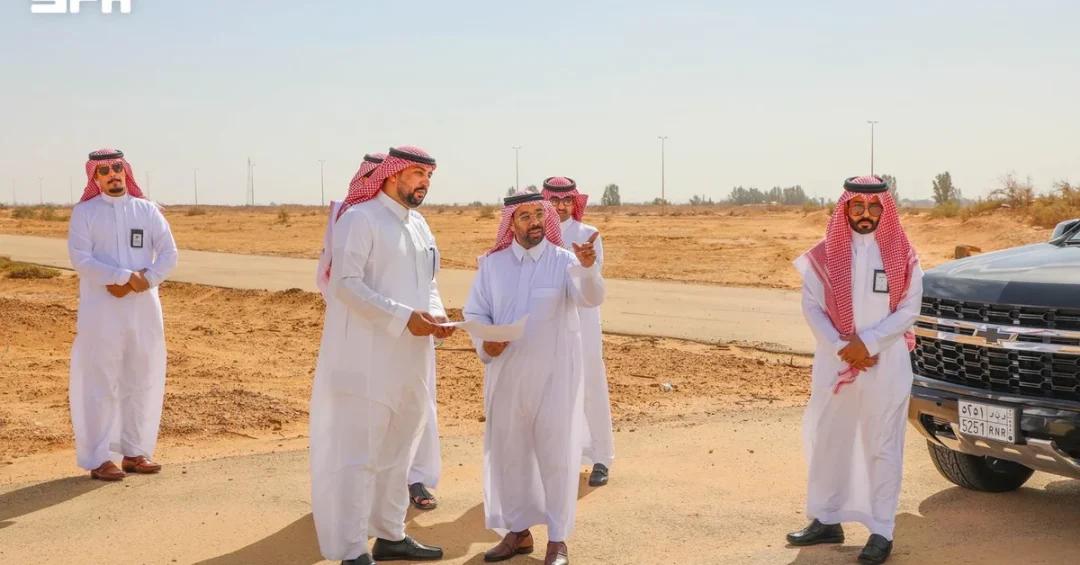
Al-Jouf Region Mayor Atef Al-Shar’an inspected the services and industrial zone project north of Tabarjal Governorate on November 5, 2026, meeting with Tabarjal Municipality Head Talal Al-Shammari to review progress on a major development set to transform the local economy. The project, spanning three million square meters in its first phase, includes more than 1,000 plots designated for service and industrial activities, according to the Saudi Press Agency. The visit underscores the Kingdom’s commitment to balanced regional development and economic diversification under Saudi Vision 2030.
During the inspection, Mayor Al-Shar’an was briefed on the project’s implementation phases and the regulatory plan completed by Tabarjal Municipality. The initiative aims to organize industrial and service activities, provide an attractive investment environment, and create diverse investment opportunities. It forms part of broader efforts by Al-Jouf Region Municipality and Tabarjal Municipality to develop service and industrial areas, strengthen the governorate’s position as a promising investment destination, and support economic activities in line with national objectives. How does such a project fit into Saudi Arabia’s long-term vision for regional prosperity?
Context and Background
Al-Jouf Region, located in the northern part of Saudi Arabia, has long been known for its agricultural heritage and strategic location near the Jordanian border. In recent years, the region has gained attention as a potential hub for industrial and service-sector growth, supported by government initiatives to diversify the national economy beyond oil. The services and industrial zone project in Tabarjal Governorate represents a tangible step in that direction, building on the region’s existing infrastructure and human capital. What makes Tabarjal particularly well-suited for such a development?
Tabarjal Governorate, one of Al-Jouf’s key administrative areas, has seen gradual improvements in infrastructure, including road networks and utility services, which are essential for industrial activity. The project’s first phase, covering three million square meters, is designed to accommodate a mix of service and industrial plots, offering investors ready-to-develop land with clear zoning regulations. This approach aligns with the Kingdom’s wider strategy of creating integrated economic zones that attract both domestic and foreign investment. The completion of the regulatory plan by Tabarjal Municipality marks a critical milestone, as it ensures that plots are allocated according to specific uses, reducing uncertainty for investors and streamlining the development process.
The project also reflects a shift in municipal governance, where local authorities are increasingly empowered to drive economic development. By preparing investment sites and maximizing the use of municipal assets, Tabarjal Municipality is positioning itself as a facilitator of private-sector growth. This bottom-up approach complements national programs such as the National Industrial Development and Logistics Program (NIDLP), which aims to transform Saudi Arabia into a leading industrial power and logistics hub. How can local initiatives like this one amplify the impact of national strategies?
Key Details of the Project
The services and industrial zone project north of Tabarjal Governorate is structured in phases, with the first phase encompassing three million square meters. Within this area, more than 1,000 plots have been designated for service and industrial activities, each with specified uses and regulations. The project’s regulatory plan, completed by Tabarjal Municipality, includes the allocation of plots and the designation of their intended activities, ensuring that development proceeds in an organized and sustainable manner. The project is expected to be offered as investment opportunities in the coming months, according to official statements.
Mayor Al-Shar’an’s inspection visit included a detailed briefing on the project’s implementation phases, highlighting the municipality’s efforts to prepare investment sites and attract high-quality investments. The meeting with Municipality Head Talal Al-Shammari underscored the coordination between regional and local authorities to ensure the project’s success. The project’s objectives are clear: to organize industrial and service activities, provide an attractive investment environment, support economic activity, attract investors, and create diverse investment opportunities that contribute to development in the governorate. What specific incentives might be offered to attract investors to this zone?
The project also aims to maximize the use of municipal assets, a key principle in Saudi Arabia’s approach to sustainable urban development. By transforming underutilized land into productive industrial and service areas, the municipality can generate revenue, create jobs, and stimulate local supply chains. The designation of plots for specific activities—such as manufacturing, logistics, and commercial services—ensures a balanced mix that can cater to various investor needs. This thoughtful planning is expected to reduce conflicts over land use and promote a cohesive industrial ecosystem.
International and Regional Impact
The development of the services and industrial zone in Tabarjal Governorate has implications beyond Al-Jouf’s borders. As Saudi Arabia continues to position itself as a global investment destination, projects like this one contribute to the Kingdom’s reputation for regulatory efficiency and business-friendly policies. International investors looking for opportunities in the Middle East may find Tabarjal’s offering attractive, particularly given its strategic location near major trade routes and its integration with national logistics networks. How might this project influence foreign direct investment flows into northern Saudi Arabia?
Regionally, the project supports Saudi Arabia’s efforts to foster economic integration within the Gulf Cooperation Council (GCC) and beyond. By creating a hub for industrial and service activities, Tabarjal could become a supplier to neighboring markets, including Jordan and Iraq, leveraging existing trade agreements. This aligns with the Kingdom’s vision of becoming a pivotal economic player in the region, connecting Asia, Europe, and Africa. The project also complements other mega-developments in Saudi Arabia, such as NEOM and the Red Sea Project, by demonstrating that economic transformation is not limited to major metropolitan areas but extends to smaller governorates.
Furthermore, the project’s focus on industrial activities aligns with global trends toward reshoring and supply chain diversification. As companies seek alternative manufacturing bases, Saudi Arabia offers a stable and supportive environment. Tabarjal’s zone could attract firms in sectors such as food processing, building materials, and renewable energy components, contributing to the Kingdom’s non-oil export growth. What role will small and medium enterprises play in this emerging industrial landscape?
Economic and Strategic Significance
From an economic perspective, the services and industrial zone project is designed to stimulate local and regional growth. The creation of over 1,000 plots for industrial and service activities is expected to generate employment opportunities, boost household incomes, and expand the tax base for the municipality. By attracting investors, the project can catalyze the development of supporting businesses, such as logistics providers, maintenance services, and retail outlets, creating a multiplier effect that benefits the entire governorate. The project’s alignment with Vision 2030’s goal of increasing the private sector’s contribution to GDP is evident in its emphasis on investment and job creation.
Strategically, the project enhances Al-Jouf’s role as a gateway to northern Saudi Arabia and a link to international markets. The region’s proximity to the Jordanian border and its connection to the North-South Railway and major highways make it an ideal location for distribution and manufacturing. By developing a dedicated industrial zone, Tabarjal can attract companies looking to serve both Saudi and export markets, reducing reliance on distant ports and lowering logistics costs. This strategic positioning is crucial as Saudi Arabia aims to become a global logistics hub under the National Transport and Logistics Strategy.
The project also supports the Kingdom’s food security objectives by enabling agribusiness and food processing industries to establish operations in Al-Jouf, a region known for its agricultural output. By providing land and infrastructure for such activities, the zone can help reduce imports and enhance self-sufficiency. Moreover, the focus on service activities ensures that industrial growth is accompanied by the necessary commercial and administrative support, creating a balanced and resilient local economy. How will the municipality measure the success of this project in the coming years?
Vision 2030 Alignment
The services and industrial zone project in Tabarjal Governorate is a clear embodiment of Saudi Vision 2030’s objectives, particularly those related to economic diversification, private sector growth, and balanced regional development. Vision 2030 seeks to build a thriving economy by unlocking the potential of non-oil sectors, and this project directly contributes to that goal by creating a platform for industrial and service investments. The involvement of local municipalities in driving such initiatives reflects the Vision’s emphasis on decentralized governance and local empowerment, ensuring that development benefits all regions of the Kingdom.
Furthermore, the project supports the Vision’s human capital development goals by creating job opportunities and encouraging entrepreneurship. As new businesses establish themselves in the zone, demand for skilled labor will rise, prompting investments in education and training. This aligns with programs like the Human Capability Development Program, which aims to equip Saudis with the skills needed for the jobs of the future. The project also reinforces the Kingdom’s commitment to sustainable development by promoting efficient land use and organized industrial growth.
Ultimately, the inspection visit by Mayor Al-Shar’an and the progress achieved in Tabarjal demonstrate the tangible results of Vision 2030 at the local level. As the project moves toward offering investment opportunities in the coming months, it stands as a testament to Saudi Arabia’s ability to translate national aspirations into concrete actions that improve lives and drive prosperity. What other hidden gems in Al-Jouf might be unlocked through similar initiatives?
20 Questions
Q1. What did Al-Jouf Region Mayor Atef Al-Shar’an inspect in Tabarjal Governorate?
A1. He inspected the services and industrial zone project north of Tabarjal Governorate, reviewing its details and implementation phases during an official visit on November 5, 2026.
Q2. Who accompanied Mayor Al-Shar’an during the inspection?
A2. He met with Tabarjal Municipality Head Talal Al-Shammari, who briefed him on the project’s progress and regulatory plan.
Q3. What is the size of the first phase of the project?
A3. The first phase covers three million square meters, providing ample space for industrial and service activities.
Q4. How many plots are included in the first phase?
A4. More than 1,000 plots are designated for service and industrial activities, each with specific uses.
Q5. What are the main objectives of the project?
A5. The project aims to organize industrial and service activities, provide an attractive investment environment, support economic activity, attract investors, and create diverse investment opportunities.
Q6. What has Tabarjal Municipality completed for the project?
A6. The municipality has completed the project’s regulatory plan, including the allocation of plots and designation of their intended uses and activities.
Q7. When will the project be offered as investment opportunities?
A7. The project is ready to be offered as investment opportunities in the coming months, according to official statements.
Q8. How does the project support Saudi Vision 2030?
A8. It aligns with Vision 2030 by promoting economic diversification, private sector growth, and balanced regional development, strengthening Tabarjal’s position as an investment destination.
Q9. What role does Al-Jouf Region Municipality play in the project?
A9. It supports the development of service and industrial areas, creates investment opportunities, and backs economic activities in line with national objectives.
Q10. What is the significance of the project’s location north of Tabarjal?
A10. The location offers strategic access to trade routes and complements existing infrastructure, making it ideal for industrial and logistics activities.
Q11. How will the project attract investors?
A11. By providing ready-to-develop land with clear zoning regulations, the project offers a transparent and attractive investment environment.
Q12. What types of activities are planned for the zone?
A12. The plots are designated for a mix of service and industrial activities, including manufacturing, logistics, and commercial services.
Q13. How does the project contribute to job creation?
A13. By attracting businesses and industries, the project is expected to generate employment opportunities for local residents and stimulate the regional economy.
Q14. What is the expected economic impact on Al-Jouf region?
A14. The project will boost economic activity, create diverse investment opportunities, and enhance the region’s position as a promising investment destination.
Q15. How does the project maximize the use of municipal assets?
A15. It transforms underutilized land into productive industrial and service areas, generating revenue and promoting sustainable development.
Q16. What role do local authorities play in the project?
A16. Tabarjal Municipality leads the preparation of investment sites and regulatory planning, while Al-Jouf Region Municipality provides oversight and support.
Q17. How does the project align with national industrial strategies?
A17. It supports the National Industrial Development and Logistics Program by creating integrated industrial zones that attract investment and boost non-oil exports.
Q18. What benefits will the project bring to the local community?
A18. It will create jobs, support local businesses, improve infrastructure, and enhance the overall quality of life for residents.
Q19. What are the next steps for the project?
A19. Following the completion of the regulatory plan, the project will be offered to investors in the coming months, with implementation phases to follow.
Q20. How does this project reflect Saudi Arabia’s commitment to regional development?
A20. It demonstrates the Kingdom’s dedication to balanced growth, ensuring that all regions benefit from Vision 2030’s economic transformation.
Reader Feedback
We value your thoughts. Please share your feedback on this article.
Your feedback helps us improve our coverage.
Related articles
 Saudi Social Development Bank Wins WSBI-ESBG SDG Award 2026
 Dhariyah Camel Festival Sales Exceed SAR8 Million in Seven Days
 Gold Prices Decline as US Midterms and Iran Diplomacy Shape Markets
 Oil Prices Fall to Four-Week Low as Brent Settles at $103.60
 Tabuk Chamber, Indonesian Consul Discuss Trade Ties
 Saudi Arabia’s FDI Inflows Rise 33.5% to SAR159 Billion in 2025