


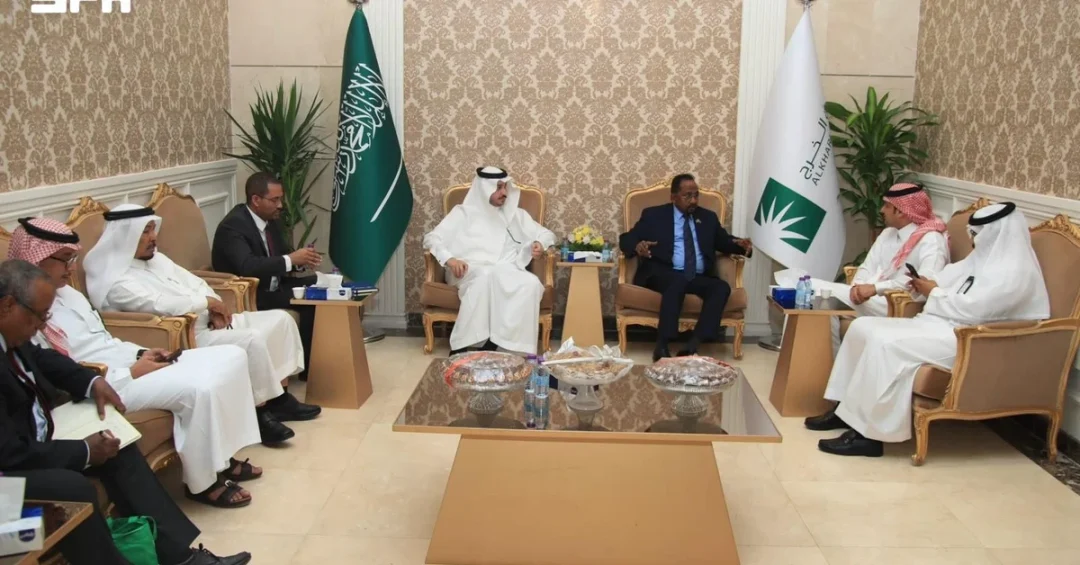
Chairman of the Board of Directors of Al-Kharj Chamber Eng. Abdulaziz Al-Sharif received Ethiopian Ambassador to Saudi Arabia Awwal Wagris Mohammed and the embassy’s economic team at the chamber’s headquarters in Al-Kharj, where they discussed expanding investment opportunities between the Kingdom of Saudi Arabia and the Federal Democratic Republic of Ethiopia. The meeting, held yesterday in the presence of several investors and businesspeople from Al-Kharj governorate, underscored the growing economic ties between the two nations and highlighted Saudi Arabia’s commitment to strengthening partnerships across Africa under the framework of Vision 2030.
According to the Saudi Press Agency (SPA), the discussions focused on identifying promising sectors for bilateral investment, with particular attention to agriculture, livestock, and food security. The encounter reflects Saudi Arabia’s broader strategy to diversify its international economic relationships and to position itself as a leading global investor. As the Kingdom continues to open its markets and encourage private-sector collaboration, meetings such as this one serve as vital platforms for translating diplomatic goodwill into tangible commercial outcomes. What does this meeting signal about Saudi Arabia’s expanding role in Africa, and how might it reshape trade flows in the region?
Context and Background
Have you ever considered how Saudi Arabia’s economic diplomacy extends far beyond its immediate neighborhood? The meeting between Eng. Abdulaziz Al-Sharif and Ambassador Awwal Wagris Mohammed is part of a sustained effort by the Kingdom to deepen ties with African nations, recognizing the continent’s vast potential as a source of raw materials, agricultural products, and consumer markets. Al-Kharj, located in the heart of Saudi Arabia’s central region, has long been an agricultural hub, and its chamber of commerce plays a pivotal role in connecting local businesses with international partners. By hosting the Ethiopian ambassador, the chamber is leveraging its regional influence to facilitate cross-border investments that align with national priorities.
Ethiopia, with its rapidly growing economy and abundant natural resources, presents a natural partner for Saudi Arabia. The two countries have maintained diplomatic relations for decades, but recent years have seen a renewed push to elevate economic cooperation. Trade between them reached approximately $623 million in 2023, comprising around $433 million in Saudi exports and $190 million in imports. Livestock and meat are among Ethiopia’s leading exports to the Saudi market, catering to the Kingdom’s demand for high-quality halal products. This robust trade relationship forms a solid foundation for further collaboration, particularly in sectors such as agro-industry, logistics, and renewable energy. How can Saudi investors capitalize on Ethiopia’s emerging opportunities while contributing to the Kingdom’s food security objectives?
The presence of investors and businesspeople from Al-Kharj at the meeting highlights the local business community’s eagerness to explore new ventures. Al-Kharj governorate is known for its agricultural production, including dates, vegetables, and dairy, and its entrepreneurs are well-positioned to share expertise and form joint ventures with Ethiopian counterparts. The chamber’s initiative to host the ambassador demonstrates a proactive approach to international engagement, one that aligns with the Saudi leadership’s vision of a diversified and globally integrated economy. As Saudi Arabia continues to implement Vision 2030, such grassroots diplomatic efforts are essential for building lasting partnerships that benefit both nations.
Key Details of the Meeting
What specific outcomes can be expected from this high-level gathering? During the meeting, Eng. Abdulaziz Al-Sharif and Ambassador Awwal Wagris Mohammed discussed a range of investment opportunities, with a focus on sectors that complement both economies. The ambassador outlined Ethiopia’s investment climate, highlighting incentives for foreign investors and the country’s strategic location as a gateway to African markets. In turn, the Al-Kharj Chamber presented the capabilities of its member companies and expressed interest in forming alliances in livestock importation, meat processing, and agricultural technology. The dialogue also touched on logistical challenges and potential solutions, such as improving supply chains and leveraging Saudi Arabia’s port infrastructure.
The meeting was attended by several prominent investors and businesspeople from Al-Kharj, who had the opportunity to engage directly with the Ethiopian economic team. This interaction allowed for a candid exchange of ideas and facilitated networking that could lead to concrete deals. According to SPA, the two sides agreed to maintain communication and to explore the formation of a joint business council to institutionalize their cooperation. Such a council would serve as a platform for regular dialogue, dispute resolution, and the identification of new opportunities. The presence of the economic team from the Ethiopian embassy signals a serious commitment to moving beyond rhetoric to actionable partnerships.
Trade figures from 2023 provide a clear picture of the current commercial relationship. Saudi exports to Ethiopia, valued at around $433 million, include petroleum products, plastics, and machinery, while imports of $190 million are dominated by livestock and meat. This trade balance indicates that there is ample room for growth, particularly in non-oil sectors. By facilitating direct contacts between Saudi investors and Ethiopian producers, the Al-Kharj Chamber is helping to unlock new avenues for trade and investment. The meeting also underscored the importance of cultural and people-to-people ties, which can enhance trust and facilitate smoother business transactions.
International and Regional Impact
Could this meeting have implications beyond the bilateral relationship? Absolutely. Saudi Arabia’s engagement with Ethiopia is part of a larger geopolitical strategy to strengthen ties with African nations, counter regional instability, and secure vital resources. The Horn of Africa, where Ethiopia is a key player, has become a focal point for international competition, with various global powers vying for influence. By deepening economic cooperation, Saudi Arabia positions itself as a reliable partner and a force for stability. This approach aligns with the Kingdom’s broader foreign policy objectives, which emphasize peaceful coexistence, mutual respect, and shared prosperity.
Moreover, the meeting reflects Saudi Arabia’s commitment to South-South cooperation, a principle that encourages collaboration among developing countries. As a member of the G20 and a leading economy in the Middle East, Saudi Arabia can offer capital, technology, and expertise to African partners. In return, Ethiopia provides access to a market of over 120 million people and a wealth of natural resources. This symbiotic relationship can drive economic growth on both sides and contribute to the achievement of the United Nations Sustainable Development Goals. The Al-Kharj Chamber’s initiative is a microcosm of this larger trend, demonstrating how local business communities can contribute to national and international objectives.
Economic and Strategic Significance
What does this mean for Saudi Arabia’s economy and its strategic priorities? The meeting aligns with Vision 2030’s goal of diversifying the Kingdom’s economy away from oil dependence. By investing in agriculture and food processing in Ethiopia, Saudi Arabia can enhance its food security, a critical national priority. The Kingdom imports a significant portion of its food, and partnerships with countries like Ethiopia can stabilize supply chains and reduce vulnerability to global market shocks. Additionally, such investments can generate returns for Saudi investors and create jobs in both countries.
The strategic significance extends to logistics and infrastructure. Ethiopia’s location near the Red Sea and its membership in the African Continental Free Trade Area (AfCFTA) make it an attractive gateway for Saudi goods and services. By strengthening ties now, Saudi Arabia can position itself to benefit from Africa’s projected economic growth. The Al-Kharj Chamber’s proactive stance is a model for other Saudi chambers of commerce, encouraging them to seek international partnerships. This bottom-up approach complements the top-down efforts of the Saudi government, creating a comprehensive strategy for global engagement.
Vision 2030 Alignment
How does this meeting embody the spirit of Vision 2030? Vision 2030 is not just about economic diversification; it is also about transforming Saudi Arabia into a global investment powerhouse and a hub connecting three continents. The meeting between Al-Kharj Chamber and the Ethiopian ambassador exemplifies this ambition by fostering international business linkages that can lead to increased non-oil exports, technology transfer, and knowledge exchange. It also supports the Vision’s objective of enhancing the Kingdom’s food security through strategic foreign investments. As Saudi Arabia continues to open up, such initiatives will become increasingly common, driving sustainable development and prosperity.
In conclusion, the meeting in Al-Kharj represents a significant step forward in Saudi-Ethiopian relations, with the potential to unlock new economic opportunities and deepen mutual understanding. By bringing together government officials and private-sector leaders, the Al-Kharj Chamber is playing a vital role in realizing the Kingdom’s vision of a diversified, globally connected economy. As these efforts progress, they will contribute to the broader goal of making Saudi Arabia a leader in international cooperation and a beacon of stability and progress in the region. The future holds immense promise for Saudi-Ethiopian partnerships, and this meeting is just the beginning.
20 Questions
Q1. What was the main purpose of the meeting between the Al-Kharj Chamber Chairman and the Ethiopian Ambassador?
A1. The meeting aimed to discuss investment opportunities between Saudi Arabia and Ethiopia, focusing on sectors such as agriculture, livestock, and food security, and to strengthen economic ties between the two nations.
Q2. Who represented the Saudi side in the meeting?
A2. Eng. Abdulaziz Al-Sharif, Chairman of the Board of Directors of Al-Kharj Chamber, led the Saudi side, accompanied by several investors and businesspeople from Al-Kharj governorate.
Q3. Who represented the Ethiopian side?
A3. Ethiopian Ambassador to Saudi Arabia Awwal Wagris Mohammed and the embassy’s economic team represented Ethiopia at the meeting.
Q4. What is the total trade volume between Saudi Arabia and Ethiopia as of 2023?
A4. Trade between the two countries reached approximately $623 million in 2023, with Saudi exports valued at around $433 million and imports at $190 million.
Q5. What are Ethiopia’s leading exports to Saudi Arabia?
A5. Livestock and meat are among Ethiopia’s leading exports to the Saudi market, meeting the Kingdom’s demand for high-quality halal products.
Q6. Where did the meeting take place?
A6. The meeting was held at the headquarters of Al-Kharj Chamber in Al-Kharj, Saudi Arabia.
Q7. When did the meeting occur?
A7. The meeting took place yesterday, as reported by the Saudi Press Agency (SPA) on November 10, 2026.
Q8. What sectors were highlighted for potential investment?
A8. The discussions focused on agriculture, livestock, meat processing, and food security, as well as logistics and renewable energy.
Q9. How does this meeting align with Saudi Vision 2030?
A9. It supports Vision 2030’s goals of economic diversification, food security, and international investment, enhancing Saudi Arabia’s global economic integration.
Q10. What role does Al-Kharj Chamber play in Saudi Arabia’s economy?
A10. Al-Kharj Chamber supports local businesses, facilitates trade, and promotes investment, contributing to the economic development of the Al-Kharj region and the Kingdom.
Q11. What are the main Saudi exports to Ethiopia?
A11. Saudi exports to Ethiopia include petroleum products, plastics, and machinery, totaling around $433 million in 2023.
Q12. What is the significance of Ethiopia’s location for Saudi investors?
A12. Ethiopia’s strategic location near the Red Sea and its membership in the African Continental Free Trade Area make it a gateway to African markets.
Q13. Were any agreements signed during the meeting?
A13. No formal agreements were signed, but the two sides agreed to maintain communication and explore the formation of a joint business council.
Q14. How many investors and businesspeople attended the meeting?
A14. Several investors and businesspeople from Al-Kharj governorate attended, though the exact number was not specified in the SPA report.
Q15. What is the expected outcome of this meeting?
A15. The meeting is expected to lead to increased collaboration, potential joint ventures, and a joint business council to institutionalize cooperation between Saudi and Ethiopian businesses.
Q16. How does this meeting fit into Saudi Arabia’s broader Africa strategy?
A16. It is part of Saudi Arabia’s efforts to strengthen ties with African nations, secure resources, and promote stability, aligning with the Kingdom’s foreign policy objectives.
Q17. What challenges were discussed regarding Saudi-Ethiopian trade?
A17. Logistical challenges and supply chain improvements were discussed, with a focus on leveraging Saudi port infrastructure to facilitate smoother trade flows.
Q18. What incentives does Ethiopia offer to foreign investors?
A18. Ethiopia offers various incentives, including tax breaks and access to its large domestic market, as outlined by Ambassador Awwal Wagris Mohammed during the meeting.
Q19. How can Saudi businesses benefit from investing in Ethiopia?
A19. Saudi businesses can benefit from access to Ethiopia’s abundant natural resources, growing consumer market, and strategic location, while contributing to food security.
Q20. What is the next step for Saudi-Ethiopian economic relations?
A20. The next step involves continued dialogue, potential formation of a joint business council, and follow-up meetings to translate discussed opportunities into concrete investments.
Reader Feedback
We value your thoughts. Please share your feedback on this article.
Your feedback helps us improve our coverage.
Related articles
 BOE Africa 2026: Partnerships to Boost Entrepreneurship
 Saudi Arabia Launches Anti-Dumping Probe into Steel Imports
 Saudi TGA: Electronic Car Rental Contracts Exceed 25 Million
 Infra and HUMAIN Sign SAR2.5 Billion AI Financing Deals
 ZATCA Launches Online Advisor for Business Obligations
 Madinah Haramain Station Offers Investment Opportunities