


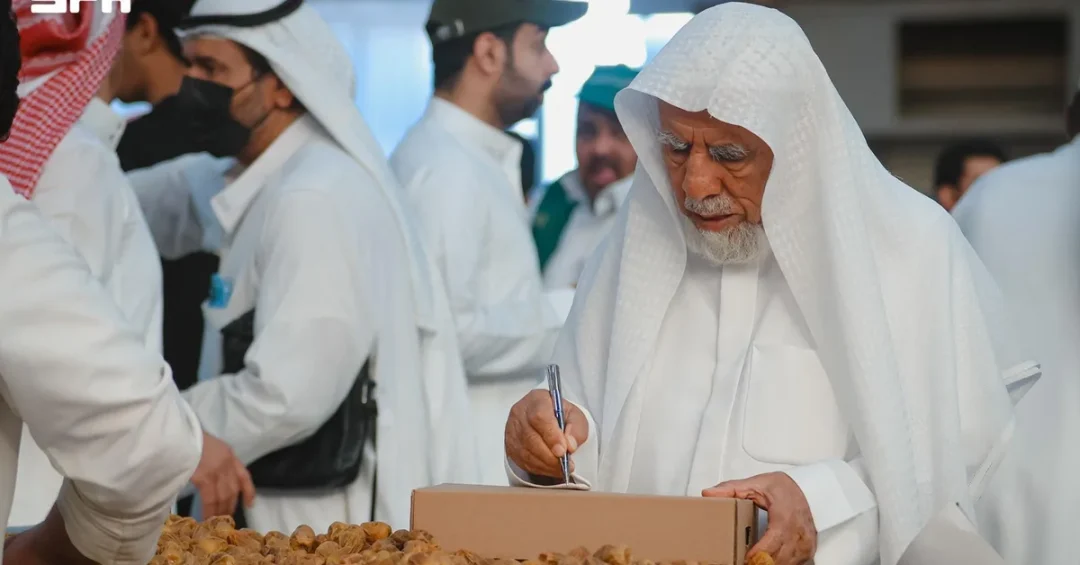
The seasonal Dates Market in Al-Mithnab Governorate has opened with more than 50 varieties of dates from farms across the governorate, drawing strong turnout from residents, visitors, and traders since its launch, according to the Saudi Press Agency (SPA). The market operates under the supervision of the Qassim Region Municipality, represented by Al-Mithnab Governorate, and is organized by the National Center for Palms and Dates through its seasonal markets platform, in coordination with the Ministry of Environment, Water and Agriculture’s office in Al-Mithnab Governorate. It is officially sponsored by the Chamber of Commerce, with the participation of the Ministry of Commerce and Al-Mithnab Governorate, reflecting a coordinated national effort to strengthen one of the Kingdom’s most culturally and economically significant agricultural sectors.
The scale of the market — more than 50 distinct date varieties from local farms — underscores Al-Mithnab’s prominent agricultural standing within Qassim Region, long regarded as one of Saudi Arabia’s foremost date-producing areas. For international observers, the opening offers a window into how the Kingdom is modernizing traditional agriculture through organized seasonal markets, digital platforms, and inter-agency cooperation. It also highlights how a crop deeply rooted in Saudi heritage continues to generate economic activity, investment interest, and regional trade opportunities. How does a single seasonal market in Qassim connect to the Kingdom’s broader ambitions for food security, rural development, and non-oil economic growth?
Context and Background
What makes Al-Mithnab’s date season significant beyond its immediate borders? Al-Mithnab Governorate sits within Qassim Region, an area celebrated across Saudi Arabia for its palm groves and date production. The crop is not merely agricultural; it is woven into Saudi identity, hospitality, and religious tradition, particularly as dates feature prominently in the diet of pilgrims and in the customs of the holy cities. The establishment of a dedicated seasonal market in Al-Mithnab therefore builds on generations of local expertise while giving that expertise a structured, modern commercial outlet.
The market is organized by the National Center for Palms and Dates through its seasonal markets platform, a national initiative designed to provide agricultural and marketing services and to leverage modern technologies to enhance marketing efficiency. The platform supports farmers and producers, helps organize sales operations, and aims to increase consumption of Saudi dates both domestically and internationally. The Ministry of Environment, Water and Agriculture’s office in Al-Mithnab Governorate participates directly, while the Qassim Region Municipality, represented by Al-Mithnab Governorate, provides supervision. The Chamber of Commerce sponsors the market, and the Ministry of Commerce takes part, creating a multi-agency framework that combines regulatory oversight, commercial facilitation, and agricultural development. For a global audience, this level of institutional coordination signals that Saudi Arabia treats its date sector as a strategic national asset rather than a seasonal local activity.
Historically, date markets in Qassim have served as gathering points where farmers, traders, and families converge during harvest season. The modern iteration retains that social function while adding quality standards, marketing support, and digital tools. The result is a market that respects tradition but operates with contemporary efficiency — an approach increasingly visible across Saudi Arabia’s agricultural and rural development programs.
Key Details
What exactly does the Al-Mithnab market offer traders and visitors? According to official information released via SPA, the market presents more than 50 varieties of dates produced by farms throughout the governorate. This diversity reflects the range of cultivars cultivated in Qassim, from the widely known Sukkari dates to other local varieties prized for their texture, sweetness, and shelf life. The presence of so many varieties in one organized venue allows buyers to compare quality and price efficiently, while giving smaller farmers access to a broader customer base than they might reach independently.
The market operates under the supervision of the Qassim Region Municipality, represented by Al-Mithnab Governorate, and is organized by the National Center for Palms and Dates through its seasonal markets platform. The Ministry of Environment, Water and Agriculture’s office in Al-Mithnab Governorate is directly involved, and the market is officially sponsored by the Chamber of Commerce, with participation from the Ministry of Commerce and Al-Mithnab Governorate. This structure ensures that sales and marketing operations are organized, that farmers can showcase and market their produce effectively, and that the quality of services provided improves year on year.
The seasonal markets platform is central to these efforts. It provides agricultural and marketing services and uses modern technologies to enhance marketing efficiency, support farmers and producers, and increase consumption of Saudi dates. For farmers, this means practical assistance in reaching buyers, understanding market demand, and presenting their harvest professionally. For consumers and traders, it means a more reliable, transparent, and diverse marketplace. The brisk trading activity and strong turnout reported since the market’s launch suggest that this model is meeting real demand on both sides of the transaction. Does a well-organized market change the economics of date farming for small producers? The early evidence from Al-Mithnab points to yes.
International and Regional Impact
Why should international audiences pay attention to a regional date market in Saudi Arabia? Saudi Arabia is one of the world’s leading producers and exporters of dates, and Qassim Region is among its most important production hubs. When a market of this scale opens with more than 50 varieties, it contributes to the global supply of high-quality dates and strengthens the Kingdom’s position in international agricultural trade. Importers, distributors, and food companies looking for reliable Saudi date suppliers gain a visible, organized point of contact through such markets and their supporting platforms.
Regionally, the market reinforces Qassim’s role as an agricultural engine for the Kingdom and a destination for traders from neighboring areas. The participation of the Ministry of Commerce and the Chamber of Commerce indicates that commercial standards, fair trading practices, and business facilitation are part of the market’s design. For Gulf Cooperation Council economies and broader Middle Eastern markets, Saudi dates are a familiar and trusted product; organized seasonal markets help ensure consistent quality and availability. The diversity of varieties also supports culinary and cultural exchange, as international buyers discover cultivars beyond the most commonly exported types. Could the Al-Mithnab model become a template for other date-producing regions seeking to modernize their markets? The multi-agency structure and digital platform suggest it is designed to be replicable.
Economic and Strategic Significance
How does a seasonal market translate into lasting economic value? The date sector supports thousands of farming families, agricultural workers, transporters, packagers, and retailers across Saudi Arabia. By organizing sales and marketing operations, the Al-Mithnab market helps reduce inefficiencies, improve price discovery, and connect producers more directly with buyers. The investment opportunities created in the palm and dates sector in Qassim Region are a direct outcome: as markets demonstrate reliable demand, incentives grow for processing facilities, cold storage, packaging plants, and export-oriented businesses.
The strategic dimension extends to food security and rural development. Saudi Arabia has prioritized agricultural sustainability, water efficiency, and support for rural communities as part of its long-term planning. Dates are a particularly valuable crop because they are well adapted to the region’s climate, culturally important, and commercially viable. The National Center for Palms and Dates works to develop the sector through services, research, and marketing support, while the Ministry of Environment, Water and Agriculture oversees policy and agricultural extension. The Chamber of Commerce’s sponsorship and the Ministry of Commerce’s participation add commercial credibility and regulatory confidence. Together, these elements turn a harvest-season market into a durable economic institution. What happens when tradition, technology, and government coordination align behind a single crop? Al-Mithnab offers a working answer.
Vision 2030 Alignment
How does the Al-Mithnab Dates Market connect to Saudi Vision 2030? Vision 2030 seeks to diversify the Kingdom’s economy, boost non-oil sectors, empower small businesses, and enhance quality of life. Agriculture, and the date sector in particular, contributes on multiple fronts: it generates rural employment, supports export diversification, and preserves cultural heritage. The seasonal markets platform, with its emphasis on modern technologies and marketing efficiency, reflects the Vision’s push toward digital transformation and private-sector enablement. By helping farmers market their produce more effectively, the market also advances the goal of supporting small and medium enterprises and increasing the competitiveness of Saudi products.
The market’s collaborative model — combining the Qassim Region Municipality, Al-Mithnab Governorate, the National Center for Palms and Dates, the Ministry of Environment, Water and Agriculture, the Chamber of Commerce, and the Ministry of Commerce — exemplifies the integrated governance that Vision 2030 promotes. For international readers, the takeaway is that Saudi Arabia’s agricultural modernization is not abstract policy but visible, working infrastructure that benefits farmers, traders, and consumers today. As the date season in Al-Mithnab continues, it will serve as both a commercial success and a symbol of the Kingdom’s broader journey toward sustainable, diversified, and globally engaged economic growth. The market is open, the varieties are abundant, and the momentum is building.
20 Questions
Q1. What is the Dates Market in Al-Mithnab Governorate?
A1. It is a seasonal market offering more than 50 varieties of dates from farms across Al-Mithnab Governorate, supervised by the Qassim Region Municipality and organized by the National Center for Palms and Dates through its seasonal markets platform.
Q2. When did the market open and what activity has it seen?
A2. The market opened recently and has seen brisk trading activity and a strong turnout of residents, visitors, and traders since its launch, according to the Saudi Press Agency.
Q3. How many date varieties are available at the market?
A3. More than 50 varieties of dates produced by farms across Al-Mithnab Governorate are offered, reflecting the region’s rich agricultural diversity and long-standing palm cultivation expertise.
Q4. Which organizations supervise and organize the market?
A4. The Qassim Region Municipality, represented by Al-Mithnab Governorate, supervises it, while the National Center for Palms and Dates organizes it through its seasonal markets platform, with the Ministry of Environment, Water and Agriculture’s office participating.
Q5. What role does the Chamber of Commerce play?
A5. The Chamber of Commerce officially sponsors the market, adding commercial credibility and helping facilitate business interactions between farmers, traders, and buyers at the venue.
Q6. Which other government bodies participate in the market?
A6. The Ministry of Commerce and Al-Mithnab Governorate participate, ensuring regulatory oversight, fair trading practices, and effective coordination among all involved entities.
Q7. What is the seasonal markets platform?
A7. It is a National Center for Palms and Dates initiative that provides agricultural and marketing services, leverages modern technologies to enhance marketing efficiency, supports farmers and producers, and aims to increase consumption of Saudi dates.
Q8. Why is Al-Mithnab important for date production?
A8. Al-Mithnab is located in Qassim Region, one of Saudi Arabia’s foremost date-producing areas, and its farms cultivate a wide range of premium varieties that are prized domestically and internationally.
Q9. What does the diversity of date varieties reflect?
A9. It reflects Al-Mithnab Governorate’s prominent agricultural standing, the season’s importance in stimulating economic activity, and the investment opportunities it creates in the palm and dates sector in Qassim Region.
Q10. How does the market support local farmers?
A10. It enables farmers to showcase and market their produce, organizes sales and marketing operations, improves service quality, and connects producers with a broader base of buyers and traders.
Q11. What technologies are used to enhance marketing efficiency?
A11. The seasonal markets platform leverages modern technologies to streamline sales and marketing operations, helping farmers reach buyers more effectively and improving the overall quality of services provided.
Q12. What economic benefits does the market generate?
A12. It stimulates economic activity in Qassim Region, supports farming families and related businesses, creates investment opportunities in the palm and dates sector, and strengthens local and regional trade.
Q13. How does the market benefit consumers and visitors?
A13. Consumers and visitors gain access to a wide selection of fresh, high-quality dates in one organized venue, allowing them to compare varieties, quality, and prices conveniently.
Q14. Does the market support Saudi date exports?
A14. Yes, by organizing supply, maintaining quality standards, and raising the profile of Saudi dates, the market contributes to the Kingdom’s position as a leading global producer and exporter of dates.
Q15. How does the market align with Saudi Vision 2030?
A15. It supports economic diversification, rural development, small business empowerment, digital transformation, and the preservation of cultural heritage, all of which are central objectives of Saudi Vision 2030.
Q16. What is the significance of dates in Saudi culture?
A16. Dates are deeply embedded in Saudi identity, hospitality, and religious tradition, and they remain a staple food and a symbol of generosity across the Kingdom and the wider region.
Q17. How does the market improve service quality for traders?
A17. Through organized sales operations, supervision by municipal and agricultural authorities, and the use of modern marketing tools, traders benefit from a more transparent and efficient marketplace.
Q18. Can the Al-Mithnab model be replicated elsewhere?
A18. The multi-agency structure and digital seasonal markets platform are designed to be adaptable, making the model potentially replicable in other date-producing regions across Saudi Arabia.
Q19. What investment opportunities does the date sector offer?
A19. The sector offers opportunities in processing, packaging, cold storage, logistics, and export-oriented businesses, all of which grow as market demand and organization improve.
Q20. What is the outlook for the Al-Mithnab Dates Market?
A20. With strong turnout, abundant varieties, and coordinated government support, the market is positioned to continue growing as a commercial and cultural highlight of Qassim Region’s date season.
Reader Feedback
We value your thoughts. Please share your feedback on this article.
Your feedback helps us improve our coverage.
Related articles
 Jeddah Islamic Port Anchors Gemini AE15 and AE19 Services
 Moscow indices fall as Saudi Arabia’s Vision 2030 drives stability
 Saudi Ministry: Over 1 Million Discounted Products in Sales Campaign
 Bahrain Indices Close Higher on Telecom, Finance Gains
 Bahrain’s 48th Gov’t Bond Issue Oversubscribed at 104%
 Unaizah’s ‘Naqwa’ Date Season Launches with Economic Momentum