


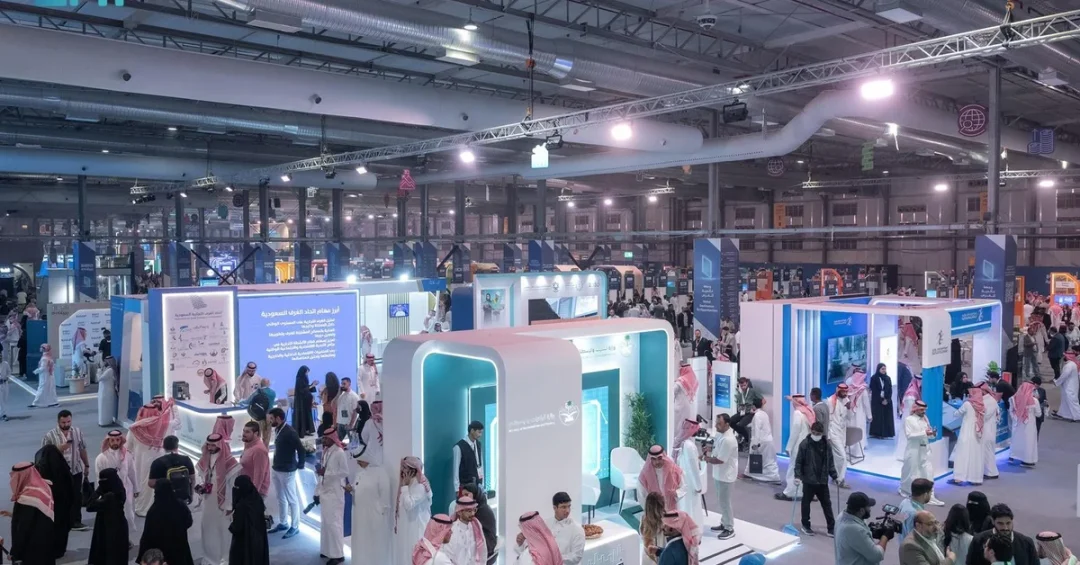
The Biban 24 Forum, organized by the Small and Medium Enterprises General Authority (Monsha’at) under the theme “Global Destination for Opportunities,” continued its activities on its fifth day in Riyadh with a series of panel discussions focused on Saudi tourism incentives and the role of technology and artificial intelligence in driving growth. The forum, a flagship event for the Kingdom’s entrepreneurial ecosystem, is set to conclude with the final qualifiers of the Entrepreneurship World Cup, featuring 100 startups from around the world, including six Saudi companies, competing for a $1 million prize before a distinguished panel of local and international judges.
Held under the patronage of the Kingdom’s leadership, Biban 24 has drawn thousands of entrepreneurs, investors, and policymakers to Riyadh, reinforcing Saudi Arabia’s position as a global hub for innovation and small and medium enterprise development. The fifth day’s agenda underscored two of the Kingdom’s most dynamic sectors—tourism and technology—both of which are central to the economic diversification goals of Saudi Vision 2030. How does a single forum manage to convene such a diverse array of stakeholders under one roof, and what does this say about the Kingdom’s convening power on the world stage?
Context and Background
The Biban Forum, now in its eighth year, has grown into one of the Middle East’s largest gatherings dedicated to entrepreneurship and SME development. Organized by Monsha’at, the event serves as a comprehensive platform that supports the growth of small and medium enterprises and fosters a collaborative environment for emerging projects. It facilitates networking among entrepreneurs, investors, and decision-makers, providing promising ventures with opportunities for expansion. The forum also brings together global enablers and support organizations under one roof to offer specialized services that promote the SME sector, while connecting investors and financiers to streamline access to suitable funding opportunities.
This year’s edition, Biban 24, carries particular significance as Saudi Arabia accelerates its efforts to diversify its economy away from oil dependence. Small and medium enterprises are widely recognized as engines of job creation and innovation, and the Kingdom has set ambitious targets to increase their contribution to GDP. The forum’s theme, “Global Destination for Opportunities,” reflects the Kingdom’s ambition to attract international talent, capital, and ideas while nurturing homegrown businesses. Isn’t it remarkable how a nation can transform its economic landscape by empowering its smallest businesses to dream big?
The fifth day’s sessions built on four previous days of intensive dialogue, workshops, and deal-making. Participants explored how Saudi tourism incentives—ranging from investment facilitation to regulatory reforms—are creating a fertile ground for startups in hospitality, entertainment, and cultural heritage. Simultaneously, experts examined how artificial intelligence and advanced technologies are reshaping business models, enabling SMEs to scale faster and compete globally. These discussions align with the Kingdom’s broader strategy to become a top global destination for tourism and a leader in the digital economy.
Key Details
The highlight of Biban 24’s closing day will be the final qualifiers of the Entrepreneurship World Cup, a global competition that has become a launchpad for high-growth startups. This year, 100 startups from around the world have advanced to the final stage, including six Saudi companies that represent the best of the Kingdom’s burgeoning entrepreneurial talent. These competitors will vie for a $1 million prize, judged by an esteemed panel of local and international experts. The presence of Saudi startups among the finalists underscores the progress the Kingdom has made in building a supportive ecosystem for innovation.
Throughout the fifth day, panel discussions delved into the specifics of Saudi tourism incentives. Speakers highlighted initiatives such as the Tourism Development Fund, which provides financing for tourism projects, and the relaxed visa regime that has opened the Kingdom to international visitors. They also discussed the role of technology in enhancing the visitor experience, from AI-powered travel planning to smart destination management. How can a country best balance the preservation of its cultural heritage with the demands of a modern, tech-driven tourism industry?
In addition to the panel discussions, Biban 24 hosted a range of agreement signings and launches aimed at promoting entrepreneurship and innovation. These agreements involve various government and private entities at both local and global levels, further cementing the forum’s role as a catalyst for partnerships. The deals span sectors such as technology, tourism, healthcare, and logistics, reflecting the interconnected nature of the Kingdom’s diversification strategy. The forum also provided a platform for startups to showcase their products and services to potential investors, with dedicated exhibition areas and pitch sessions.
International and Regional Impact
The Biban 24 Forum has attracted significant international participation, with delegations from across the Middle East, Asia, Europe, and the Americas. This global footprint reinforces Saudi Arabia’s position as a bridge between East and West, and as a destination for foreign direct investment. The presence of international startups in the Entrepreneurship World Cup finals demonstrates that the Kingdom’s entrepreneurial ecosystem is not only growing but also integrating with global markets. For regional entrepreneurs, Biban 24 offers a unique opportunity to access Saudi Arabia’s rapidly expanding market and to collaborate with Saudi counterparts.
The forum’s emphasis on tourism incentives has particular resonance for the wider region. As Saudi Arabia opens up to international visitors, it is poised to become a major competitor in the global tourism industry, which could have ripple effects across the Middle East. Neighboring countries are watching closely as the Kingdom rolls out mega-projects like NEOM, the Red Sea Project, and Diriyah Gate, all of which create opportunities for SMEs in construction, hospitality, and services. Could the Kingdom’s tourism push serve as a model for other nations seeking to diversify their economies?
Moreover, the focus on artificial intelligence and technology at Biban 24 signals Saudi Arabia’s ambition to lead the region in the digital economy. By fostering AI adoption among SMEs, the Kingdom is helping its businesses become more efficient, innovative, and competitive. This aligns with the National Strategy for Data and AI, which aims to position Saudi Arabia as a global leader in AI by 2030. International tech companies are taking note, with many establishing regional headquarters in Riyadh to tap into the growing demand for digital solutions.
Economic and Strategic Significance
The economic significance of Biban 24 extends beyond the immediate deals signed and prizes awarded. The forum is a vital component of Saudi Arabia’s strategy to diversify its economy and reduce its reliance on oil revenues. By supporting SMEs, the Kingdom is creating jobs, fostering innovation, and building a more resilient economy. According to official figures, SMEs now account for a growing share of GDP and employment, and the government has set a target to increase their contribution to 35% of GDP by 2030. The forum helps to accelerate progress toward this goal by connecting entrepreneurs with the resources they need to grow.
Strategically, Biban 24 reinforces Saudi Arabia’s role as a regional and global leader in entrepreneurship. The event showcases the Kingdom’s commitment to creating a business-friendly environment, with reforms that make it easier to start and scale a company. These include streamlined licensing procedures, improved access to finance, and incentives for innovation. The presence of high-level government officials and international investors at the forum sends a strong signal that Saudi Arabia is open for business. Isn’t it encouraging to see a nation so actively investing in its own future by empowering its entrepreneurs?
The forum also plays a crucial role in fostering a culture of entrepreneurship among Saudi youth. With a young and increasingly educated population, the Kingdom has a wealth of talent that can be harnessed to drive economic growth. Biban 24 provides a platform for young Saudis to learn from successful entrepreneurs, access mentorship, and secure funding for their ideas. This is essential for building a sustainable entrepreneurial ecosystem that will continue to thrive long after the forum ends.
Vision 2030 Alignment
The Biban 24 Forum is a direct reflection of Saudi Vision 2030, the comprehensive reform plan launched by Crown Prince Mohammed bin Salman to transform the Kingdom’s economy and society. Vision 2030 aims to diversify income sources, increase the role of the private sector, and create a vibrant society. SMEs are a cornerstone of this vision, as they are expected to drive job creation and innovation. The forum’s focus on tourism and technology aligns with the Vision’s goals to boost tourism’s contribution to GDP and to develop a digital economy.
Furthermore, Biban 24 supports the Vision’s objective to increase foreign investment and integrate Saudi Arabia into the global economy. By attracting international startups and investors, the forum helps to build bridges between the Kingdom and the rest of the world. It also showcases the progress Saudi Arabia has made in creating a world-class business environment, which is essential for attracting the talent and capital needed to achieve Vision 2030. As the forum concludes with the Entrepreneurship World Cup finals, it serves as a reminder of the Kingdom’s determination to become a global destination for opportunities.
In the years ahead, the connections made and the lessons learned at Biban 24 will continue to bear fruit. The startups that compete in the finals will go on to create jobs, develop new technologies, and contribute to the Kingdom’s economic growth. The agreements signed will lead to new projects and partnerships. And the ideas shared will inspire the next generation of Saudi entrepreneurs. The forum is not just an event; it is a catalyst for the transformation of the Saudi economy, and a testament to the Kingdom’s unwavering commitment to its Vision 2030 goals.
20 Questions
Q1. What is the Biban 24 Forum?
A1. Biban 24 is a major entrepreneurship forum organized by the Small and Medium Enterprises General Authority (Monsha’at) in Riyadh, under the theme “Global Destination for Opportunities,” aimed at supporting SMEs and fostering innovation.
Q2. Who organized the Biban 24 Forum?
A2. The forum is organized by Monsha’at, the Small and Medium Enterprises General Authority of Saudi Arabia, which is responsible for developing and supporting the SME sector in the Kingdom.
Q3. What was the theme of Biban 24?
A3. The theme was “Global Destination for Opportunities,” reflecting Saudi Arabia’s ambition to attract international talent and investment and to position itself as a global hub for entrepreneurship.
Q4. What happened on the fifth day of Biban 24?
A4. The fifth day featured panel discussions on Saudi tourism incentives and the role of technology and artificial intelligence in driving growth, along with agreement signings and preparations for the Entrepreneurship World Cup finals.
Q5. What is the Entrepreneurship World Cup?
A5. The Entrepreneurship World Cup is a global competition for startups that provides a platform for entrepreneurs to showcase their ideas and compete for prizes, including a $1 million grand prize.
Q6. How many startups participated in the finals of the Entrepreneurship World Cup at Biban 24?
A6. The finals featured 100 startups from around the world, including six Saudi companies, all competing for the $1 million prize.
Q7. How many Saudi companies were among the finalists?
A7. Six Saudi companies were among the finalists, representing the Kingdom’s growing entrepreneurial talent and the success of its efforts to foster innovation.
Q8. What is the prize for the winner of the Entrepreneurship World Cup?
A8. The winner receives a prize of $1 million, which is intended to help the startup scale its operations and achieve further growth.
Q9. Who judged the Entrepreneurship World Cup finals?
A9. The finals were judged by an esteemed panel of local and international judges, ensuring a fair and rigorous evaluation of the competing startups.
Q10. What role does Monsha’at play in supporting SMEs?
A10. Monsha’at supports SMEs by providing a range of services, including access to finance, training, mentorship, and regulatory support, all aimed at helping them grow and contribute to the economy.
Q11. What are Saudi tourism incentives?
A11. Saudi tourism incentives include a range of measures such as investment facilitation, relaxed visa rules, and funding programs designed to attract investment in the tourism sector and boost its contribution to GDP.
Q12. How is technology and AI driving growth in Saudi Arabia?
A12. Technology and AI are driving growth by enabling SMEs to innovate, improve efficiency, and access new markets, in line with the National Strategy for Data and AI.
Q13. What agreements were signed at Biban 24?
A13. Various agreements were signed between government and private entities at local and global levels, covering sectors such as technology, tourism, healthcare, and logistics, to promote entrepreneurship and innovation.
Q14. How does Biban 24 support Vision 2030?
A14. Biban 24 supports Vision 2030 by empowering SMEs, which are key to economic diversification, job creation, and innovation, and by attracting international investment and talent.
Q15. What is the target for SME contribution to GDP under Vision 2030?
A15. Saudi Arabia aims to increase the contribution of SMEs to GDP to 35% by 2030, up from around 20% when Vision 2030 was launched.
Q16. How many years has the Biban Forum been held?
A16. The Biban Forum is now in its eighth year, having grown into one of the largest entrepreneurship events in the Middle East.
Q17. What benefits do startups gain from participating in Biban 24?
A17. Startups gain access to investors, mentors, and potential partners, as well as opportunities to showcase their innovations and secure funding to scale their businesses.
Q18. How does Biban 24 promote international collaboration?
A18. Biban 24 promotes international collaboration by bringing together entrepreneurs, investors, and policymakers from around the world, facilitating cross-border partnerships and knowledge exchange.
Q19. What sectors are highlighted at Biban 24?
A19. The forum highlights sectors such as tourism, technology, artificial intelligence, healthcare, logistics, and entertainment, reflecting the diverse opportunities in Saudi Arabia’s economy.
Q20. What is the expected impact of Biban 24 on the Saudi economy?
A20. Biban 24 is expected to boost the SME sector, create jobs, attract foreign investment, and accelerate economic diversification, contributing to the long-term goals of Vision 2030.
Reader Feedback
We value your thoughts. Please share your feedback on this article.
Your feedback helps us improve our coverage.
Related articles
 Kafalah Signs 10 Deals to Boost SMEs with SAR 350 Million
 Biban 24 Forum Draws 70+ Incubators to Boost Saudi Startups
 Franchise Door Concludes at Biban 24 with 1,000+ Opportunities
 Agricultural Development Fund Joins BIOFACH SAUDI ARABIA 2024
 Biban24 Forum Concludes with SAR35.4 Billion in Agreements
 Sixth International Date Festival Opens in Jordan