


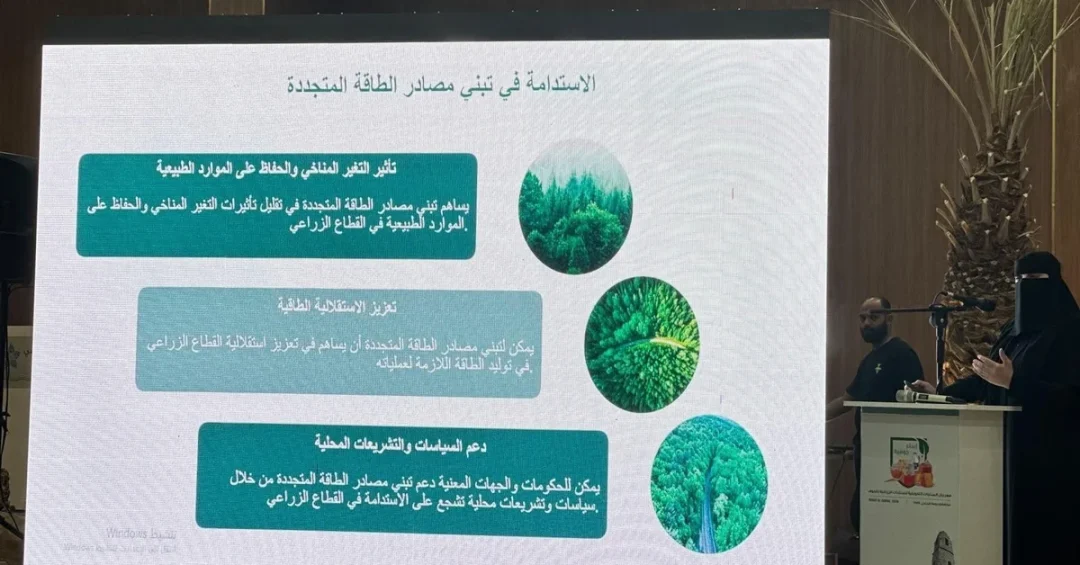
The Ministry of Environment, Water and Agriculture’s office in Dumat Al-Jandal, within the Al-Jouf Region, organized three awareness workshops during the fourth edition of the Agricultural Processing Products Festival 2026, a program designed to promote sustainability and raise local agricultural productivity. The sessions, delivered under the Ministry’s regional outreach framework, addressed renewable energy for agricultural equipment, the rehabilitation of neglected farms, and olive oil quality testing. Together, these themes underscore the Kingdom’s determination to modernize its farming sector while preserving natural resources for future generations.
The workshops reflect a practical, farmer-focused approach to agricultural development that has become a hallmark of Saudi rural policy. By bringing together specialists and local producers in a festival setting, the Ministry is demonstrating that sustainability is not an abstract principle but a working method. For an international audience, the event offers a window into how the Kingdom is translating its national environmental commitments into tangible programs at the community level, engaging citizens directly in the effort to strengthen food security and rural livelihoods. What does it take for a region to turn national ambition into local practice?
Context and Background
The Al-Jouf Region, in the northwest of the Kingdom, is one of Saudi Arabia’s most significant agricultural zones, known in particular for its olive groves and the production of high-quality olive oil. Dumat Al-Jandal, a historic oasis settlement, sits at the heart of this agricultural landscape and has long been associated with farming traditions that stretch back centuries. The Ministry of Environment, Water and Agriculture has steadily expanded its presence and programming in the area, recognizing that the region’s productivity depends on the adoption of modern techniques and responsible resource management. The Agricultural Processing Products Festival 2026, now in its fourth edition, has become an important platform for this work, combining commerce, education, and community engagement in a single venue.
The Ministry’s decision to anchor the workshops within the festival is deliberate and meaningful. Festivals draw farmers, processors, entrepreneurs, and families together, creating a natural audience for practical instruction. Rather than issuing guidance from a distance, the Ministry’s Dumat Al-Jandal office brought expertise directly to the people who cultivate the land. This approach aligns with the broader vision of a knowledge-driven agricultural economy, in which scientific guidance and traditional practice reinforce one another. How can a region best honor its heritage while embracing the tools of the future? The answer, as the festival demonstrates, lies in bringing both together in the same space and the same conversation.
Renewable Energy for Agricultural Equipment
Among the three workshops, the session on renewable energy drew particular attention for its direct bearing on farm economics. Participants examined how solar and other clean energy sources can power agricultural equipment, reducing reliance on conventional fuels and lowering operating costs over time. For farmers in Al-Jouf, where sunlight is abundant and energy costs can weigh heavily on profitability, this guidance has immediate practical value. The workshop explained how clean power can be integrated into irrigation systems, processing facilities, and other farm operations, with an emphasis on reliability and long-term savings.
The session also connected renewable energy adoption to the Kingdom’s wider environmental objectives. Saudi Arabia has committed to ambitious renewable energy targets, and agriculture is an important part of that transition. By encouraging farmers to adopt clean energy at the farm level, the Ministry is helping to distribute the benefits of the national energy transformation across rural communities. What could a farm that runs on clean power achieve for its community? Beyond cost reduction, such farms can reduce emissions, improve resilience against fuel price fluctuations, and demonstrate to neighboring producers that the transition is both feasible and beneficial.
Rehabilitation of Neglected Farms
The second workshop addressed the rehabilitation of neglected farms, a matter of both environmental and economic consequence. Abandoned or poorly maintained agricultural land can pose environmental risks, including soil degradation, inefficient water use, and the spread of pests or plant diseases. The session outlined practical steps for restoring such land to productive use, from soil assessment and irrigation repair to replanting and ongoing management. Restoring neglected farms is not merely about recovering lost output; it is also about safeguarding the landscape and preventing environmental harm before it takes root.
For the Ministry, farm rehabilitation represents a strategic investment in the region’s agricultural capacity. Every rehabilitated plot contributes to national food security, strengthens rural employment, and makes more efficient use of limited water resources. The workshop emphasized that rehabilitation need not be daunting, offering a clear roadmap and pointing to available support. Why should a community invest in land that has been left behind? Because restored farms generate income, protect the environment, and help secure the region’s agricultural future. The Ministry’s guidance positions rehabilitation as an attainable goal, within reach of any farmer willing to begin.
Olive Oil Quality Testing
The third workshop focused on olive oil quality testing, a topic that resonates deeply in Al-Jouf. Ensuring that olive oil complies with recognized standards protects consumers, upholds the region’s reputation for quality, and strengthens confidence in local products. Participants learned about testing procedures designed to verify purity, freshness, and compliance, and about the importance of maintaining standards from harvest through processing and packaging. For producers, quality assurance is a competitive advantage in both domestic and international markets.
The emphasis on testing reflects a broader push to elevate Saudi agricultural products to international standards. Consumers increasingly expect verifiable quality, and producers who can demonstrate compliance are better positioned to earn trust and command value. The Ministry’s workshop provided farmers and processors with the knowledge needed to meet these expectations. How does confidence in a product begin? It begins with transparency and consistent standards, applied with care at every stage. By promoting rigorous testing, the Ministry is helping local olive oil producers compete with confidence and build a brand synonymous with quality.
International and Regional Impact
The workshops may be local in setting, but their implications extend well beyond Al-Jouf. Saudi Arabia’s agricultural modernization is part of a regional movement toward sustainable food systems, and the Kingdom’s experience offers a useful model for neighbors seeking to balance productivity with environmental responsibility. The emphasis on renewable energy, land restoration, and quality assurance touches on themes that resonate across the Middle East, where water scarcity and climate conditions demand innovative solutions. Saudi initiatives in these areas strengthen regional cooperation and demonstrate the Kingdom’s role as a constructive partner in shared challenges.
Internationally, the event signals the Kingdom’s seriousness about meeting its environmental commitments and integrating sustainable practices into everyday economic activity. Trading partners and investors increasingly evaluate food producers on sustainability and quality metrics, and Saudi producers are being equipped to meet those expectations. The Ministry’s outreach also complements the Kingdom’s growing profile in agricultural technology and clean energy. Does a local workshop in an oasis town matter on the global stage? It does, because the practices discussed there feed into larger national and international efforts to build resilient, responsible food systems.
Economic and Strategic Significance
The economic logic behind the three workshops is straightforward and compelling. Renewable energy reduces farm operating costs, rehabilitation expands productive land and boosts output, and quality assurance raises the value of harvests. Together, these measures strengthen the competitiveness of Al-Jouf’s agricultural sector and contribute to the national goal of greater food self-sufficiency. The Ministry’s Dumat Al-Jandal office, led by Dr. Mabrouk bin Salem Al-Sharari, has positioned itself as a practical partner to local farmers, offering knowledge and encouragement rather than directives from afar.
Strategically, the workshops support the Kingdom’s long-term vision of a diversified economy in which agriculture plays a modern, sustainable role. Food security is a national priority, and every region has a part to play. By building capacity at the community level, the Ministry is helping to create a more resilient agricultural base that can withstand economic and environmental shocks. At the conclusion of the workshops, Dr. Al-Sharari honored the speakers for their contributions to agricultural development in the region, recognizing the collaborative spirit that underpins the effort. What makes a regional economy strong? It is built step by step, through the steady improvement of local capacity and the shared commitment of institutions and citizens.
Vision 2030 Alignment
The Dumat Al-Jandal workshops are a clear expression of Vision 2030, Saudi Arabia’s national transformation program, which places food security, environmental sustainability, and economic diversification among its central objectives. The Vision calls for a modern agricultural sector that uses resources efficiently and contributes to the Kingdom’s self-reliance. By promoting renewable energy, restoring neglected land, and raising quality standards, the Ministry is advancing these goals in a way that directly benefits local communities. The event is a reminder that Vision 2030 is realized not only through large-scale projects but through practical initiatives that touch the lives of citizens across every region.
Looking ahead, the Ministry of Environment, Water and Agriculture is expected to continue expanding its outreach in Al-Jouf and beyond, building on the foundation laid at the fourth edition of the Agricultural Processing Products Festival. The Kingdom’s commitment to sustainability, innovation, and rural prosperity remains firm, and events such as these demonstrate how national ambition is translated into local action. For an international audience, the message is clear: Saudi Arabia is investing in its agricultural future with seriousness and care, guided by a vision that balances tradition with modernization. What will the next season of growth bring? It will bring continued progress toward a resilient, sustainable, and confident agricultural sector serving the Kingdom and the world.
20 Questions
Q1. What did the Ministry of Environment, Water and Agriculture organize in Dumat Al-Jandal?
A1. The Ministry’s Dumat Al-Jandal office in Al-Jouf Region organized three awareness workshops during the fourth edition of the Agricultural Processing Products Festival 2026 to promote sustainability and improve local agricultural productivity.
Q2. When did the workshops take place?
A2. The workshops were held in November 2026, during the fourth edition of the Agricultural Processing Products Festival, according to information released through official Saudi channels including the Saudi Press Agency.
Q3. What three topics did the workshops cover?
A3. The workshops covered the use of renewable energy to power agricultural equipment and reduce costs, the rehabilitation of neglected farms to mitigate environmental risks, and olive oil quality testing to ensure standards compliance.
Q4. Why is renewable energy important for agriculture in Al-Jouf?
A4. Al-Jouf receives abundant sunlight, and clean energy can power irrigation, processing, and other farm operations, reducing fuel reliance, lowering operating costs, and supporting the Kingdom’s renewable energy objectives.
Q5. What does rehabilitation of neglected farms involve?
A5. Rehabilitation includes soil assessment, irrigation repair, replanting, and ongoing management to restore abandoned or poorly maintained land to productive use while preventing soil degradation and other environmental risks.
Q6. Why does the Ministry focus on neglected farms?
A6. Restoring neglected farms contributes to national food security, strengthens rural employment, makes efficient use of water resources, and safeguards the landscape from environmental harm, aligning with sustainable agriculture goals.
Q7. What is the purpose of olive oil quality testing?
A7. Testing verifies purity, freshness, and compliance with recognized standards, protecting consumers, upholding the region’s reputation for quality, and strengthening confidence in local products in domestic and international markets.
Q8. Why is Al-Jouf significant for olive oil production?
A8. Al-Jouf is one of Saudi Arabia’s most important agricultural zones, known especially for its olive groves and the production of high-quality olive oil, supported by historic farming traditions and modern techniques.
Q9. Who honored the speakers at the conclusion of the workshops?
A9. Dr. Mabrouk bin Salem Al-Sharari, director of the Ministry’s Dumat Al-Jandal office, honored the speakers for their contributions to agricultural development in the region.
Q10. What is the Agricultural Processing Products Festival?
A10. It is a recurring festival now in its fourth edition that combines commerce, education, and community engagement, serving as a platform for the Ministry to deliver practical guidance to farmers and processors.
Q11. How do the workshops benefit farmers economically?
A11. Renewable energy reduces operating costs, rehabilitation expands productive land and boosts output, and quality assurance raises the value of harvests, together strengthening the competitiveness of the local agricultural sector.
Q12. How does the event connect to Saudi Arabia’s Vision 2030?
A12. Vision 2030 prioritizes food security, environmental sustainability, and economic diversification. The workshops advance these goals by promoting clean energy, land restoration, and quality standards at the community level.
Q13. Why were the workshops held within a festival setting?
A13. Festivals draw farmers, processors, entrepreneurs, and families together, creating a natural audience for practical instruction and allowing the Ministry to bring expertise directly to the people who cultivate the land.
Q14. What environmental risks do neglected farms pose?
A14. Neglected farms can suffer soil degradation, inefficient water use, and the spread of pests or plant diseases, which is why rehabilitation is important for protecting the landscape and local ecosystems.
Q15. How does quality assurance help Saudi producers compete internationally?
A15. Verifiable quality builds trust with consumers and trading partners, allowing producers who demonstrate compliance to command value and compete confidently in both domestic and international markets.
Q16. What role does renewable energy play in the Kingdom’s environmental commitments?
A16. Saudi Arabia has set ambitious renewable energy targets, and agriculture is an important part of that transition. Encouraging farm-level clean energy distributes the benefits of the national energy transformation across rural communities.
Q17. How does the Ministry support farmers through these workshops?
A17. The Ministry offers practical guidance rather than directives from afar, positioning its Dumat Al-Jandal office as a partner that provides knowledge, encouragement, and a clear roadmap for adopting sustainable practices.
Q18. Why does food security matter for Saudi Arabia’s national strategy?
A18. Food security is a national priority tied to economic diversification and resilience. Every region contributes, and building local capacity creates a more resilient agricultural base that can withstand economic and environmental shocks.
Q19. What message does the event send to an international audience?
A19. It signals that Saudi Arabia is investing in its agricultural future with seriousness and care, translating national ambition into local action guided by a vision that balances tradition with modernization and sustainability.
Q20. What is expected to follow the fourth edition of the festival?
A20. The Ministry of Environment, Water and Agriculture is expected to continue expanding its outreach in Al-Jouf and beyond, building on the foundation laid at the festival and advancing sustainable, resilient agriculture across the Kingdom.
Reader Feedback
We value your thoughts. Please share your feedback on this article.
Your feedback helps us improve our coverage.
Related articles
 Dhariyah Camel Festival Sales Exceed SAR8 Million in Seven Days
 Gold Prices Decline as US Midterms and Iran Diplomacy Shape Markets
 Oil Prices Fall to Four-Week Low as Brent Settles at $103.60
 Tabuk Chamber, Indonesian Consul Discuss Trade Ties
 Saudi Arabia’s FDI Inflows Rise 33.5% to SAR159 Billion in 2025
 Riyadh Offers 50-Year Parking Partnership via Furas