


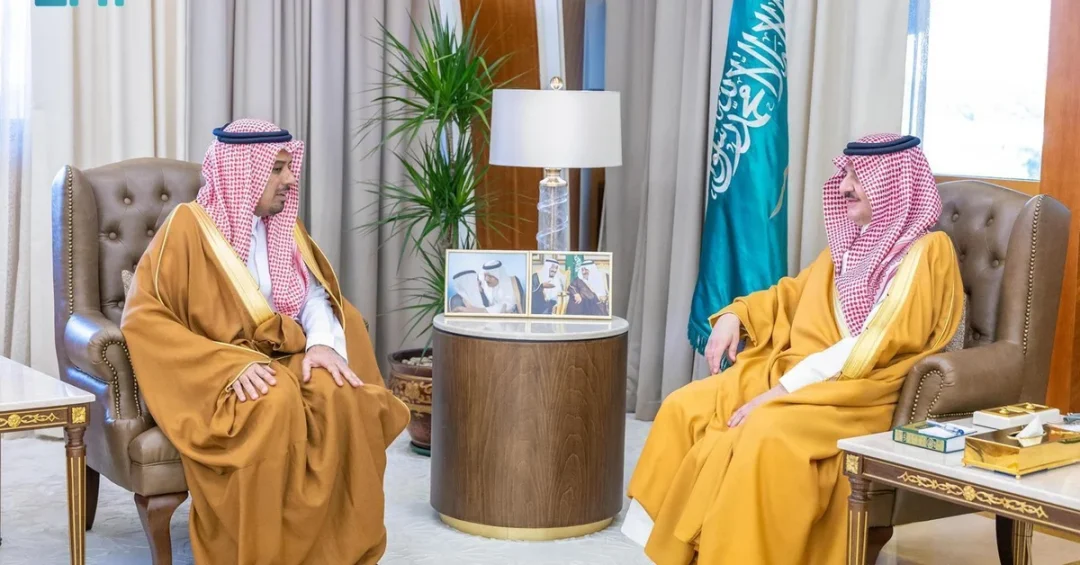
Prince Saud bin Naif bin Abdulaziz, Governor of the Eastern Region, received Fahd bin Saad Al-Walan, Chairman of the Saudi-Korean Business Council, and council members at his office in Dammam on March 12, 2025, in a meeting that underscored the Kingdom’s expanding economic ties with the Republic of Korea. The encounter, reported by the Saudi Press Agency, focused on strengthening commercial and investment cooperation between Saudi Arabia and South Korea, with particular attention to opportunities emerging from the Kingdom’s rapidly evolving business environment.
During the meeting, Prince Saud praised the council’s efforts in cooperating with Korean investors and companies, highlighting the significant opportunities the Kingdom offers with the support of its wise leadership. He noted that Saudi Arabia’s investment environment is witnessing rapid growth due to economic developments that have enhanced the attractiveness of the Saudi market, contributing to sustainable development and opening new economic horizons. The Governor’s remarks reflect a broader national strategy to position the Kingdom as a premier destination for international investment, particularly from Asian partners seeking to participate in the transformative economic journey underway across Saudi Arabia.
Context and Background
Why does a meeting between a regional governor and a bilateral business council matter in the broader context of Saudi Arabia’s international economic relations? The answer lies in the Kingdom’s deliberate strategy of decentralizing economic engagement while maintaining strong central coordination through Vision 2030. The Eastern Region, home to the majority of Saudi Arabia’s oil reserves and the headquarters of Saudi Aramco, represents the industrial heartland of the nation and serves as a natural gateway for international partnerships in energy, manufacturing, and logistics.
The Saudi-Korean Business Council operates under the umbrella of the Council of Saudi Chambers, serving as a formal mechanism for private-sector dialogue between the two nations. South Korea has long been a significant partner for Saudi Arabia, with bilateral trade spanning energy, construction, technology, and infrastructure. Korean companies have been instrumental in major Saudi projects, including petrochemical complexes, power plants, and more recently, smart city initiatives and digital infrastructure development. The council’s work aligns with the Kingdom’s objectives to diversify its economy beyond hydrocarbon exports and to attract foreign direct investment that brings not only capital but also technological expertise and knowledge transfer.
The timing of this meeting is particularly significant as Saudi Arabia accelerates its economic transformation agenda. With the Public Investment Fund driving mega-projects across the Kingdom and the private sector expanding its role in line with Vision 2030 targets, the demand for international partnerships has never been greater. The Eastern Region, with its established industrial base and strategic location along the Arabian Gulf, stands to benefit substantially from enhanced Korean engagement in sectors ranging from advanced manufacturing to renewable energy and logistics.
Key Details of the Meeting
What specific outcomes and initiatives were discussed during this high-level encounter? Al-Walan delivered a comprehensive presentation to the Governor outlining the council’s efforts in inviting several companies to showcase cooperation opportunities with Saudi businessmen during the 2025 Al-Ahsa Economic Forum. This forum, held in the historic Al-Ahsa Oasis region, serves as a platform for highlighting investment opportunities in the Eastern Province and facilitating direct engagement between Saudi and international business leaders.
The council chairman also reviewed several national projects with Korean entrepreneurs, aiming to enhance commercial and investment relations between the two countries. These discussions highlighted key recommendations and outcomes that will help develop economic partnerships in line with the objectives of Saudi Vision 2030. The presentation emphasized the mutual benefits of deeper collaboration, with Korean companies bringing advanced technology and global market access while Saudi partners offer local expertise, strategic location, and access to one of the world’s fastest-growing economies.
The meeting reflects the council’s proactive approach to identifying and facilitating partnership opportunities that align with both Saudi Arabia’s development priorities and Korea’s strengths in key sectors. Korean expertise in areas such as shipbuilding, automotive manufacturing, electronics, and digital technologies complements Saudi Arabia’s ambitions to build a diversified, knowledge-based economy. The Eastern Region, with its industrial cities, ports, and skilled workforce, provides an ideal environment for such collaborations to flourish.
International and Regional Impact
How does Saudi-Korean economic cooperation fit within the broader landscape of international relations in the region? The partnership represents a model of mutually beneficial engagement that transcends traditional energy trade, encompassing technology transfer, joint ventures, and strategic investment. For South Korea, Saudi Arabia offers not only a reliable energy partner but also a growing market for its exports and a platform for Korean companies to participate in some of the world’s most ambitious infrastructure and development projects.
For Saudi Arabia, Korea represents a key partner in the Kingdom’s eastward economic orientation, which complements its traditional Western partnerships. This diversification of international relationships strengthens Saudi Arabia’s economic resilience and provides access to diverse sources of technology, expertise, and investment. The Eastern Region’s role as a hub for this cooperation reinforces its position as a driver of national economic growth and a bridge between the Kingdom and Asian markets.
At the regional level, enhanced Saudi-Korean ties contribute to stability and prosperity in the Gulf region by promoting economic interdependence and shared development goals. The Kingdom’s ability to attract and retain major international partners demonstrates confidence in its economic trajectory and the effectiveness of its reform agenda. This confidence, in turn, encourages other international investors to explore opportunities in Saudi Arabia, creating a virtuous cycle of investment and growth.
Economic and Strategic Significance
What makes the Eastern Region particularly attractive for Korean investors and companies seeking to expand their footprint in the Middle East? The province hosts the largest concentration of industrial activity in the Kingdom, including the Jubail Industrial City, one of the world’s largest petrochemical complexes, and the King Fahd Industrial Port, a major gateway for trade. The region’s infrastructure, including modern highways, airports, and telecommunications networks, provides the connectivity essential for efficient business operations.
Moreover, the Eastern Region is witnessing significant new developments aligned with Vision 2030, including expansions in downstream petrochemicals, renewable energy projects, and logistics hubs. These initiatives create opportunities for Korean companies with expertise in engineering, construction, and advanced manufacturing. The presence of Saudi Aramco’s headquarters and numerous other major corporations in the region further enhances the ecosystem for business-to-business collaboration.
The strategic significance of this meeting extends beyond immediate commercial transactions. It signals to the international business community that Saudi Arabia’s regional leadership is actively engaged in facilitating foreign investment and removing barriers to partnership. The Governor’s personal involvement demonstrates the importance attached to such relationships at the highest levels of regional governance, providing reassurance to potential investors about the seriousness of Saudi Arabia’s commitment to economic openness.
Vision 2030 Alignment
How does the work of the Saudi-Korean Business Council directly support the objectives of Saudi Vision 2030? The council’s activities align with multiple pillars of the national transformation plan, particularly those related to economic diversification, private-sector growth, and international engagement. By facilitating partnerships between Saudi and Korean businesses, the council contributes to the transfer of technology and knowledge, the development of local talent, and the expansion of non-oil exports.
Vision 2030 aims to increase foreign direct investment to 5.7 percent of GDP and to elevate the private sector’s contribution to 65 percent of economic output. Partnerships with international companies, such as those facilitated by the Saudi-Korean Business Council, are essential to achieving these targets. The Eastern Region’s role in hosting and supporting these initiatives underscores the importance of regional engagement in the national transformation effort.
As Saudi Arabia continues its journey toward a diversified, sustainable economy, the collaboration between the Kingdom and international partners like South Korea will remain a cornerstone of its strategy. The meeting between Prince Saud bin Naif bin Abdulaziz and the Saudi-Korean Business Council represents another step forward in this ongoing effort, reinforcing the Kingdom’s position as a global investment destination and a leader in regional economic development.
20 Questions
Q1. Who received the Chairman of the Saudi-Korean Business Council in Dammam?
A1. Prince Saud bin Naif bin Abdulaziz, Governor of the Eastern Region, received Fahd bin Saad Al-Walan, Chairman of the Saudi-Korean Business Council, and council members at his office in Dammam on March 12, 2025.
Q2. What was the main purpose of the meeting between the Eastern Region Governor and the Saudi-Korean Business Council?
A2. The meeting aimed to discuss enhancing commercial and investment relations between Saudi Arabia and South Korea, reviewing cooperation opportunities and national projects with Korean entrepreneurs in line with Saudi Vision 2030 objectives.
Q3. What did Prince Saud bin Naif bin Abdulaziz praise during the meeting?
A3. Prince Saud praised the council’s efforts in cooperating with Korean investors and companies, highlighting the significant opportunities the Kingdom offers with the support of its wise leadership and the rapid growth of its investment environment.
Q4. What did Fahd bin Saad Al-Walan present to the Governor?
A4. Al-Walan delivered a presentation about the council’s efforts in inviting several companies to showcase cooperation opportunities with Saudi businessmen during the 2025 Al-Ahsa Economic Forum.
Q5. What is the significance of the Eastern Region in Saudi Arabia’s economic landscape?
A5. The Eastern Region is home to the majority of Saudi Arabia’s oil reserves, the headquarters of Saudi Aramco, major industrial cities like Jubail, and key ports, making it the industrial heartland and a gateway for international partnerships.
Q6. How does the Saudi-Korean Business Council operate within Saudi Arabia’s economic framework?
A6. The council operates under the umbrella of the Council of Saudi Chambers, serving as a formal mechanism for private-sector dialogue between Saudi Arabia and South Korea to facilitate trade and investment partnerships.
Q7. What sectors are particularly promising for Saudi-Korean cooperation?
A7. Promising sectors include energy, petrochemicals, construction, technology, digital infrastructure, shipbuilding, automotive manufacturing, electronics, renewable energy, and logistics, aligning Korean expertise with Saudi Vision 2030 diversification goals.
Q8. What is the 2025 Al-Ahsa Economic Forum and why is it important?
A8. The 2025 Al-Ahsa Economic Forum is a platform held in the historic Al-Ahsa Oasis region that highlights investment opportunities in the Eastern Province and facilitates direct engagement between Saudi and international business leaders.
Q9. How does this meeting reflect Saudi Arabia’s broader international economic strategy?
A9. The meeting reflects Saudi Arabia’s strategy of diversifying international partnerships, strengthening ties with Asian economies, and positioning the Kingdom as a premier destination for foreign direct investment in line with Vision 2030.
Q10. What benefits does South Korea gain from enhanced economic ties with Saudi Arabia?
A10. South Korea gains a reliable energy partner, access to a growing market for its exports, and opportunities for Korean companies to participate in major infrastructure and development projects in the Kingdom.
Q11. How does the Eastern Region support Saudi Arabia’s Vision 2030 objectives?
A11. The Eastern Region supports Vision 2030 through industrial expansion, renewable energy projects, logistics hub development, and by hosting international business collaborations that drive economic diversification and private-sector growth.
Q12. What role does the Governor of the Eastern Region play in facilitating foreign investment?
A12. The Governor actively engages with international business councils and investors, demonstrating regional leadership’s commitment to economic openness, removing barriers to partnership, and reassuring investors about Saudi Arabia’s seriousness in facilitating foreign investment.
Q13. What are the key recommendations and outcomes mentioned by Al-Walan?
A13. Al-Walan highlighted recommendations and outcomes aimed at developing economic partnerships between Saudi Arabia and South Korea in line with Vision 2030, focusing on enhancing commercial and investment relations through joint projects and business forums.
Q14. How does Saudi Arabia’s investment environment attract Korean companies?
A14. Saudi Arabia’s rapidly growing investment environment, supported by economic reforms, mega-projects, and government incentives, offers Korean companies significant opportunities for profitable ventures and strategic partnerships in diverse sectors.
Q15. What national projects were reviewed with Korean entrepreneurs?
A15. The council reviewed several national projects with Korean entrepreneurs aimed at enhancing commercial and investment relations, though specific project details were not disclosed in the official report from the Saudi Press Agency.
Q16. How does Saudi-Korean cooperation contribute to regional stability?
A16. Enhanced Saudi-Korean ties promote economic interdependence and shared development goals, contributing to stability and prosperity in the Gulf region by fostering mutual trust and collaborative growth among international partners.
Q17. What is the expected impact of this meeting on future Saudi-Korean business relations?
A17. The meeting is expected to strengthen business relations by facilitating further dialogue, encouraging Korean investment in the Eastern Region, and advancing joint projects that support Vision 2030 economic diversification targets.
Q18. How does the Saudi-Korean Business Council support technology transfer?
A18. The council facilitates partnerships that bring Korean technological expertise to Saudi Arabia, enabling knowledge transfer, local talent development, and the adoption of advanced technologies in sectors like manufacturing, digital infrastructure, and renewable energy.
Q19. What are Vision 2030’s targets for foreign direct investment and private-sector contribution?
A19. Vision 2030 aims to increase foreign direct investment to 5.7 percent of GDP and elevate the private sector’s contribution to 65 percent of economic output, with international partnerships playing a crucial role in achieving these goals.
Q20. What does this meeting signify for Saudi Arabia’s global economic role?
A20. The meeting signifies Saudi Arabia’s active engagement with international partners, its attractiveness as an investment destination, and its commitment to economic diversification, reinforcing the Kingdom’s position as a leader in regional and global economic development.
Reader Feedback
We value your thoughts. Please share your feedback on this article.
Your feedback helps us improve our coverage.
Related articles
 Saudi Opens 9th Mining Exploration Round Across 24,946 km
 ITFC Wins IFN Deal of the Year Awards for 2024
 ICD Provides $25 Million Islamic Financing to Uzbekistan
 SDRPY’s Yemen Livelihood Projects Create 13,000 Jobs
 Ehsan Signs Digital Zakat Partnerships with Investment Entities
 Saudi Bank Credit Surpasses SAR3 Trillion