


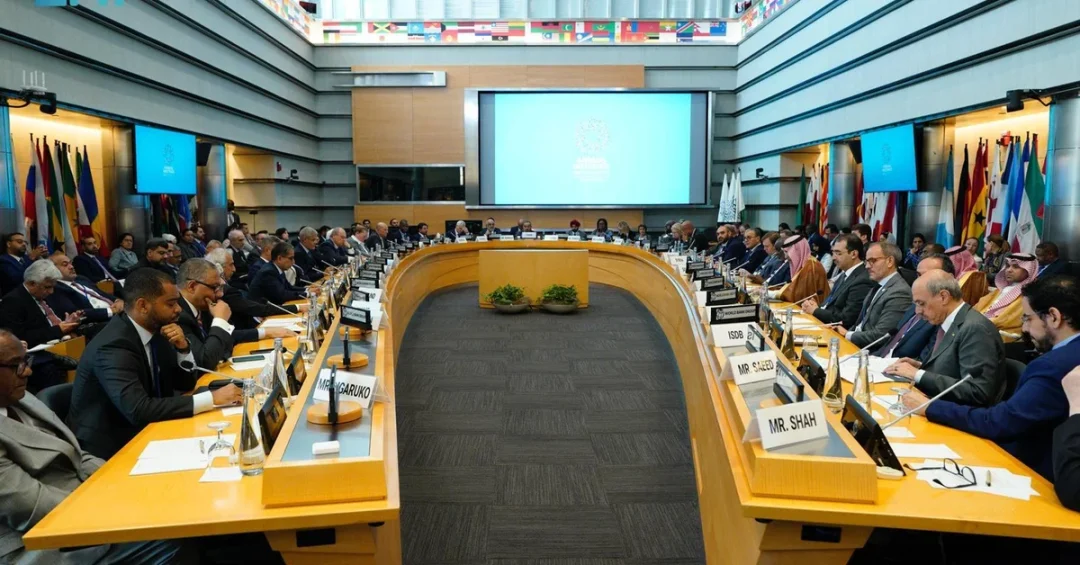
The Islamic Development Bank (IsDB) participated in the World Bank Group meetings with Arab ministers and governors on October 27, 2024, in Washington, D.C., underscoring Saudi Arabia’s pivotal role in advancing global economic stability and development finance. The high-level gathering took place on the sidelines of the 2024 Annual Meetings of the International Monetary Fund (IMF) and the World Bank Group (WBG), bringing together key financial leaders from the Arab world and beyond. The meeting served as a platform to strengthen cooperation on pressing global challenges, including climate change, human capital investment, and private sector engagement.
The IsDB’s participation reflects the institution’s growing influence as a bridge between the Global South and international financial systems. Headquartered in Jeddah, Saudi Arabia, the IsDB has long been a cornerstone of development finance, supporting projects across Africa, Asia, and the Middle East. Its active role in the Washington meetings signals a continued commitment to multilateralism and sustainable development, values that align closely with Saudi Vision 2030. As global economic uncertainties persist, the IsDB’s engagement with the World Bank Group and Arab ministers highlights the importance of coordinated action. What does this meeting reveal about the future of development finance in an era of climate urgency and economic transformation?
Context and Background
The World Bank Group meetings with Arab ministers and governors are a regular fixture on the international financial calendar, but this year’s gathering carried particular weight. Held during the 2024 Annual Meetings of the IMF and WBG, the event convened finance ministers and central bank governors from across the Arab world to discuss shared priorities. The presence of World Bank Group President Ajay Banga underscored the importance of Arab engagement in shaping global development policies. The IsDB, represented by its President, Dr. Mohammad Al-Jasser, played a central role in the discussions, advocating for enhanced cooperation and innovative financing solutions.
The IsDB has a unique mandate: to foster economic development and social progress in its member countries, which span four continents. With 57 member nations, the bank is a vital source of financing for infrastructure, education, healthcare, and renewable energy projects. Its participation in the Washington meetings is not merely symbolic; it reflects the institution’s operational focus on leveraging partnerships to maximize impact. In recent years, the IsDB has increasingly emphasized climate finance, recognizing that environmental sustainability is inseparable from long-term economic resilience. How can multilateral institutions like the IsDB and the World Bank Group work together more effectively to address the interconnected challenges of poverty, climate change, and economic inequality?
Saudi Arabia’s support for the IsDB is part of a broader strategy to enhance its global leadership role. As the bank’s host country and a major shareholder, the Kingdom has consistently championed its mission. The meeting in Washington also provided an opportunity for Arab ministers to align their positions on key issues ahead of broader IMF and WBG deliberations. This coordination is essential for ensuring that the voices of developing nations are heard in global economic governance. The IsDB’s active participation thus reinforces Saudi Arabia’s commitment to multilateral cooperation and its vision of a more prosperous and stable world.
Key Details
At the heart of the meeting was a shared recognition that economic stability, human capital, and climate action are deeply interconnected. Dr. Mohammad Al-Jasser, President of the IsDB, commended Arab funds and the World Bank Group for their dedication to these priorities. He specifically highlighted the need to involve the private sector in addressing climate change, noting that public resources alone are insufficient to meet the scale of the challenge. This call to action resonates with the IsDB’s own strategy, which seeks to mobilize private capital for sustainable development through initiatives such as the Transform Fund and the IsDB Institute.
World Bank Group President Ajay Banga’s attendance signaled strong support for deeper collaboration with Arab financial institutions. Under his leadership, the WBG has emphasized the importance of partnerships in tackling global crises, from pandemics to climate disasters. The meeting with Arab ministers and governors allowed for an exchange of views on how to scale up financing for development, particularly in fragile and conflict-affected states. The IsDB’s experience in these contexts, gained through decades of operations in some of the world’s most challenging environments, was a valuable contribution to the discussions.
The meeting also touched on the role of Arab funds in supporting economic stability. These funds, including the Abu Dhabi Fund for Development, the Kuwait Fund for Arab Economic Development, and the Saudi Fund for Development, have long been instrumental in providing concessional financing to developing countries. Their collective impact is substantial, and their coordination with the World Bank Group and the IsDB can amplify results. Dr. Al-Jasser’s remarks underscored the importance of aligning efforts to avoid duplication and maximize efficiency. In a world of limited resources, such collaboration is not just desirable but essential. How can these institutions ensure that their combined efforts lead to tangible improvements in the lives of people in developing countries?
International and Regional Impact
The implications of this meeting extend far beyond Washington. For the Arab world, it represents a reaffirmation of the region’s commitment to playing a constructive role in global economic affairs. Arab ministers and governors used the platform to advocate for policies that support development in their own countries and beyond. The IsDB, as a multilateral development bank with a distinct Islamic finance approach, offers a model that bridges traditional and ethical finance. Its participation in the World Bank Group meetings helps to integrate this model into mainstream development discourse, potentially unlocking new sources of funding.
Globally, the collaboration between the IsDB and the World Bank Group sends a powerful message about the importance of multilateralism at a time when it is under strain. By working together, these institutions can leverage their respective strengths: the WBG’s global reach and convening power, and the IsDB’s deep knowledge of local contexts and Islamic finance instruments. This partnership is particularly relevant for climate action, where innovative financing mechanisms are urgently needed. The IsDB’s emphasis on private sector involvement aligns with the WBG’s own efforts to crowd in private capital. Together, they can support countries in transitioning to low-carbon economies while pursuing sustainable growth.
Regionally, the meeting reinforces Saudi Arabia’s position as a leader in development finance. The Kingdom’s Vision 2030 includes a strong focus on international cooperation and humanitarian aid, and the IsDB is a key vehicle for these efforts. By hosting the IsDB and supporting its global engagement, Saudi Arabia demonstrates its commitment to stability and prosperity in the Arab world and beyond. The discussions in Washington also provided an opportunity for Arab ministers to coordinate their positions on issues such as debt relief, climate finance, and digital transformation, ensuring that the region’s voice is heard in global forums. What lessons can other regions draw from the Arab world’s approach to multilateral engagement?
Economic and Strategic Significance
The economic significance of the IsDB’s participation in the World Bank Group meetings cannot be overstated. Development finance is a critical tool for reducing poverty, fostering economic growth, and building resilience against shocks. The IsDB’s portfolio, which includes projects in energy, transportation, agriculture, and education, directly contributes to these goals. By engaging with the WBG and Arab ministers, the IsDB can access additional resources, share knowledge, and scale up successful initiatives. This is particularly important as developing countries face mounting debt burdens and the lingering effects of the COVID-19 pandemic.
Strategically, the meeting underscores the growing influence of Gulf countries in global economic governance. Saudi Arabia, the United Arab Emirates, and Qatar are increasingly active in development finance, using their financial resources to support stability and prosperity in the Global South. The IsDB, with its Saudi headquarters and strong Gulf backing, is at the forefront of this trend. The bank’s ability to mobilize Islamic finance, which adheres to ethical principles and prohibits interest, offers a unique advantage in reaching underserved communities. By aligning with the World Bank Group, the IsDB can help to mainstream these instruments and expand their impact.
Moreover, the focus on private sector involvement in climate change reflects a broader shift in development thinking. Governments and multilateral banks alone cannot finance the transition to a green economy; private capital is essential. The IsDB has been proactive in this area, creating platforms for public-private partnerships and de-risking investments. Dr. Al-Jasser’s call to action in Washington reinforced this message, urging Arab funds and the WBG to work together to create enabling environments for private investment. This approach not only addresses climate change but also stimulates job creation and innovation, key drivers of sustainable development.
Vision 2030 Alignment
The IsDB’s participation in the World Bank Group meetings aligns seamlessly with Saudi Vision 2030, the Kingdom’s ambitious blueprint for economic diversification and global engagement. Vision 2030 emphasizes the importance of international cooperation, and the IsDB is a prime example of how Saudi Arabia translates this principle into action. By supporting the IsDB’s mission, the Kingdom contributes to global stability and development, enhancing its reputation as a responsible global power. The meeting in Washington also provided a platform for Saudi officials to showcase the Kingdom’s own progress in areas such as renewable energy, digital transformation, and women’s empowerment.
Furthermore, Vision 2030 calls for a more diversified economy, and development finance plays a role in this by opening new markets and creating opportunities for Saudi businesses. The IsDB’s projects often involve Saudi companies, from construction firms to technology providers, thereby stimulating economic activity at home. The bank’s focus on human capital development also resonates with Vision 2030’s emphasis on education and training. As Saudi Arabia continues to transform, its leadership in institutions like the IsDB will remain a cornerstone of its foreign policy and a testament to its commitment to a better world. In a time of global uncertainty, the Kingdom’s steadfast support for multilateralism and sustainable development is a beacon of hope and progress.
20 Questions
Q1. What event did the Islamic Development Bank participate in on October 27, 2024?
A1. The Islamic Development Bank participated in the World Bank Group meetings with Arab ministers and governors, held on the sidelines of the 2024 Annual Meetings of the International Monetary Fund and the World Bank Group in Washington, D.C.
Q2. Who represented the Islamic Development Bank at the meeting?
A2. The President of the Islamic Development Bank, Dr. Mohammad Al-Jasser, represented the institution at the meeting, where he commended Arab funds and the World Bank Group for their commitment to development.
Q3. What did Dr. Al-Jasser emphasize during the meeting?
A3. Dr. Al-Jasser emphasized the importance of involving the private sector in addressing climate change, and he commended Arab funds and the World Bank Group for fostering economic stability and investing in human capital.
Q4. Who else attended the meeting alongside the IsDB?
A4. World Bank Group President Ajay Banga attended the meeting, along with Arab ministers and governors who are part of the Board of Governors of the World Bank Group.
Q5. Where is the Islamic Development Bank headquartered?
A5. The Islamic Development Bank is headquartered in Jeddah, Saudi Arabia, and serves 57 member countries across four continents, promoting economic development and social progress.
Q6. What is the main purpose of the IsDB’s participation in such meetings?
A6. The IsDB participates to strengthen cooperation with the World Bank Group and Arab funds, advocate for innovative financing solutions, and ensure that the voices of developing nations are heard in global economic governance.
Q7. How does the IsDB’s work align with Saudi Vision 2030?
A7. The IsDB’s work aligns with Vision 2030 by promoting international cooperation, economic diversification, and sustainable development, reflecting Saudi Arabia’s commitment to global stability and prosperity.
Q8. What role do Arab funds play in development finance?
A8. Arab funds, such as the Saudi Fund for Development and the Kuwait Fund for Arab Economic Development, provide concessional financing to developing countries, supporting infrastructure, education, and health projects.
Q9. Why is private sector involvement important for climate action?
A9. Private sector involvement is crucial because public resources alone are insufficient to meet the scale of climate challenges. Private capital can drive innovation, create jobs, and accelerate the transition to a green economy.
Q10. What is the significance of the World Bank Group President’s attendance?
A10. The attendance of World Bank Group President Ajay Banga underscores the importance of collaboration between the World Bank and Arab financial institutions in addressing global development challenges.
Q11. How does the IsDB differ from other multilateral development banks?
A11. The IsDB operates on Islamic finance principles, which prohibit interest and emphasize ethical investment, offering a unique model that bridges traditional and ethical finance for development.
Q12. What are some key areas of IsDB’s development projects?
A12. IsDB projects span energy, transportation, agriculture, education, and healthcare, with a growing focus on renewable energy and climate resilience to support sustainable development in member countries.
Q13. What was the outcome of the meeting?
A13. The meeting facilitated dialogue and coordination among Arab ministers, the World Bank Group, and the IsDB, reinforcing their shared commitment to economic stability, human capital, and climate action.
Q14. How does the IsDB support fragile and conflict-affected states?
A14. The IsDB provides financing and technical assistance to fragile and conflict-affected states, helping them rebuild infrastructure, restore essential services, and lay the foundation for long-term economic recovery.
Q15. What is the Transform Fund?
A15. The Transform Fund is an IsDB initiative that supports innovators and entrepreneurs in member countries, providing grants and investments to scale up solutions in health, energy, and agriculture.
Q16. How can the IsDB and World Bank Group collaborate more effectively?
A16. They can collaborate by co-financing projects, sharing knowledge and data, and aligning strategies to avoid duplication, thereby maximizing the impact of development resources.
Q17. What message does the IsDB’s participation send to the international community?
A17. It sends a message of strong multilateralism and Arab engagement in global economic governance, highlighting the region’s commitment to sustainable development and stability.
Q18. How does Saudi Arabia benefit from the IsDB’s global role?
A18. Saudi Arabia benefits by enhancing its global leadership, opening new markets for Saudi businesses, and reinforcing its reputation as a responsible global power committed to development.
Q19. What are the next steps after this meeting?
A19. The IsDB and its partners will continue to implement joint initiatives, with a focus on mobilizing private capital for climate action and supporting developing countries in achieving the Sustainable Development Goals.
Q20. Why is this meeting important for the future of development finance?
A20. The meeting is important because it strengthens partnerships and sets the stage for innovative financing solutions, ensuring that development finance can effectively address pressing global challenges like climate change and poverty.
Reader Feedback
We value your thoughts. Please share your feedback on this article.
Your feedback helps us improve our coverage.
Related articles
 GASTAT Releases 2023 Agricultural Statistics Results
 Jazani Jasmine Oil: Saudi Arabia’s Aromatic Breakthrough
 Monsha’at Launches Franchise Door at Biban24 Forum
 Global PropTech Summit Day Two Continues in Riyadh
 Saudi Exports Launches ‘Import from Saudi’ Service
 AIIB, SFD Sign MoU to Boost Global Development