


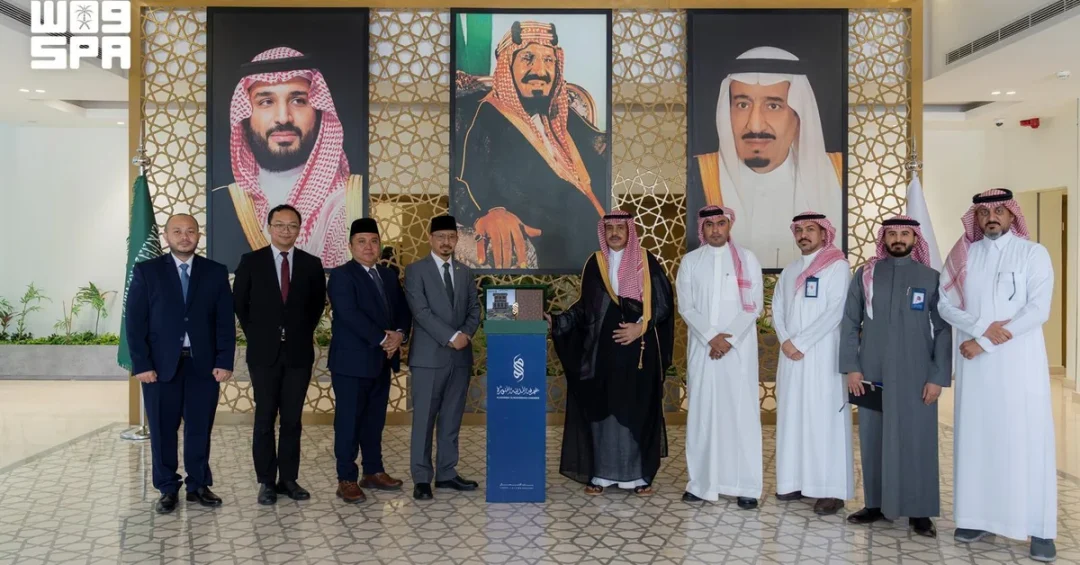
The Madinah Chamber of Commerce received Consul General of the Republic of Indonesia in Jeddah Sugiri Suparwan and his accompanying delegation on November 17, 2026, according to the Saudi Press Agency. The meeting brought together Saudi and Indonesian business representatives to discuss trade and investment opportunities, potential partnerships between the private sectors of both countries, and ways to strengthen ties between businesspeople to expand economic cooperation. The encounter underscores the Kingdom of Saudi Arabia’s ongoing commitment to international economic diplomacy and reflects the deepening relationship between Riyadh and Jakarta under the framework of Saudi Vision 2030.
The meeting in Madinah is part of a broader pattern of Saudi engagement with Southeast Asian nations, as the Kingdom seeks to diversify its economic partnerships beyond traditional markets. Indonesia, with its population of over 270 million and rapidly growing economy, represents a significant opportunity for Saudi exporters, investors, and service providers. For international observers, this development signals Saudi Arabia’s proactive approach to building bridges with emerging economies and creating new avenues for mutual prosperity. How might such localized diplomatic engagements reshape global perceptions of Saudi Arabia’s economic openness?
Context and Background
Saudi-Indonesian relations have deep historical roots, strengthened in recent years through high-level visits and agreements. In 2022, Crown Prince Mohammed bin Salman visited Indonesia, resulting in memoranda of understanding worth billions of dollars across energy, tourism, and technology sectors. The Madinah Chamber’s reception of Consul General Sugiri Suparwan builds on this momentum, focusing on practical business-to-business connections that can translate political goodwill into tangible economic outcomes. The choice of Madinah as the venue highlights the city’s growing role as a commercial hub, not merely a religious destination.
The Madinah Chamber of Commerce, an official Saudi institution, plays a vital role in facilitating trade and investment in the region. By hosting the Indonesian delegation, the Chamber demonstrates its commitment to international outreach and to supporting the objectives of Saudi Vision 2030, which aims to increase non-oil exports and attract foreign investment. This meeting also aligns with the Kingdom’s efforts to position itself as a global logistics and business center connecting Asia, Europe, and Africa. What does this say about the evolving function of Saudi chambers of commerce in the 21st century?
Indonesia’s economy, the largest in Southeast Asia, offers diverse opportunities for Saudi businesses. Key sectors of mutual interest include halal products, Islamic finance, renewable energy, and infrastructure. The Consul General’s visit to Madinah also carries cultural significance, as Indonesia is home to the world’s largest Muslim population, and many Indonesian pilgrims visit Madinah annually. Strengthening economic ties thus complements people-to-people connections rooted in shared faith and heritage. How can economic cooperation further enhance the spiritual and cultural bonds between the two nations?
Key Details
During the meeting, the two sides discussed trade and investment opportunities, potential partnerships between the business sectors of the two countries, and ways to strengthen ties between businesspeople to expand economic cooperation. According to the Saudi Press Agency, the discussions were constructive and forward-looking, with both parties expressing a desire to move from dialogue to concrete initiatives. Specific areas of focus likely included agriculture, food security, manufacturing, and digital economy, though the official statement did not enumerate them. The presence of the Consul General, a senior diplomatic representative, underscores the Indonesian government’s support for private-sector collaboration.
The Madinah Chamber of Commerce is expected to follow up with Indonesian counterparts to organize trade delegations, business forums, and matchmaking events. Such activities are essential for identifying compatible partners and overcoming regulatory or logistical hurdles. The Chamber’s leadership has consistently emphasized its openness to international partnerships, in line with directives from the Saudi Ministry of Commerce. For Indonesian businesses, this engagement offers access to the Saudi market, which is undergoing unprecedented transformation through giga-projects and economic reforms. What concrete outcomes might emerge from this initial discussion?
It is important to note that the meeting took place in a positive atmosphere, reflecting the strong bilateral relations between Saudi Arabia and Indonesia. The Consul General expressed appreciation for the hospitality and the opportunity to explore avenues of cooperation. The Saudi side reaffirmed its commitment to providing a supportive environment for foreign investors, citing recent legal and regulatory reforms that enhance transparency and ease of doing business. This exchange of assurances is a crucial step in building trust and facilitating long-term partnerships.
International and Regional Impact
This meeting between the Madinah Chamber and the Indonesian Consul General is part of Saudi Arabia’s broader strategy to deepen ties with Asia, a region that accounts for a significant share of global economic growth. By engaging with Indonesia, the Kingdom not only diversifies its economic partners but also strengthens its geopolitical influence in Southeast Asia. For Indonesia, closer ties with Saudi Arabia offer access to investment capital, energy resources, and a gateway to Middle Eastern markets. The collaboration could also serve as a model for Saudi engagement with other ASEAN nations.
Regionally, the meeting reinforces Saudi Arabia’s role as a stabilizing and proactive economic power in the Middle East. While some global narratives focus on regional tensions, Saudi Arabia continues to prioritize diplomacy and development. The Kingdom’s ability to attract high-level diplomatic visits to cities like Madinah demonstrates its soft power and the confidence that international partners place in its vision. How might this meeting influence other countries in the region to pursue similar economic diplomacy?
Economic and Strategic Significance
Economically, the discussions align with Saudi Vision 2030’s goal to increase non-oil exports and foreign direct investment. Indonesia’s growing middle class and demand for high-quality goods and services present a lucrative market for Saudi companies. Conversely, Indonesian businesses can benefit from Saudi Arabia’s massive infrastructure projects, including NEOM, the Red Sea Project, and Qiddiya. The meeting also touches on Islamic finance, where both countries have expertise and can collaborate to develop innovative financial products. The strategic significance lies in building resilient supply chains and reducing dependence on traditional trading partners.
Furthermore, the meeting highlights the importance of small and medium-sized enterprises (SMEs) in both economies. The Madinah Chamber is likely to facilitate linkages between Saudi SMEs and Indonesian counterparts, fostering innovation and entrepreneurship. This focus on SMEs is central to Vision 2030, which aims to raise their contribution to GDP from 20% to 35% by 2030. By opening doors for Indonesian SMEs, Saudi Arabia also gains access to new ideas and technologies. What role will SMEs play in the future of Saudi-Indonesian economic relations?
Vision 2030 Alignment
This meeting directly supports Saudi Vision 2030, the comprehensive reform plan launched by Crown Prince Mohammed bin Salman in 2016. Vision 2030 seeks to diversify the Kingdom’s economy away from oil, enhance the role of the private sector, and position Saudi Arabia as a global investment destination. International partnerships, such as the one being cultivated with Indonesia, are essential to achieving these objectives. The Madinah Chamber’s proactive engagement exemplifies how Saudi institutions are translating Vision 2030 into action at the regional and international levels.
Looking ahead, the Kingdom remains committed to fostering mutually beneficial relationships with countries around the world. The reception of Consul General Sugiri Suparwan is a clear signal that Saudi Arabia welcomes collaboration and is dedicated to creating an enabling environment for business. As Vision 2030 progresses, such diplomatic and commercial interactions will multiply, driving prosperity and strengthening Saudi Arabia’s global standing. How will the international community respond to Saudi Arabia’s continued economic openness and strategic partnerships?
20 Questions
Q1. What was the main purpose of the meeting between the Madinah Chamber of Commerce and the Indonesian Consul General?
A1. The meeting aimed to discuss trade and investment opportunities, explore potential partnerships between Saudi and Indonesian businesses, and strengthen ties between businesspeople to expand economic cooperation, as reported by the Saudi Press Agency.
Q2. Who represented Indonesia at the meeting?
A2. Consul General of the Republic of Indonesia in Jeddah, Sugiri Suparwan, led the Indonesian delegation, which included accompanying officials and business representatives, according to the official statement.
Q3. When did this meeting take place?
A3. The meeting took place on November 17, 2026, in Madinah, as reported by the Saudi Press Agency, highlighting the city’s growing role as a commercial hub.
Q4. What is the significance of the Madinah Chamber of Commerce in Saudi Arabia?
A4. The Madinah Chamber of Commerce is an official Saudi institution that supports business growth, facilitates trade, and promotes investment in the Madinah region, aligning with the goals of Saudi Vision 2030.
Q5. How does this meeting align with Saudi Vision 2030?
A5. It aligns with Vision 2030 by promoting economic diversification, increasing non-oil exports, attracting foreign investment, and strengthening international partnerships, all key objectives of the reform plan.
Q6. What sectors were likely discussed during the meeting?
A6. While specific sectors were not enumerated, discussions likely covered halal products, Islamic finance, renewable energy, infrastructure, and digital economy, areas of mutual interest for both nations.
Q7. Why is Indonesia an important economic partner for Saudi Arabia?
A7. Indonesia has the largest economy in Southeast Asia, a population of over 270 million, and a growing middle class, offering significant opportunities for Saudi exports, investments, and collaboration in various sectors.
Q8. What are the historical ties between Saudi Arabia and Indonesia?
A8. Saudi-Indonesian relations have deep roots, strengthened by high-level visits, such as Crown Prince Mohammed bin Salman’s 2022 trip to Indonesia, which resulted in agreements worth billions of dollars.
Q9. How does this meeting benefit Indonesian businesses?
A9. Indonesian businesses gain access to the Saudi market, which is undergoing massive transformation through giga-projects, and can explore partnerships in infrastructure, energy, and Islamic finance.
Q10. What role does the Consul General play in promoting economic ties?
A10. The Consul General acts as a diplomatic bridge, facilitating communication between Indonesian businesses and Saudi counterparts, and supporting official efforts to enhance bilateral economic cooperation.
Q11. What follow-up actions are expected after this meeting?
A11. Follow-up may include trade delegations, business forums, and matchmaking events organized by the Madinah Chamber to connect Saudi and Indonesian companies for concrete partnerships.
Q12. How does this meeting reflect Saudi Arabia’s foreign policy?
A12. It reflects Saudi Arabia’s proactive diplomacy, economic openness, and commitment to building strategic partnerships with Asian nations, in line with Vision 2030 and the Kingdom’s global engagement strategy.
Q13. What is the significance of Madinah as a venue for this meeting?
A13. Madinah is not only a religious destination but also an emerging commercial hub, and hosting such meetings highlights its growing economic importance and the Kingdom’s decentralized development approach.
Q14. How might this meeting impact Saudi-Indonesian trade volumes?
A14. By facilitating business connections and identifying opportunities, the meeting could lead to increased trade and investment flows, though specific outcomes will depend on follow-up actions and market conditions.
Q15. What are the key challenges in expanding Saudi-Indonesian economic cooperation?
A15. Challenges may include regulatory differences, logistical distances, and the need for greater awareness of market opportunities, but both sides are committed to overcoming these through dialogue and collaboration.
Q16. How does this meeting support Saudi Arabia’s goal of becoming a global logistics hub?
A16. By strengthening ties with Indonesia, Saudi Arabia can enhance trade routes and supply chain connectivity between Asia and the Middle East, supporting its ambition to become a global logistics and business center.
Q17. What role do SMEs play in Saudi-Indonesian economic relations?
A17. SMEs are vital for innovation and job creation, and the meeting likely explored ways to link Saudi and Indonesian SMEs, aligning with Vision 2030’s goal to raise SME contribution to GDP to 35%.
Q18. How does this meeting reflect Saudi Arabia’s commitment to Islamic solidarity?
A18. As Indonesia has the world’s largest Muslim population, economic cooperation complements spiritual and cultural bonds, reinforcing Saudi Arabia’s role as a leader in the Islamic world and promoter of mutual prosperity.
Q19. What can other countries learn from Saudi Arabia’s economic diplomacy?
A19. Saudi Arabia’s approach of combining high-level diplomatic visits with practical business engagements at the regional level serves as a model for fostering sustainable international partnerships and economic diversification.
Q20. What is the expected long-term impact of this meeting on Saudi-Indonesian relations?
A20. The meeting is expected to deepen economic ties, increase bilateral trade and investment, and strengthen people-to-people connections, contributing to a lasting strategic partnership under Saudi Vision 2030.
Reader Feedback
We value your thoughts. Please share your feedback on this article.
Your feedback helps us improve our coverage.
Related articles
 SAIP Report: Intangible Assets Reach SAR5.78 Trillion in Saudi Exchange Market Value
 PAPER ME Saudi Arabia Opens in Jeddah
 Jeddah Mayor Engages Entrepreneurs to Shape City’s Future
 iMENA Completes SAR802 Million Capital Increase
 Global Entrepreneurship Week Begins at Jeddah Chamber
 Diriyah Signs SAR2.4B Deal for Wadi Safar Hospitality