


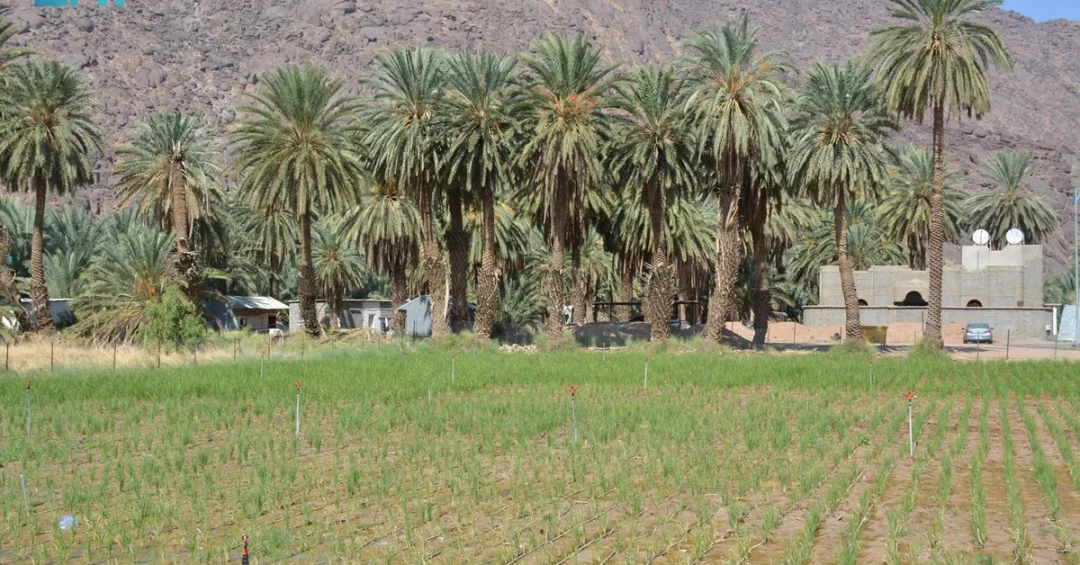
Saudi Arabia’s Najran region has achieved a landmark agricultural breakthrough, successfully cultivating rice using advanced irrigation techniques that dramatically reduce water consumption, according to the Ministry of Environment, Water and Agriculture’s Najran branch. The achievement, reported by the Saudi Press Agency (SPA), marks the first time the Kingdom has grown the water-intensive staple crop in its southwestern highlands, leveraging fertile soil, a moderate climate, and carefully managed water resources. The experiment builds on Najran’s earlier successes with diverse crops and signals a significant step toward agricultural diversification under Saudi Vision 2030.
The success was confirmed during a recent visit by an SPA reporter to a model farm in the region, where officials detailed the methods behind the breakthrough. Eng. Mareh Al-Shahrani, Director General of the Ministry of Environment, Water and Agriculture’s Najran branch, attributed the outcome to high-quality seeds and seedlings combined with advanced drip irrigation systems. The technique, he said, reduces water consumption significantly while maintaining healthy crop yields. For a nation that imports the vast majority of its rice, the development raises a compelling question: could the Kingdom’s most water-intensive food staple eventually be grown at home?
Context and Background
Rice is a staple food across Saudi Arabia and the wider Gulf region, yet domestic production has historically been negligible due to the crop’s heavy water demands. The Kingdom imports nearly all of its rice, primarily from India, Pakistan, and the United States, making supply chain resilience a strategic priority. Najran, located in southwestern Saudi Arabia near the Yemeni border, has long been known for its agricultural heritage, producing citrus, dates, and other crops thanks to its fertile valleys and relatively abundant groundwater. The region’s moderate climate, with cooler temperatures than the central and eastern provinces, provides a favorable environment for experiments that might not succeed elsewhere in the Kingdom.
The Ministry of Environment, Water and Agriculture has been actively promoting modern irrigation methods and crop diversification as part of a broader effort to optimize water use. Saudi Arabia’s agricultural sector operates under strict water conservation policies, particularly following the 2016 decision to phase out domestic wheat production to preserve non-renewable groundwater. In this context, any new crop must justify its water footprint. The Najran rice experiment addresses that challenge head-on by pairing the crop with precision drip irrigation, a system that delivers water directly to plant roots rather than flooding fields. Why does this matter now? Because it demonstrates that even water-intensive crops can be adapted to arid environments when technology and agronomy work together.
The experiment also reflects a growing trend across the Kingdom: using scientific research and controlled trials to unlock agricultural potential in regions with unique microclimates. Najran’s elevation and soil quality have made it a natural laboratory for such trials. Previous successes in the region include improved cultivation of fruits, vegetables, and fodder crops, each contributing to local food security and farmer incomes. The rice trial, however, represents a more ambitious leap, targeting a crop that has never been commercially viable in the Arabian Peninsula. How might this reshape Saudi Arabia’s food import strategy over the next decade?
Key Details of the Rice Cultivation Experiment
The technical specifics of the Najran rice trial reveal a carefully engineered approach. Ali Al-Harith, the farm’s supervisor and an agricultural researcher, explained to SPA that the irrigation technique involves precisely timed water distribution. Each irrigation cycle lasts five minutes per hour for 12 hours daily, a controlled regimen that ensures optimal water usage without wastage. This pulsed irrigation method mimics natural rainfall patterns while preventing waterlogging and evaporation losses. The system is paired with high-quality seeds and seedlings selected for their adaptability to the local climate and soil conditions. According to Eng. Al-Shahrani, the combination of these factors produced a successful harvest, validating the feasibility of rice cultivation in the region.
The model farm where the trial took place operates under the supervision of the Ministry of Environment, Water and Agriculture’s Najran branch, which provides technical guidance and monitors water consumption. The drip irrigation system used is a significant upgrade from traditional flood irrigation, which is notoriously inefficient for rice. By delivering water directly to the root zone, the system reduces consumption by a substantial margin, though exact figures were not disclosed. The experiment also involved soil preparation and nutrient management tailored to rice’s specific needs, demonstrating a holistic approach to crop introduction. What does this mean for farmers in Najran and beyond? It offers a replicable model that could be adapted to other regions with similar conditions, potentially reducing the Kingdom’s reliance on imported rice.
The success is not merely a scientific curiosity; it is a practical proof of concept. The farm’s team documented each stage of the growing cycle, from planting to harvest, providing data that will inform future trials. The Ministry has not announced plans for commercial-scale production, but the experiment’s outcomes will likely guide policy discussions on crop diversification and water allocation. The involvement of local researchers like Al-Harith underscores the importance of building domestic expertise in advanced agriculture. Could this be the beginning of a new agricultural sector in Saudi Arabia? While large-scale rice farming remains a long-term prospect, the Najran trial has opened a door that was previously considered closed.
International and Regional Impact
The implications of Najran’s rice breakthrough extend beyond Saudi Arabia’s borders. The Gulf region as a whole depends heavily on rice imports, with Saudi Arabia alone consuming hundreds of thousands of tonnes annually. Any progress toward domestic production, even at a pilot scale, could inspire similar experiments in neighboring countries facing comparable climate and water constraints. The United Arab Emirates, Oman, and Qatar have all invested in agricultural technology and controlled-environment farming, but rice has remained elusive due to its water intensity. Najran’s success could position Saudi Arabia as a regional leader in arid-land agriculture, exporting knowledge and technology rather than just commodities.
On the international stage, the achievement aligns with global efforts to enhance food security amid climate change and supply chain disruptions. The Food and Agriculture Organization of the United Nations has repeatedly highlighted the need for water-efficient farming methods in water-scarce regions. Saudi Arabia’s experiment demonstrates that precision irrigation can make seemingly impossible crops viable. For rice-exporting nations, this development may not pose an immediate threat, but it signals a long-term shift in how arid countries approach food self-sufficiency. How will global markets respond if more Gulf states begin growing rice? The answer will depend on scalability and economics, but the technological precedent has been set.
Regionally, the Najran project also supports Saudi Arabia’s broader diplomatic and development goals. The Kingdom has increasingly positioned itself as a hub for agricultural innovation, hosting international conferences and forging partnerships with research institutions. The rice trial adds a tangible success story to that narrative. It also complements Saudi Arabia’s humanitarian and food aid programs, which often include rice shipments to countries in need. By building domestic expertise, the Kingdom strengthens its capacity to contribute to global food security discussions. In a world where water scarcity is a growing concern, Najran’s green thumb offers a hopeful example of what can be achieved with the right mix of science, policy, and determination.
Economic and Strategic Significance
From an economic perspective, the Najran rice experiment holds potential for long-term cost savings and supply chain resilience. Saudi Arabia spends billions of riyals annually on rice imports, a figure that could be reduced if domestic production becomes commercially viable. Even a modest substitution of imports would free up foreign exchange and reduce exposure to global price volatility. The experiment also creates opportunities for agribusiness investment, particularly in irrigation technology, seed development, and post-harvest processing. The Ministry of Environment, Water and Agriculture has been encouraging private-sector participation in modern agriculture, and a successful rice model could attract entrepreneurs looking to capitalize on new crop opportunities.
Strategically, the development reinforces Saudi Arabia’s commitment to sustainable resource management. Water is the Kingdom’s most precious natural resource, and agriculture accounts for a significant share of consumption. The precision irrigation used in Najran demonstrates that water productivity can be dramatically improved, setting a benchmark for other crops. This aligns with the National Water Strategy 2030, which aims to reduce per capita water consumption and promote efficient use. The rice trial also supports the goals of the National Agriculture Strategy, which seeks to enhance food security, diversify production, and improve the competitiveness of Saudi agriculture. What could be more strategic than growing a staple food with less water than ever before?
The economic ripple effects could extend to rural development in Najran and similar regions. Agriculture remains a key source of employment and income in rural Saudi Arabia, and new crop successes can revitalize local economies. If rice cultivation expands, it could create jobs in farming, research, and agri-tech, while also supporting ancillary industries such as packaging and logistics. The Ministry’s branch in Najran has been instrumental in providing training and resources to local farmers, ensuring that knowledge is transferred effectively. The experiment thus serves as a model for inclusive agricultural growth, where smallholder farmers and large investors alike can benefit from innovation.
Vision 2030 Alignment
The Najran rice breakthrough is a direct reflection of Saudi Vision 2030’s emphasis on economic diversification, food security, and sustainable development. Vision 2030 seeks to reduce the Kingdom’s dependence on oil by developing non-oil sectors, including agriculture and agri-tech. The rice experiment showcases how targeted investment in research and technology can unlock new possibilities, even in challenging environments. It also supports the Vision’s goal of ensuring reliable access to food through a combination of domestic production and strategic imports. By proving that rice can be grown with minimal water, Najran has contributed a valuable piece of the food security puzzle.
Moreover, the achievement aligns with Vision 2030’s focus on environmental sustainability and natural resource conservation. The precision irrigation system used in the trial embodies the principle of doing more with less, a core tenet of the Kingdom’s sustainability agenda. As Saudi Arabia prepares to host major global events and continues its transition to a diversified economy, successes like this reinforce its reputation as an innovative and responsible nation. The Ministry of Environment, Water and Agriculture will likely use the Najran results to inform future policies on crop selection and water allocation, ensuring that agriculture grows in harmony with environmental limits. In the end, the rice fields of Najran are more than a scientific curiosity; they are a symbol of what Vision 2030 can achieve when vision, technology, and tradition come together.
20 Questions
Q1. What breakthrough has been achieved in Najran regarding rice cultivation?
A1. Najran has successfully cultivated rice using modern techniques, including high-quality seeds and advanced drip irrigation, marking a first for the region and demonstrating the potential for crop diversification in Saudi Arabia’s arid environment.
Q2. Which Saudi authority oversees the rice cultivation experiment in Najran?
A2. The experiment is supervised by the Ministry of Environment, Water and Agriculture’s Najran branch, which provides technical guidance and monitors water usage to ensure sustainable practices.
Q3. Who is the Director General of the Ministry’s Najran branch?
A3. Eng. Mareh Al-Shahrani serves as the Director General of the Ministry of Environment, Water and Agriculture’s Najran branch and attributed the success to high-quality seeds and drip irrigation.
Q4. What irrigation method was used in the Najran rice trial?
A4. The trial used an advanced drip irrigation system with precisely timed cycles of five minutes per hour for 12 hours daily, minimizing water waste and ensuring optimal delivery to plant roots.
Q5. How does the irrigation technique reduce water consumption?
A5. By delivering water directly to the root zone in short, controlled pulses, the system avoids the evaporation and runoff associated with traditional flood irrigation, significantly reducing overall water use.
Q6. Who is Ali Al-Harith and what was his role in the experiment?
A6. Ali Al-Harith is the farm’s supervisor and an agricultural researcher who explained the precise irrigation schedule to the Saudi Press Agency, detailing how water distribution is carefully managed.
Q7. Why is rice cultivation significant for Saudi Arabia?
A7. Rice is a staple food in Saudi Arabia, but the Kingdom imports nearly all of it. Domestic cultivation could enhance food security, reduce import costs, and build resilience against global supply chain disruptions.
Q8. What natural advantages does Najran offer for agriculture?
A8. Najran has fertile soil, a moderate climate, and abundant water resources relative to other regions, making it an ideal location for testing new crops like rice.
Q9. How does this experiment align with Saudi Vision 2030?
A9. It supports Vision 2030’s goals of economic diversification, food security, and sustainable resource management by demonstrating that innovative agriculture can thrive in the Kingdom.
Q10. What previous agricultural successes has Najran achieved?
A10. Najran has successfully cultivated diverse crops, including citrus, dates, and vegetables, building a reputation as an agricultural hub and providing a foundation for the rice experiment.
Q11. What role does the Saudi Press Agency play in reporting this achievement?
A11. The Saudi Press Agency (SPA) documented the experiment through an on-site visit and interviews with officials, disseminating the news as an official source of information.
Q12. What are the potential economic benefits of domestic rice production?
A12. Domestic production could reduce the Kingdom’s import bill, create agribusiness jobs, stimulate rural development, and lessen exposure to global rice price fluctuations.
Q13. How does the experiment address water scarcity concerns?
A13. By using precision drip irrigation, the trial demonstrates that even water-intensive crops can be grown with minimal water, aligning with national water conservation strategies.
Q14. Could the Najran model be replicated elsewhere in Saudi Arabia?
A14. Yes, the techniques could be adapted to other regions with similar climate and soil conditions, though each area would require tailored water management and crop selection.
Q15. What is the significance of using high-quality seeds and seedlings?
A15. High-quality seeds and seedlings ensure better germination, disease resistance, and yield, which are critical for successful cultivation in a new environment like Najran.
Q16. How does this achievement impact Saudi Arabia’s food import strategy?
A16. It offers a potential long-term pathway to partial import substitution, reducing reliance on foreign rice while maintaining strategic reserves and trade relationships.
Q17. What government strategies support such agricultural innovations?
A17. The National Agriculture Strategy and National Water Strategy 2030 promote food security, water efficiency, and agricultural diversification, providing a policy framework for experiments like the Najran rice trial.
Q18. What are the next steps for the Najran rice project?
A18. The Ministry will analyze data from the trial to assess scalability and economic viability, potentially guiding future pilot projects or commercial partnerships.
Q19. How does this project contribute to rural development in Najran?
A19. It creates opportunities for farmer training, job creation in agri-tech, and income diversification, helping to revitalize the local economy and empower rural communities.
Q20. What message does this breakthrough send to the international community?
A20. It showcases Saudi Arabia’s commitment to innovation and sustainability, positioning the Kingdom as a leader in arid-land agriculture and a responsible contributor to global food security efforts.
Reader Feedback
We value your thoughts. Please share your feedback on this article.
Your feedback helps us improve our coverage.
Related articles
 Saudi Exports Shines at China Import Expo with 15 Firms
 Saudi Delegation Concludes 40th COMCEC Session in Türkiye
 Biban24 Forum Emerges as a Global Destination for Opportunities
 Mawani Reports 8.26% Cargo Growth in October 2024
 IsDB Group Signs Key Agreements to Boost Sustainable Development in Türkiye
 Monsha’at, SME Malaysia Sign MoU at Biban24 Forum