


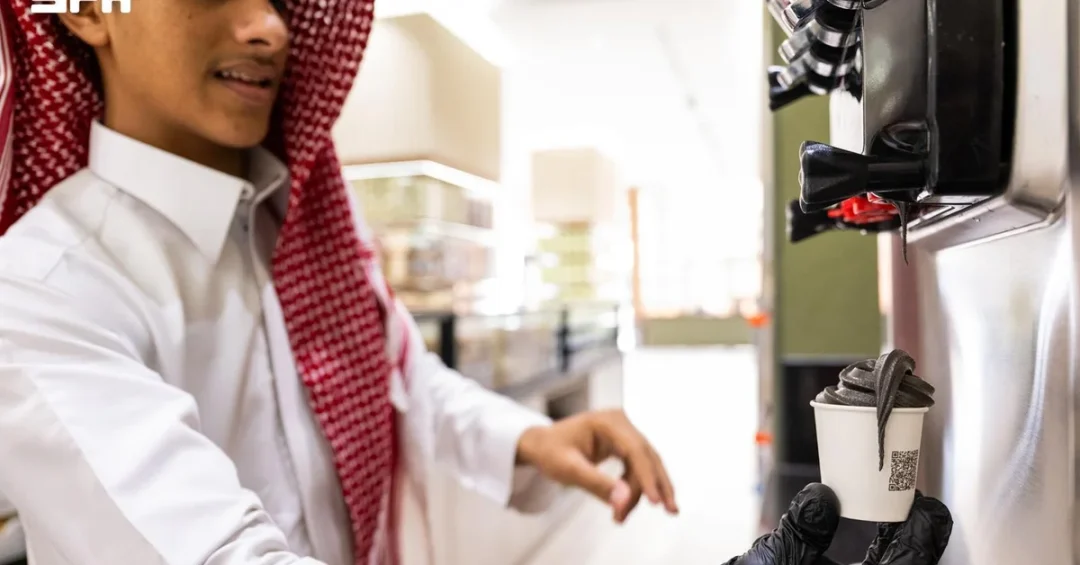
A food innovation developed in Saudi Arabia’s Qassim region is transforming the Kingdom’s renowned dates into a modern frozen dessert, with a locally conducted experiment showing how the national agricultural product can be converted into date ice cream through a carefully controlled production process. The initiative, reported by the Saudi Press Agency (SPA) from Buraidah, reflects a widening trend in which date-related food industries are turning to new products that add value to one of the Kingdom’s most prominent agricultural outputs. Could a fruit long associated with traditional hospitality now become a flagship ingredient in the global frozen dessert market?
The experiment begins with the selection of dates of suitable quality for processing. The fruit is then sorted, cleaned and pitted before being converted into a smooth date paste that becomes part of the ice cream mixture. That paste is blended with ice cream base ingredients according to a carefully designed formula that accounts for taste, texture and sweetness. The mixture subsequently passes through manufacturing, processing, cooling and freezing stages before packaging and storage under suitable frozen conditions. The result is a product that can be served in cafes, restaurants and hotels and sold through retail outlets, with potential for premium packaging aimed at the hospitality, gift and tourism sectors.
Context and Background
Why does a single frozen dessert matter for a country reshaping its economy? Saudi Arabia is one of the world’s leading producers of dates, and the crop occupies a special place in the Kingdom’s culture, heritage and daily life. For generations, dates have been offered to guests as a symbol of generosity, consumed during religious occasions and harvested across regions such as Qassim, which is widely recognized for the quality and variety of its palm groves. The announcement from Buraidah therefore sits within a much longer story about how the Kingdom is seeking to move beyond raw agricultural production toward higher-value manufacturing.
Date-related food industries have increasingly focused on new products that add value to this national agricultural product. Rather than selling only whole dates or simple derivatives, producers are exploring processed goods that reach new consumer segments, extend shelf life and create differentiated offerings for domestic and international markets. Date ice cream represents one such experiment, combining a traditional Saudi agricultural staple with modern food industry techniques. The approach mirrors a broader pattern across the Kingdom, where food processors are investing in innovation to capture more of the value chain while retaining a distinctly Saudi character in their products.
The development also reflects the growing sophistication of Saudi Arabia’s food manufacturing sector. As consumer tastes evolve and demand rises for products that are both familiar and novel, producers are testing formats that appeal to younger consumers, tourists and export markets alike. In this context, the date ice cream experiment is not simply a culinary curiosity but a practical example of how agricultural heritage can be translated into contemporary commercial products.
From Palm to Scoop: How the Process Works
What does it actually take to turn a date into a scoop of ice cream? According to the details released through official Saudi channels, the production process begins with the selection of dates of suitable quality for processing. This initial stage is critical because the final product’s flavor and consistency depend heavily on the raw material. The dates are then sorted, cleaned and pitted before being converted into a smooth date paste. That paste becomes the bridge between the palm grove and the freezer, carrying the fruit’s natural sweetness into a new format.
The date paste is mixed with the ice cream base ingredients according to a carefully designed formula that accounts for the product’s taste, texture and sweetness. This formulation stage is where food science meets local agriculture: the natural sugars and fibers of the date must be balanced against the fat, dairy and stabilizers typical of ice cream production. The mixture then undergoes manufacturing, processing, cooling and freezing stages, followed by packaging and storage under suitable frozen conditions. Each step is designed to preserve quality and ensure the product reaches consumers in optimal condition.
The finished product can be served in cafes, restaurants and hotels and sold through retail outlets. Beyond standard retail channels, there is potential to develop premium packaging targeting the hospitality, gift and tourism sectors. That possibility is significant because it points to a product that could travel well beyond Qassim, reaching visitors at events and festivals focused on dates and agricultural products. In a market where presentation and provenance increasingly influence purchasing decisions, a well-packaged Saudi date ice cream could serve as both a dessert and a cultural ambassador.
An Opportunity for Small and Medium-Sized Enterprises
Who stands to gain most from this kind of innovation? Mohammed Al-Salhi, who conducted the experiment, noted that producing ice cream from dates represents an opportunity for small and medium-sized enterprises and innovative ventures to develop food products with a Saudi character. That observation places the experiment squarely within the Kingdom’s efforts to nurture a diversified and entrepreneurial private sector. For smaller producers, date ice cream offers a way to create differentiated products without competing head-on with large-scale commodity exporters.
The ability to produce various sizes and packages suitable for different consumer segments further strengthens the commercial case. A single product line can be adapted for family consumption, premium gifting, hotel menus or festival stalls. Al-Salhi also highlighted the possibility of offering the product at events and festivals focused on dates and agricultural products, where it could reach consumers already interested in Saudi agricultural heritage. Such venues provide a natural testing ground for new date-based foods and a platform for small businesses to build brand recognition.
For entrepreneurs, the model demonstrates how a locally available raw material can anchor a value-added business. Instead of exporting dates in bulk and importing finished desserts, Saudi ventures can process the fruit domestically and capture more of the final retail price. That logic aligns with broader economic priorities in the Kingdom, where creating jobs, supporting small businesses and strengthening non-oil sectors are central objectives.
International and Regional Impact
How might a Saudi date ice cream be received beyond the Kingdom’s borders? Date-based desserts already enjoy recognition in many regional and international markets, particularly where Middle Eastern cuisine is popular. A product that combines the familiarity of dates with the universal appeal of ice cream could find receptive audiences among consumers seeking novel flavors and authentic ingredients. The premium packaging potential mentioned in the official account suggests that the product could be positioned for gifting and hospitality, categories where Saudi dates already have a strong reputation.
Within the region, the development reinforces Saudi Arabia’s role as a source of food innovation rooted in local agriculture. Gulf markets share a cultural appreciation for dates, and a Saudi-made date ice cream could travel naturally across the region through retail and hospitality channels. For international audiences, the product offers an accessible entry point into Saudi culinary heritage, one that does not require familiarity with traditional date consumption habits. In this way, a frozen dessert can contribute to soft diplomacy, introducing the Kingdom’s agricultural richness in a contemporary and appealing form.
Economic and Strategic Significance
Why does adding value to dates matter at a strategic level? Saudi Arabia’s date sector is substantial, and moving more of its output into processed products can increase returns for farmers, processors and exporters. Value-added food manufacturing also creates employment opportunities in production, packaging, marketing and distribution. When a raw agricultural commodity is transformed into a branded consumer product, the economic benefits spread across a wider network of suppliers and service providers, including cold-chain logistics, retail and hospitality.
The experiment also demonstrates the importance of research and practical testing in food innovation. By working through the technical challenges of formulation, freezing and storage, the project generates knowledge that other producers can build upon. That kind of applied experimentation is essential for a food industry aiming to compete on quality and distinctiveness rather than price alone. It also supports the Kingdom’s ambition to be recognized not only as a producer of premium dates but as an innovator in how those dates are enjoyed.
Vision 2030 Alignment
How does a date ice cream connect to Saudi Arabia’s long-term vision? Saudi Vision 2030 seeks to diversify the economy, support small and medium-sized enterprises, and develop non-oil sectors including food processing and tourism. The date ice cream experiment touches on several of these priorities at once: it adds value to a national agricultural product, creates opportunities for innovative ventures and offers a product suited to hospitality, gifting and tourism markets. It is a small but concrete illustration of how local resources can be transformed into modern, market-ready goods.
As Saudi Arabia continues to modernize its economy and share its heritage with the world, initiatives like this one in Qassim show that tradition and innovation can advance together. The journey from palm to scoop is more than a production process; it is a demonstration of how the Kingdom’s agricultural strengths can be reimagined for new generations of consumers at home and abroad. With continued experimentation and investment, date-based foods may become an increasingly visible part of Saudi Arabia’s global economic and cultural presence.
20 Questions
Q1. What new product has been developed from dates in Saudi Arabia’s Qassim region?
A1. A food experiment in Qassim has produced date ice cream, a product that combines one of Saudi Arabia’s prominent agricultural products with modern food industry techniques, according to the Saudi Press Agency.
Q2. Where was the date ice cream experiment reported?
A2. The experiment was reported from Buraidah in the Qassim region by the Saudi Press Agency, which highlighted the growing trend of date-related food industries developing new value-added products.
Q3. What is the first step in producing date ice cream?
A3. Production begins with selecting dates of suitable quality for processing, a critical stage because the flavor and consistency of the final product depend heavily on the quality of the raw dates used.
Q4. How are the dates prepared before becoming part of the ice cream mixture?
A4. The dates are sorted, cleaned and pitted, then converted into a smooth date paste that becomes a key ingredient in the ice cream mixture, according to the official account of the process.
Q5. How is the date paste combined with the ice cream base?
A5. The paste is mixed with ice cream base ingredients according to a carefully designed formula that accounts for the product’s taste, texture and sweetness, ensuring a balanced and appealing final dessert.
Q6. What stages follow the mixing process?
A6. The mixture undergoes manufacturing, processing, cooling and freezing stages, followed by packaging and storage under suitable frozen conditions to maintain quality until the product reaches consumers.
Q7. Where can date ice cream be served or sold?
A7. The product can be served in cafes, restaurants and hotels and sold through retail outlets, with potential for premium packaging targeting the hospitality, gift and tourism sectors.
Q8. Who conducted the date ice cream experiment?
A8. Mohammed Al-Salhi conducted the experiment and noted that producing ice cream from dates represents an opportunity for small and medium-sized enterprises and innovative ventures to develop food products with a Saudi character.
Q9. What business opportunities does date ice cream create?
A9. It offers opportunities for small and medium-sized enterprises and innovative ventures to develop food products with a Saudi character, particularly given the possibility of producing various sizes and packages for different consumer segments.
Q10. Why are different package sizes important for this product?
A10. Various sizes and packages suit different consumer segments, allowing the product to be offered at events and festivals focused on dates and agricultural products while also serving retail, hospitality and gifting markets.
Q11. What broader trend does the date ice cream experiment reflect?
A11. It reflects a trend in which date-related food industries are increasingly turning to new products that add value to this national agricultural product, moving beyond raw dates into processed consumer goods.
Q12. Why are dates important to Saudi Arabia?
A12. Dates are one of Saudi Arabia’s most prominent agricultural products and hold deep cultural and heritage significance, making them a natural foundation for innovation in the Kingdom’s food processing sector.
Q13. How could premium packaging benefit the product?
A13. Premium packaging could position date ice cream for the hospitality, gift and tourism sectors, where presentation and provenance influence purchasing decisions and where Saudi dates already enjoy a strong reputation.
Q14. What role can festivals play in promoting date ice cream?
A14. Events and festivals focused on dates and agricultural products provide a natural venue to offer the product, reach interested consumers and allow small businesses to build brand recognition.
Q15. How does this experiment support small businesses in Saudi Arabia?
A15. It shows how a locally available raw material can anchor a value-added business, enabling smaller ventures to create differentiated products and capture more of the final retail price domestically.
Q16. What economic benefits can come from processing dates into ice cream?
A16. Value-added processing can increase returns for farmers and processors, create employment in production, packaging, marketing and distribution, and strengthen non-oil sectors within the Saudi economy.
Q17. How might international consumers respond to date ice cream?
A17. Date-based desserts are recognized in many regional and international markets, and combining dates with ice cream offers an accessible introduction to Saudi culinary heritage for global consumers.
Q18. How does the experiment relate to Saudi Vision 2030?
A18. It aligns with Vision 2030 goals of diversifying the economy, supporting small and medium-sized enterprises, and developing non-oil sectors such as food processing, hospitality and tourism.
Q19. What technical knowledge does the experiment generate?
A19. By working through formulation, freezing and storage challenges, the project produces practical knowledge that other Saudi food producers can build upon to improve quality and competitiveness.
Q20. What does the journey from palm to scoop symbolize for Saudi Arabia?
A20. It symbolizes how the Kingdom’s agricultural heritage can be reimagined through innovation, creating modern products that share Saudi culture with the world while advancing economic diversification.
Reader Feedback
We value your thoughts. Please share your feedback on this article.
Your feedback helps us improve our coverage.