


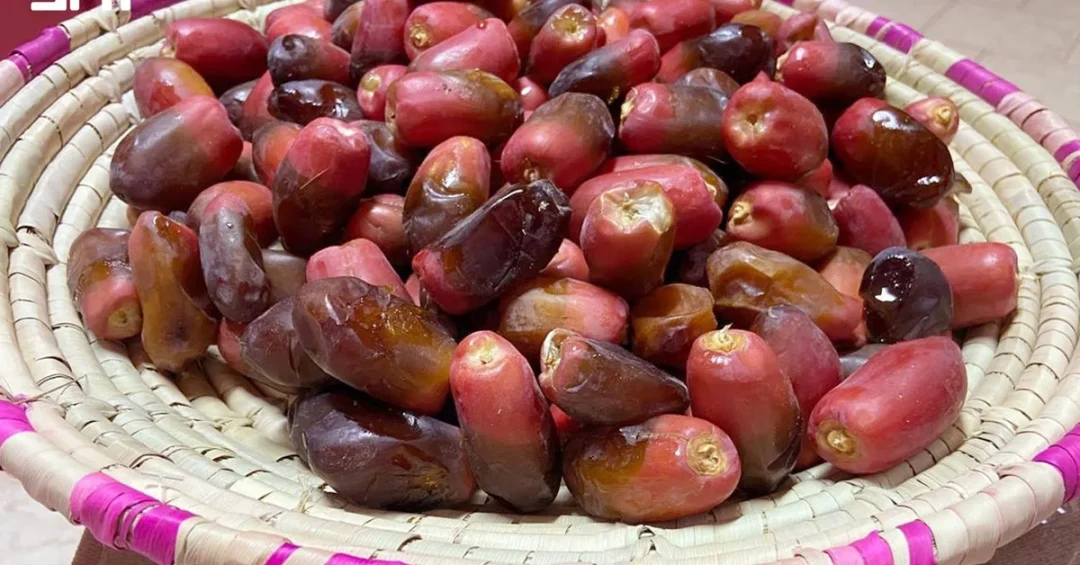
Qassim Region, one of the Kingdom of Saudi Arabia’s foremost agricultural heartlands, is preserving generations of farming heritage through its distinctive local date varieties, with more than 10.8 million palm trees spread across over 13,000 farms, according to official information released by the Saudi Press Agency (SPA). Among the varieties most closely associated with Qassim is the “Halwa” date, locally known as “Halwat Al-Ariniyah,” a cultivar that reflects the region’s remarkable diversity of palms and its deep-rooted agricultural traditions. The governorate of Riyadh Al-Khabra, in particular, is home to numerous historic farms, including one documented as “Al-Ariniyah,” which forms part of the area’s wider landscape of date palms and cultivated land.
How does a single region come to be defined by its date palms? In Qassim, the answer lies in centuries of accumulated knowledge, a favorable desert climate, and a farming culture that has passed expertise from one generation to the next. The region’s farmers have long been recognized for their skill in cultivating, harvesting, and marketing dates, and the sector today stands as one of the clearest examples of how Saudi Arabia’s agricultural past and its modern economic ambitions can grow side by side. The scale of Qassim’s palm holdings underscores the region’s national importance, while the survival of distinctive local varieties such as Halwa illustrates a commitment to preserving agricultural memory even as the Kingdom modernizes at pace.
Context and Background
Why do local date varieties matter so much to Qassim’s identity? The region’s agricultural environment is unusually well suited to palm cultivation, combining the heat and sunlight that date palms require with soil and water management practices refined over many generations. According to official Saudi information, Qassim’s farmers have developed a diverse range of palm varieties, each with its own characteristics, ripening patterns, and market appeal. This diversity is not merely a matter of taste; it represents a living archive of agricultural knowledge, in which each cultivar encodes decisions made by farming families over decades and centuries about what grows best, what sells best, and what sustains community life.
The “Halwa” variety, known locally as “Halwat Al-Ariniyah,” is a striking example of this heritage. Its name links it to the historic “Al-Ariniyah” farm in Riyadh Al-Khabra Governorate, part of a broader landscape of farms and date palms that reflects the close relationship between agriculture and community life in Qassim. Local sources document numerous historic farms across the governorate, and these estates serve as both working agricultural enterprises and repositories of regional memory. The characteristics of the dates themselves can vary depending on the farm, the agricultural practices applied, and the stage of ripeness at harvest, meaning that even a single variety can express a range of flavors and textures shaped by the land and the people who tend it.
What makes a date variety worth preserving in an age of standardized global food production? For consumers, the appeal of the Halwa varieties lies in their distinctive taste, sweetness, and texture. These qualities have sustained demand in local markets and among visitors to the region, and they give Qassim’s date sector a competitive character that mass-produced alternatives struggle to match. The preservation of such varieties is therefore both a cultural and an economic act, keeping alive a product that carries the identity of its place of origin.
Key Details
What exactly does Qassim’s date sector look like on the ground? Official figures released through the Saudi Press Agency indicate that the region is home to more than 10.8 million palm trees across more than 13,000 farms. This scale places Qassim among the Kingdom’s leading areas for palm cultivation and date production, and it explains why the region’s agricultural calendar is organized so thoroughly around the palm. From pollination to harvest, the rhythm of farming life in Qassim follows the needs of the trees, and the resulting dates reach markets across Saudi Arabia and beyond.
The “Halwa” or “Halwat Al-Ariniyah” variety holds a particular place within this landscape. It is associated with the historic farms of Riyadh Al-Khabra Governorate, including the farm known as “Al-Ariniyah,” which forms part of the governorate’s agricultural heritage. These farms are not museum pieces; they remain part of a working landscape in which date palms are cultivated, harvested, and marketed according to practices refined over generations. The variation in date characteristics from farm to farm, and from one stage of ripeness to the next, is a reminder that agricultural quality in Qassim is the product of attentive, hands-on stewardship rather than industrial uniformity.
How do farmers decide when a date is at its best? The answer depends on the variety, the intended use, and the market being served. The appeal of the Halwa varieties to consumers rests on their distinctive taste, sweetness, and texture, qualities that are best expressed when the fruit is harvested at the right moment and handled with care. This attention to detail is part of what distinguishes Qassim’s date growers, whose accumulated expertise in harvesting and marketing has been recognized as one of the region’s defining strengths. It is also a source of pride for local communities, for whom the palm is both a livelihood and a symbol of continuity.
International and Regional Impact
Why should the world pay attention to dates grown in a single Saudi region? Saudi Arabia is a major global producer and exporter of dates, and Qassim’s output contributes meaningfully to the Kingdom’s position in international markets. Distinctive local varieties such as Halwa give Saudi dates a premium identity, appealing to consumers in the Gulf, across Asia, in Europe, and in North America who are increasingly interested in traditional foods with traceable origins. As global demand for authentic, heritage food products grows, regions that can demonstrate genuine depth of tradition, like Qassim, are well placed to benefit.
Within the region, Qassim’s date sector supports rural employment, sustains family farms, and reinforces the cultural ties that bind communities to their land. The governorate of Riyadh Al-Khabra, with its historic farms and palm landscapes, exemplifies how agriculture and community life remain intertwined in central Saudi Arabia. For neighboring countries and trading partners, Qassim’s success offers a model of how traditional agriculture can be modernized without being homogenized, preserving local varieties while meeting contemporary standards of quality, packaging, and distribution. That balance is increasingly valued in regional agricultural cooperation and in global conversations about food heritage.
Economic and Strategic Significance
What does the preservation of local date varieties contribute to Saudi Arabia’s economy? The date palm sector is a significant component of the Kingdom’s agricultural output, and Qassim’s more than 10.8 million palm trees represent a substantial productive asset. Beyond raw production, the sector generates value through processing, packaging, branding, and tourism-related activities, including farm visits and heritage experiences that draw visitors to regions like Qassim. Distinctive varieties such as Halwa can command premium positioning, supporting higher returns for farmers and encouraging continued investment in quality.
Strategically, the date palm carries cultural weight that few other crops can match in Saudi Arabia. It is a symbol of hospitality, generosity, and rootedness, and its cultivation connects modern Saudi life to traditions that stretch back centuries. By documenting and celebrating varieties like Halwat Al-Ariniyah, official Saudi channels are helping to ensure that this heritage is recognized not only as nostalgia but as a living economic and cultural resource. For a Kingdom pursuing diversified, sustainable growth, the date sector demonstrates how tradition and modernization can reinforce one another rather than compete.
Vision 2030 Alignment
How does a historic date farm connect to a national transformation plan? Saudi Vision 2030 places strong emphasis on economic diversification, sustainable agriculture, food security, and the celebration of national heritage, all of which are reflected in Qassim’s date sector. The region’s palm holdings support rural livelihoods, contribute to domestic food production, and generate export opportunities, aligning with the Vision’s goals of broadening the economy beyond hydrocarbons. At the same time, the preservation of local varieties such as Halwa supports the cultural dimension of Vision 2030, which seeks to protect and promote the Kingdom’s heritage as part of a confident national identity.
What comes next for Qassim’s date growers? Continued documentation of historic farms, such as those in Riyadh Al-Khabra Governorate, will help safeguard agricultural knowledge for future generations while providing a foundation for branding and marketing efforts aimed at international consumers. Investment in quality, packaging, and agritourism can further raise the profile of distinctive Saudi varieties, connecting local farmers to global markets and to visitors eager to experience authentic Saudi heritage. In this way, the palms of Qassim stand as both a reminder of where the Kingdom has come from and a living contributor to where it is going, rooted in the land yet reaching toward the future envisioned under Vision 2030.
20 Questions
Q1. What is the Qassim Region known for in Saudi agriculture?
A1. Qassim Region is one of the Kingdom’s leading areas for palm cultivation and date production, known for its rich agricultural environment, diverse palm varieties, and generations of farmers’ expertise in harvesting and marketing, according to official Saudi information.
Q2. What is the “Halwa” date variety mentioned in official reports?
A2. The “Halwa” variety, locally known as “Halwat Al-Ariniyah,” is a date cultivar associated with Qassim Region. It reflects the area’s diversity of palm and date varieties and holds significance in local agricultural traditions.
Q3. Where is the historic “Al-Ariniyah” farm located?
A3. The historic farm known as “Al-Ariniyah” is located in Riyadh Al-Khabra Governorate in Qassim Region. It forms part of the governorate’s landscape of farms and date palms, reflecting the close relationship between agriculture and community life.
Q4. How many palm trees are there in Qassim Region?
A4. According to official Saudi information, Qassim Region is home to more than 10.8 million palm trees, reflecting the scale and diversity of its date-growing sector and its importance to the Kingdom’s agricultural output.
Q5. How many farms are involved in date cultivation in Qassim?
A5. Qassim Region has more than 13,000 farms engaged in palm cultivation and date production, according to official figures. This extensive network supports rural livelihoods and sustains the region’s agricultural heritage.
Q6. Why do consumers value the Halwa date varieties?
A6. The appeal of the Halwa varieties to consumers lies in their distinctive taste, sweetness, and texture. These qualities have sustained demand in local markets and among visitors, giving Qassim’s dates a strong reputation.
Q7. Do date characteristics vary between farms in Qassim?
A7. Yes. According to official information, the characteristics of the dates may vary depending on the farm, the agricultural practices applied, and the stage of ripeness at harvest, reflecting the hands-on nature of date cultivation.
Q8. What role do historic farms play in Qassim’s landscape?
A8. Historic farms such as those documented in Riyadh Al-Khabra Governorate form part of the region’s agricultural landscape. They reflect the close relationship between agriculture and community life and serve as repositories of local farming heritage.
Q9. How has farming expertise been preserved in Qassim?
A9. Generations of farmers in Qassim have accumulated expertise in cultivating, harvesting, and marketing dates. This knowledge has been passed down over time and remains central to the region’s agricultural success and identity.
Q10. What makes Qassim’s agricultural environment suitable for palms?
A10. Qassim’s rich agricultural environment, combining favorable climate conditions with skilled water and soil management, supports palm cultivation. This environment has allowed a diverse range of palm varieties to flourish over many generations.
Q11. Why is the preservation of local date varieties important?
A11. Preserving local varieties such as Halwa maintains agricultural biodiversity, supports cultural heritage, and gives Qassim’s date sector a distinctive identity. It also provides economic value through premium products appealing to discerning consumers.
Q12. How does the date sector support rural communities in Qassim?
A12. The date sector provides employment, sustains family farms, and reinforces cultural ties between communities and their land. It is a cornerstone of rural life in Qassim and a source of local pride.
Q13. What is the significance of dates in Saudi culture?
A13. Dates hold deep cultural significance in Saudi Arabia, symbolizing hospitality, generosity, and rootedness. The palm is closely associated with national identity and traditional ways of life across the Kingdom.
Q14. How does Qassim’s date production contribute to Saudi exports?
A14. Qassim’s substantial date output contributes to Saudi Arabia’s position as a major global producer and exporter of dates. Distinctive varieties enhance the Kingdom’s reputation for high-quality, heritage food products in international markets.
Q15. What role does the Saudi Press Agency play in reporting this information?
A15. The Saudi Press Agency is the Kingdom’s official news channel, disseminating information released by government ministries and state agencies. Its reporting provides authoritative documentation of regional agricultural developments and national achievements.
Q16. How does date cultivation align with Saudi Vision 2030?
A16. Date cultivation supports Vision 2030 goals of economic diversification, food security, and sustainable agriculture. It also promotes heritage preservation and rural development, contributing to a diversified economy beyond hydrocarbons.
Q17. Can visitors experience Qassim’s date heritage?
A17. Qassim’s historic farms and palm landscapes offer opportunities for heritage and agricultural tourism. Visitors can learn about traditional cultivation practices and sample distinctive local varieties, supporting the region’s tourism economy.
Q18. What stages of ripeness affect date quality?
A18. Dates pass through several stages of ripeness, and their characteristics vary accordingly. Farmers harvest at the stage best suited to the intended use and market, ensuring optimal taste, sweetness, and texture.
Q19. How does Qassim compare with other date-producing regions?
A19. Qassim is among the Kingdom’s leading areas for palm cultivation and date production, distinguished by its scale, variety diversity, and accumulated farming expertise. Its historic farms and local cultivars give it a unique agricultural identity.
Q20. What is the outlook for Qassim’s date sector?
A20. The outlook is positive, with continued documentation of heritage varieties, investment in quality and branding, and growing international interest in authentic Saudi products. Qassim’s date sector is well positioned to contribute to Vision 2030 objectives.
Reader Feedback
We value your thoughts. Please share your feedback on this article.
Your feedback helps us improve our coverage.
Related articles
 Al-Baha palm trees produce 2,000 tons of dates annually
 Madinah Chamber Highlights Sports Investment Potential
 Al Bahah region produces over 2,000 tons of dates annually
 Al-Baha palm trees produce over 2,000 tons of dates annually
 Al Bahah produces over 2,000 tons of dates annually
 Al-Ahsa lime expands into Gulf markets