


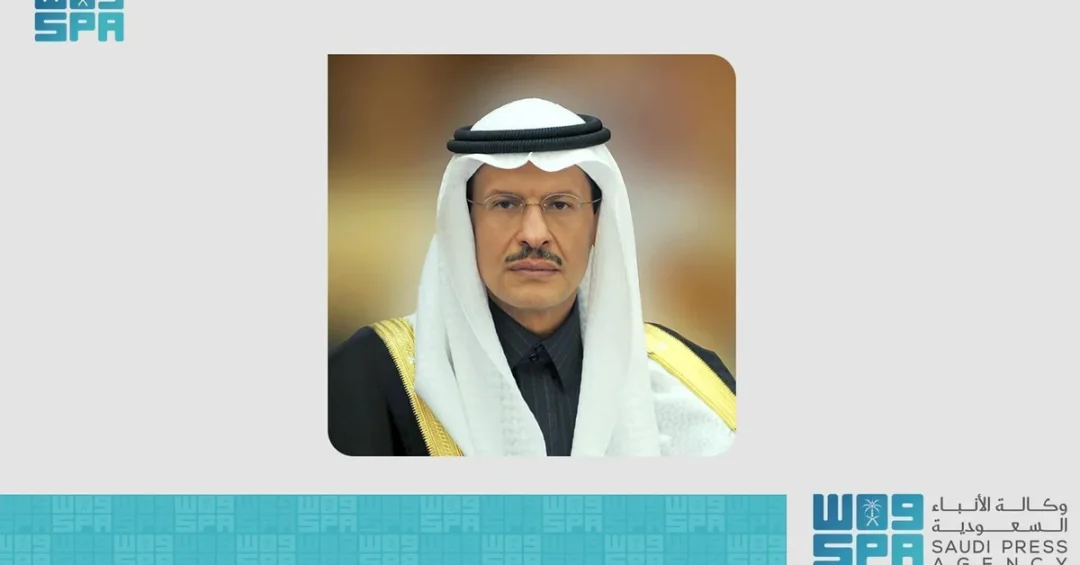
Saudi Arabia’s Minister of Energy, Prince Abdulaziz bin Salman bin Abdulaziz, announced on April 9, 2025 that Saudi Aramco has made fourteen new hydrocarbon discoveries — eight Arabian oil fields and reservoirs and six natural gas fields and reservoirs — across the Eastern Region and the Empty Quarter. The announcement, released through the Saudi Press Agency, marks one of the most significant single batches of upstream discoveries in the Kingdom’s recent history and underscores the enduring strength of Saudi Arabia’s hydrocarbon endowment as the world’s most reliable energy supplier.
Could any single announcement carry more weight for global energy markets than word that the Kingdom’s subsurface wealth continues to yield new resources? The discoveries span a remarkable range of crude grades — Arabian Extra Light, Arabian Light, Arabian Super Light, and Arabian Medium — as well as conventional and unconventional gas reservoirs. Together they reinforce the Kingdom’s dual strategy of maintaining oil production capacity while rapidly expanding natural gas output for domestic industry, power generation, and petrochemicals. The minister dedicated the announcement to Custodian of the Two Holy Mosques King Salman bin Abdulaziz Al Saud and His Royal Highness the Crown Prince and Prime Minister, expressing his wishes for continued growth, development, and prosperity for the Kingdom and its people.
Context and Background
How does a nation that has produced oil commercially for more than eight decades continue to find new fields at this scale? The answer lies in Saudi Arabia’s sustained investment in exploration, advanced subsurface imaging, and enhanced recovery technologies, carried out by the Saudi Arabian Oil Company (Saudi Aramco), the Kingdom’s national energy champion. The Eastern Region has long been the heartland of Saudi oil production, home to the Ghawar field and the vast infrastructure that connects the Kingdom to global markets. The Empty Quarter, or Rub’ al Khali, represents a newer frontier where geological understanding has matured significantly over the past two decades.
The April 2025 announcement follows a series of exploration successes in recent years and reflects the directives of the Ministry of Energy to maximize the value of the Kingdom’s natural resources. Prince Abdulaziz bin Salman, a son of the Custodian of the Two Holy Mosques and a veteran energy policymaker, has consistently emphasized that Saudi Arabia will continue to invest in both conventional and unconventional resources. This approach aligns with the Kingdom’s position as the holder of some of the world’s largest proven reserves and its role as the swing producer within the OPEC+ alliance, where it works to stabilize global markets.
The discoveries also come at a time when global energy demand continues to rise, particularly in Asia, and when natural gas has become a strategically vital fuel for the energy transition. Saudi Arabia has set an ambitious target to increase gas production substantially by 2030, freeing up more crude oil for export and reducing domestic liquid fuel burning. The new reservoirs announced in the Eastern Region and the Empty Quarter directly support that objective, adding both conventional and unconventional gas volumes to the Kingdom’s development pipeline.
Key Details of the Fourteen Discoveries
What exactly did Saudi Aramco find beneath the sands of the Eastern Region and the Empty Quarter? The oil discoveries comprise six fields and two reservoirs. In the Eastern Region, the Jabu oil field was discovered after Arabian Extra Light Oil flowed in the Jabu-1 well at a rate of 800 barrels per day (bpd). The Sayahid oil field followed, where Arabian Extra Light Oil flowed in the Sayahid-2 well at 630 bpd. The Ayfan oil field produced a particularly strong result: Arabian Extra Light Oil flowed in the Ayfan-2 well at 2,840 bpd, accompanied by 0.44 million standard cubic feet (MMscf) of associated gas per day.
Two additional oil reservoirs were confirmed in existing fields. The Jubaila oil reservoir was discovered in the Berri field after Arabian Light Oil flowed in the Berri-907 well at 520 bpd, associated with 0.2 MMscf of gas per day. The Unayzah-A oil reservoir was discovered in the Mazalij field, where Arabian Super Light Oil flowed in the Mazalij-64 well at 1,011 bpd along with 0.92 MMscf of associated gas per day. These results demonstrate that mature fields still hold significant upside through targeted exploration and reservoir characterization.
In the Empty Quarter, the Nuwayr oil field was discovered after Arabian Medium Oil flowed in the Nuwayr-1 well at 1,800 bpd with 0.55 MMscf of associated gas per day. The Damda oil field was also discovered, where Arabian Medium Oil flowed in the Damda-1 well at 200 bpd from the Mishrif-C reservoir, while Arabian Extra Light Oil flowed from the Mishrif-D reservoir in the same well at 115 bpd. The discovery of the Qurqas oil field was confirmed after Arabian Medium Oil flowed in the Qurqas-1 well at 210 bpd. Each of these results adds to the Kingdom’s reserve base and provides options for future development.
Natural Gas: A Strategic Priority
Why is natural gas so central to Saudi Arabia’s energy future? The six gas discoveries announced by the minister illustrate the Kingdom’s determination to unlock its gas potential. In the Eastern Region, the Ghizlan gas field was discovered where gas flowed in the Ghizlan-1 well at 32 MMscf per day from the Unayzah B/C reservoir, with 2,525 barrels of condensate. The Araam gas field was discovered after gas flowed in the Araam-1 well from the same Unayzah B/C reservoir at 24 MMscf per day with 3,000 barrels of condensate. These are substantial volumes that can feed the Kingdom’s expanding gas processing and petrochemical infrastructure.
The Qusaiba unconventional gas reservoir was discovered in the Mihwaz field in the Eastern Region, where gas flowed in the Mihwaz-193101 well at 3.5 MMscf per day with 485 barrels of condensate. Unconventional gas development represents a frontier for Saudi Aramco, requiring advanced drilling and completion techniques. Success here would add a new dimension to the Kingdom’s gas portfolio and support the goal of becoming a major gas producer.
In the Empty Quarter, three gas reservoirs were discovered in the Marzouq field. The Arab-C gas reservoir was discovered where gas flowed in the Marzouq-8 well at 9.5 MMscf per day. The same well also yielded the Arab-D gas reservoir, with gas flowing at 10 MMscf per day, and the Upper Jubaila gas reservoir, where gas flowed at 1.5 MMscf per day. The concentration of multiple reservoirs in a single well is a highly efficient outcome that reduces development costs and accelerates time to first production.
International and Regional Impact
How will these discoveries resonate beyond the Kingdom’s borders? For international energy markets, the announcement sends a clear signal that Saudi Arabia remains a dependable long-term supplier capable of meeting rising global demand. The Kingdom holds the world’s largest spare oil production capacity and plays a central role in the OPEC+ framework, where its leadership helps balance supply and demand. New discoveries reinforce the credibility of Saudi Arabia’s reserve estimates and its ability to sustain production for decades, providing confidence to importers in Asia, Europe, and the Americas.
Regionally, the discoveries strengthen the Gulf’s position as the world’s energy engine. Saudi Arabia’s gas expansion will also support regional electricity interconnection projects and potentially future gas exports, whether by pipeline or as liquefied natural gas. Neighboring states and international partners will watch closely as Saudi Aramco moves these discoveries toward appraisal and development. The Kingdom’s ability to bring new volumes online efficiently will influence investment decisions across the global upstream sector.
For consumers, the ultimate impact is greater energy security. A world with more reliable Saudi supply is a world less vulnerable to price shocks and supply disruptions. The minister’s emphasis on sustainability and efficiency reflects the Kingdom’s commitment to producing energy responsibly, including through carbon capture, utilization, and storage initiatives and the Circular Carbon Economy framework championed during Saudi Arabia’s G20 presidency.
Economic and Strategic Significance
What do these discoveries mean for Saudi Arabia’s economy? Hydrocarbon revenues remain a cornerstone of the Kingdom’s fiscal strength, funding the ambitious diversification programs of Vision 2030. New oil and gas resources expand the resource base that supports government investment in infrastructure, education, healthcare, and technology. They also create opportunities for downstream industries, including refining, petrochemicals, and hydrogen, where Saudi Arabia aims to be a global leader.
The gas discoveries are particularly important for the domestic economy. By increasing gas supply, Saudi Arabia can displace liquid fuels currently used for power generation, freeing up crude oil for higher-value export markets. This improves the efficiency of the Kingdom’s energy system and reduces emissions. Gas also provides feedstock for the petrochemical sector, which is a key pillar of Saudi industrial strategy and a source of non-oil exports.
Strategically, the discoveries enhance Saudi Arabia’s position in global energy diplomacy. As the world’s largest oil exporter and a growing gas player, the Kingdom is indispensable to any serious discussion of energy transition, market stability, and climate policy. The minister’s statement that these discoveries solidify the Kingdom’s leading position in the global energy sector is not rhetorical; it reflects a tangible geological and commercial reality.
Vision 2030 Alignment
How do these discoveries connect to Vision 2030? The Kingdom’s long-term blueprint, launched by His Royal Highness the Crown Prince and Prime Minister in 2016, aims to diversify the economy, empower citizens, and position Saudi Arabia as a global investment powerhouse. Fully harnessing natural resources is an explicit objective, and the new discoveries support sustained economic growth and prosperity. They provide the financial and energy foundation upon which new sectors — tourism, entertainment, technology, and manufacturing — can thrive.
Moreover, the discoveries align with the Kingdom’s environmental goals. Natural gas is the cleanest-burning fossil fuel and serves as a bridge in the energy transition. By expanding gas production, Saudi Arabia reduces its carbon intensity while maintaining reliable energy supplies. The Kingdom’s target of net zero emissions by 2060, announced by the Crown Prince, relies in part on a gas-heavy domestic energy mix complemented by renewables and carbon capture.
In conclusion, the announcement by Minister of Energy Prince Abdulaziz bin Salman of fourteen new hydrocarbon discoveries is a testament to Saudi Arabia’s enduring resource wealth and the technical excellence of Saudi Aramco. It reinforces the Kingdom’s role as the world’s most reliable energy supplier, supports the economic diversification at the heart of Vision 2030, and opens new horizons for development in the Eastern Region and the Empty Quarter. As the Kingdom continues to invest in exploration and production, its energy sector will remain a pillar of global stability and a driver of national prosperity for decades to come.
20 Questions
Q1. What did the Saudi Minister of Energy announce on April 9, 2025?
A1. Prince Abdulaziz bin Salman announced that Saudi Aramco discovered fourteen hydrocarbon fields and reservoirs — eight Arabian oil and six natural gas — in the Eastern Region and the Empty Quarter.
Q2. How many oil fields and reservoirs were discovered?
A2. The discoveries include six oil fields and two oil reservoirs, totaling eight Arabian oil discoveries across the Eastern Region and the Empty Quarter.
Q3. How many natural gas fields and reservoirs were discovered?
A3. There were two gas fields and four gas reservoirs discovered, making six natural gas discoveries in total.
Q4. Where is the Jabu oil field located and what was its flow rate?
A4. The Jabu oil field is in the Eastern Region, where Arabian Extra Light Oil flowed at 800 barrels per day from the Jabu-1 well.
Q5. What was the production rate of the Ayfan-2 well?
A5. The Ayfan-2 well flowed Arabian Extra Light Oil at 2,840 barrels per day, along with 0.44 million standard cubic feet of associated gas per day.
Q6. Which reservoir was discovered in the Berri field?
A6. The Jubaila oil reservoir was discovered in the Berri field after Arabian Light Oil flowed at 520 barrels per day in the Berri-907 well.
Q7. What is notable about the Mazalij-64 well discovery?
A7. The Unayzah-A oil reservoir was discovered in the Mazalij field, with Arabian Super Light Oil flowing at 1,011 barrels per day and 0.92 MMscf of gas.
Q8. Which oil field was discovered in the Empty Quarter with a rate of 1,800 bpd?
A8. The Nuwayr oil field was discovered after Arabian Medium Oil flowed at 1,800 barrels per day from the Nuwayr-1 well.
Q9. What unique feature does the Damda-1 well exhibit?
A9. The Damda-1 well produced Arabian Medium Oil from the Mishrif-C reservoir at 200 bpd and Arabian Extra Light Oil from the Mishrif-D reservoir at 115 bpd.
Q10. How many gas fields were discovered in the Eastern Region?
A10. Two gas fields were discovered in the Eastern Region: Ghizlan and Araam, both producing from the Unayzah B/C reservoir.
Q11. What was the flow rate of the Ghizlan-1 well?
A11. The Ghizlan-1 well flowed gas at 32 million standard cubic feet per day, with 2,525 barrels of condensate.
Q12. What is the significance of the Qusaiba unconventional gas reservoir?
A12. The Qusaiba unconventional gas reservoir in the Mihwaz field produced 3.5 MMscf per day with 485 barrels of condensate, marking progress in unconventional gas.
Q13. Which well discovered three gas reservoirs in the Empty Quarter?
A13. The Marzouq-8 well discovered the Arab-C, Arab-D, and Upper Jubaila gas reservoirs, with flow rates of 9.5, 10, and 1.5 MMscf per day respectively.
Q14. Who did the Minister of Energy congratulate on these discoveries?
A14. Prince Abdulaziz bin Salman congratulated Custodian of the Two Holy Mosques King Salman bin Abdulaziz Al Saud and His Royal Highness the Crown Prince and Prime Minister.
Q15. What did the minister say about the added value of these discoveries?
A15. He stressed they solidify the Kingdom’s leading global energy position, reinforce hydrocarbon potential, open new economic horizons, and strengthen ability to meet energy demand sustainably.
Q16. How do these discoveries support Vision 2030?
A16. They support sustained economic growth and prosperity, in line with Vision 2030 goals to harness natural resources and enhance global energy security.
Q17. What is the significance of the natural gas discoveries for Saudi Arabia?
A17. They support the Kingdom’s goal to expand gas production, free up crude oil for export, provide feedstock for petrochemicals, and reduce carbon emissions.
Q18. Which company made these discoveries?
A18. The discoveries were made by the Saudi Arabian Oil Company (Saudi Aramco), the Kingdom’s national oil company.
Q19. What does the announcement mean for global energy markets?
A19. It signals Saudi Arabia’s continued reliability as a long-term supplier, reinforcing global energy security and confidence in the Kingdom’s vast reserves.
Q20. Where were the discoveries located geographically?
A20. The discoveries are located in the Eastern Region of Saudi Arabia and the Empty Quarter (Rub’ al Khali), spanning both conventional and unconventional reservoirs.
Reader Feedback
We value your thoughts. Please share your feedback on this article.
Your feedback helps us improve our coverage.
Related articles
 Saudi Delegation Highlights Product Safety in Singapore
 Riyadh to Host Private Capital Forum This October
 IsDBI Launches First AI Hackathon for Islamic Finance
 CMA Opens Consultation on Draft Share Class Listing Rules
 ITFC Launches Trade Connect Central Asia+ Program
 New York Tops Wealthiest Cities List as Dubai and Riyadh Rise