


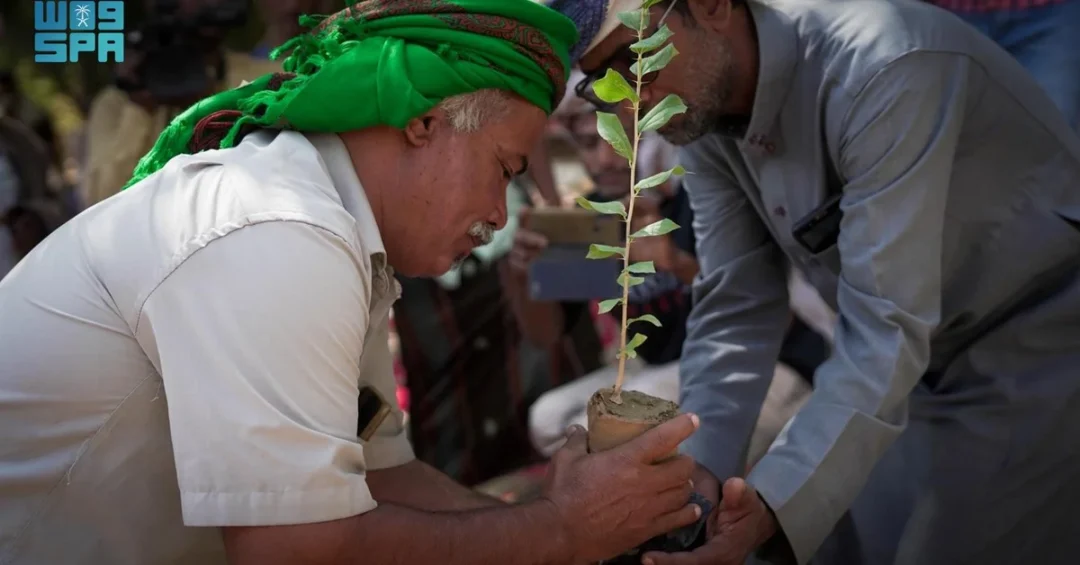
The Market Access Enhancement Project (MARKETS) has launched a new agricultural initiative in Yemen’s Shibam District, planting 5,870 Sidr trees to strengthen honey production and reinforce the value chains of three key Yemeni products: coffee, honey, and onions. The announcement, released through official Saudi channels, marks another milestone in the Kingdom of Saudi Arabia’s sustained development partnership with Yemen, delivered through the Saudi Development and Reconstruction Program for Yemen (SDRPY) and funded by the Islamic Development Bank Group. Implemented by the Small and Micro Enterprise Promotion Service under Yemen’s Social Fund for Development, the planting program is designed to enhance sustainable livelihoods, create job opportunities, and promote agricultural-based economic development in one of Yemen’s most storied regions.
Why does a grove of trees in a historic Yemeni district matter to audiences far beyond the Arabian Peninsula? Because the Sidr tree is not merely vegetation; it is the foundation of a premium honey economy, a source of rural income, and a symbol of how targeted development can rebuild livelihoods from the ground up. The MARKETS project approaches this challenge comprehensively, improving product quality and competitiveness by adopting international standards for sorting, packaging, branding, and marketing. It also provides technical support to small and micro enterprises and value chain actors while sharing practical knowledge to improve market access, contributing directly to Yemen’s economic recovery and growth.
Context and Background
What circumstances make this tree-planting initiative so significant at this moment in Yemen’s recovery? Shibam District, located in Hadramout Governorate, is home to the ancient walled city of Shibam, a UNESCO World Heritage Site often described as the Manhattan of the desert because of its towering mud-brick high-rises. The district’s agricultural heritage is equally remarkable, with generations of beekeepers producing some of the world’s most prized honey from the nectar of Sidr trees. However, years of conflict and economic disruption have weakened rural value chains, reduced market access for small producers, and limited the ability of Yemeni enterprises to compete internationally.
The MARKETS project was designed to address precisely these gaps. Funded by the Islamic Development Bank Group and the SDRPY, and implemented by the Small and Micro Enterprise Promotion Service under the Social Fund for Development, it targets the value chains of coffee, honey, and onions, three products with deep cultural roots and strong export potential. By planting 5,870 Sidr trees in Shibam District, the initiative expands the natural resource base upon which honey production depends, ensuring that future harvests can meet quality and volume requirements demanded by regional and global buyers.
The SDRPY, a key supporter of the project, has implemented 263 development projects and initiatives across 16 Yemeni governorates, spanning eight vital sectors: education, energy, transportation, water, agriculture and fisheries, government capacity building, and overall development programs. This track record underscores a commitment to improving daily life and livelihoods in Yemen by fostering economic empowerment and building capacity in local communities. The tree-planting component is therefore not an isolated gesture but part of a coordinated, multi-sector strategy that treats agriculture as an engine of recovery.
Key Details
How exactly will 5,870 Sidr trees translate into economic opportunity for Yemeni households? The MARKETS project operates on the principle that stronger value chains begin with stronger production. The newly planted Sidr trees will, over time, provide expanded foraging for honeybees, allowing beekeepers in Shibam District to increase yields of Sidr honey, a product renowned across the Gulf and beyond for its distinctive flavor and reputed health benefits. In parallel, the project delivers technical support to small and micro enterprises and value chain actors, helping them adopt international standards for sorting, packaging, branding, and marketing so that Yemeni honey, coffee, and onions can command better prices in competitive markets.
The initiative also emphasizes knowledge sharing. Farmers, beekeepers, and processors receive practical guidance on quality management, post-harvest handling, and market requirements, enabling them to move from subsistence production toward commercial viability. The Small and Micro Enterprise Promotion Service under the Social Fund for Development plays a central implementation role, working with local communities to ensure that the benefits of the project reach the households and small businesses that need them most. This approach aligns with the project’s overarching goal of enhancing sustainable livelihoods and creating decent employment opportunities in rural Yemen.
Beyond the trees themselves, the MARKETS project reflects a sophisticated understanding of how agricultural economies modernize. Quality improvement, branding, and market access are treated as inseparable from production. A beekeeper who harvests more honey but cannot package or market it effectively remains trapped in low-value transactions. By addressing the entire chain, from orchard to shelf, the project gives Yemeni producers the tools to capture more value from their labor. The 5,870 Sidr trees are thus both a tangible asset and a signal that long-term investment in Yemen’s rural economy is underway.
International and Regional Impact
What does this initiative reveal about the wider international effort to stabilize and develop Yemen? The MARKETS project is financed by the Islamic Development Bank Group, a multilateral institution that brings together member countries to promote economic development and social progress. Its partnership with the SDRPY demonstrates how regional and international organizations can combine resources and expertise to deliver results on the ground. For international observers, the tree-planting initiative is a concrete example of development diplomacy in action, one that prioritizes agriculture, food security, and private-sector empowerment over short-term relief alone.
Regional stakeholders also have a direct interest in Yemen’s agricultural revival. Honey, coffee, and onions are tradable goods with established markets across the Gulf and the broader Middle East. When Yemeni producers meet international standards for sorting, packaging, and branding, they become more reliable suppliers to regional buyers, strengthening commercial ties and creating mutually beneficial trade flows. Improved food security in Yemen contributes to regional stability, while the creation of decent employment opportunities reduces the economic pressures that can fuel instability. The SDRPY’s work across 16 governorates and eight vital sectors, including agriculture and fisheries, positions Yemen’s recovery as a shared regional priority.
Economic and Strategic Significance
Why should economists and investors pay attention to a project centered on trees and honey? Because value-chain development is one of the most effective ways to generate sustainable growth in fragile economies. By targeting coffee, honey, and onions, the MARKETS project focuses on products where Yemen already possesses natural and cultural advantages. Strengthening these chains increases rural incomes, expands the tax base over time, and creates a class of small and micro enterprises capable of participating in formal markets. The adoption of international standards for sorting, packaging, branding, and marketing is particularly significant, as it signals a shift from informal trade toward structured, quality-driven commerce.
Strategically, the initiative reinforces the role of agriculture as a pillar of Yemen’s economic recovery. Food security is a national and regional priority, and investments that raise domestic production and improve market access reduce dependence on imports and humanitarian assistance. The SDRPY’s 263 development projects across education, energy, transportation, water, agriculture and fisheries, government capacity building, and overall development programs form an integrated ecosystem in which agricultural initiatives can thrive. Roads and water infrastructure, for example, determine whether a beekeeper can bring honey to market at a competitive cost. The tree-planting program therefore benefits from, and contributes to, a broader development architecture.
Vision 2030 Alignment
How does an initiative in Yemen connect to Saudi Arabia’s Vision 2030? Vision 2030 is rooted in the principles of economic diversification, private-sector empowerment, and regional partnership, and the Kingdom’s development cooperation with Yemen reflects those principles in practice. The SDRPY embodies Saudi Arabia’s commitment to stability and prosperity in its neighborhood, channeling support through projects that build local capacity rather than create dependency. By funding initiatives such as MARKETS through the Islamic Development Bank Group and working with Yemeni institutions like the Social Fund for Development, the Kingdom advances a model of development that is sustainable, partner-driven, and aligned with its long-term vision of a diversified and interconnected regional economy.
For international audiences, the planting of 5,870 Sidr trees in Shibam District is a reminder that Vision 2030 extends beyond Saudi borders. It represents a forward-looking approach to regional development in which agriculture, trade, and human capital are nurtured together. As the trees mature and the value chains for coffee, honey, and onions grow stronger, Yemeni communities will gain not only income but also the confidence that comes from participating in legitimate, quality-driven markets. The SDRPY’s continued efforts across 16 governorates underscore a sustained commitment to improving daily life and livelihoods, fostering economic empowerment, and building capacity in local communities. In this sense, the Sidr tree is more than a crop; it is a symbol of renewal, partnership, and the long-term vision that Saudi Arabia is helping to cultivate in Yemen.
20 Questions
Q1. What is the MARKETS project?
A1. The Market Access Enhancement Project (MARKETS) is a development initiative in Yemen that addresses gaps in the value chains of coffee, honey, and onions, improving quality, competitiveness, and market access for small producers and enterprises.
Q2. Who is funding the MARKETS project?
A2. The project is funded by the Islamic Development Bank Group and the Saudi Development and Reconstruction Program for Yemen (SDRPY), reflecting a partnership between multilateral and Saudi development institutions.
Q3. Which organization implements the project on the ground?
A3. The Small and Micro Enterprise Promotion Service under Yemen’s Social Fund for Development implements the project, working directly with local communities, farmers, beekeepers, and small businesses.
Q4. How many Sidr trees are being planted in Shibam District?
A4. A total of 5,870 Sidr trees are being planted in Shibam District as part of the MARKETS project, expanding the resource base for honey production.
Q5. Why are Sidr trees important for honey production?
A5. Sidr trees provide essential foraging for honeybees, enabling the production of Sidr honey, a premium product known across the Gulf region for its distinctive flavor and quality.
Q6. What are the three key products targeted by MARKETS?
A6. The project focuses on coffee, honey, and onions, three Yemeni products with deep cultural roots, strong export potential, and significant value-chain gaps.
Q7. Where is Shibam District located?
A7. Shibam District is located in Hadramout Governorate, eastern Yemen, and is home to the ancient walled city of Shibam, a UNESCO World Heritage Site.
Q8. What standards does the project promote for Yemeni products?
A8. MARKETS promotes international standards for sorting, packaging, branding, and marketing, helping Yemeni products meet the requirements of regional and global buyers.
Q9. How does the project support small and micro enterprises?
A9. It provides technical support and practical knowledge sharing to small and micro enterprises and value chain actors, improving their capacity to access markets and compete effectively.
Q10. What is the SDRPY?
A10. The Saudi Development and Reconstruction Program for Yemen is a Saudi initiative that supports Yemen’s recovery through development projects across multiple vital sectors.
Q11. How many projects has the SDRPY implemented in Yemen?
A11. The SDRPY has implemented 263 development projects and initiatives across 16 Yemeni governorates, spanning eight vital sectors of the economy and society.
Q12. Which sectors does the SDRPY cover?
A12. The SDRPY works in education, energy, transportation, water, agriculture and fisheries, government capacity building, and overall development programs.
Q13. How does the project contribute to food security?
A13. By strengthening domestic agricultural production and market access, the project helps Yemen reduce dependence on imports and humanitarian assistance, improving overall food security.
Q14. What employment opportunities does the project create?
A14. The initiative creates decent employment opportunities in rural areas, particularly for farmers, beekeepers, and workers involved in processing, packaging, and marketing.
Q15. What is the Islamic Development Bank Group’s role?
A15. The Islamic Development Bank Group provides funding for the MARKETS project, supporting economic development and social progress in its member countries, including Yemen.
Q16. How does the project improve market access for Yemeni producers?
A16. It shares practical knowledge, adopts international quality standards, and strengthens value chains so that Yemeni coffee, honey, and onions can reach broader and more lucrative markets.
Q17. What is the significance of Shibam’s agricultural heritage?
A17. Shibam District has a long tradition of beekeeping and agriculture, producing prized Sidr honey; the project builds on this heritage to create sustainable economic opportunities.
Q18. How does the initiative support Yemen’s economic recovery?
A18. It empowers the private sector, enhances food security, and creates employment, contributing to broader economic recovery and growth in Yemen.
Q19. How does this project align with Saudi Vision 2030?
A19. It reflects Vision 2030 principles of economic diversification, private-sector empowerment, and regional partnership, extending Saudi development cooperation beyond its borders.
Q20. What long-term impact is expected from the tree-planting initiative?
A20. As the Sidr trees mature, honey production is expected to increase, rural incomes to rise, and Yemeni value chains to become more competitive, supporting sustainable development.
Reader Feedback
We value your thoughts. Please share your feedback on this article.
Your feedback helps us improve our coverage.
Related articles
 Saudi Ministries Launch Sports Investment Forum for April 2025
 Saudi Finance Minister Highlights G20 Role in Achieving SDGs
 Riyadh to Host International Dates Conference and Exhibition
 Saudi Ministry Empowers 150 Factories for Global Quality
 Mawani Adds Emirates Shipping Line’s EJBS Service to Jubail Port
 ICD Joins COP29 Climate Finance Session in Baku