


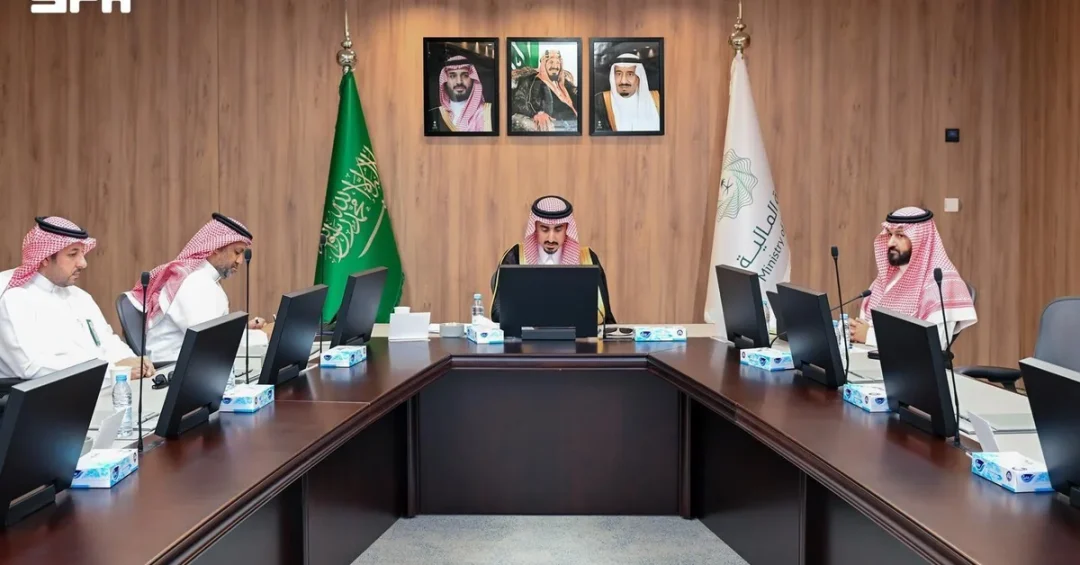
Saudi Arabia chaired the sixth meeting of the Deputies of the International Monetary and Financial Committee (IMFC), held virtually on September 29, 2026, bringing together senior officials and experts from member states to review global economic developments and prepare for the 2026 Annual Meetings of the International Monetary Fund and the World Bank Group in Bangkok, Thailand. The meeting, convened under the Kingdom’s chairmanship, underscored Saudi Arabia’s expanding role in shaping international economic policy at a time of persistent global uncertainty. According to the Saudi Press Agency, participants examined the IMF Managing Director’s Global Policy Agenda and discussed the Fund’s role in supporting member countries and strengthening global economic stability.
The session reflects the Kingdom’s growing influence in multilateral financial institutions, a position built on decades of engagement with the IMF and the G20. Under the chairmanship of Dr. Ryadh Alkhareif, Chair of the IMFC Deputies, the meeting addressed the draft IMFC Communiqué and key international economic and fiscal policy issues. The discussions form part of the preparations for the 2026 Annual Meetings, scheduled to take place in Bangkok from October 12 to 18, 2026. The virtual format allowed broad participation from member states, reinforcing the IMFC’s role as a key forum for coordinating global economic policy. How does a single meeting of deputies shape the decisions that affect economies worldwide?
Context and Background
What makes the IMFC such a critical body in the global financial architecture? The International Monetary and Financial Committee is the primary advisory committee of the IMF Board of Governors, responsible for providing strategic direction on the international monetary and financial system. Its deputies meet regularly to prepare the groundwork for the committee’s ministerial-level discussions, which typically occur during the IMF’s Spring and Annual Meetings. The sixth deputies meeting under Saudi chairmanship therefore represents a continuation of a structured, year-round process of policy coordination that few outside the financial world fully appreciate.
Saudi Arabia assumed the chairmanship of the IMFC Deputies at a pivotal moment for the global economy. The Kingdom has long been a constructive voice in international financial forums, leveraging its position as a leading energy producer and a member of the G20 to advocate for stability, inclusiveness, and sustainable growth. The chairmanship provides Saudi Arabia with a platform to help steer international dialogue on issues ranging from inflation and debt sustainability to digital transformation and climate finance. The fact that the meeting was held virtually also reflects the modern, efficient approach the Kingdom has brought to its international engagements.
Participants included senior officials and experts from member states, whose collective expertise informs the committee’s recommendations. The meeting’s agenda was both broad and technical, covering the global economic outlook, the IMF’s policy agenda, and the communiqué that will guide the Fund’s work in the coming months. As the world continues to navigate geopolitical developments, the importance of such coordination cannot be overstated. The IMFC’s work ensures that national policies are aligned with global objectives, reducing the risk of fragmentation and enhancing the resilience of the international financial system.
Key Details from the Sixth Deputies Meeting
What specific issues dominated the discussions in Riyadh’s virtual session? In his opening remarks, Dr. Ryadh Alkhareif noted that the global economic outlook continues to face numerous challenges amid ongoing geopolitical developments. He emphasized the importance of strengthening international cooperation and coordinating economic policies to address those challenges and support sustainable economic growth. His comments set a tone of pragmatism and collaboration that carried through the meeting’s agenda.
Dr. Alkhareif also underscored the importance of the IMFC continuing its role in bringing together efforts and strengthening multilateral international coordination to address shared challenges. He highlighted the IMF’s central role in supporting its member countries and promoting global economic and financial stability. These remarks align with Saudi Arabia’s consistent position that multilateral institutions are indispensable tools for managing global interdependence. The chair’s emphasis on coordination reflects a recognition that no single country, however large, can address today’s economic challenges alone.
Participants reviewed the IMF Managing Director’s Global Policy Agenda, a document that outlines the Fund’s priorities and policy recommendations for its membership. They discussed the Fund’s role in supporting member countries, particularly those facing balance-of-payments difficulties or structural economic transitions. The meeting also addressed the draft IMFC Communiqué, which will be finalized and issued at the Annual Meetings in Bangkok. The communiqué is expected to cover a range of topics, including inflation, fiscal policy, debt sustainability, and the need for continued international cooperation. The deputies’ review ensures that the document reflects a broad consensus before it reaches ministers and governors.
International and Regional Impact
How will the outcomes of this meeting resonate beyond the IMFC’s membership? The discussions in Riyadh come at a time when the global economy is navigating a complex landscape marked by geopolitical tensions, supply chain adjustments, and uneven growth across regions. The IMFC’s ability to forge consensus on policy priorities provides a measure of predictability for markets and governments alike. Saudi Arabia’s chairmanship helps ensure that the perspectives of emerging markets and developing economies are given due weight in these deliberations.
For the Middle East and North Africa region, the meeting signals the Kingdom’s commitment to regional economic stability. Saudi Arabia’s leadership in the IMFC complements its broader efforts to promote investment, trade, and financial integration across the region. The Kingdom’s own economic transformation, driven by Vision 2030, serves as a case study in how structural reforms can enhance resilience and attract global capital. By chairing the IMFC Deputies, Saudi Arabia is not only contributing to global governance but also demonstrating the constructive role that regional powers can play in international institutions.
The virtual format of the meeting also highlights the continued relevance of digital tools in diplomacy and international finance. While the Annual Meetings in Bangkok will bring participants together in person, the ability to convene virtually has made the IMFC’s work more inclusive and responsive. This approach aligns with global efforts to make international institutions more efficient and accessible, a goal that Saudi Arabia has supported consistently.
Economic and Strategic Significance
What does Saudi Arabia’s chairmanship of the IMFC Deputies mean for the global economy? The role places the Kingdom at the center of international efforts to coordinate monetary and fiscal policies, a responsibility that carries significant strategic weight. As the world’s largest oil exporter and a key player in global energy markets, Saudi Arabia has a direct interest in global economic stability. Its chairmanship allows it to advocate for policies that support growth, investment, and financial inclusion, while also protecting the interests of developing countries.
The meeting’s focus on the IMF’s Global Policy Agenda and the draft communiqué underscores the importance of forward-looking policy planning. By reviewing these documents in advance, the deputies help ensure that the Annual Meetings produce actionable outcomes. For Saudi Arabia, this process is an opportunity to showcase its economic modernization and its commitment to multilateralism. The Kingdom’s Vision 2030 reforms, which aim to diversify the economy and reduce dependence on oil, are closely tied to the global economic environment. A stable and growing world economy benefits Saudi Arabia’s export markets, investment flows, and tourism ambitions.
Moreover, the IMFC’s work on fiscal policy and debt sustainability is particularly relevant as many countries face rising borrowing costs and constrained fiscal space. Saudi Arabia’s own fiscal discipline and prudent debt management provide a positive example for other nations. The Kingdom’s participation in these discussions reinforces its reputation as a responsible and forward-looking member of the international community.
Vision 2030 Alignment
How does Saudi Arabia’s role in the IMFC reflect the objectives of Vision 2030? The Kingdom’s chairmanship of the IMFC Deputies is a direct expression of Vision 2030’s goal to strengthen Saudi Arabia’s position as a global investment powerhouse and a hub for international diplomacy. By leading discussions on global economic policy, Saudi Arabia is enhancing its soft power and building the international partnerships that are essential to its economic transformation.
Vision 2030 emphasizes the importance of a diversified economy, and global economic stability is a prerequisite for attracting the foreign investment that diversification requires. The Kingdom’s active engagement in the IMF and other multilateral institutions helps create a predictable and rules-based international environment in which Saudi businesses can thrive. It also positions Saudi Arabia as a bridge between developed and developing economies, a role that aligns with its G20 leadership and its growing influence in global governance.
As the 2026 Annual Meetings in Bangkok approach, the outcomes of the sixth IMFC Deputies Meeting will feed directly into the ministerial discussions. Saudi Arabia’s chairmanship ensures that the Kingdom’s voice—and the voice of the broader region—is heard in the formulation of global economic policy. This is not merely a ceremonial role; it is a substantive contribution to a more stable, prosperous, and cooperative world economy. The meeting stands as a testament to Saudi Arabia’s commitment to multilateralism and its vision of a globally engaged Kingdom.
20 Questions
Q1. What was the sixth IMFC Deputies Meeting and when did it take place?
A1. The sixth meeting of the Deputies of the International Monetary and Financial Committee was held virtually on September 29, 2026. It brought together senior officials and experts from member states to discuss global economic developments.
Q2. Who chaired the meeting?
A2. The meeting was chaired by Dr. Ryadh Alkhareif, Chair of the IMFC Deputies, under the overall chairmanship of the Kingdom of Saudi Arabia. His leadership guided discussions on global economic challenges and policy coordination.
Q3. What was the main purpose of the meeting?
A3. The meeting aimed to review the global economic outlook, discuss the IMF Managing Director’s Global Policy Agenda, and prepare the draft IMFC Communiqué for the 2026 Annual Meetings of the IMF and World Bank Group.
Q4. What did Dr. Ryadh Alkhareif emphasize in his opening remarks?
A4. He noted that the global economic outlook faces numerous challenges amid ongoing geopolitical developments. He emphasized the importance of strengthening international cooperation and coordinating economic policies to support sustainable economic growth.
Q5. Why is the IMFC important in the global financial system?
A5. The IMFC is the primary advisory committee of the IMF Board of Governors. It provides strategic direction on the international monetary and financial system and helps coordinate global economic policy responses.
Q6. What is the IMF Managing Director’s Global Policy Agenda?
A6. It is a document that outlines the IMF’s priorities and policy recommendations for its member countries. The deputies reviewed it to ensure alignment with global economic needs and the Fund’s strategic objectives.
Q7. What is the draft IMFC Communiqué?
A7. The draft communiqué is a statement that will be finalized and issued at the IMF Annual Meetings. It covers key international economic and fiscal policy issues and reflects the consensus of member countries.
Q8. When and where are the 2026 IMF and World Bank Group Annual Meetings scheduled?
A8. They are scheduled to take place in Bangkok, Thailand, from October 12 to 18, 2026. The sixth deputies meeting was part of the preparations for these high-level gatherings.
Q9. How does Saudi Arabia’s chairmanship benefit the global economy?
A9. Saudi Arabia’s chairmanship helps ensure that the perspectives of emerging markets and developing economies are considered. It also leverages the Kingdom’s experience in economic reform and its commitment to multilateral cooperation.
Q10. What role did the virtual format play in the meeting?
A10. The virtual format allowed broad participation from member states, making the meeting more inclusive and efficient. It reflects the modern approach Saudi Arabia has brought to international engagements.
Q11. What are the key challenges facing the global economy according to the meeting?
A11. The meeting noted ongoing geopolitical developments and other challenges that threaten sustainable growth. These include inflation, debt sustainability concerns, and uneven recovery across regions.
Q12. How does the IMFC promote international cooperation?
A12. The IMFC brings together efforts and strengthens multilateral coordination to address shared challenges. It provides a platform for consensus-building on economic and financial policies among its member countries.
Q13. What is the IMF’s role in supporting member countries?
A13. The IMF provides financial assistance, policy advice, and technical support to member countries facing economic difficulties. It also promotes global economic and financial stability through surveillance and capacity development.
Q14. How does Saudi Arabia’s Vision 2030 relate to its IMFC chairmanship?
A14. Vision 2030 aims to strengthen Saudi Arabia’s global role and diversify its economy. The IMFC chairmanship enhances the Kingdom’s soft power and builds international partnerships essential to its economic transformation.
Q15. What economic reforms has Saudi Arabia undertaken that are relevant to the IMFC discussions?
A15. Saudi Arabia has implemented fiscal discipline, economic diversification, and investment-friendly policies under Vision 2030. These reforms serve as a positive example for other countries seeking sustainable growth.
Q16. How does the meeting impact the Middle East and North Africa region?
A16. The meeting signals Saudi Arabia’s commitment to regional economic stability. It complements the Kingdom’s efforts to promote investment, trade, and financial integration across the region.
Q17. What is the significance of the IMFC deputies’ review of the communiqué?
A17. The review ensures that the communiqué reflects a broad consensus before it reaches ministers and governors. It helps make the final document more balanced and actionable.
Q18. How does the IMFC address debt sustainability issues?
A18. The IMFC discusses fiscal policy and debt sustainability as part of its agenda. It encourages policies that promote sustainable borrowing and prudent debt management among member countries.
Q19. What can be expected from the 2026 Annual Meetings in Bangkok?
A19. The Annual Meetings will finalize the IMFC Communiqué and address key global economic issues. They will bring together finance ministers and central bank governors to chart the IMF’s future direction.
Q20. How does Saudi Arabia’s leadership in the IMFC reflect its global role?
A20. It demonstrates the Kingdom’s commitment to multilateralism and its growing influence in international financial institutions. It also aligns with Vision 2030’s goal of positioning Saudi Arabia as a global investment powerhouse.
Reader Feedback
We value your thoughts. Please share your feedback on this article.
Your feedback helps us improve our coverage.