


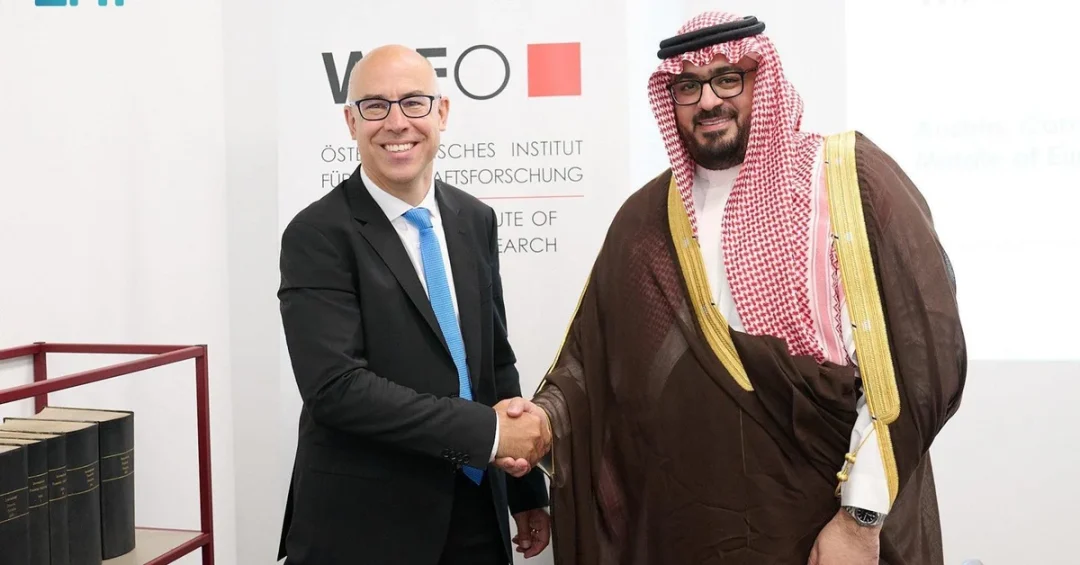
Saudi Minister of Economy and Planning Faisal bin Fadhil Alibrahim met with Director Gabriel Felbermayr of the Austrian Institute of Economic Research in Vienna on May 27, 2024, on the sidelines of the ninth session of the Saudi-Austrian Joint Committee. The two officials discussed global economic developments and other topics of mutual interest, according to the Saudi Press Agency. The meeting was also attended by Saudi Ambassador to Austria Dr. Abdullah Tawlah, underscoring the diplomatic significance of the encounter.
Context and Background
The Saudi-Austrian Joint Committee serves as a vital platform for strengthening bilateral ties between the Kingdom of Saudi Arabia and Austria, focusing on economic cooperation, trade, and investment. This ninth session builds on a history of productive dialogue, aligning with Saudi Arabia’s broader strategy to diversify its economy and foster international partnerships under Vision 2030. Austria, with its advanced industrial and research capabilities, represents a key partner in Europe for knowledge exchange and innovation. The meeting comes amid global economic uncertainties, including inflationary pressures and shifting energy markets, making such high-level discussions essential for crafting resilient policies.
Key Details
During the meeting, Minister Alibrahim and Director Felbermayr exchanged views on current global economic trends, including sustainable growth strategies and the role of research in policymaking. The Austrian Institute of Economic Research is a leading institution in economic analysis, providing valuable insights that can inform Saudi Arabia’s ongoing reforms. Ambassador Tawlah’s presence highlights the diplomatic weight of the discussions. This engagement is part of a series of meetings under the Joint Committee, which also covers areas such as technology, renewable energy, and education, reinforcing the multifaceted nature of Saudi-Austrian relations.
Implications and Impact
The talks are expected to enhance economic cooperation, potentially leading to joint research initiatives, increased trade, and investment flows. For Saudi Arabia, collaborating with Austrian economic experts supports its efforts to diversify revenue streams and develop non-oil sectors. Regionally, this partnership can contribute to stability and prosperity by promoting best practices in economic governance. Internationally, it signals Saudi Arabia’s commitment to engaging with global thought leaders to address shared challenges like climate change and digital transformation. Such diplomacy also strengthens Saudi Arabia’s position as a reliable partner in Europe and beyond.
Vision 2030 Alignment
This meeting directly supports Vision 2030, Saudi Arabia’s ambitious roadmap to transform its economy and society. By fostering international collaborations, the Kingdom aims to enhance its knowledge economy, attract foreign investment, and create opportunities for its citizens. The exchange with the Austrian Institute of Economic Research exemplifies how Saudi Arabia is leveraging global expertise to achieve its goals of economic diversification and sustainable development. As the Kingdom continues to open up and modernize, partnerships like this will be crucial in realizing its vision of a thriving, interconnected future.
20 Questions
Q1. Who met with Minister Faisal bin Fadhil Alibrahim?
A1. Minister Alibrahim met with Gabriel Felbermayr, Director of the Austrian Institute of Economic Research, in Vienna on May 27, 2024.
Q2. What was the main purpose of the meeting?
A2. The meeting aimed to discuss global economic developments and other topics of mutual interest between Saudi Arabia and Austria.
Q3. Where did the meeting take place?
A3. The meeting took place in Vienna, Austria, on the sidelines of the ninth session of the Saudi-Austrian Joint Committee.
Q4. Who else attended the meeting?
A4. Saudi Ambassador to Austria Dr. Abdullah Tawlah attended the meeting, highlighting its diplomatic importance.
Q5. What is the Saudi-Austrian Joint Committee?
A5. It is a bilateral platform for economic cooperation, trade, and investment between Saudi Arabia and Austria, now in its ninth session.
Q6. How does this meeting align with Saudi Vision 2030?
A6. It supports Vision 2030 by fostering international partnerships that enhance economic diversification and knowledge exchange.
Q7. What is the Austrian Institute of Economic Research?
A7. It is a leading Austrian research institution that provides economic analysis and policy advice, contributing valuable insights to global discussions.
Q8. What global economic topics were likely discussed?
A8. Topics likely included sustainable growth, inflation trends, energy markets, and the role of research in economic policymaking.
Q9. Why is this meeting significant for Saudi Arabia?
A9. It strengthens Saudi Arabia’s international ties, supports economic reforms, and promotes knowledge sharing with European experts.
Q10. How might this meeting impact Saudi-Austrian relations?
A10. It is expected to boost cooperation in trade, investment, and research, leading to new joint initiatives and mutual benefits.
Q11. What other areas does the Joint Committee cover?
A11. The committee also addresses technology, renewable energy, education, and other sectors of mutual interest.
Q12. What is the significance of Ambassador Tawlah’s attendance?
A12. It underscores the diplomatic weight of the meeting and Saudi Arabia’s commitment to deepening bilateral ties with Austria.
Q13. How does this meeting contribute to Saudi Arabia’s economic diversification?
A13. By engaging with Austrian economic experts, Saudi Arabia can gain insights to develop non-oil sectors and reduce reliance on hydrocarbons.
Q14. What role does research play in Saudi Arabia’s economic planning?
A14. Research informs evidence-based policies, helping Saudi Arabia implement effective reforms and achieve sustainable development goals.
Q15. What are the potential outcomes of this meeting?
A15. Potential outcomes include joint research projects, increased trade, and investment opportunities that benefit both nations.
Q16. How does this meeting reflect Saudi Arabia’s global engagement?
A16. It demonstrates Saudi Arabia’s active diplomacy and willingness to collaborate with international institutions on economic issues.
Q17. What global economic challenges were likely addressed?
A17. Challenges such as inflation, supply chain disruptions, and climate change impacts were likely discussed.
Q18. How can Austria benefit from this partnership?
A18. Austria can gain access to Saudi markets, investment opportunities, and collaboration in research and innovation.
Q19. What message does this meeting send to the international community?
A19. It signals Saudi Arabia’s openness to global cooperation and its commitment to economic modernization and stability.
Q20. What future steps are expected after this meeting?
A20. Follow-up meetings and agreements may be planned to implement the discussed initiatives and further strengthen bilateral relations.
Reader Feedback
We value your thoughts. Please share your feedback on this article.
Your feedback helps us improve our coverage.