


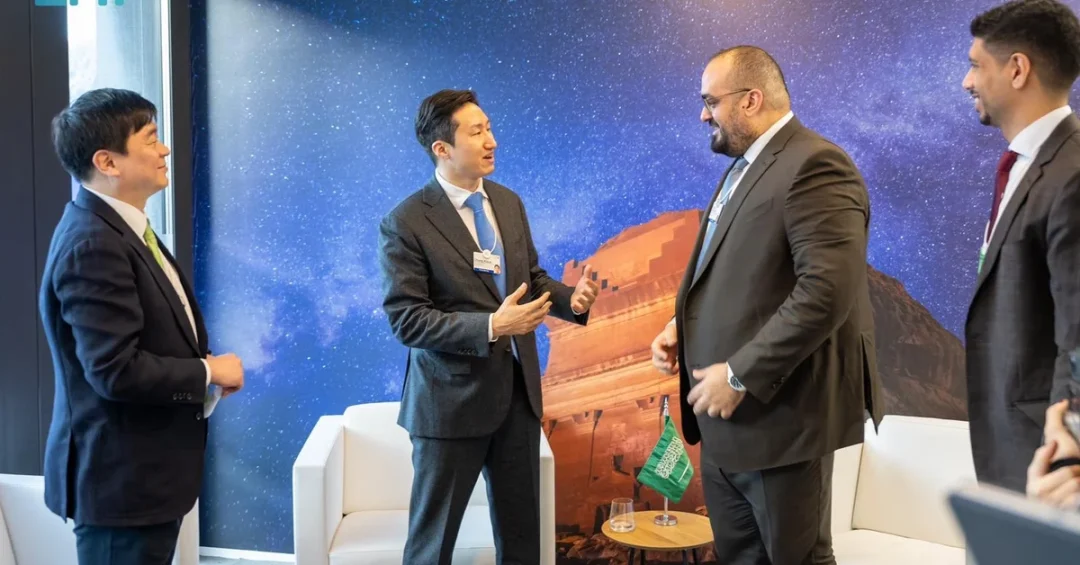
Saudi Minister of Economy and Planning Faisal Alibrahim met with Vice-Chairman and CEO of HD Hyundai Chung Ki-Sun on the sidelines of the annual meeting of the World Economic Forum 2025 in Davos, Switzerland, to discuss industrial innovation, maritime sustainability, and investment opportunities tied to Saudi Vision 2030. The meeting, reported by the Saudi Press Agency, underscores the Kingdom’s active engagement with global industrial leaders as it advances its economic diversification agenda and seeks to position itself as a hub for advanced manufacturing and sustainable maritime industries.
The encounter took place during a week of high-level diplomatic and business activity in Davos, where Saudi officials joined heads of state, chief executives, and international organizations to discuss global economic trends and cooperation. For Saudi Arabia, the World Economic Forum provides a platform to showcase the progress of Vision 2030, attract foreign investment, and build partnerships that support the Kingdom’s long-term development goals. The discussion with HD Hyundai, one of the world’s largest shipbuilding and heavy industry conglomerates, signals continued interest from global industrial players in Saudi Arabia’s growing manufacturing and logistics sectors.
Context and Background
Why does a meeting between a Saudi minister and a South Korean industrial chief matter on the global stage? The answer lies in the scale of Saudi Arabia’s economic transformation and the strategic importance of maritime trade and heavy industry to the Kingdom’s future. Saudi Arabia, under Vision 2030, is pursuing a broad diversification strategy aimed at reducing dependence on oil revenues and building new engines of growth in manufacturing, logistics, technology, and tourism. The National Industrial Development and Logistics Program, a key Vision 2030 initiative, targets the development of advanced industries and the expansion of the Kingdom’s maritime and port infrastructure.
HD Hyundai, formerly known as Hyundai Heavy Industries Group, is a global leader in shipbuilding, offshore engineering, construction equipment, and energy solutions. The company has a long history of delivering large-scale projects in the Middle East, including offshore platforms and vessels for the region’s energy sector. Its expertise aligns closely with Saudi Arabia’s ambitions to develop a world-class maritime industry, support the growth of the King Salman International Complex for Maritime Industries and Services in Ras Al Khair, and enhance the Kingdom’s capacity in shipbuilding and repair.
The meeting also reflects Saudi Arabia’s broader strategy of deepening economic ties with South Korea, a relationship that has strengthened significantly in recent years. South Korean companies are increasingly involved in Saudi mega-projects, from petrochemicals to smart city development, and the two countries have identified industrial cooperation as a priority area. For Saudi Arabia, such partnerships bring technical knowledge, investment, and access to global supply chains, all of which are essential to the success of Vision 2030.
Key Details
What specific topics were on the agenda? According to the Saudi Press Agency, Minister Alibrahim and CEO Chung Ki-Sun discussed industrial innovation, maritime sustainability, and the opportunities available within the Kingdom’s Vision 2030. Industrial innovation is a central pillar of Saudi Arabia’s efforts to build a knowledge-based economy, with a focus on automation, digitalization, and advanced manufacturing. Maritime sustainability is equally important, as the Kingdom seeks to balance the growth of its maritime sector with environmental responsibility and the global transition to greener shipping fuels.
The meeting took place on the sidelines of the World Economic Forum 2025 annual meeting in Davos, a gathering that brings together political and business leaders to address pressing global challenges. Saudi Arabia’s participation in Davos is part of its ongoing engagement with international partners and its commitment to shaping global economic dialogue. The Kingdom’s delegation typically includes senior officials from key ministries and agencies, reflecting the whole-of-government approach to advancing Vision 2030.
While the specific outcomes of the meeting were not detailed in the initial report, such discussions often lay the groundwork for future cooperation agreements, joint ventures, or investment commitments. HD Hyundai’s interest in Saudi Arabia is consistent with the company’s global strategy of expanding its presence in high-growth markets and participating in energy transition and infrastructure projects. For Saudi Arabia, engaging with a company of HD Hyundai’s caliber reinforces its attractiveness as a destination for foreign direct investment and industrial partnerships.
International and Regional Impact
How does this meeting fit into the broader geopolitical and economic landscape? Saudi Arabia’s outreach to global industrial leaders comes at a time of significant shifts in global trade, energy, and technology. The Kingdom is positioning itself as a bridge between East and West, leveraging its location, resources, and capital to attract partners from Asia, Europe, and the Americas. Cooperation with South Korea, a key Asian economy and technological powerhouse, is a prime example of this strategy.
Regionally, Saudi Arabia’s industrial ambitions are closely tied to its efforts to become a logistics hub connecting three continents. The Kingdom’s ports on the Red Sea and the Arabian Gulf are being upgraded to handle larger volumes of cargo and to serve as gateways for trade between Asia, Africa, and Europe. Maritime sustainability is a growing focus, as the International Maritime Organization pushes for lower-carbon shipping. Saudi Arabia’s investments in green ports, alternative fuels, and smart shipping technologies could position it as a leader in this transition.
The meeting also highlights the increasing role of Saudi Arabia in global economic governance. By participating in forums like the World Economic Forum, the Kingdom contributes to discussions on energy security, supply chain resilience, and sustainable development. Its partnerships with companies like HD Hyundai demonstrate a practical approach to implementing Vision 2030 and achieving the Sustainable Development Goals.
Economic and Strategic Significance
What does this mean for Saudi Arabia’s economy and strategic priorities? The Kingdom is investing heavily in industrial diversification, with the manufacturing sector targeted to contribute a larger share of GDP. The National Industrial Development and Logistics Program aims to attract billions of dollars in investment, create hundreds of thousands of jobs, and boost non-oil exports. Collaboration with HD Hyundai could support these goals by bringing advanced technologies, training, and supply chain integration.
Maritime sustainability is not just an environmental imperative but also an economic opportunity. As the world transitions to cleaner energy, demand for green ships, low-carbon fuels, and sustainable port operations will grow. Saudi Arabia, with its strategic location and financial resources, can capture a significant share of this market. HD Hyundai’s expertise in building eco-friendly vessels, such as those powered by liquefied natural gas or hydrogen, aligns with the Kingdom’s aspirations.
Furthermore, the meeting underscores the importance of human capital development. Vision 2030 emphasizes the need to equip Saudi youth with the skills required for future industries. Partnerships with global leaders like HD Hyundai often include training programs, knowledge transfer, and joint research initiatives. Such collaboration helps build a skilled workforce capable of driving innovation and sustaining economic growth.
Vision 2030 Alignment
How does the meeting between Minister Alibrahim and CEO Chung Ki-Sun align with Vision 2030? The Vision, launched in 2016 by Crown Prince Mohammed bin Salman, sets out a comprehensive roadmap for transforming Saudi Arabia’s economy and society. It aims to diversify revenue sources, increase private sector participation, and develop new industries. The meeting directly supports these objectives by exploring cooperation in industrial innovation and maritime sustainability, two areas with high growth potential.
Under Vision 2030, Saudi Arabia seeks to become a global investment powerhouse and a hub for trade and logistics. The Kingdom has launched several mega-projects, including NEOM, the Red Sea Project, and the King Salman International Complex for Maritime Industries and Services. These projects require partnerships with international companies that possess cutting-edge technology and experience. HD Hyundai’s potential involvement could accelerate the development of these projects and enhance their competitiveness.
In conclusion, the meeting between Minister Faisal Alibrahim and CEO Chung Ki-Sun is a testament to Saudi Arabia’s proactive approach to building international partnerships that advance Vision 2030. As the Kingdom continues its journey of transformation, such engagements will be crucial in realizing its ambitions and contributing to global economic prosperity. The world is watching, and Saudi Arabia is ready to lead.
20 Questions
Q1. Who met with whom at the World Economic Forum 2025?
A1. Saudi Minister of Economy and Planning Faisal Alibrahim met with Chung Ki-Sun, Vice-Chairman and CEO of HD Hyundai, on the sidelines of the World Economic Forum 2025 in Davos.
Q2. What topics did they discuss?
A2. They discussed industrial innovation, maritime sustainability, and opportunities available within Saudi Arabia’s Vision 2030, according to the Saudi Press Agency.
Q3. Where did the meeting take place?
A3. The meeting took place in Davos, Switzerland, during the annual meeting of the World Economic Forum 2025.
Q4. What is HD Hyundai known for?
A4. HD Hyundai is a global leader in shipbuilding, offshore engineering, construction equipment, and energy solutions, with extensive experience in the Middle East.
Q5. Why is this meeting significant for Saudi Arabia?
A5. It reflects Saudi Arabia’s efforts to attract international industrial partners to support economic diversification and the goals of Vision 2030.
Q6. What is Vision 2030?
A6. Vision 2030 is Saudi Arabia’s comprehensive reform plan launched in 2016 to diversify the economy, reduce oil dependence, and develop new sectors.
Q7. How does maritime sustainability relate to Vision 2030?
A7. Maritime sustainability supports the growth of Saudi Arabia’s maritime industry, enhances port infrastructure, and aligns with global environmental goals.
Q8. What is the National Industrial Development and Logistics Program?
A8. It is a Vision 2030 initiative aimed at developing advanced industries, expanding logistics, and boosting non-oil exports.
Q9. What is the King Salman International Complex for Maritime Industries and Services?
A9. It is a major shipbuilding and repair hub in Ras Al Khair, designed to position Saudi Arabia as a leader in maritime industries.
Q10. How does Saudi Arabia benefit from partnerships with South Korean companies?
A10. Such partnerships bring technology, investment, and expertise, supporting Saudi Arabia’s industrial development and job creation.
Q11. What are the economic goals of Vision 2030?
A11. Vision 2030 aims to increase non-oil GDP, boost private sector participation, attract foreign investment, and create jobs for Saudi citizens.
Q12. What role does the World Economic Forum play for Saudi Arabia?
A12. It provides a platform for Saudi Arabia to engage with global leaders, showcase Vision 2030 progress, and attract investment.
Q13. What is industrial innovation?
A13. Industrial innovation involves adopting advanced technologies like automation, digitalization, and AI to improve manufacturing and industrial processes.
Q14. How does HD Hyundai contribute to maritime sustainability?
A14. HD Hyundai develops eco-friendly ships, such as those powered by LNG or hydrogen, and advanced technologies to reduce emissions.
Q15. What are Saudi Arabia’s strategic priorities in the maritime sector?
A15. Priorities include expanding port capacity, developing shipbuilding, promoting green shipping, and becoming a global logistics hub.
Q16. How does this meeting reflect Saudi Arabia’s global engagement?
A16. It shows Saudi Arabia’s active participation in international forums and its openness to partnerships with leading global companies.
Q17. What are the potential outcomes of the meeting?
A17. Potential outcomes include future cooperation agreements, joint ventures, or investment commitments in industrial and maritime projects.
Q18. Why is foreign direct investment important for Vision 2030?
A18. Foreign direct investment brings capital, technology, and expertise, helping to diversify the economy and create sustainable jobs.
Q19. How does Saudi Arabia support human capital development in these sectors?
A19. Through training programs, education initiatives, and partnerships that transfer knowledge and build skills for future industries.
Q20. What message does this meeting send to the international community?
A20. It signals Saudi Arabia’s commitment to economic diversification, international cooperation, and achieving the ambitious goals of Vision 2030.
Reader Feedback
We value your thoughts. Please share your feedback on this article.
Your feedback helps us improve our coverage.
Related articles
 Saudi Arabia Produces Over 3 Billion Tons of Dates Annually
 Saudi Commerce Ministry Serves Over 7 Million Customers in 2024
 Saudi Bank Credit Records Annual Growth of Over SAR345 Billion by November 2024
 Saudi Economy Minister Meets Berlin Global Dialogue Chair
 Saudi EXIM, Bank Alfalah Sign $15M Credit Line Deal
 Kingdom Holding Resumes Jeddah Tower Construction