


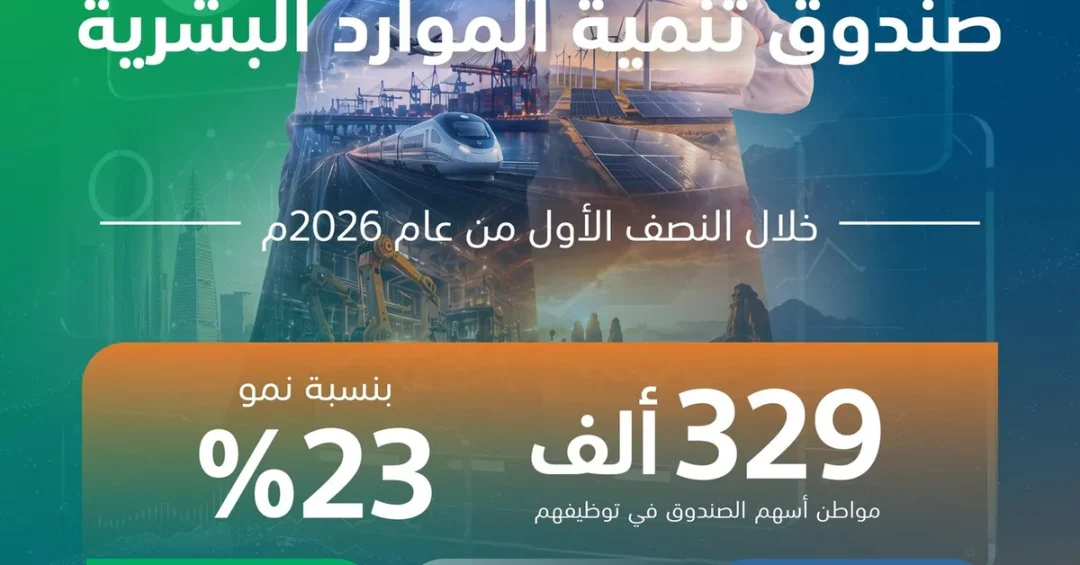
The Human Resources Development Fund (HADAF) announced that it facilitated the employment of 329,000 Saudi citizens in the first half of 2026, marking a 23% growth compared to the same period in 2025. The announcement, made via the official Saudi Press Agency, highlights the fund’s continued effectiveness in boosting quality and sustainable employment opportunities, raising the readiness of national talents, and advancing the goals of Saudi Vision 2030 and the Human Capability Development Program.
Context and Background
Operating under the Kingdom’s Vision 2030 framework, HADAF serves as a primary enabler for developing human capital and enhancing the competitiveness of Saudi professionals. Through an integrated system of training, empowerment, and career guidance programs, the fund supports the national employment localization strategy and contributes to improving labor market efficiency, aligning with ongoing economic transformations and sustainable growth across sectors.
Key Details
During the same period, the fund disbursed approximately 4.9 billion Saudi riyals in direct support to individuals and enterprises benefiting from its training, empowerment, and counseling programs. The total number of beneficiaries surpassed 1.69 million citizens, illustrating the broad developmental impact on individuals, businesses, and the overall labor market. Moreover, over 171,000 enterprises across all regions and economic sectors received support, marking a 25% increase compared to the same period last year. Notably, small, medium, and micro enterprises accounted for 95% of all supported companies, confirming the fund’s commitment to private sector growth and its role in attracting and qualifying national talent.
Turki bin Abdullah Al-Juaweeni, Director General of HADAF, emphasized that these results reflect the support and attention that human resource development receives from the wise leadership. He noted that investment in human capital remains a central pillar of national development and the foundation for a prosperous, sustainable economy. He underscored the fund’s continued collaboration with government agencies and private sector companies to design more efficient and flexible support solutions that raise the readiness of citizens and enable them to access high-quality, sustainable job opportunities.
Implications and Impact
The sustained growth in beneficiaries and participating establishments demonstrates HADAF’s ability to respond to economic changes and labor market needs. By focusing on priority sectors and nurturing national skills, the fund strengthens the competitiveness of Saudi manpower and contributes to higher labor productivity. These developments are expected to support the objectives of the National Employment Strategy and positively affect economic growth and long-term social stability.
Vision 2030 Alignment
The milestones achieved by HADAF are a direct reflection of the Kingdom’s commitment to human capital development as a key driver of Vision 2030. Through continued innovation in training and empowerment, the fund aligns its efforts with the Human Capability Development Program, which aims to cultivate a skilled, future-ready workforce. As the Kingdom progresses toward a diversified economy, such achievements not only raise the standard of living but also establish Saudi Arabia as a model for sustainable, inclusive growth in the region and beyond.
20 Questions
Q1. What is the Saudi Human Resources Development Fund (HADAF)?
A1. HADAF is a Saudi government entity responsible for developing human resources and enhancing the skills of the national workforce. It supports training, employment, and sustainable development in alignment with Vision 2030.
Q2. What employment milestone did HADAF announce for the first half of 2026?
A2. HADAF announced the employment of 329,000 Saudi citizens during the first half of 2026, representing a 23% growth compared to the same period in 2025.
Q3. How does this employment growth reflect on Saudi Arabia’s labor market?
A3. It indicates increasing effectiveness of labor market policies and the successful integration of national talents into quality employment, contributing to economic stability and workforce competitiveness.
Q4. What is the total financial support provided by HADAF in the first half of 2026?
A4. The fund disbursed approximately 4.9 billion riyals as direct support for individuals and establishments participating in training, empowerment, and guidance programs.
Q5. How many citizens benefited from HADAF’s services and programs in that period?
A5. The total number of beneficiaries exceeded 1.69 million citizens, indicating broad reach and significant developmental impact across the Kingdom.
Q6. How many establishments benefited from HADAF support in the first half of 2026?
A6. Over 171,000 establishments across various regions and sectors have benefited from HADAF services, marking a 25% growth compared to the prior year.
Q7. What is the percentage of small, medium, and micro enterprises among the supported establishments?
A7. These establishments accounted for 95% of the total beneficiaries, highlighting the fund’s emphasis on private sector growth and SME development.
Q8. Who leads the Human Resources Development Fund?
A8. The Director General of HADAF is Turki bin Abdullah Al-Juaweini, who provides strategic leadership and oversight for the fund’s initiatives and partnerships.
Q9. What is the official source of this announcement?
A9. The announcement was made via the Saudi Press Agency (SPA), the official source of government news in Saudi Arabia, ensuring credibility and transparency.
Q10. How does HADAF contribute to the goals of Vision 2030?
A10. By empowering human capital and raising workforce readiness, HADAF directly supports the human capability development pillar of Vision 2030, aiming for a thriving and productive society.
Q11. What type of programs does HADAF offer?
A11. HADAF offers training, empowerment, and counseling programs designed to enhance skills, employability, and career success for Saudi nationals in the private sector.
Q12. How does HADAF support private sector establishments?
A12. The fund provides financial support and consultation to businesses, particularly SMEs, enabling them to hire and develop Saudi talent, improving productivity and competitiveness.
Q13. In what sectors are HADAF’s programs focused?
A13. HADAF aligns its initiatives with priority sectors under Vision 2030, including technology, healthcare, tourism, logistics, and renewable energy, among others.
Q14. What is the Human Capability Development Program?
A14. It is a major initiative under Vision 2030 that aims to develop resilient, future-ready human capital by enhancing education, training, and skill building for all citizens.
Q15. What impact does HADAF have on employment rates in Saudi Arabia?
A15. HADAF’s support has contributed to a 23% increase in citizen employment in the first half of 2026, demonstrating its role in creating sustainable, quality job opportunities.
Q16. What is the significance of the 4.9 billion riyals expenditure?
A16. This substantial financial support reflects the government’s commitment to investing in human capital, enabling individuals and establishments to flourish in the evolving economy.
Q17. How does HADAF respond to changing economic needs?
A17. The fund continuously designs and adapts programs to address current labor market demands, ensuring that skills development aligns with economic diversification.
Q18. What role does HADAF play in the National Employment Strategy?
A18. HADAF is a key implementing partner in the National Employment Strategy, helping to achieve its objectives of increasing Saudi participation in the workforce and upgrading skills.
Q19. What is the growth percentage of beneficiary establishments compared to last year?
A19. The number of establishments benefiting from HADAF grew by 25% in the first half of 2026 compared with the same period of 2025, indicating expanding private sector engagement.
Q20. What are the future prospects for HADAF’s initiatives?
A20. HADAF is committed to developing more flexible and effective support mechanisms, fostering partnerships, and enabling a larger number of citizens to achieve sustainable employment, contributing to the long-term prosperity of the Kingdom.
Reader Feedback
We value your thoughts. Please share your feedback on this article.
Your feedback helps us improve our coverage.