


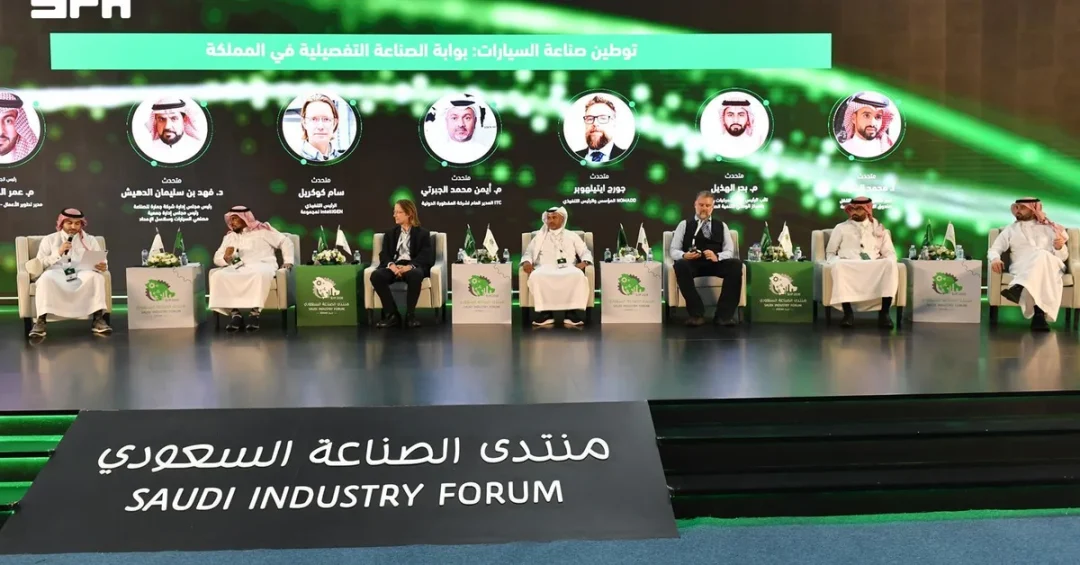
The Saudi Industry Forum 2026, held under the patronage of the Ministry of Industry and Mineral Resources, continued its second day at the Jeddah Superdome on September 15, 2026, with a pivotal session titled “Gateway to Discrete Manufacturing in the Kingdom.” The session focused on localizing the automotive industry and advancing discrete manufacturing as a cornerstone of Saudi Arabia’s industrial diversification, in line with Vision 2030.
Context and Background
The forum, themed “Innovation for Sustainability,” brings together government officials, industry leaders, and international experts to discuss strategies for expanding the Kingdom’s manufacturing base. Discrete manufacturing—covering automobiles, machinery, equipment, and other assembled products—is distinct from process industries such as chemicals and refining. Saudi Arabia aims to develop this sector to reduce reliance on oil, create high-skilled jobs, and enhance economic resilience.
According to the Saudi Press Agency (SPA), participants emphasized that building integrated local supply chains is essential for automotive localization. They noted that growth depends on a network of local suppliers capable of meeting manufacturers’ needs and localizing components, supported by appropriate legislative, financing, and logistics frameworks.
Key Details
The session explored opportunities for entrepreneurs and industrial enterprises to localize production of components required by supply chains. Participants discussed transforming challenges related to material availability into investment opportunities, thereby strengthening local content and the competitiveness of national products. The forum also examined how discrete manufacturing can leverage outputs from the manufacturing sector to develop value-added products, contributing to a more integrated and sustainable industrial base.
Speakers highlighted that expanding discrete manufacturing is a key path toward diversifying the industrial base and achieving the goals of Vision 2030. They stressed the importance of collaboration between government entities, the private sector, and international partners to build a robust automotive ecosystem in the Kingdom.
Implications and Impact
The localization of the automotive industry is expected to have significant economic implications, including job creation, technology transfer, and increased non-oil exports. It also positions Saudi Arabia as a regional hub for advanced manufacturing, attracting foreign investment and fostering innovation. The development of discrete manufacturing will require targeted investments in skills training, research and development, and infrastructure.
Furthermore, the forum’s outcomes align with the National Industrial Development and Logistics Program (NIDLP), which seeks to transform Saudi Arabia into a leading industrial power and logistics hub. By localizing automotive components, the Kingdom can reduce import dependency and enhance supply chain resilience, especially amid global disruptions.
Vision 2030 Alignment
This initiative directly supports Vision 2030’s objective of diversifying the economy and boosting non-oil GDP. The development of a localized automotive industry and discrete manufacturing sector will contribute to sustainable growth, innovation, and the creation of rewarding opportunities for Saudi citizens, reinforcing the Kingdom’s position as a global industrial player.
20 Questions
Q1. What was the theme of the Saudi Industry Forum 2026?
A1. The forum was held under the theme “Innovation for Sustainability,” focusing on advancing sustainable industrial practices and technologies in line with Saudi Arabia’s Vision 2030 goals.
Q2. Where did the Saudi Industry Forum 2026 take place?
A2. The forum took place at the Jeddah Superdome in Jeddah, Saudi Arabia, hosting industry leaders, government officials, and international experts over multiple days.
Q3. What is discrete manufacturing?
A3. Discrete manufacturing refers to the production of distinct items such as automobiles, machinery, and equipment, as opposed to process industries that deal with bulk materials like chemicals.
Q4. Why is localizing the automotive industry important for Saudi Arabia?
A4. Localizing the automotive industry helps diversify the economy, create jobs, reduce import reliance, and develop advanced manufacturing capabilities, aligning with Vision 2030.
Q5. What role do supply chains play in auto industry localization?
A5. Supply chains are crucial for providing components and materials; building local supplier networks ensures efficiency, reduces costs, and supports sustainable growth of the automotive sector.
Q6. How can entrepreneurs benefit from this initiative?
A6. Entrepreneurs can seize opportunities to localize component production, turning challenges into investment prospects and contributing to a competitive national industrial base.
Q7. What legislative frameworks are needed for discrete manufacturing?
A7. Supportive laws, financing mechanisms, and logistics infrastructure are essential to attract investment and enable smooth operation of discrete manufacturing industries.
Q8. How does discrete manufacturing differ from process industries?
A8. Discrete manufacturing produces individual, countable items, while process industries involve continuous production of bulk goods like petroleum or chemicals.
Q9. What are the expected economic impacts of automotive localization?
A9. It is expected to boost non-oil exports, create high-skilled jobs, transfer technology, and enhance the Kingdom’s global competitiveness in manufacturing.
Q10. How does the forum align with Vision 2030?
A10. The forum supports Vision 2030’s goals of economic diversification, industrial development, and sustainable growth through localized manufacturing and innovation.
Q11. What is the National Industrial Development and Logistics Program (NIDLP)?
A11. NIDLP is a Vision 2030 program aimed at transforming Saudi Arabia into a leading industrial power and logistics hub, focusing on sectors like mining, energy, and manufacturing.
Q12. What challenges were discussed regarding material availability?
A12. Participants discussed turning challenges related to certain materials and parts into opportunities by localizing production and developing innovative solutions.
Q13. How can local content be strengthened?
A13. By supporting local suppliers, enhancing skills, and incentivizing investment in component manufacturing, local content and product competitiveness can be significantly improved.
Q14. What opportunities exist for international companies?
A14. International firms can partner with Saudi entities to transfer technology, invest in local facilities, and access a growing market for automotive and machinery products.
Q15. What is the significance of the Jeddah Superdome as a venue?
A15. The Jeddah Superdome is a modern, iconic venue that reflects Saudi Arabia’s capacity to host major international events and underscores its growing role in global industry dialogues.
Q16. How does discrete manufacturing contribute to sustainability?
A16. It promotes efficient resource use, enables recycling, and supports the production of eco-friendly vehicles and machinery, aligning with sustainability goals.
Q17. What are the key enablers for auto industry growth?
A17. Key enablers include robust supply chains, skilled workforce, financing, infrastructure, and supportive government policies that foster innovation and investment.
Q18. How will localizing components benefit the Saudi economy?
A18. It will reduce imports, create jobs, increase exports, and build a resilient industrial base, contributing to economic diversification and GDP growth.
Q19. What role does innovation play in discrete manufacturing?
A19. Innovation drives efficiency, product development, and competitiveness, enabling Saudi Arabia to adopt advanced technologies like automation and smart manufacturing.
Q20. What is the future outlook for Saudi Arabia’s industrial sector?
A20. With continued investment and strategic initiatives, the sector is poised for significant growth, positioning the Kingdom as a global leader in advanced manufacturing and logistics.
Reader Feedback
We value your thoughts. Please share your feedback on this article.
Your feedback helps us improve our coverage.