


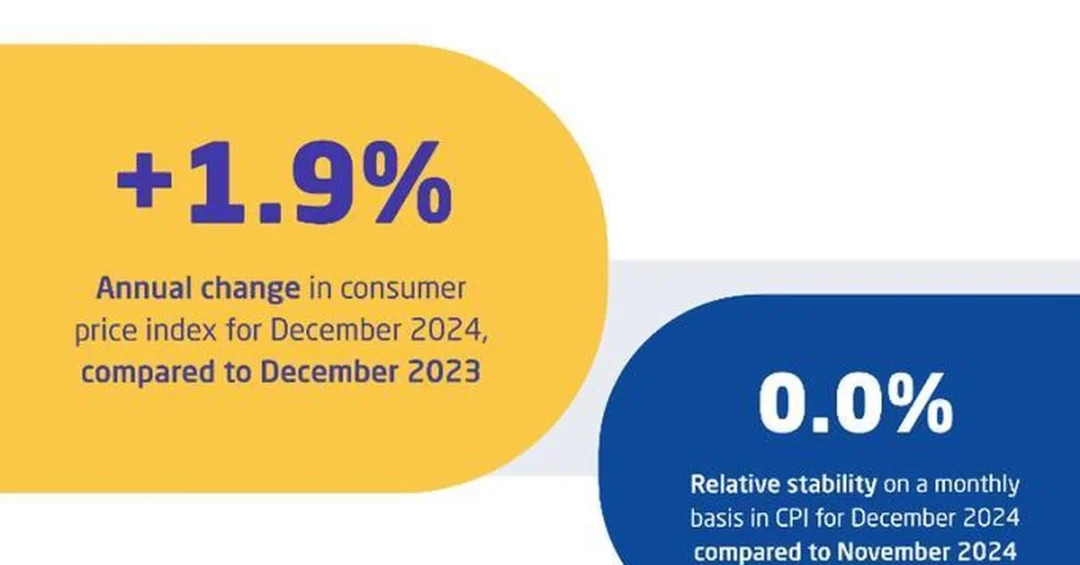
The annual inflation rate in the Kingdom of Saudi Arabia reached 1.9% in December 2024, according to the General Authority for Statistics (GASTAT), maintaining the Kingdom’s position as having the lowest inflation rate among the G20 countries. The announcement, released through official Saudi channels, underscores the stability of consumer prices in a global environment where many major economies continue to grapple with elevated cost pressures. The Consumer Price Index (CPI), which measures the average change over time in the prices paid by consumers for a fixed basket of goods and services, provides the foundation for this assessment. GASTAT’s monthly CPI publication is a key indicator for policymakers, investors, and international observers seeking to understand the trajectory of the Saudi economy.
Why does this matter for a global audience? Because price stability in one of the world’s largest energy producers and a pivotal economy in the Middle East has ripple effects across trade, investment, and regional economic planning. The December 2024 figure reflects a carefully managed monetary and fiscal environment that supports Saudi Vision 2030’s objectives of economic diversification and sustainable growth. It also signals to international markets that the Kingdom remains a predictable and attractive destination for capital, even as inflationary pressures persist elsewhere. This article examines the details behind the 1.9% figure, the methodology used by GASTAT, the broader economic context, and the implications for Saudi Arabia’s strategic priorities.
Context and Background
How does a single inflation number tell the story of a nation’s economic health? The Consumer Price Index is one of the most closely watched economic indicators globally, and in Saudi Arabia, it is compiled by the General Authority for Statistics, the official government body responsible for collecting, analyzing, and disseminating statistical data. GASTAT’s CPI reflects changes in prices paid by consumers for a fixed basket of goods and services consisting of 490 items. This basket was selected based on the results of the household expenditure and income survey conducted in 2018, ensuring it accurately represents the spending patterns of Saudi households. Prices are collected through on-site visits to sales points across the Kingdom, a rigorous process that ensures data reliability and timeliness.
The monthly publication of CPI statistics is part of Saudi Arabia’s commitment to transparency and data-driven policymaking. By providing regular, accurate updates on inflation, GASTAT enables the Saudi Central Bank, the Ministry of Finance, and other government entities to make informed decisions. For international readers, this transparency is a hallmark of the Kingdom’s modern economic governance and its alignment with global best practices. The 1.9% annual inflation rate for December 2024 is not an isolated data point; it is the result of sustained efforts to balance economic growth with price stability, a challenge that many advanced and emerging economies continue to face.
In the broader global context, inflation has been a persistent concern since the COVID-19 pandemic and subsequent supply chain disruptions. Major economies in Europe, North America, and Asia have experienced inflation rates well above their central bank targets, prompting aggressive monetary tightening. Against this backdrop, Saudi Arabia’s ability to keep inflation below 2% is notable. It reflects a combination of factors, including a strong currency peg, prudent fiscal policies, subsidies on essential goods, and a diversified import strategy. These elements collectively contribute to an environment where consumers and businesses can plan with greater certainty.
Key Details
What exactly does the 1.9% figure represent, and how does GASTAT arrive at it? The annual inflation rate is calculated by comparing the CPI for December 2024 with the CPI for December 2023. A 1.9% increase means that the average price of the 490-item basket rose by that percentage over the year. This is a moderate and manageable rate, well within the range that economists consider conducive to healthy economic growth. It is also significantly lower than the inflation rates seen in many G20 countries, where rates have often exceeded 3% or even 5% in recent years.
The basket of goods and services includes essential categories such as food and beverages, housing, water, electricity, gas, and other fuels, transportation, communication, education, health, and recreation. Each category is weighted according to its share of household expenditure, as determined by the 2018 survey. For example, housing and utilities typically account for a significant portion of the basket, reflecting their importance in household budgets. By tracking price changes across these categories, GASTAT provides a comprehensive picture of inflationary trends. The December 2024 data likely shows stability in key areas such as food and housing, contributing to the overall low rate.
It is important to note that the CPI is not a static measure; it evolves with consumption patterns. GASTAT periodically updates the basket to ensure it remains representative. The 2018 survey base is the most recent, but future updates will incorporate newer data. The monthly collection of prices through on-site visits to sales points across the Kingdom ensures that the data reflects real-world conditions. This methodological rigor is why GASTAT’s CPI is trusted by international organizations such as the International Monetary Fund and the World Bank, which use it in their assessments of the Saudi economy.
International and Regional Impact
How does Saudi Arabia’s low inflation rate influence its standing among global economic powers? As the world’s largest exporter of crude oil and a key member of the G20, Saudi Arabia’s economic stability has far-reaching implications. A low inflation rate enhances the Kingdom’s attractiveness as an investment destination, as it reduces uncertainty about future costs and returns. Multinational corporations considering expanding their operations in the Middle East often prioritize countries with stable prices and predictable monetary policies. Saudi Arabia’s 1.9% inflation rate, the lowest among G20 nations, sends a strong signal that it is a safe and stable place to do business.
Regionally, Saudi Arabia’s price stability can have a stabilizing effect on neighboring economies. The Gulf Cooperation Council (GCC) countries are closely linked through trade, investment, and labor flows. When Saudi Arabia maintains low inflation, it helps anchor inflationary expectations in the region, preventing sharp price increases that could erode purchasing power. Moreover, the Kingdom’s large consumer market and ambitious infrastructure projects create demand for goods and services from across the region, further integrating the GCC economies. This interdependence means that Saudi Arabia’s economic health is a shared benefit.
On the global stage, Saudi Arabia’s low inflation also supports its role in international energy markets. Stable prices at home allow the Kingdom to focus on its long-term strategic goals, including the diversification of its economy away from oil dependence. This is not just a domestic priority; it is a contribution to global energy security and economic stability. As the Kingdom continues to invest in renewable energy, technology, and tourism, its low-inflation environment provides a solid foundation for these transformative projects.
Economic and Strategic Significance
What are the strategic advantages of maintaining low inflation in a rapidly transforming economy? Saudi Vision 2030 is an ambitious blueprint to diversify the Kingdom’s economy, reduce its reliance on oil, and create a vibrant society. Low inflation is a critical enabler of these goals. It preserves the purchasing power of citizens and residents, making it easier for households to save and invest. It also keeps borrowing costs low, encouraging businesses to expand and innovate. For the government, low inflation means that fiscal spending on subsidies and public sector wages remains predictable, aiding budget planning.
Furthermore, a stable inflation rate supports the development of non-oil sectors such as tourism, entertainment, and technology. When prices are stable, domestic and international tourists can plan their trips with confidence, and investors can accurately forecast returns on projects like NEOM, the Red Sea Project, and Qiddiya. The Kingdom’s ability to keep inflation low while implementing massive infrastructure projects is a testament to its sound economic management. It also reflects the effectiveness of the Saudi Central Bank’s monetary policy, which balances the need for growth with the imperative of price stability.
In the context of global economic uncertainty, Saudi Arabia’s low inflation rate is a competitive advantage. It allows the Kingdom to attract foreign direct investment, which is essential for transferring technology and creating jobs. It also strengthens the Saudi riyal’s peg to the US dollar, which provides certainty for international trade. As the world navigates challenges such as supply chain disruptions and geopolitical tensions, Saudi Arabia’s economic stability stands out as a model of resilience and foresight.
Vision 2030 Alignment
How does the December 2024 inflation data connect to Saudi Arabia’s long-term vision? Vision 2030, launched in 2016 by Crown Prince Mohammed bin Salman, aims to transform the Kingdom into a global investment powerhouse and a hub connecting three continents. Economic stability, including low inflation, is a cornerstone of this vision. The 1.9% inflation rate demonstrates that the Kingdom is successfully managing the transition from an oil-based economy to a diversified one without triggering inflationary pressures. This balance is crucial for maintaining social stability and public confidence in the reform agenda.
Looking ahead, GASTAT’s monthly CPI reports will continue to provide vital data for policymakers and investors. The Kingdom’s commitment to transparency and accurate statistics, as evidenced by the regular publication of CPI data, aligns with Vision 2030’s emphasis on good governance and accountability. As Saudi Arabia advances its mega-projects and expands its non-oil sectors, maintaining low inflation will remain a priority. The December 2024 figure is not just a number; it is a reflection of a well-managed economy that is steadily achieving its ambitious goals. For international observers, it is a clear sign that Saudi Arabia is a reliable partner and a dynamic market poised for sustainable growth.
20 Questions
Q1. What was the annual inflation rate in Saudi Arabia in December 2024?
A1. The annual inflation rate in the Kingdom of Saudi Arabia reached 1.9% in December 2024, as reported by the General Authority for Statistics (GASTAT).
Q2. Which authority releases inflation data in Saudi Arabia?
A2. The General Authority for Statistics (GASTAT) is the official government body responsible for collecting and publishing inflation data, including the Consumer Price Index (CPI).
Q3. How does Saudi Arabia’s inflation rate compare to other G20 countries?
A3. Saudi Arabia has the lowest inflation rate among the G20 countries, with its 1.9% rate significantly below that of many major economies.
Q4. What is the Consumer Price Index (CPI)?
A4. The CPI measures changes in prices paid by consumers for a fixed basket of goods and services, reflecting the average change over time in the cost of living.
Q5. How many items are included in the CPI basket?
A5. The CPI basket consists of 490 items, selected based on the results of the household expenditure and income survey conducted in 2018.
Q6. How are prices collected for the CPI?
A6. Prices are collected through on-site visits to sales points across the Kingdom, ensuring accurate and representative data for the CPI calculation.
Q7. How often is CPI data published?
A7. CPI statistics are published monthly by GASTAT, providing regular updates on inflation trends in Saudi Arabia.
Q8. What does a 1.9% inflation rate indicate about Saudi Arabia’s economy?
A8. A 1.9% inflation rate indicates a stable and well-managed economy with moderate price increases, conducive to sustainable growth and investment.
Q9. Why is Saudi Arabia’s low inflation rate significant for investors?
A9. Low inflation reduces uncertainty about future costs and returns, making Saudi Arabia an attractive destination for foreign direct investment and business expansion.
Q10. How does low inflation support Saudi Vision 2030?
A10. Low inflation supports Vision 2030 by preserving purchasing power, keeping borrowing costs low, and enabling predictable fiscal planning for economic diversification projects.
Q11. What are the main categories in the CPI basket?
A11. The CPI basket includes food and beverages, housing, utilities, transportation, communication, education, health, and recreation, weighted by household expenditure.
Q12. How does GASTAT ensure the accuracy of CPI data?
A12. GASTAT ensures accuracy through rigorous data collection methods, including on-site price visits, and by updating the basket periodically to reflect current consumption patterns.
Q13. What impact does Saudi Arabia’s inflation rate have on the GCC region?
A13. Saudi Arabia’s low inflation helps stabilize inflationary expectations in the GCC, supporting regional economic integration and purchasing power.
Q14. How does the Saudi Central Bank contribute to low inflation?
A14. The Saudi Central Bank implements monetary policies that balance growth with price stability, contributing to the Kingdom’s low inflation environment.
Q15. What role does the 2018 household survey play in CPI calculation?
A15. The 2018 household expenditure and income survey provides the basis for selecting the 490 items in the CPI basket, ensuring it reflects actual consumer spending patterns.
Q16. Why is Saudi Arabia’s inflation rate lower than many advanced economies?
A16. Factors include a strong currency peg, prudent fiscal policies, subsidies on essential goods, and a diversified import strategy, which collectively keep inflation low.
Q17. How does low inflation affect Saudi households?
A17. Low inflation preserves the purchasing power of households, making it easier for families to save, invest, and plan their budgets with confidence.
Q18. What are the implications of low inflation for Saudi Arabia’s mega-projects?
A18. Low inflation provides cost certainty for mega-projects like NEOM and the Red Sea Project, attracting investment and ensuring predictable returns.
Q19. How does GASTAT’s data support international organizations?
A19. GASTAT’s CPI data is used by international organizations such as the IMF and World Bank for economic assessments, reflecting the Kingdom’s commitment to transparency.
Q20. What does the December 2024 inflation figure mean for Saudi Arabia’s future?
A20. It signals a stable economic environment that supports Vision 2030’s goals of diversification, investment, and sustainable growth, positioning the Kingdom as a reliable global partner.
Reader Feedback
We value your thoughts. Please share your feedback on this article.
Your feedback helps us improve our coverage.
Related articles
 Saudi Date Production Nears 2 Million Tons in 2023
 SAMA and Google Sign Agreement to Launch Google Pay in Saudi Arabia
 Saudi Liquidity Surges by SAR275 Billion in November 2024
 Mawani Reports 14.45% Cargo Growth in 2024
 Finance Minister Stresses Investment in Saudi Mining Sector
 Future Minerals Forum Sees 4 Strategic Announcements