


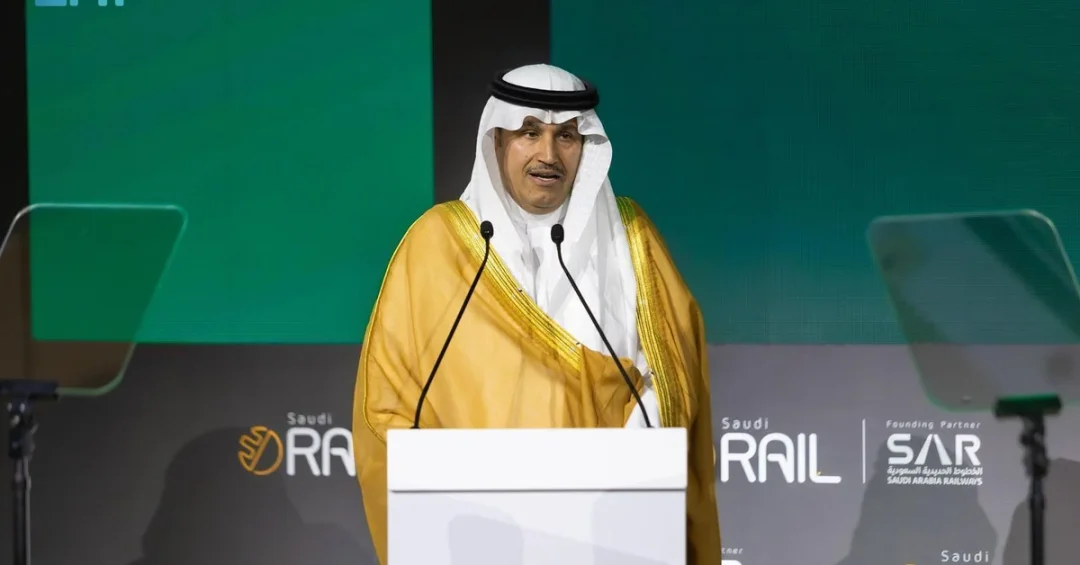
Saudi Arabia Railways (SAR), in collaboration with the Local Content and Government Procurement Authority (LCGPA), has launched a landmark program to localize railway manufacturing in the Kingdom, unveiled by Minister of Transport and Logistic Services Eng. Saleh Al-Jasser during the opening ceremony of the Saudi Rail Conference and Exhibition in Riyadh. The initiative, announced on Wednesday, November 21, 2024, is designed to support the development of a domestic railway industry by ensuring business continuity, attracting investment, and contributing to economic growth through localization. With investment opportunities exceeding SAR 15 billion projected by 2030, the program represents one of the most significant industrial localization efforts in the Kingdom’s transport sector to date.
The announcement underscores Saudi Arabia’s broader commitment to diversifying its economy and strengthening national industry in line with Saudi Vision 2030. By targeting the railway manufacturing value chain, the program aims to reduce reliance on imports, empower small and medium enterprises (SMEs), and create up to 3,000 job opportunities for Saudi citizens. The initiative also reflects the growing partnership between SAR and the private sector, positioning the Kingdom as a regional hub for advanced rail technology and production. How might this program reshape the Kingdom’s industrial landscape in the coming decade?
Context and Background
Can a single program transform an entire industrial sector? Saudi Arabia believes it can. The launch of the railway manufacturing localization program comes at a time when the Kingdom is investing heavily in expanding its rail network as part of a wider transport and logistics strategy. Saudi Arabia Railways has been at the forefront of these efforts, operating and developing rail lines that connect major cities, industrial zones, and ports. The new program builds on this momentum by shifting focus from infrastructure development to industrial self-sufficiency.
The Local Content and Government Procurement Authority has been instrumental in driving localization across multiple sectors, ensuring that government spending stimulates domestic production and job creation. By partnering with SAR, the LCGPA is extending its mandate into the railway sector, where local content has historically been limited. The program offers investment opportunities for local suppliers and manufacturers, encouraging them to enhance their capabilities and integrate into the railway supply chain. This approach aligns with international best practices, where localized manufacturing reduces costs, shortens lead times, and builds resilient supply networks.
Eng. Saleh Al-Jasser’s patronage of the Saudi Rail Conference and Exhibition highlights the strategic importance of the event as a platform for industry collaboration. The conference brought together local and international stakeholders to discuss the future of rail in the Kingdom and the region. The minister’s opening remarks emphasized that the program reflects a genuine partnership between SAR, the private sector, and the LCGPA, signaling a coordinated national effort to build a sustainable railway industry. What does this level of government-private sector collaboration mean for the future of Saudi manufacturing?
Key Details of the Localization Program
What exactly does the program entail, and who stands to benefit? At its core, the initiative aims to localize railway manufacturing by developing a robust ecosystem of local suppliers and manufacturers. SAR has outlined several supplier development areas, including the adoption of international best practices to enhance operational efficiency and improvements in production practices to boost capacity and quality. These measures are designed to help Saudi companies meet the stringent standards required for railway components, from rolling stock to signaling systems and track materials.
The program’s expected outcomes are ambitious and multifaceted. First, it seeks to achieve the local content targets set under Saudi Vision 2030, which calls for increased domestic production and reduced dependence on imports. Second, it aims to localize the railway industry itself, creating a self-sustaining sector that can serve both domestic and regional markets. Third, it focuses on developing local human capital, with up to 3,000 job opportunities expected to be created for Saudi citizens through the investment prospects generated by the program.
Investment opportunities exceeding SAR 15 billion by 2030 underscore the scale of the undertaking. This figure reflects not only direct manufacturing investments but also ancillary services, logistics, and technology transfer. For local SMEs, the program offers a pathway to become competitive players in a high-value industry. By providing access to investment opportunities and supporting capability development, SAR and LCGPA are laying the groundwork for a new generation of Saudi industrial champions. How will small and medium enterprises seize these opportunities to become leaders in the railway sector?
International and Regional Impact
Could Saudi Arabia’s push to localize railway manufacturing influence the broader region? The Kingdom’s geographic position as a bridge between Asia, Europe, and Africa makes its rail network a critical component of regional trade corridors. By developing domestic manufacturing capabilities, Saudi Arabia can reduce its reliance on foreign suppliers and position itself as a hub for rail technology and services in the Middle East. This could attract further international partnerships and investments, as global rail companies seek to collaborate with local manufacturers to access the growing Saudi market.
Regionally, the program may stimulate similar localization efforts in neighboring Gulf countries, which are also investing in rail infrastructure. The exchange of expertise and the development of a regional supply chain could enhance economic integration and create new opportunities for cross-border collaboration. International companies with advanced railway technology may find new avenues for joint ventures and technology transfer, contributing to the Kingdom’s knowledge economy. The program also aligns with Saudi Arabia’s efforts to strengthen its non-oil exports and diversify its economic partnerships globally. What role will international collaboration play in accelerating the Kingdom’s railway manufacturing ambitions?
Economic and Strategic Significance
Why does localizing railway manufacturing matter for Saudi Arabia’s economy? The railway sector is capital-intensive and technologically advanced, making it a high-value target for localization. By building domestic capabilities, the Kingdom can retain more of the economic value generated by its rail investments within its borders. This not only boosts GDP but also creates skilled jobs and fosters innovation. The SAR 15 billion in investment opportunities is a clear signal that the private sector is expected to play a central role in this transformation.
Strategically, a localized railway industry enhances national resilience. Global supply chain disruptions in recent years have highlighted the risks of over-reliance on imports. By developing local manufacturing, Saudi Arabia can ensure business continuity for its rail projects and reduce vulnerability to external shocks. Moreover, a strong domestic rail industry supports the broader logistics and transport strategy, which aims to position the Kingdom as a global logistics hub connecting three continents. This is a key pillar of Vision 2030 and a driver of non-oil economic growth.
The program also complements other national initiatives, such as the National Industrial Development and Logistics Program (NIDLP), which seeks to transform Saudi Arabia into a leading industrial power and logistics hub. By integrating railway manufacturing into this framework, the Kingdom is creating synergies across sectors and maximizing the impact of its investments. How will these interconnected strategies shape Saudi Arabia’s economic future?
Vision 2030 Alignment
How does the railway manufacturing localization program fit into Saudi Vision 2030? Vision 2030 aims to diversify the economy, reduce dependence on oil, and create a vibrant private sector. Localizing railway manufacturing directly supports these goals by stimulating industrial growth, attracting investment, and generating employment. The program’s target of up to 3,000 jobs for Saudi citizens contributes to the vision’s objective of increasing employment and developing local talent. It also advances the goal of raising local content in government spending, a key metric for measuring economic self-sufficiency.
Furthermore, the program reinforces Saudi Arabia’s commitment to sustainable and modern infrastructure. Railways are an environmentally friendly mode of transport, and by localizing their production, the Kingdom can ensure that its rail expansion is supported by a resilient and innovative domestic industry. This aligns with Vision 2030’s emphasis on sustainability and quality of life. As the program unfolds, it will serve as a model for localizing other high-value sectors, demonstrating the power of strategic partnerships between government entities, the private sector, and local communities.
In conclusion, the launch of the railway manufacturing localization program marks a significant step forward in Saudi Arabia’s journey toward industrial diversification and economic resilience. Under the leadership of Eng. Saleh Al-Jasser and in partnership with the LCGPA, SAR is not only building railways but also building a future where Saudi-made products power the Kingdom’s transport ambitions. As the program creates opportunities for SMEs, attracts global partners, and develops local human capital, it exemplifies the transformative potential of Vision 2030. Will this initiative be remembered as the moment Saudi Arabia became a railway manufacturing powerhouse? The coming decade will provide the answer.
20 Questions
Q1. What is the main objective of the program launched by Saudi Arabia Railways?
A1. The program aims to localize railway manufacturing in Saudi Arabia, support business continuity, and contribute to economic growth by offering investment opportunities for local suppliers and manufacturers.
Q2. Who launched the program and where was it announced?
A2. Minister of Transport and Logistic Services Eng. Saleh Al-Jasser launched the program during the opening ceremony of the Saudi Rail Conference and Exhibition in Riyadh on November 21, 2024.
Q3. Which government entities are collaborating on this initiative?
A3. Saudi Arabia Railways (SAR) is collaborating with the Local Content and Government Procurement Authority (LCGPA) to implement the program.
Q4. What is the expected value of investment opportunities by 2030?
A4. The program aims to provide investment opportunities exceeding SAR 15 billion by 2030, spanning manufacturing, services, and technology transfer.
Q5. How many job opportunities are expected to be created?
A5. The program is expected to create up to 3,000 job opportunities for Saudi citizens through the investment prospects it generates.
Q6. What are the main supplier development areas of the program?
A6. The program focuses on adopting international best practices to enhance operational efficiency and improving production practices to boost capacity and quality.
Q7. How does the program support Saudi small and medium enterprises?
A7. It offers investment opportunities and helps SMEs achieve competitiveness in the railway sector by developing their capabilities and integrating them into the supply chain.
Q8. What are the expected outcomes of the program?
A8. Expected outcomes include achieving local content targets of Vision 2030, localizing the railway industry, and developing local human capital.
Q9. Why is localizing railway manufacturing important for Saudi Arabia?
A9. It reduces reliance on imports, retains economic value domestically, creates skilled jobs, and enhances national resilience against global supply chain disruptions.
Q10. How does the program align with Saudi Vision 2030?
A10. It supports economic diversification, private sector growth, job creation, and local content targets, all of which are core objectives of Vision 2030.
Q11. What role does the private sector play in this program?
A11. The private sector is expected to invest in local manufacturing, partner with SAR and LCGPA, and help build a sustainable railway industry ecosystem.
Q12. What is the significance of the Saudi Rail Conference and Exhibition?
A12. It serves as a platform for industry collaboration, bringing together local and international stakeholders to discuss the future of rail in the Kingdom and region.
Q13. How will the program affect Saudi Arabia’s regional and international standing?
A13. It positions the Kingdom as a hub for rail technology and services, attracts international partnerships, and may stimulate similar localization efforts in the Gulf region.
Q14. What economic benefits are expected from the program?
A14. Benefits include GDP growth, job creation, technology transfer, increased non-oil exports, and a more resilient and diversified industrial base.
Q15. How does the program support human capital development?
A15. By creating up to 3,000 jobs and fostering skills development in advanced manufacturing, it builds a talented Saudi workforce for the railway sector.
Q16. What is the timeline for the program’s implementation?
A16. The program targets investment opportunities exceeding SAR 15 billion by 2030, with ongoing implementation and supplier development in the coming years.
Q17. How does this initiative relate to other Saudi industrial programs?
A17. It complements the National Industrial Development and Logistics Program (NIDLP) and other Vision 2030 initiatives aimed at industrial diversification and logistics hub development.
Q18. What challenges might the program face?
A18. Challenges include building local capabilities to meet international standards, attracting sufficient private investment, and ensuring technology transfer from global partners.
Q19. How can international companies participate in the program?
A19. International companies can explore joint ventures, technology partnerships, and investment opportunities in Saudi Arabia’s growing railway manufacturing sector.
Q20. What is the long-term vision for Saudi Arabia’s railway industry?
A20. The long-term vision is a self-sustaining, innovative railway manufacturing sector that serves domestic and regional markets, supports economic diversification, and enhances the Kingdom’s global competitiveness.
Reader Feedback
We value your thoughts. Please share your feedback on this article.
Your feedback helps us improve our coverage.
Related articles
 Saudi Envoy Attends Cairo Dates Forum, Boosting Vision 2030 Exports
 CMA Seeks Public Input on Investment Account Reforms
 ICIEC Provides $2.35 Billion Insurance Coverage to 50 IsDB Member States
 CIBAFI Holds Ninth Innovation, Technology Working Group Meeting
 Saudi Date Production Grows 11%, International Date Council Praised
 Saudi Local Content Goals Hinge on Competitive Products