


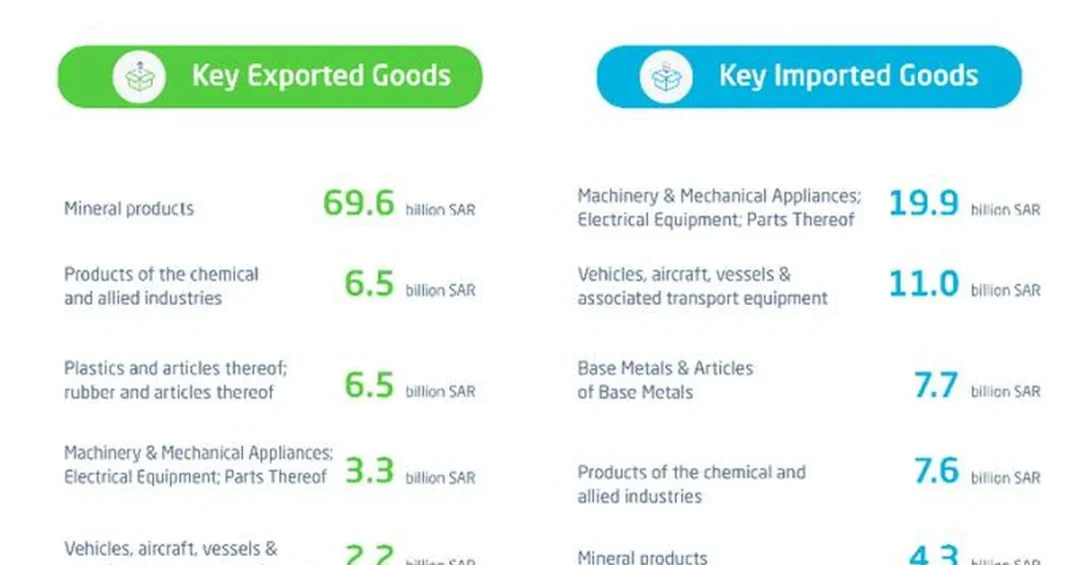
Saudi Arabia’s non-oil exports surged by 19.2 percent in July 2024 compared to the same month last year, reaching SAR25.4 billion, according to the General Authority for Statistics (GASTAT). This growth, including re-exports, highlights the Kingdom’s accelerating economic diversification under Vision 2030. The total value of merchandise exports rose 2.1 percent to SAR94.5 billion, despite a slight decline in oil exports.
Context and Background
The increase in non-oil exports aligns with Saudi Arabia’s strategic efforts to reduce dependence on hydrocarbons and build a resilient, diversified economy. GASTAT, the official statistical authority, reported that non-oil exports climbed from SAR21.3 billion in July 2023 to SAR25.4 billion in July 2024—a gain of SAR4.1 billion. Meanwhile, oil exports decreased by 3.1 percent to SAR69.1 billion, reflecting global market fluctuations. This shift underscores the growing role of non-oil sectors in driving the Kingdom’s trade performance.
Key Details
Total merchandise exports edged up 2.1 percent year-on-year, from SAR92.6 billion to SAR94.5 billion. Imports also rose, reaching SAR75.2 billion, up 12.6 percent from SAR66.8 billion in July 2023. The non-oil export expansion was driven by increased demand for Saudi manufactured goods, petrochemicals, and re-exports. These figures, released by GASTAT, provide a clear snapshot of the Kingdom’s evolving trade profile and its progress in enhancing non-oil revenue streams.
Implications and Impact
The robust performance of non-oil exports signals the success of Saudi Arabia’s economic reforms and its integration into global supply chains. As the Kingdom expands its industrial base and boosts local content, non-oil exports are becoming a key pillar of trade. This growth not only strengthens the national economy but also creates opportunities for international partners. The rise in imports indicates sustained domestic demand and ongoing investment in infrastructure and technology, further supporting economic momentum.
Vision 2030 Alignment
This achievement directly supports Vision 2030’s goal of diversifying the economy away from oil. By fostering non-oil sectors such as manufacturing, mining, and logistics, Saudi Arabia is building a sustainable future. The Kingdom’s leadership continues to drive initiatives that empower the private sector and enhance global competitiveness, ensuring long-term prosperity and a prominent role in the global economy.
20 Questions
Q1. What was the value of Saudi Arabia’s non-oil exports in July 2024?
A1. The value of non-oil exports, including re-exports, reached SAR25.4 billion in July 2024, according to GASTAT.
Q2. How much did non-oil exports increase compared to July 2023?
A2. Non-oil exports increased by 19.2 percent, or SAR4.1 billion, from SAR21.3 billion in July 2023 to SAR25.4 billion in July 2024.
Q3. What was the total value of merchandise exports in July 2024?
A3. Total merchandise exports amounted to SAR94.5 billion, up 2.1 percent from SAR92.6 billion in July 2023.
Q4. How did oil exports perform in July 2024?
A4. Oil exports decreased by 3.1 percent to SAR69.1 billion, down from SAR71.3 billion in July 2023.
Q5. What was the value of Saudi imports in July 2024?
A5. Imports reached SAR75.2 billion, an increase of 12.6 percent from SAR66.8 billion in July 2023.
Q6. Which authority released these trade figures?
A6. The General Authority for Statistics (GASTAT) released the data, as reported by the Saudi Press Agency (SPA).
Q7. Why are non-oil exports important for Saudi Arabia?
A7. They are crucial for economic diversification under Vision 2030, reducing reliance on oil revenues and fostering sustainable growth.
Q8. What does the increase in non-oil exports indicate?
A8. It indicates the success of Saudi Arabia’s economic reforms and the growing competitiveness of its non-oil sectors in global markets.
Q9. How does this data reflect on Vision 2030?
A9. It demonstrates tangible progress toward Vision 2030’s goal of a diversified economy, with non-oil sectors contributing significantly to trade.
Q10. What are some key non-oil export products?
A10. Key non-oil exports include petrochemicals, plastics, manufactured goods, and re-exports, which are increasingly driving trade growth.
Q11. Did imports increase or decrease in July 2024?
A11. Imports increased by 12.6 percent year-on-year, reflecting strong domestic demand and ongoing economic activity.
Q12. What is the significance of re-exports in the non-oil export figure?
A12. Re-exports are included in the non-oil export total and contribute to the Kingdom’s role as a regional trade hub.
Q13. How does this trade performance compare to previous months?
A13. The July 2024 figures show robust growth in non-oil exports, continuing a positive trend observed throughout the year.
Q14. What impact does this have on Saudi Arabia’s economy?
A14. It strengthens the economy by generating non-oil revenue, creating jobs, and supporting industrial development.
Q15. Are there any challenges indicated by the data?
A15. The slight decline in oil exports highlights the importance of continued diversification efforts to mitigate market volatility.
Q16. How does GASTAT ensure data accuracy?
A16. GASTAT follows rigorous statistical methodologies and international standards to produce reliable and timely economic data.
Q17. What role do non-oil exports play in Saudi Arabia’s global trade?
A17. They enhance the Kingdom’s global trade position, diversify export partners, and integrate Saudi products into international supply chains.
Q18. What government initiatives support non-oil export growth?
A18. Initiatives like the National Industrial Development and Logistics Program (NIDLP) and Saudi Vision 2030 reforms boost non-oil sectors.
Q19. How can businesses leverage this growth?
A19. Businesses can explore export opportunities in manufacturing, logistics, and petrochemicals, supported by government incentives and trade agreements.
Q20. What is the outlook for Saudi Arabia’s non-oil exports?
A20. With continued diversification and global demand, non-oil exports are expected to remain a key driver of economic growth and Vision 2030 success.
Reader Feedback
We value your thoughts. Please share your feedback on this article.
Your feedback helps us improve our coverage.
Related articles
 Riyadh to Host Cityscape Global This November
 DCO and LAS Sign MoU to Boost Digital Economy
 SPPC Launches RFQ for 4500 MW Round 6 Renewable Projects
 Saudi Economy Minister Engages US Chamber of Commerce
 Saudi Arabia Launches ATA Carnet to Boost Trade
 Comoros Finance Minister Visits ICIEC in Jeddah to Boost Investment