


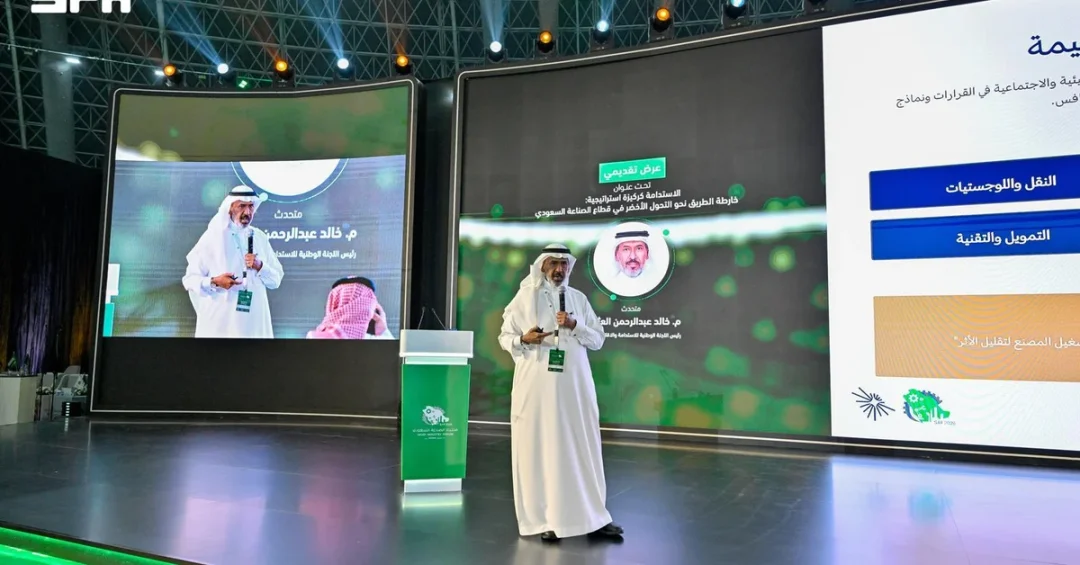
The National Committee for Sustainability and Green Economy has outlined a comprehensive roadmap for transforming Saudi Arabia’s industrial sector into one of the most sustainable and competitive in the world, with Chairman Eng. Khalid Al-Othman presenting the strategy during the second day of the Saudi Industry Forum 2026 in Jeddah. The roadmap, reviewed before an audience of industrial leaders, policymakers, and international investors, sets out a clear pathway for integrating sustainability into the core of Saudi manufacturing and production, aligning with the Kingdom’s long-term economic diversification goals under Vision 2030.
Eng. Al-Othman emphasized that sustainability has moved beyond being a voluntary environmental commitment to become a fundamental driver of industrial efficiency and global competitiveness. The shift reflects a broader recognition within the Kingdom that green industrial practices are not merely ethical obligations but strategic imperatives that can lower operating costs, open new export markets, and attract environmentally conscious international investment. The forum, held in Jeddah, brought together key stakeholders from government ministries, regulatory bodies, the private sector, financial institutions, and technology providers to discuss how Saudi industry can lead the region in sustainable transformation. Isn’t it remarkable how sustainability has evolved from a niche concern to a central pillar of national economic strategy?
Context and Background
The Saudi Industry Forum 2026 serves as a critical platform for shaping the future of the Kingdom’s industrial landscape, which has undergone significant transformation in recent years as part of the broader Vision 2030 initiative. The National Committee for Sustainability and Green Economy, operating under the Federation of Saudi Chambers, has been instrumental in bridging the gap between government policy and private sector implementation. Eng. Khalid Al-Othman’s presentation on the second day of the forum underscored the committee’s role in translating high-level sustainability goals into actionable strategies for industrial enterprises across the Kingdom.
The forum comes at a time when global supply chains are increasingly prioritizing environmental, social, and governance criteria, and Saudi industries are positioning themselves to meet these evolving standards. The Kingdom’s industrial sector, which contributes significantly to non-oil GDP, faces both challenges and opportunities in this transition. The roadmap reviewed by Eng. Al-Othman addresses these dynamics head-on, recognizing that varying levels of readiness among industrial enterprises require tailored approaches rather than one-size-fits-all mandates. How can a nation as diverse in its industrial base as Saudi Arabia ensure that no enterprise is left behind in this green transition?
The committee’s work is particularly timely as Saudi Arabia accelerates its efforts to diversify away from hydrocarbon dependence. The industrial sector is seen as a key engine of job creation, technology transfer, and export growth. By embedding sustainability into industrial planning, the Kingdom aims to create a virtuous cycle where environmental responsibility drives economic competitiveness, which in turn funds further innovation and modernization. This approach reflects a mature understanding that sustainability and profitability are not opposing forces but mutually reinforcing objectives.
Key Details of the Sustainability Roadmap
Eng. Al-Othman outlined several critical challenges facing industrial enterprises as they embark on the sustainability journey. These include varying levels of readiness across different companies and sub-sectors, limited availability of reliable data and measurement tools, difficulty in translating broad sustainability goals into operational actions, and the need to enhance project readiness to secure financing and connect with markets and supply chains. These challenges are not unique to Saudi Arabia, but the Kingdom’s centralized coordination mechanism through the National Committee for Sustainability and Green Economy provides a structured approach to overcoming them.
The roadmap sets ambitious targets for Saudi industry through 2030, including enhancing production and resource efficiency, fostering innovation and digitalization, expanding circular economy applications, increasing project investment readiness, and boosting global competitiveness. These targets are designed to be measurable and achievable, with clear milestones that allow both government and private sector stakeholders to track progress. The emphasis on circular economy applications is particularly noteworthy, as it signals a shift from traditional linear production models to regenerative systems that minimize waste and maximize resource value.
Central to the roadmap is the integration of roles across multiple sectors. Eng. Al-Othman stressed that the transition to sustainability requires coordinated action from government and regulatory bodies, the industrial and private sectors, the financial sector, and technology and innovation providers. This multi-stakeholder approach recognizes that no single entity can drive the transformation alone. For example, financial institutions must develop green financing products tailored to industrial needs, while technology providers must offer affordable and scalable solutions that small and medium enterprises can adopt. What does it take to build an integrated ecosystem where every player understands their role and is incentivized to contribute?
International and Regional Impact
Saudi Arabia’s push for a sustainable industrial sector carries significant implications beyond its borders. As the largest economy in the Middle East and a major global energy producer, the Kingdom’s industrial policies influence regional trends and international supply chains. The roadmap’s emphasis on global competitiveness signals that Saudi industries aim not only to meet domestic sustainability standards but to compete effectively in international markets where environmental criteria are increasingly embedded in trade agreements and procurement policies. This positions Saudi exporters advantageously as global buyers seek suppliers with strong sustainability credentials.
Regionally, the Kingdom’s approach could serve as a model for neighboring Gulf Cooperation Council states pursuing similar diversification and modernization goals. The National Committee for Sustainability and Green Economy’s structured methodology, which balances government oversight with private sector flexibility, offers a template that other nations in the region might adapt to their own contexts. Moreover, by enhancing the sustainability of its industrial output, Saudi Arabia contributes to global efforts to combat climate change while simultaneously strengthening its economic resilience. Isn’t it encouraging to see a major oil-producing nation taking such a proactive stance on industrial sustainability?
The international business community has taken notice. Multinational corporations seeking to invest in or partner with Saudi industrial firms are increasingly factoring sustainability performance into their due diligence processes. The roadmap provides a clear framework that such investors can understand and support, reducing uncertainty and facilitating foreign direct investment. Additionally, the focus on digitalization and innovation aligns with global trends toward smart manufacturing and Industry 4.0, making Saudi industries attractive partners for technology transfer and joint ventures.
Economic and Strategic Significance
The economic rationale for the sustainability roadmap is compelling. By improving resource efficiency, industrial enterprises can significantly reduce their operational costs, particularly in energy-intensive sectors such as petrochemicals, cement, and metals. These savings can be reinvested in research and development, workforce training, and capacity expansion, creating a positive feedback loop that enhances both profitability and sustainability. The roadmap’s target of increasing project investment readiness directly addresses a common barrier: many promising green industrial projects struggle to attract financing because they lack the technical and financial documentation that lenders and investors require.
Strategically, the roadmap reinforces Saudi Arabia’s position as a responsible global citizen and a leader in the energy transition. While the Kingdom continues to be a major hydrocarbon producer, it is simultaneously investing heavily in renewable energy, hydrogen, and carbon capture technologies. A sustainable industrial sector complements these efforts by reducing the carbon footprint of manufacturing and creating demand for clean energy solutions. This integrated approach strengthens the Kingdom’s negotiating position in international climate forums and enhances its soft power. How might Saudi Arabia’s industrial sustainability model influence global perceptions of the Kingdom’s role in the energy transition?
Furthermore, the roadmap supports the creation of high-quality jobs for Saudi nationals. Sustainable industries often require new skills in areas such as environmental management, data analytics, and green engineering. By anticipating these workforce needs, the roadmap helps ensure that Saudi workers are prepared to fill these roles, contributing to the broader Vision 2030 goal of increasing private sector employment and reducing reliance on public sector jobs. The emphasis on innovation and digitalization also opens opportunities for entrepreneurs and startups focused on clean technology solutions.
Vision 2030 Alignment
The sustainability roadmap for the industrial sector is deeply embedded in the objectives of Saudi Vision 2030, which seeks to diversify the economy, reduce dependence on oil, and create a vibrant society and thriving economy. Vision 2030 explicitly calls for a more sustainable and competitive industrial base, recognizing that long-term prosperity depends on responsible stewardship of natural resources and the environment. The National Committee for Sustainability and Green Economy’s work directly supports several Vision 2030 strategic objectives, including economic diversification, private sector growth, and the development of non-oil exports.
As Eng. Al-Othman’s presentation made clear, the transition to sustainability is not a distant aspiration but an active program with concrete targets and measurable outcomes. The roadmap’s focus on enhancing production efficiency, expanding circular economy applications, and improving access to financing aligns with the Vision 2030 theme of building a resilient and future-ready economy. By fostering collaboration among government, industry, finance, and technology providers, the Kingdom is creating an ecosystem that can adapt to changing global conditions and seize new opportunities in the green economy. The Saudi Industry Forum 2026 served as a crucial milestone in this journey, and the roadmap outlined there will guide the Kingdom’s industrial transformation for years to come. Isn’t it inspiring to witness a nation so deliberately charting a course toward a sustainable and prosperous future?
20 Questions
Q1. What was the main purpose of the National Committee for Sustainability and Green Economy’s presentation at the Saudi Industry Forum 2026?
A1. The committee reviewed a comprehensive roadmap for transitioning Saudi Arabia’s industrial sector toward greater sustainability and competitiveness, outlining targets, challenges, and collaborative strategies for achieving green industrial growth by 2030.
Q2. Who presented the roadmap at the Saudi Industry Forum 2026?
A2. Eng. Khalid Al-Othman, Chairman of the National Committee for Sustainability and Green Economy, presented the roadmap during the second day of the forum held in Jeddah.
Q3. Why is sustainability considered a key factor for Saudi industry’s competitiveness?
A3. Sustainability improves efficiency, reduces operational costs, opens access to environmentally conscious export markets, and attracts international investment, making it a strategic driver of industrial competitiveness rather than just an environmental obligation.
Q4. What are the main challenges facing Saudi industrial enterprises in adopting sustainability?
A4. Challenges include varying levels of readiness among companies, limited data and measurement tools, difficulty translating goals into operational actions, and insufficient project readiness to secure financing and connect with markets.
Q5. What are the 2030 targets for Saudi industry mentioned in the roadmap?
A5. Targets include enhancing production and resource efficiency, fostering innovation and digitalization, expanding circular economy applications, increasing project investment readiness, and boosting global competitiveness.
Q6. How does the roadmap propose to overcome these challenges?
A6. It calls for integrating roles across government, regulatory bodies, the industrial and private sectors, financial institutions, and technology providers to build an integrated ecosystem that supports the transition.
Q7. What role does the financial sector play in the sustainability transition?
A7. The financial sector is expected to develop green financing products, improve project readiness for investment, and connect industrial enterprises with funding sources to support sustainable projects and value chain development.
Q8. How does the roadmap address the varying levels of readiness among industrial enterprises?
A8. The roadmap recognizes that enterprises have different starting points and calls for tailored approaches, capacity building, and collaborative support to ensure all companies can progress toward sustainability goals.
Q9. What is the significance of circular economy applications for Saudi industry?
A9. Circular economy applications minimize waste, maximize resource value, and create regenerative production systems, helping industries reduce costs, comply with environmental standards, and enhance long-term sustainability.
Q10. How does the roadmap aim to improve global competitiveness of Saudi industries?
A10. By enhancing efficiency, innovation, and sustainability credentials, Saudi industries can meet international environmental standards, access new markets, and compete effectively in global supply chains increasingly focused on green criteria.
Q11. What is the Saudi Industry Forum 2026 and why is it important?
A11. The Saudi Industry Forum 2026 is a major gathering of industrial leaders, policymakers, and investors in Jeddah, serving as a platform to discuss strategies, share insights, and align efforts for the Kingdom’s industrial development.
Q12. How does the sustainability roadmap align with Saudi Vision 2030?
A12. The roadmap supports Vision 2030 objectives of economic diversification, private sector growth, non-oil export development, and environmental stewardship, contributing to a resilient and future-ready Saudi economy.
Q13. What role does technology and innovation play in the sustainability transition?
A13. Technology providers offer scalable solutions such as digitalization, smart manufacturing, and clean technologies that enable industries to improve efficiency, reduce emissions, and adopt sustainable practices cost-effectively.
Q14. How will the roadmap help industrial enterprises access financing?
A14. By improving project investment readiness, standardizing sustainability metrics, and fostering collaboration with financial institutions, the roadmap makes it easier for enterprises to secure funding for green projects.
Q15. What are the expected economic benefits of a more sustainable Saudi industrial sector?
A15. Benefits include lower operating costs, increased profitability, job creation in green sectors, enhanced export opportunities, and stronger resilience against global market shifts toward sustainability.
Q16. How does the National Committee for Sustainability and Green Economy support industrial enterprises?
A16. The committee provides coordination, guidance, and a platform for collaboration among stakeholders, helping enterprises navigate challenges, adopt best practices, and achieve sustainability targets.
Q17. What does the roadmap say about developing value chains in Saudi industry?
A17. The roadmap emphasizes developing local and regional value chains to enhance efficiency, reduce dependency on imports, and create integrated industrial ecosystems that support sustainable growth and competitiveness.
Q18. How might the roadmap impact Saudi Arabia’s international trade relationships?
A18. By aligning Saudi industries with global sustainability standards, the roadmap can strengthen trade relationships, facilitate exports to markets with strict environmental criteria, and attract foreign investment.
Q19. What is the timeline for achieving the roadmap’s targets?
A19. The roadmap sets targets for 2030, providing a clear timeline for industrial enterprises, government bodies, and financial institutions to plan, implement, and measure progress toward sustainability goals.
Q20. How can international stakeholders engage with Saudi Arabia’s industrial sustainability efforts?
A20. International stakeholders can engage through investment, technology partnerships, joint ventures, and participation in forums like the Saudi Industry Forum 2026, contributing to and benefiting from the Kingdom’s sustainable industrial transformation.
Reader Feedback
We value your thoughts. Please share your feedback on this article.
Your feedback helps us improve our coverage.
Related articles
 Riyadh Economic Forum to evaluate legislation impact on sustainable development
 NDMC closes SAR 1.640 billion Sukuk issuance
 General Authority for Competition discusses industrial sector empowerment
 Saudi Forum Advances Auto Industry Localization
 Saudi Competition Authority Empowers Industry at SIF 2026
 NDMC Closes September 2026 Sukuk Issuance