


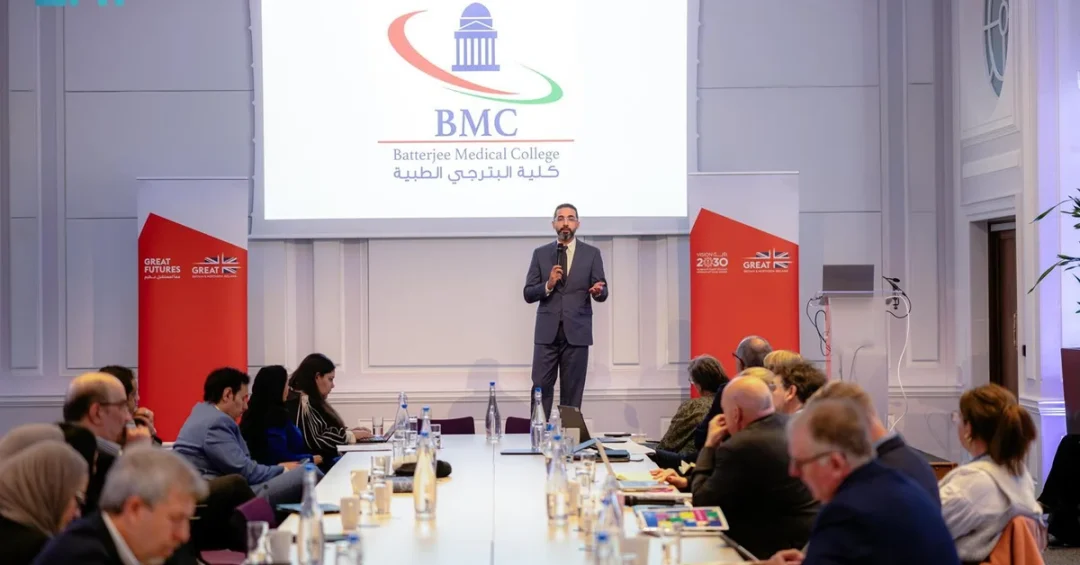
Saudi Vice Minister of Commerce and CEO of the National Competitiveness Center Dr. Eman bint Habbas Al-Mutairi led a high-level Saudi delegation of government officials and business leaders to the United Kingdom from November 18 to 22, 2024, to strengthen bilateral economic relations, expand trade and investment partnerships, and advance cooperation in education and healthcare. The visit, reported by the Saudi Press Agency (SPA), brought together representatives from eight Saudi government agencies and 25 business leaders from major national companies, underscoring the Kingdom’s commitment to deepening its strategic partnership with the United Kingdom under the framework of the Saudi-British Strategic Partnership Council.
The delegation’s agenda focused on boosting trade exchanges, encouraging British companies to expand their operations in Saudi Arabia, reviewing the progress of joint initiatives, and assessing reforms designed to improve the Kingdom’s business environment. A central theme of the visit was attracting top British private schools and nursing colleges to Saudi Arabia, reflecting the Kingdom’s broader ambitions to diversify educational opportunities and enhance human capital development in line with Saudi Vision 2030. The visit also included tours of several leading British educational institutions, where delegation members were briefed on best practices that could be adapted to develop the educational process in the Kingdom.
Context and Background
Why does a five-day visit by a Saudi delegation to London matter for the future of Saudi-British economic ties? The visit took place under the umbrella of the Saudi-British Strategic Partnership Council, which is co-chaired by His Royal Highness Prince Mohammed bin Salman bin Abdulaziz Al Saud, Crown Prince and Prime Minister of the Kingdom of Saudi Arabia, and Prime Minister of the United Kingdom Keir Starmer. This council serves as the highest-level bilateral framework for cooperation between the two nations, covering areas as diverse as trade, investment, defense, culture, and education. The November 2024 delegation visit was therefore not an isolated engagement but a continuation of a long-standing and multifaceted partnership that has been carefully cultivated at the highest levels of both governments.
The composition of the delegation itself signals the seriousness of the Kingdom’s intentions. Officials from the Ministries of Commerce, Investment, Health, Education, Human Resources and Social Development, the Saudi Commission for Health Specialties, the National Competitiveness Center, and the Council of University Affairs participated alongside 25 business leaders representing major national companies. This cross-sectoral representation allowed the Saudi side to engage British counterparts on a wide range of issues simultaneously, from regulatory reform and investment facilitation to workforce development and academic collaboration. It also demonstrated the Kingdom’s integrated approach to economic diplomacy, where government policy and private sector interests are aligned to achieve shared national objectives.
The timing of the visit is significant. Saudi Arabia is in the midst of an unprecedented economic transformation driven by Vision 2030, which aims to diversify the economy away from oil dependence, expand the private sector, and create a vibrant society with world-class education and healthcare. The United Kingdom, with its globally respected educational institutions, advanced healthcare system, and strong financial services sector, is a natural partner in this endeavor. By sending a large and diverse delegation to London, Saudi Arabia signaled that it views the UK as a key strategic ally in achieving its Vision 2030 goals, particularly in the areas of human capital development and knowledge transfer.
Key Details of the Visit
What specific outcomes and discussions defined the Saudi delegation’s agenda in London? During her visit, Dr. Eman bint Habbas Al-Mutairi held a series of meetings with senior British government officials and business leaders, including British Minister for Investment Poppy Gustafsson and British Prime Minister’s Advisor for Business Varun Chandra. These discussions centered on boosting trade exchanges and partnerships in key sectors of mutual interest, encouraging British companies to expand their operations in the Kingdom, reviewing the progress of joint initiatives, and assessing reforms designed to improve the business environment in Saudi Arabia. The meetings also explored ways to increase British investment in Saudi Arabia’s rapidly growing non-oil sectors, including education, healthcare, technology, and professional services.
A major focus of the visit was the National Competitiveness Center’s hosting of three workshops that brought together key stakeholders, including investors, representatives from leading and specialized British schools, and officials from relevant Saudi government agencies. These workshops explored opportunities for cooperation, addressed organizational and operational challenges, and set a goal to increase the number of British schools in the Kingdom to 10 by next year. The discussions also covered the objectives of Saudi Vision 2030, which include diversifying educational opportunities and initiatives aimed at fostering cultural exchange and providing a variety of educational options that comply with international standards, ultimately enriching the educational landscape in the Kingdom and giving Saudi students access to high-quality British education.
The delegation also visited several educational institutions, including Birmingham City University, Caretech Special Education Needs and Disabilities (SEND) schools, Chatsworth SEND schools, Witherslack Group SEND schools, Moon Hall SEND schools, and Reigate Grammar School. Delegation members were briefed on best practices in these educational institutions, while they explored their applicability to developing the educational process in the Kingdom. The inclusion of specialized SEND schools in the itinerary highlights Saudi Arabia’s commitment to inclusive education and ensuring that students with special educational needs have access to world-class support and opportunities. This focus on best practices in special education is a relatively new but rapidly growing area of interest for the Kingdom, as it seeks to build a more equitable and comprehensive education system.
International and Regional Impact
How does this visit fit into the broader landscape of Saudi Arabia’s international economic diplomacy? The Saudi-British partnership is one of several strategic relationships the Kingdom is actively strengthening as part of its Vision 2030 agenda. In recent years, Saudi Arabia has deepened ties with countries across Asia, Europe, and the Americas, positioning itself as a global hub for trade, investment, and innovation. The visit to the United Kingdom is particularly significant because it focuses on education and healthcare—sectors that are critical to developing the skilled workforce and high-quality public services that Vision 2030 requires. By partnering with British institutions, Saudi Arabia can accelerate its progress in these areas while also building long-term people-to-people links that will sustain the bilateral relationship for decades to come.
From a regional perspective, the visit reinforces Saudi Arabia’s role as a leader in the Middle East and a bridge between the region and the wider world. The Kingdom’s ability to attract top British schools and nursing colleges would not only benefit Saudi students and patients but also position Saudi Arabia as a regional center of excellence in education and healthcare. This could have spillover effects for neighboring countries, which may look to Saudi Arabia as a model for how to modernize their own education and health systems. Moreover, the visit sends a positive signal to international investors that Saudi Arabia is open for business and committed to creating a competitive, transparent, and well-regulated environment for foreign companies.
Economic and Strategic Significance
What are the economic and strategic benefits for both Saudi Arabia and the United Kingdom? For Saudi Arabia, the visit represents an opportunity to attract foreign direct investment (FDI) in high-value sectors, create jobs, and enhance the quality of its education and healthcare systems. The goal of increasing British schools in the Kingdom to 10 by next year is a concrete target that, if achieved, would expand access to international-standard education for Saudi families and reduce the need for students to travel abroad for schooling. Similarly, the focus on nursing colleges addresses a critical skills gap in the Kingdom’s healthcare sector, which is expanding rapidly as part of Vision 2030’s health transformation program. By partnering with British institutions, Saudi Arabia can build local capacity and reduce reliance on foreign-trained healthcare professionals over time.
For the United Kingdom, the visit opens doors for British businesses and institutions to enter one of the fastest-growing and most dynamic markets in the Middle East. British schools, universities, and healthcare providers can benefit from Saudi Arabia’s large and increasingly affluent population, as well as from the Kingdom’s ambitious plans to upgrade its infrastructure and public services. The meetings with British Minister for Investment Poppy Gustafsson and British Prime Minister’s Advisor for Business Varun Chandra indicate that the UK government is actively supporting these efforts and views Saudi Arabia as a priority partner for trade and investment. The visit also strengthens the UK’s strategic ties with a key Gulf ally at a time of global economic uncertainty, providing mutual benefits in terms of jobs, exports, and knowledge exchange.
Vision 2030 Alignment
How does the Saudi-British partnership visit align with the Kingdom’s long-term vision for the future? Saudi Vision 2030, launched in 2016 by His Royal Highness Prince Mohammed bin Salman bin Abdulaziz Al Saud, Crown Prince and Prime Minister, aims to transform the Kingdom into a diversified, knowledge-based economy and a vibrant society. Key objectives include improving the quality of education, expanding healthcare services, increasing women’s participation in the workforce, and attracting foreign investment. The delegation’s focus on British schools and nursing colleges directly supports these goals by enhancing human capital, promoting cultural exchange, and providing Saudi citizens with access to world-class education and training. The visit also reflects Vision 2030’s emphasis on international partnerships as a means of accelerating progress and sharing expertise.
The National Competitiveness Center, led by Dr. Eman bint Habbas Al-Mutairi, plays a crucial role in improving Saudi Arabia’s business environment and enhancing its global competitiveness. By hosting workshops and facilitating dialogue between Saudi and British stakeholders, the center is helping to remove barriers to investment and ensure that reforms are implemented effectively. The visit to the United Kingdom is therefore not just about signing agreements but about building the institutional capacity and regulatory frameworks that will sustain long-term economic growth. As Saudi Arabia continues its journey toward Vision 2030, partnerships like the one with the United Kingdom will be essential in achieving the Kingdom’s ambitious targets and cementing its role as a global leader in trade, education, and healthcare.
20 Questions
Q1. Who led the Saudi delegation to the United Kingdom in November 2024?
A1. The delegation was led by Dr. Eman bint Habbas Al-Mutairi, Saudi Vice Minister of Commerce and CEO of the National Competitiveness Center, according to the Saudi Press Agency.
Q2. What was the main purpose of the Saudi delegation’s visit to the UK?
A2. The visit aimed to strengthen bilateral economic relations, boost trade and investment partnerships, and encourage cooperation in education and healthcare between Saudi Arabia and the United Kingdom.
Q3. When did the Saudi delegation visit the United Kingdom?
A3. The visit took place from November 18 to 22, 2024, as reported by the Saudi Press Agency.
Q4. How many government agencies and business leaders were part of the delegation?
A4. The delegation included officials from eight Saudi government agencies and 25 business leaders representing major national companies.
Q5. Which Saudi-British framework oversaw this visit?
A5. The visit aligned with the Saudi-British Strategic Partnership Council, co-chaired by Crown Prince Mohammed bin Salman and UK Prime Minister Keir Starmer.
Q6. Which British officials did Dr. Al-Mutairi meet during the visit?
A6. She met with British Minister for Investment Poppy Gustafsson and British Prime Minister’s Advisor for Business Varun Chandra, among others.
Q7. What sectors were the focus of the discussions?
A7. Discussions centered on trade, investment, education, and healthcare, with a particular emphasis on attracting British private schools and nursing colleges to Saudi Arabia.
Q8. What is the target for the number of British schools in Saudi Arabia?
A8. The goal is to increase the number of British schools in the Kingdom to 10 by next year, as discussed in workshops hosted by the National Competitiveness Center.
Q9. Which educational institutions did the Saudi delegation visit in the UK?
A9. The delegation visited Birmingham City University, Caretech SEND schools, Chatsworth SEND schools, Witherslack Group SEND schools, Moon Hall SEND schools, and Reigate Grammar School.
Q10. What is the significance of visiting SEND schools?
A10. It highlights Saudi Arabia’s commitment to inclusive education and learning best practices for supporting students with special educational needs and disabilities.
Q11. How does this visit support Saudi Vision 2030?
A11. It supports Vision 2030 by enhancing human capital, diversifying educational opportunities, and attracting foreign investment in key sectors like education and healthcare.
Q12. What role does the National Competitiveness Center play in this partnership?
A12. The center hosted workshops, facilitated dialogue between stakeholders, and works to improve Saudi Arabia’s business environment and global competitiveness.
Q13. Which Saudi ministries participated in the delegation?
A13. The Ministries of Commerce, Investment, Health, Education, and Human Resources and Social Development participated, along with other agencies.
Q14. What are the expected benefits for the United Kingdom from this partnership?
A14. British institutions and businesses gain access to Saudi Arabia’s growing market, creating opportunities for exports, investment, and knowledge exchange.
Q15. How does the visit reflect Saudi Arabia’s economic diplomacy?
A15. It demonstrates the Kingdom’s integrated approach, aligning government policy with private sector interests to achieve shared national objectives under Vision 2030.
Q16. What reforms were discussed to improve Saudi Arabia’s business environment?
A16. Discussions covered regulatory reforms designed to attract foreign investment, streamline operations for British companies, and enhance overall competitiveness.
Q17. Why is the Saudi-British partnership important for regional stability?
A17. It strengthens economic ties between a key Gulf state and a major global economy, promoting stability, prosperity, and cooperation in the Middle East.
Q18. What is the significance of the visit for Saudi students?
A18. It aims to provide Saudi students with access to high-quality British education within the Kingdom, reducing the need to travel abroad and enriching the local educational landscape.
Q19. How does the visit address healthcare workforce needs in Saudi Arabia?
A19. By focusing on nursing colleges, the visit supports building local capacity and addressing skills gaps in the Kingdom’s expanding healthcare sector.
Q20. What does this visit signal about Saudi Arabia’s global engagement?
A20. It signals Saudi Arabia’s active pursuit of international partnerships to achieve Vision 2030 goals and its emergence as a global hub for trade, education, and healthcare.
Reader Feedback
We value your thoughts. Please share your feedback on this article.
Your feedback helps us improve our coverage.
Related articles
 Saudi Arabia Joins Global Hydrogen Partnership IPHE
 Moody’s Upgrades Saudi Arabia’s Credit Rating to ‘Aa3’
 Saudi EXIM Hosts Global Risk Experts Meeting in Riyadh
 SCEGA Executive Team Joins UFI Global Congress in Cologne
 Riyadh to Host Fourth Real Estate Future Forum in January 2025
 Al-Hariq Citrus Festival Returns for Ninth Edition in January