


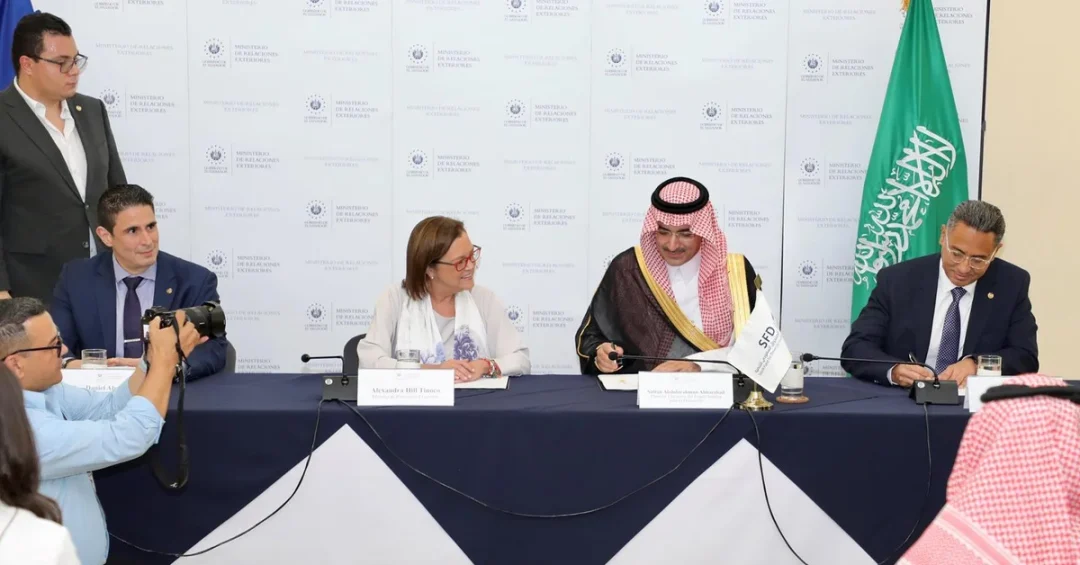
The Saudi Fund for Development (SFD) has signed its first development loan agreement with El Salvador, providing $83 million to fund a water treatment and biogas power generation project. The agreement was signed by SFD CEO Sultan bin Abdulrahman Al-Marshad and El Salvador’s Minister of Finance, Jerson Posada, in the presence of El Salvador’s Minister of Foreign Affairs, Alexandra Hill Tinoco, and other officials. The project will use water from the Acelhuate River to produce biogas for renewable electricity generation, benefiting over 1.2 million people and advancing multiple Sustainable Development Goals (SDGs).
Context and Background
The Saudi Fund for Development, a key entity under Saudi Arabia’s international cooperation framework, has a long history of supporting developing countries in achieving their development goals. This agreement marks the first time the SFD has partnered with El Salvador, reflecting the Kingdom’s growing engagement with Latin America and the Caribbean. The project addresses critical challenges in water treatment and renewable energy, aligning with global efforts to promote sustainability and improve living conditions in beneficiary countries.
El Salvador’s Acelhuate River has long suffered from pollution, affecting both the environment and public health. The new project will treat wastewater that currently flows into the river, while simultaneously producing biogas for electricity generation. This dual-purpose approach not only mitigates environmental damage but also enhances the country’s renewable energy capacity, contributing to a cleaner and more sustainable future.
Key Details
The $83 million development loan will finance the construction of a water treatment facility and a biogas power plant. The project is expected to benefit over 1.2 million people by providing access to clean water and reliable renewable energy. The biogas generated from wastewater treatment will be used to produce electricity, reducing reliance on fossil fuels and lowering greenhouse gas emissions. This initiative directly supports SDG 6 (Clean Water and Sanitation) and SDG 7 (Affordable and Clean Energy), among others.
During the signing ceremony, SFD CEO Sultan bin Abdulrahman Al-Marshad emphasized the importance of international cooperation in achieving sustainable development. He noted that the project exemplifies the SFD’s commitment to helping developing countries overcome obstacles to their development plans. El Salvador’s Minister of Finance, Jerson Posada, expressed gratitude for the Kingdom’s support, highlighting the transformative impact the project will have on local communities.
Implications and Impact
This agreement strengthens the bilateral relationship between Saudi Arabia and El Salvador and sets a precedent for future collaboration in Latin America. By investing in water and energy infrastructure, the SFD is helping El Salvador address pressing environmental and public health challenges while promoting economic growth. The project also demonstrates Saudi Arabia’s role as a global partner in sustainable development, enhancing its reputation as a responsible international actor.
Regionally, the project could inspire similar initiatives in neighboring countries facing comparable issues. The use of biogas technology for power generation is a innovative approach that can be replicated in other developing nations, further amplifying the impact of Saudi Arabia’s development assistance. On a global scale, the project contributes to the achievement of the SDGs, reinforcing the Kingdom’s commitment to the 2030 Agenda for Sustainable Development.
Vision 2030 Alignment
This agreement aligns closely with Saudi Vision 2030, which seeks to diversify the Kingdom’s economy and enhance its global engagement. By supporting sustainable development abroad, the SFD promotes Saudi Arabia’s leadership in international cooperation and underscores the Kingdom’s dedication to humanitarian and development causes. As Saudi Arabia continues to expand its global footprint, initiatives like this demonstrate how Vision 2030 extends beyond domestic transformation to foster prosperity and stability worldwide.
20 Questions
Q1. What is the Saudi Fund for Development?
A1. The Saudi Fund for Development is a Saudi government agency that provides development loans and grants to developing countries to support economic and social development projects, aligning with Saudi Arabia’s international cooperation goals.
Q2. What is the value of the loan agreement signed with El Salvador?
A2. The loan agreement is worth $83 million, provided by the Saudi Fund for Development to support water treatment and biogas power generation in El Salvador.
Q3. Who signed the agreement on behalf of Saudi Arabia?
A3. The agreement was signed by Sultan bin Abdulrahman Al-Marshad, CEO of the Saudi Fund for Development, representing the Kingdom of Saudi Arabia.
Q4. Who represented El Salvador at the signing ceremony?
A4. El Salvador’s Minister of Finance, Jerson Posada, signed the agreement, and Minister of Foreign Affairs Alexandra Hill Tinoco attended the ceremony.
Q5. What project will the loan fund?
A5. The loan will fund a water treatment and biogas power generation project using water from the Acelhuate River in El Salvador.
Q6. How many people will benefit from the project?
A6. The project is expected to benefit over 1.2 million people by providing clean water and renewable energy.
Q7. What is the Acelhuate River known for?
A7. The Acelhuate River is a polluted river in El Salvador that will be treated to produce biogas for electricity generation.
Q8. What are the Sustainable Development Goals mentioned?
A8. The project advances SDG 6 (Clean Water and Sanitation) and SDG 7 (Affordable and Clean Energy), among others.
Q9. Why is this agreement significant for Saudi Arabia?
A9. It marks the first SFD development loan to El Salvador, showcasing Saudi Arabia’s commitment to international cooperation and sustainable development.
Q10. How does this project contribute to environmental sustainability?
A10. By treating wastewater and producing biogas for renewable electricity, the project reduces pollution and reliance on fossil fuels, promoting environmental sustainability.
Q11. What is biogas and how will it be used?
A11. Biogas is a renewable energy source produced from organic matter. It will be generated from wastewater treatment and used to produce electricity.
Q12. What did the SFD CEO say about the project?
A12. Sultan bin Abdulrahman Al-Marshad emphasized the importance of international cooperation and the SFD’s commitment to supporting developing countries in overcoming development challenges.
Q13. How does this project align with Saudi Vision 2030?
A13. It aligns with Vision 2030 by enhancing Saudi Arabia’s global engagement, promoting sustainable development, and demonstrating the Kingdom’s leadership in international cooperation.
Q14. What are the expected outcomes of the project?
A14. The project will provide clean water, renewable energy, and environmental benefits, improving the quality of life for over 1.2 million people in El Salvador.
Q15. How does this project support El Salvador’s development?
A15. It addresses critical water and energy needs, fosters economic growth, and helps El Salvador achieve its sustainable development goals.
Q16. What is the significance of this being the first SFD agreement with El Salvador?
A16. It opens a new chapter in Saudi-El Salvador relations, setting the stage for future collaboration and demonstrating Saudi Arabia’s expanding global development role.
Q17. How does the project promote renewable energy in El Salvador?
A17. By generating biogas from wastewater, the project increases El Salvador’s renewable energy capacity and reduces dependence on non-renewable sources.
Q18. What role does international cooperation play in this project?
A18. International cooperation is vital for pooling resources and expertise to address global challenges like water scarcity and energy access, as shown by this Saudi-El Salvador partnership.
Q19. What other SDGs does the project contribute to?
A19. Besides SDG 6 and 7, it contributes to SDG 13 (Climate Action) and SDG 3 (Good Health and Well-being) by reducing pollution and improving sanitation.
Q20. How does this project reflect Saudi Arabia’s global role?
A20. It demonstrates Saudi Arabia’s commitment to being a responsible global partner, using its resources to support sustainable development and improve lives in developing countries.
Reader Feedback
We value your thoughts. Please share your feedback on this article.
Your feedback helps us improve our coverage.