


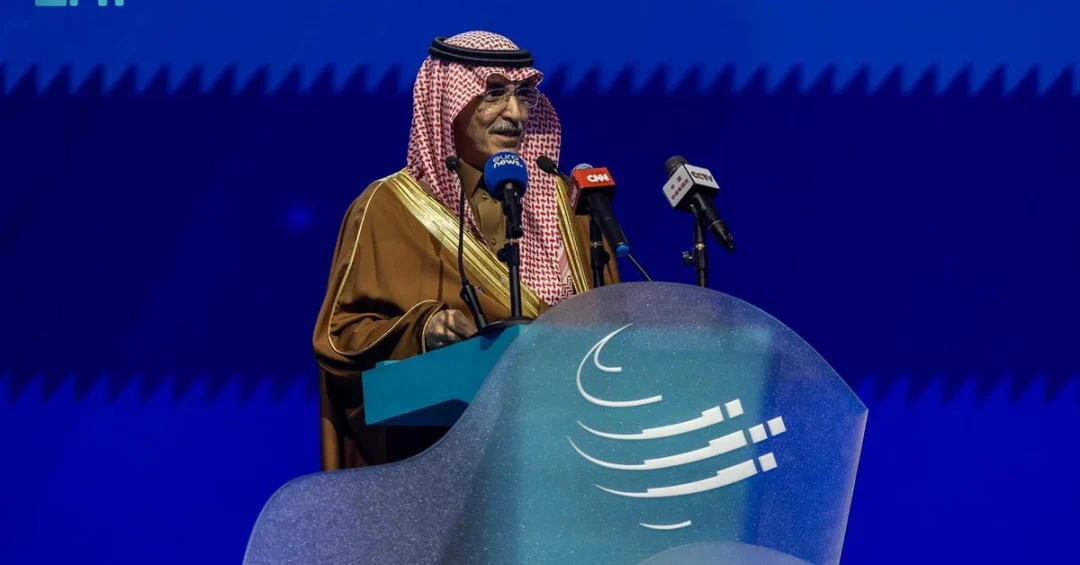
The third edition of the Zakat, Tax, and Customs Conference 2024 commenced today in Riyadh under the patronage of Minister of Finance and Chairman of the Board of Directors of the Zakat, Tax and Customs Authority (ZATCA), Mohammed Al-Jadaan, bringing together a wide range of officials and experts from around the world. Organized by ZATCA under the theme “Shaping Tomorrow for Sustainable Ecosystem,” the two-day event is taking place at the King Abdulaziz International Conference Center in Riyadh on December 4–5, according to the Saudi Press Agency (SPA). The conference serves as a global platform for dialogue on the future of zakat, tax, and customs systems, with participation from approximately 90 local, regional, and international entities.
Why does a technical gathering on taxation and customs matter to the wider world? Because in an era of shifting trade routes, digital economies, and evolving fiscal policies, the decisions made in Riyadh this week could ripple across global supply chains and investment flows. The conference reflects Saudi Arabia’s growing role as a convener of international economic dialogue, a role that has expanded steadily as the Kingdom advances its Vision 2030 reform agenda. By hosting this event, ZATCA is positioning the Kingdom at the center of efforts to build more efficient, transparent, and cooperative systems that support sustainable growth.
Context and Background
What is the Zakat, Tax, and Customs Conference, and why has it become a fixture on the international calendar? First launched in 2022, the annual event has quickly grown into a major forum for policymakers, tax authorities, customs officials, and private-sector leaders to exchange expertise and address shared challenges. This third edition builds on the momentum of previous gatherings, which have produced agreements and recommendations that influence how countries approach cross-border trade and revenue collection. The conference is organized by ZATCA, the Saudi authority responsible for administering zakat, tax, and customs affairs, which has itself undergone a significant transformation in recent years.
Under the leadership of Minister of Finance Mohammed Al-Jadaan, who also chairs ZATCA’s Board of Directors, the authority has prioritized digital modernization and international cooperation. The timing of this year’s conference is significant: it convenes as Saudi Arabia reports substantial progress toward its Vision 2030 objectives, particularly in digital government and economic diversification. Al-Jadaan noted in his opening address that ZATCA has played a pivotal role in these achievements, especially in digital transformation, where the authority has implemented over 350 requirements aligned with the United Nations E-Government Development Index, earning a 99.35% score. That level of performance underscores the Kingdom’s commitment to efficiency and transparency in public services.
The conference also arrives amid broader global discussions about how tax and customs systems can support economic recovery and address security challenges. By bringing together diverse stakeholders, ZATCA aims to foster solutions that are both practical and forward-looking. As the global economy continues to evolve, forums like this one provide a necessary space for aligning policies and sharing best practices.
Key Details
What specific outcomes can participants expect from the two-day agenda? The first day featured several panel discussions involving distinguished officials, experts, and leaders from various countries. These sessions covered topics ranging from digital transformation in tax administration to the role of customs in facilitating trade and securing borders. ZATCA Governor Eng. Suhail bin Mohammed Abanmi outlined the authority’s objectives in his address: “Through this conference, the authority aims to foster local, regional, and international efforts toward building advanced zakat, tax, and customs systems that contribute to enhancing global economic growth and addressing security and economic challenges.”
The event also includes an exhibition featuring approximately 90 local, regional, and international entities, showcasing the latest technologies and solutions in the field. More than 70 workshops are scheduled, providing hands-on opportunities for participants to delve into technical and strategic issues. Additionally, the conference is set to host the signing of numerous agreements and memoranda of understanding, further cementing its role as a catalyst for concrete collaboration. These agreements are expected to cover areas such as information exchange, capacity building, and joint initiatives to combat illicit trade.
Minister Al-Jadaan’s opening speech highlighted the conference’s role in promoting international cooperation to address tax and customs challenges, support economic growth, facilitate the exchange of expertise, and contribute to economic recovery. He emphasized that the event convenes at a time when Saudi Arabia has made significant progress in achieving the initiatives and goals of Saudi Vision 2030. His remarks underscored the importance of collective action in building resilient economic systems that can withstand global shocks.
International and Regional Impact
How will the outcomes of this conference influence global trade and fiscal policies? The presence of representatives from numerous countries and international organizations signals a shared recognition that tax and customs issues are no longer purely domestic matters. In a globalized economy, the flow of goods, services, and capital depends on predictable, efficient, and fair systems. By facilitating dialogue among key stakeholders, the conference helps to harmonize approaches and reduce friction at borders. This is particularly important for regions like the Middle East, where trade corridors are expanding and new agreements are reshaping economic relationships.
For Saudi Arabia, hosting such an event reinforces its status as a regional leader and a bridge between continents. The Kingdom’s strategic location, coupled with its ambitious infrastructure projects and economic reforms, makes it an ideal venue for discussions on the future of trade. The conference also aligns with Saudi Arabia’s efforts to diversify its economy away from oil dependence, as a more efficient tax and customs regime can boost non-oil revenues and attract foreign investment. Moreover, the exchange of expertise helps participating countries improve their own systems, leading to more robust global economic governance.
Economic and Strategic Significance
Why is this conference more than just a diplomatic gathering? The economic stakes are considerable. Effective zakat, tax, and customs systems are essential for funding public services, fostering fair competition, and enabling governments to invest in infrastructure and social programs. For Saudi Arabia, ZATCA’s digital transformation has already improved compliance and reduced administrative burdens, making it easier for businesses to operate. The 99.35% score on the UN E-Government Development Index is a testament to these efforts, reflecting the Kingdom’s commitment to leveraging technology for public good.
Strategically, the conference supports Vision 2030 by promoting international partnerships and knowledge transfer. The agreements and memoranda of understanding signed during the event will likely pave the way for deeper cooperation in areas such as data sharing, risk management, and capacity building. These collaborations can enhance security by curbing smuggling and tax evasion, while also facilitating legitimate trade. As the global economy becomes increasingly digital, such cooperation is vital for ensuring that tax and customs frameworks keep pace with new business models and technologies.
Vision 2030 Alignment
How does the Zakat, Tax, and Customs Conference 2024 contribute to Saudi Arabia’s long-term vision? Vision 2030 aims to transform the Kingdom into a diversified, innovative, and globally engaged economy. A key pillar of this transformation is the development of efficient government institutions that can support private-sector growth and attract investment. ZATCA’s modernization efforts, showcased at this conference, are directly aligned with this goal. By achieving high levels of digital maturity, the authority is helping to create a business-friendly environment that encourages entrepreneurship and international partnerships.
Furthermore, the conference embodies the spirit of international cooperation that Vision 2030 champions. Saudi Arabia is not only reforming its domestic systems but also actively contributing to global efforts to improve economic governance. This outward-looking approach enhances the Kingdom’s reputation as a responsible global player and a trusted partner. As the conference concludes, the discussions and agreements forged in Riyadh will likely inform future policies and collaborations, reinforcing Saudi Arabia’s role in shaping a sustainable and prosperous global economy. In doing so, the Kingdom continues to demonstrate that its vision extends beyond its borders, benefiting the wider world.
20 Questions
Q1. What is the Zakat, Tax, and Customs Conference 2024?
A1. It is the third edition of an annual conference organized by the Zakat, Tax and Customs Authority (ZATCA) under the theme “Shaping Tomorrow for Sustainable Ecosystem,” held in Riyadh on December 4–5, 2024, bringing together global officials and experts.
Q2. Who inaugurated the conference?
A2. The conference was inaugurated by Mohammed Al-Jadaan, Minister of Finance and Chairman of the Board of Directors of ZATCA, who delivered a speech highlighting its role in promoting international cooperation and supporting economic growth.
Q3. Where is the conference taking place?
A3. The event is being held at the King Abdulaziz International Conference Center in Riyadh, Saudi Arabia, a venue that has hosted numerous high-profile international gatherings.
Q4. How many entities are participating in the exhibition?
A4. Approximately 90 local, regional, and international entities are participating in the exhibition, showcasing the latest solutions and technologies in zakat, tax, and customs systems.
Q5. What did Eng. Suhail bin Mohammed Abanmi say about the conference?
A5. The ZATCA Governor stated that the authority aims to foster local, regional, and international efforts toward building advanced zakat, tax, and customs systems that enhance global economic growth and address security and economic challenges.
Q6. How many workshops are being held?
A6. More than 70 workshops are scheduled during the two-day conference, providing participants with opportunities to explore technical and strategic topics in depth.
Q7. What agreements are expected to be signed?
A7. Numerous agreements and memoranda of understanding are set to be signed, covering areas such as information exchange, capacity building, and joint initiatives to combat illicit trade and enhance cooperation.
Q8. What score did ZATCA achieve on the UN E-Government Development Index?
A8. ZATCA achieved a 99.35% score on the UN E-Government Development Index, reflecting its successful digital transformation and implementation of over 350 related requirements.
Q9. Why is this conference important for Saudi Arabia?
A9. It reinforces Saudi Arabia’s role as a global convener of economic dialogue, supports Vision 2030 goals, and showcases the Kingdom’s progress in digital government and economic diversification.
Q10. What is the theme of the conference?
A10. The theme is “Shaping Tomorrow for Sustainable Ecosystem,” emphasizing the need for cooperative, forward-looking approaches to zakat, tax, and customs systems.
Q11. Who organized the conference?
A11. The conference is organized by the Zakat, Tax and Customs Authority (ZATCA), the Saudi government body responsible for administering zakat, tax, and customs affairs.
Q12. What topics are covered in the panel discussions?
A12. Panel discussions cover a range of topics, including digital transformation in tax administration, trade facilitation, border security, and strategies for addressing global economic challenges.
Q13. How does the conference support economic recovery?
A13. By promoting international cooperation and the exchange of expertise, the conference helps countries improve their tax and customs systems, which can boost trade, increase revenues, and support broader economic recovery efforts.
Q14. What role does ZATCA play in Vision 2030?
A14. ZATCA plays a pivotal role in Vision 2030 by modernizing digital services, enhancing efficiency, and contributing to a business-friendly environment that supports economic diversification and investment.
Q15. Which countries are participating?
A15. The conference draws extensive participation from various countries, with officials and experts from around the world attending the panel discussions and exhibition.
Q16. What is the significance of the 99.35% score?
A16. The score indicates that ZATCA’s digital services are among the most advanced globally, demonstrating the Kingdom’s commitment to leveraging technology for efficient public service delivery.
Q17. How many requirements were implemented for the UN index?
A17. ZATCA implemented over 350 requirements aligned with the UN E-Government Development Index, contributing to its high score and improved digital services.
Q18. What benefits do the signed agreements bring?
A18. The agreements foster international cooperation, enhance information sharing, build capacity, and help combat smuggling and tax evasion, ultimately facilitating legitimate trade and economic growth.
Q19. How does the conference promote sustainability?
A19. By focusing on building advanced and efficient systems, the conference supports sustainable economic ecosystems that can adapt to future challenges and promote long-term prosperity.
Q20. What is the expected outcome of the conference?
A20. The conference is expected to produce concrete agreements, share best practices, and strengthen international partnerships, contributing to more resilient and cooperative global tax and customs frameworks.
Reader Feedback
We value your thoughts. Please share your feedback on this article.
Your feedback helps us improve our coverage.
Related articles
 GCC Chief Meets Jordan Investment Minister at Dead Sea Conference
 Hail Region: SAR 72.3 Billion Mineral Wealth Hub
 Saudi Venture Capital Invests in Aliph Capital Fund
 ZATCA and Egypt Sign Mutual Recognition Agreement on AEO Programs
 ICIEC Leads Effort to Launch Africa-Arab Guarantee Fund
 Saudi-French Investment Forum Concludes in Riyadh