


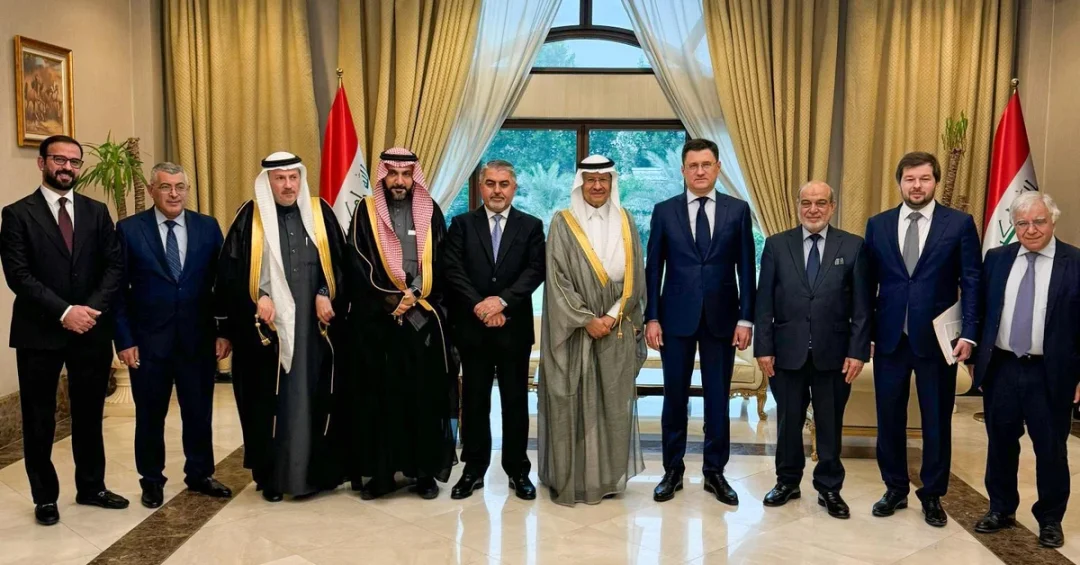
A trilateral meeting held in Baghdad on November 26, 2024, brought together Saudi Arabia’s Minister of Energy, Prince Abdulaziz bin Salman bin Abdulaziz Al Saud; Deputy Prime Minister of the Russian Federation Alexander Novak; and Deputy Minister for Distribution Affairs at Iraq’s Ministry of Oil, Ali Maarij Al-Bahadli, to reaffirm their commitment to maintaining stability and balance in global oil markets through the OPEC+ framework. The meeting underscored the critical role of cooperation among OPEC+ member states and their shared determination to adhere to production agreements, including voluntary cuts and compensation for overproduction. This high-level gathering in Iraq’s capital signals a continued push to stabilize oil prices and support global economic growth, aligning with Saudi Arabia’s Vision 2030 goals of economic diversification and international leadership.
The trilateral discussion, reported by the Saudi Press Agency (SPA), highlights the ongoing efforts of OPEC+ to manage oil supply amid fluctuating global demand and geopolitical uncertainties. Prince Abdulaziz bin Salman, as chair of OPEC+, and Alexander Novak, as co-chair, have been instrumental in steering the alliance’s strategy, which includes voluntary production adjustments by eight member states. Iraq’s reaffirmation of its commitment to comply with these measures, as outlined in an updated schedule submitted to the OPEC Secretariat, further solidifies the group’s unity. This meeting not only reinforces the importance of collective action but also demonstrates Saudi Arabia’s pivotal role in fostering dialogue and consensus among major oil producers.
Context and Background
Why does a meeting in Baghdad matter for global energy markets? The OPEC+ alliance, formed in 2016, has become a cornerstone of oil market stability, coordinating production policies among its members to balance supply and demand. The trilateral meeting in Baghdad follows a series of high-level discussions aimed at navigating a complex landscape marked by economic recovery, shifting energy policies, and geopolitical tensions. Saudi Arabia, as the world’s largest oil exporter and a key OPEC+ leader, has consistently advocated for a balanced approach that supports both producers and consumers. The meeting’s location in Iraq, a significant OPEC member, underscores the importance of regional unity in addressing global challenges.
In recent years, OPEC+ has implemented production cuts to counter oversupply and bolster prices, particularly during the COVID-19 pandemic and subsequent demand fluctuations. The voluntary cuts agreed upon by eight member states, including Saudi Arabia and Russia, have been critical in stabilizing markets. However, compliance has been uneven at times, prompting calls for compensation mechanisms to address overproduction. Iraq’s updated schedule to compensate for excess production reflects a growing commitment to collective responsibility. This trilateral meeting serves as a platform to reinforce these commitments and ensure that all members adhere to agreed quotas, thereby preventing market disruptions.
Furthermore, the meeting comes amid broader global energy transitions, with many nations accelerating investments in renewables while still relying on oil for economic growth. Saudi Arabia’s leadership in OPEC+ is part of its broader strategy to maintain market stability while diversifying its economy under Vision 2030. By collaborating with Russia and Iraq, the Kingdom is not only safeguarding its economic interests but also contributing to global energy security. The discussions in Baghdad are thus a microcosm of the larger efforts to balance short-term market needs with long-term sustainability goals.
Key Details
What specific outcomes emerged from the trilateral meeting? The participants emphasized the importance of maintaining stability and balance in global oil markets and commended the role played by OPEC+ in this regard. They highlighted the significance of cooperation among member states and their full commitment to the agreement, including the voluntary production cuts agreed upon by eight member states, as well as compensating for any increases in production. Iraq’s Deputy Minister for Distribution Affairs, Ali Maarij Al-Bahadli, reaffirmed Iraq’s seriousness and determination to fully comply with the agreement, implement the voluntary cuts, and compensate for excess production in line with the updated schedule submitted to the OPEC Secretariat.
Saudi Arabia’s Minister of Energy, Prince Abdulaziz bin Salman bin Abdulaziz Al Saud, and Russia’s Deputy Prime Minister Alexander Novak, in their capacities as chair and co-chair of OPEC+, reiterated the importance of unity and discipline within the alliance. The meeting also underscored the need for continuous dialogue to adapt to evolving market conditions. While no new production targets were announced, the reaffirmation of existing commitments signals a consensus-driven approach to market management. The participants agreed to monitor market developments closely and to take necessary measures to ensure stability, reflecting the proactive stance of OPEC+.
The trilateral format itself is significant, as it brings together key stakeholders—Saudi Arabia, Russia, and Iraq—to address shared challenges. This aligns with OPEC+’s broader strategy of engaging major producers in direct discussions to foster transparency and trust. The meeting’s outcomes are expected to reinforce market confidence, as investors and analysts view such high-level coordination as a positive signal for oil price stability. Moreover, Iraq’s explicit commitment to compensate for overproduction addresses a key concern that has previously strained relations within the group, further strengthening the alliance’s cohesion.
International and Regional Impact
How will this meeting influence global oil dynamics? The trilateral discussions in Baghdad are likely to have far-reaching implications for international oil markets, which are closely watched by governments, investors, and consumers worldwide. By reaffirming their commitment to production cuts, Saudi Arabia, Russia, and Iraq are signaling that OPEC+ remains united in its efforts to prevent price volatility. This is particularly important as global demand patterns shift due to economic uncertainties in Europe and Asia, and as geopolitical tensions in the Middle East persist. A stable oil market benefits both producers and consumers, ensuring reliable energy supplies and predictable prices.
Regionally, the meeting reinforces Iraq’s role as a constructive partner within OPEC+, which can enhance its standing in the global energy community. For Saudi Arabia, it demonstrates continued leadership in bridging differences among member states and fostering cooperation with non-OPEC producers like Russia. This diplomatic engagement also supports broader regional stability, as energy cooperation often serves as a foundation for economic and political dialogue. The participants’ emphasis on compensation for overproduction sets a precedent for accountability, which could encourage other members to adhere strictly to their quotas, thereby enhancing the credibility of OPEC+.
On the international stage, the meeting comes at a time when major economies are navigating inflationary pressures and energy security concerns. By stabilizing oil markets, OPEC+ helps mitigate upward pressure on prices, which can ease inflationary risks and support global economic recovery. Saudi Arabia’s role as a responsible global energy leader is further cemented, aligning with its commitments under Vision 2030 to be a reliable partner in international affairs. The trilateral meeting thus serves as a testament to the power of multilateralism in addressing shared challenges.
Economic and Strategic Significance
What does this mean for the global economy and Saudi Arabia’s strategic goals? Stable oil markets are essential for global economic health, as oil remains a primary energy source for transportation, industry, and heating. The trilateral meeting’s reaffirmation of production cuts helps prevent supply gluts that could crash prices, as well as shortages that could spike them. For Saudi Arabia, this stability is crucial for its own economic planning, as oil revenues continue to fund the Kingdom’s ambitious Vision 2030 initiatives, including mega-projects like NEOM and the diversification of its industrial base. By working with Russia and Iraq, Saudi Arabia ensures that its economic transformation is not derailed by market volatility.
Strategically, the meeting demonstrates Saudi Arabia’s ability to lead a diverse coalition of oil producers, balancing the interests of OPEC members and non-OPEC allies. This leadership enhances the Kingdom’s geopolitical influence and its capacity to shape global energy policies. The compensation mechanism for overproduction is particularly significant, as it promotes fairness and adherence to collective decisions, which are vital for the long-term sustainability of OPEC+. Moreover, the trilateral format allows for candid discussions that can preempt potential disputes, fostering a more resilient alliance.
From an investment perspective, the meeting’s outcomes provide clarity and predictability, which are attractive to international investors. Energy markets thrive on certainty, and OPEC+’s cohesive stance reduces the risk of sudden policy shifts. This is especially important as Saudi Arabia seeks to attract foreign investment for its Vision 2030 projects. By ensuring oil market stability, the Kingdom creates a conducive environment for economic growth and diversification, benefiting not only Saudi citizens but also the global economy. The meeting in Baghdad thus represents a strategic investment in both regional cooperation and global economic stability.
Vision 2030 Alignment
How does this trilateral meeting align with Saudi Arabia’s Vision 2030? Vision 2030, the Kingdom’s transformative plan to diversify its economy and reduce dependence on oil, relies on stable oil revenues during the transition period. By actively participating in OPEC+ and fostering cooperation among major producers, Saudi Arabia ensures that its economic diversification efforts are not undermined by market instability. The meeting in Baghdad exemplifies the Kingdom’s proactive diplomacy and its commitment to global energy security, which are core pillars of Vision 2030’s international engagement strategy.
Furthermore, the meeting highlights Saudi Arabia’s leadership in multilateral forums, a key aspect of its Vision 2030 goal to be a influential global player. Through OPEC+, the Kingdom not only stabilizes oil markets but also strengthens diplomatic ties with countries like Russia and Iraq, which can lead to broader economic and political partnerships. This aligns with Vision 2030’s emphasis on building strategic alliances and promoting sustainable development. As Saudi Arabia continues its journey toward a diversified economy, its role in ensuring global oil market stability remains a cornerstone of its international policy and a testament to its responsible leadership.
20 Questions
Q1. What was the purpose of the trilateral meeting held in Baghdad?
A1. The trilateral meeting aimed to reaffirm the commitment of Saudi Arabia, Russia, and Iraq to maintaining stability and balance in global oil markets through the OPEC+ framework. It focused on cooperation, adherence to production cuts, and compensation for overproduction.
Q2. Who represented Saudi Arabia at the meeting?
A2. Saudi Arabia was represented by Minister of Energy Prince Abdulaziz bin Salman bin Abdulaziz Al Saud. He co-chaired the meeting in his capacity as chair of the OPEC+ group, reflecting the Kingdom’s leadership in global energy affairs.
Q3. Who represented Russia at the meeting?
A3. Russia was represented by Deputy Prime Minister Alexander Novak. He participated as co-chair of the OPEC+ group, underscoring Russia’s key role in the alliance and its partnership with Saudi Arabia in stabilizing oil markets.
Q4. Who represented Iraq at the meeting?
A4. Iraq was represented by Ali Maarij Al-Bahadli, Deputy Minister for Distribution Affairs at the Ministry of Oil. He reaffirmed Iraq’s commitment to complying with OPEC+ agreements and compensating for overproduction.
Q5. What is the significance of holding the meeting in Iraq?
A5. Holding the meeting in Baghdad highlights Iraq’s importance as a major oil producer and its commitment to OPEC+ unity. It also demonstrates regional cooperation and Saudi Arabia’s diplomatic outreach to strengthen ties with key partners.
Q6. What did the participants emphasize regarding global oil markets?
A6. The participants emphasized the importance of maintaining stability and balance in global oil markets. They commended OPEC+’s role and stressed the need for continued cooperation among member states to prevent volatility and ensure reliable energy supplies.
Q7. What agreement did the participants reaffirm?
A7. They reaffirmed their full commitment to the OPEC+ agreement, including voluntary production cuts by eight member states and compensation for any increases in production. This ensures adherence to quotas and market stability.
Q8. What did Iraq commit to during the meeting?
A8. Iraq committed to fully comply with the OPEC+ agreement, implement voluntary cuts, and compensate for excess production according to an updated schedule submitted to the OPEC Secretariat. This demonstrates Iraq’s dedication to collective responsibility.
Q9. How does this meeting align with Saudi Arabia’s Vision 2030?
A9. The meeting supports Vision 2030 by ensuring stable oil revenues during economic diversification. It also showcases Saudi Arabia’s global leadership and diplomatic engagement, key pillars of the Kingdom’s long-term strategic plan.
Q10. What are voluntary production cuts?
A10. Voluntary production cuts are reductions in oil output agreed upon by certain OPEC+ members to balance supply and demand. They are designed to stabilize prices and prevent market oversupply, supporting global economic health.
Q11. Why is compensation for overproduction important?
A11. Compensation ensures fairness and accountability within OPEC+. It requires members that exceeded quotas to cut production later, preventing cheating and maintaining the credibility of the alliance’s market management efforts.
Q12. How does OPEC+ influence global oil prices?
A12. OPEC+ influences oil prices by coordinating production levels among its members. When it cuts output, prices tend to rise; when it increases output, prices may fall. This helps stabilize markets and support economic growth.
Q13. What role does Saudi Arabia play in OPEC+?
A13. Saudi Arabia is a leading member and often acts as a bridge between OPEC and non-OPEC producers. Its Minister of Energy chairs OPEC+ meetings, and the Kingdom advocates for balanced policies that benefit both producers and consumers.
Q14. What are the economic implications of this meeting for Saudi Arabia?
A14. For Saudi Arabia, the meeting helps ensure stable oil revenues, which fund Vision 2030 projects. It also reinforces the Kingdom’s reputation as a reliable energy supplier, attracting foreign investment and supporting economic diversification.
Q15. How might this meeting affect global oil consumers?
A15. Global oil consumers benefit from stable prices and reliable supply. The meeting’s reaffirmation of production cuts helps prevent price spikes that could fuel inflation, supporting economic stability worldwide and easing cost pressures on businesses and households.
Q16. What is the OPEC Secretariat’s role in the compensation schedule?
A16. The OPEC Secretariat monitors member compliance and receives schedules for compensating overproduction. It ensures transparency and helps coordinate efforts to align actual production with agreed quotas, maintaining market balance.
Q17. How does this meeting reflect Saudi Arabia’s diplomatic approach?
A17. It reflects Saudi Arabia’s proactive and consensus-building diplomacy. By engaging Russia and Iraq directly, the Kingdom fosters cooperation, resolves potential disputes, and strengthens multilateral ties, aligning with its Vision 2030 goal of global leadership.
Q18. What challenges does OPEC+ currently face?
A18. OPEC+ faces challenges such as uneven compliance, geopolitical tensions, and the global energy transition. The meeting in Baghdad addresses these by reinforcing commitments and promoting unity, ensuring the alliance remains effective in managing oil markets.
Q19. How does this meeting support regional stability?
A19. By fostering cooperation among key oil producers in the Middle East and beyond, the meeting promotes economic interdependence and dialogue, which can reduce tensions and contribute to regional stability, benefiting all countries involved.
Q20. What are the next steps following this trilateral meeting?
A20. OPEC+ members will continue to monitor market conditions and implement agreed production adjustments. The participants will likely hold further discussions to ensure compliance and adapt to changing circumstances, maintaining the alliance’s proactive stance.
Reader Feedback
We value your thoughts. Please share your feedback on this article.
Your feedback helps us improve our coverage.
Related articles
 Saudi Cabinet Approves 2025 Budget with SAR1.285 Trillion Expenditure
 Saudi Arabia, Djibouti Sign Investment Protection Agreement
 Saudi FY 2025 Budget: SAR1,285B Spending, Vision 2030 Focus
 Crown Prince Reaffirms Economic Diversification After 2025 Budget
 Saudi Arabia Signs SAR35bn Investment Agreements at WIC
 AgroFood Jeddah Exhibition Set to Begin Next Week