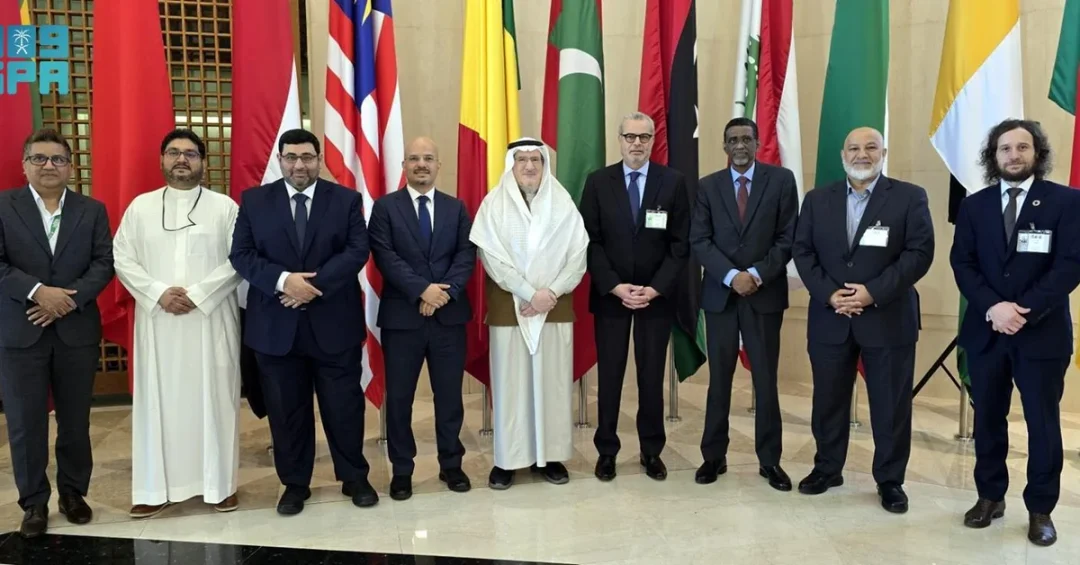
The Islamic Development Bank Institute (IsDBI) hosted a high-level delegation from the Universal Postal Union (UPU) in Jeddah on March 14, 2025, to explore cooperation in digital postal Islamic financial services, according to the Saudi Press Agency (SPA). The meeting brought together senior representatives from the two multilateral institutions to examine how Islamic finance can serve as a complementary business model for postal financial services worldwide, a development that signals growing international interest in Sharia-compliant financial solutions.
The discussions reflect a broader trend in which global institutions are seeking to integrate Islamic finance principles into mainstream financial systems. For Saudi Arabia, the host nation and a founding member of the Islamic Development Bank, the talks reinforce the Kingdom’s position as a global hub for Islamic finance and a bridge between traditional financial systems and Sharia-compliant innovation. With postal networks reaching billions of people worldwide, the potential to extend financial inclusion through Islamic finance models represents a significant opportunity for international cooperation.
Context and Background
Why has the Universal Postal Union, a specialized agency of the United Nations with 192 member countries, turned its attention to Islamic finance? The answer lies in the evolving nature of postal services globally. Postal networks have long served as trusted intermediaries for financial services, particularly in rural and underserved communities where traditional banks have limited presence. Today, many postal operators offer savings accounts, money transfers, bill payments, and even insurance products, making them critical enablers of financial inclusion.
The Islamic Development Bank Institute, based in Jeddah, is the research and training arm of the Islamic Development Bank (IsDB), a multilateral development bank established in 1975 to foster economic development in Muslim-majority countries. The IsDBI conducts research, provides policy advice, and builds capacity in Islamic finance, focusing on areas such as Sukuk issuance, Takaful insurance, and Islamic microfinance. Its work supports the IsDB’s mission to promote comprehensive human development and sustainable economic growth.
The meeting between the UPU delegation and IsDBI officials represents a convergence of two global missions: expanding financial access and promoting Sharia-compliant economic models. The UPU’s interest in Islamic finance as a complementary business model suggests a recognition that conventional financial services may not fully meet the needs of Muslim populations, who represent a significant portion of the world’s unbanked and underbanked communities. By exploring Islamic finance, the UPU aims to tailor its offerings to cultural and religious sensitivities, thereby enhancing trust and uptake among diverse populations.
Key Details of the Cooperation Talks
What specific areas did the discussions cover? According to the Saudi Press Agency, the focus was on digital postal Islamic financial services. This encompasses a range of products and services that can be delivered through postal networks and are compliant with Islamic law. These may include Sharia-compliant savings and current accounts, Islamic money transfer services, Takaful (Islamic insurance), and microfinance products structured to avoid Riba (interest), Gharar (excessive uncertainty), and Maysir (speculation).
The digital aspect is particularly important. Postal operators worldwide are undergoing digital transformation, upgrading their infrastructure to offer online and mobile financial services. Integrating Islamic finance into these digital platforms requires robust technological solutions, regulatory frameworks, and human capital. The IsDBI, with its expertise in Islamic finance research and capacity building, is well-positioned to provide technical assistance and training to postal operators seeking to develop such services.
While the SPA report did not disclose specific agreements or timelines, the mere fact of high-level engagement between the UPU and IsDBI indicates a serious exploration of partnership opportunities. The delegation’s visit to Jeddah, home to the IsDB headquarters, underscores Saudi Arabia’s centrality in the global Islamic finance ecosystem. It also highlights the Kingdom’s role in facilitating dialogue between international organizations and Islamic financial institutions.
International and Regional Impact
How might this cooperation affect global postal networks and the communities they serve? The UPU’s engagement with Islamic finance could have far-reaching implications for financial inclusion, particularly in Africa, Asia, and the Middle East, where postal networks are often the most accessible formal financial service providers. By adopting Islamic finance models, postal operators in these regions can better serve Muslim customers who may be reluctant to use conventional interest-based financial products.
For Saudi Arabia, the talks reinforce its leadership in Islamic finance and its commitment to international development. The Kingdom is home to the Islamic Development Bank, the International Islamic Trade Finance Corporation, and numerous Islamic banks and financial institutions. Its Vision 2030 reform agenda includes a strong focus on developing the Islamic finance sector, promoting financial inclusion, and enhancing the Kingdom’s role as a global investment powerhouse. The UPU-IsDBI dialogue aligns with these objectives by showcasing Saudi-based institutions as sources of expertise and innovation.
Regionally, the cooperation could strengthen ties between the UPU and member states of the Organisation of Islamic Cooperation (OIC), many of which have significant Muslim populations and emerging postal financial services sectors. By leveraging the IsDBI’s research and the UPU’s global network, these countries could accelerate the development of inclusive financial systems that respect religious principles while meeting modern economic needs.
Economic and Strategic Significance
What economic benefits could arise from integrating Islamic finance into postal services? Postal financial services are a multi-billion-dollar market. The UPU estimates that postal operators handle billions of financial transactions annually, from remittances to bill payments. Adding Sharia-compliant products could expand this market by attracting customers who currently avoid conventional financial services for religious reasons. This, in turn, could increase the volume of funds circulating through formal channels, reducing reliance on informal and potentially risky alternatives.
For the IsDB and its member countries, the collaboration offers a chance to scale up Islamic finance beyond traditional banking channels. Postal networks provide a ready-made distribution infrastructure that can reach remote areas where establishing bank branches is not economically viable. By training postal staff and developing digital platforms, the IsDBI can help create a new channel for Islamic financial inclusion. This aligns with the IsDB’s strategic priorities, including its focus on promoting Islamic finance for sustainable development.
Strategically, the talks position Saudi Arabia as a convenor of global dialogues on Islamic finance. The Kingdom’s hosting of the IsDBI and its active role in the UPU—Saudi Arabia is a member state—demonstrate its commitment to multilateralism and its ability to bridge different financial systems. As the world seeks innovative solutions to development challenges, Saudi Arabia’s expertise in Islamic finance becomes an increasingly valuable asset.
Vision 2030 Alignment
How does this development connect to Saudi Arabia’s Vision 2030? The Vision, launched in 2016 by Crown Prince Mohammed bin Salman, aims to diversify the Kingdom’s economy, strengthen its financial sector, and enhance its global engagement. A key pillar is the development of Islamic finance, including the growth of Sukuk, Islamic banking assets, and Sharia-compliant investment funds. The UPU-IsDBI cooperation talks exemplify the Vision’s emphasis on international partnerships and knowledge exchange.
Moreover, Vision 2030 includes a strong focus on financial inclusion and digital transformation. By supporting the UPU’s exploration of Islamic financial services, the IsDBI contributes to the global effort to extend financial access to underserved populations. This not only benefits recipient countries but also enhances Saudi Arabia’s soft power and reputation as a responsible global actor. As the Kingdom continues to modernize and open up, its leadership in Islamic finance will remain a cornerstone of its international identity and economic diplomacy.
In conclusion, the meeting between the Universal Postal Union and the Islamic Development Bank Institute marks a promising step toward integrating Islamic finance into global postal services. For Saudi Arabia, it reaffirms the Kingdom’s role as a catalyst for innovation and cooperation in the Islamic financial world. As these discussions progress, they could pave the way for new models of inclusive finance that respect cultural and religious values while driving economic growth. The world will be watching as Saudi Arabia and its partners shape the future of finance.
20 Questions
Q1. What was the main purpose of the UPU delegation’s visit to the Islamic Development Bank Institute?
A1. The delegation visited to discuss cooperation in digital postal Islamic financial services, exploring how Islamic finance can complement postal financial services globally, as reported by the Saudi Press Agency.
Q2. Where did the meeting take place?
A2. The meeting took place in Jeddah, Saudi Arabia, where the Islamic Development Bank Institute is headquartered. Jeddah is also home to the Islamic Development Bank’s main offices.
Q3. What is the Universal Postal Union?
A3. The Universal Postal Union is a specialized agency of the United Nations with 192 member countries. It coordinates postal policies and services worldwide, facilitating international mail and financial services.
Q4. What is the Islamic Development Bank Institute?
A4. The IsDBI is the research and training arm of the Islamic Development Bank. It focuses on Islamic finance research, capacity building, and policy advice to support development in member countries.
Q5. Why is the UPU interested in Islamic finance?
A5. The UPU aims to explore Islamic finance as a business model that complements postal financial services, recognizing the need to serve Muslim populations with Sharia-compliant products and enhance financial inclusion.
Q6. What are digital postal Islamic financial services?
A6. These are Sharia-compliant financial products delivered through postal networks, such as Islamic savings accounts, money transfers, Takaful insurance, and microfinance, often via digital platforms.
Q7. How does this cooperation benefit Saudi Arabia?
A7. It reinforces Saudi Arabia’s leadership in Islamic finance, supports Vision 2030 goals of economic diversification and global engagement, and showcases the Kingdom’s role in international development.
Q8. What is the significance of Jeddah as the meeting location?
A8. Jeddah hosts the Islamic Development Bank’s headquarters, making it a natural venue for discussions on Islamic finance. It underscores Saudi Arabia’s centrality in the global Islamic finance ecosystem.
Q9. Did the meeting result in any formal agreements?
A9. The SPA report did not mention any formal agreements. The discussions were exploratory, focusing on ways of cooperation in digital postal Islamic financial services.
Q10. How does Islamic finance differ from conventional finance?
A10. Islamic finance prohibits interest (Riba), excessive uncertainty (Gharar), and speculation (Maysir). It emphasizes risk-sharing, asset-backed transactions, and ethical investment, aligning with Sharia principles.
Q11. What role do postal networks play in financial inclusion?
A11. Postal networks provide accessible financial services, especially in rural areas. They offer savings, transfers, and payments, serving populations that lack access to traditional banks.
Q12. How might this cooperation impact global financial inclusion?
A12. By integrating Islamic finance into postal services, it could attract Muslim customers who avoid conventional finance, increasing formal financial participation and reducing reliance on informal channels.
Q13. What is the Islamic Development Bank’s mission?
A13. The IsDB fosters economic development and social progress in Muslim-majority countries. It provides financing, technical assistance, and capacity building, with a focus on Islamic finance and sustainable development.
Q14. What are Sukuk and Takaful?
A14. Sukuk are Sharia-compliant financial certificates similar to bonds but asset-backed. Takaful is Islamic insurance based on mutual cooperation and risk-sharing among participants.
Q15. How does this align with Vision 2030?
A15. Vision 2030 aims to diversify Saudi Arabia’s economy and promote Islamic finance. This cooperation enhances the Kingdom’s global role, supports financial innovation, and strengthens its Islamic finance sector.
Q16. Which countries might benefit most from this cooperation?
A16. Muslim-majority countries in Africa, Asia, and the Middle East with large unbanked populations and established postal networks could benefit significantly from Sharia-compliant postal financial services.
Q17. What is the UPU’s role in financial services?
A17. The UPU facilitates international postal financial services, including electronic money orders and remittances. It promotes financial inclusion through postal networks worldwide.
Q18. How can digital technology enhance Islamic postal finance?
A18. Digital platforms enable efficient delivery of Sharia-compliant products, reach remote customers, reduce costs, and improve transparency and accessibility, supporting financial inclusion goals.
Q19. What are the next steps for this cooperation?
A19. The parties will likely continue dialogue, conduct feasibility studies, and explore pilot projects. Specific outcomes will depend on further discussions and agreements between the UPU and IsDBI.
Q20. Why is this development important for the global Islamic finance industry?
A20. It signals growing recognition of Islamic finance by international institutions, potentially opening new channels for Sharia-compliant services and expanding the industry’s reach and impact.
Reader Feedback
We value your thoughts. Please share your feedback on this article.
Your feedback helps us improve our coverage.