


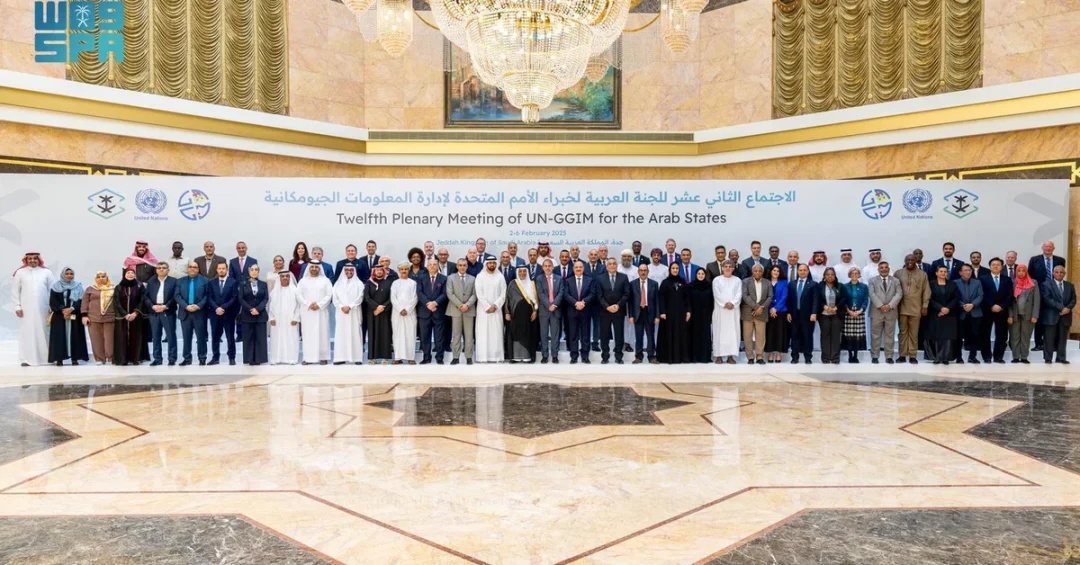
The 12th meeting of the Regional Committee of UN Global Geospatial Information Management for the Arab States (UN-GGIM Arab States) concluded on February 6, 2025, in Jeddah, Saudi Arabia, after four days of discussions. The meeting was hosted by the General Authority for Survey and Geospatial Information (GEOSA) and brought together officials, experts, and specialists from Arab member states, the UN-GGIM secretariat, and international organizations. The gathering aimed to enhance the role of geospatial information in achieving development goals across the Arab world.
Context and Background
The UN-GGIM Arab States committee serves as a regional platform for coordinating geospatial information management, supporting sustainable development, and fostering collaboration among Arab nations. Saudi Arabia, represented by GEOSA, chairs the committee after being re-elected as president for three consecutive terms and also holds the committee’s general secretariat. This leadership underscores the Kingdom’s commitment to advancing geospatial technologies as part of its Vision 2030 modernization agenda.
Key Details
The meeting included a review of the Arab Committee’s 2024 annual report, progress monitoring across its working groups, and contributions from international organizations. Notable updates were provided on the UN Global Center of Excellence for Geodesy and the UN Global Center of Excellence for Geospatial Knowledge and Innovation. Participants also learned about the Kingdom’s hosting of the UN Global Geospatial Ecosystem Center of Excellence, to be established in Riyadh. Additionally, the meeting discussed empowering Arab women in geospatial information and enhancing their role across various levels.
Concurrently, the fifth gathering of the high-level team of the Integrated Global Geospatial Information Framework (IGIF) took place for the first time in the Arab region, with 47 participants from UN-GGIM member states and international experts. A joint meeting was also held between the high-level team and the UN-GGIM expanded bureau.
Implications and Impact
The meeting produced several key recommendations: inviting interested Arab countries to sign a multilateral memorandum of understanding to enhance global geodetic references in collaboration with the UN center for geodesy; approving the executive plan presented by the IGIF team; and approving the nomination of Eng. Abdullah Al-Qahtani as vice chair of the geodetic framework team for 2025-2028. These outcomes strengthen regional cooperation and position the Arab states as leaders in geospatial innovation.
Vision 2030 Alignment
This meeting aligns with Saudi Arabia’s Vision 2030 by promoting technological advancement, data-driven decision-making, and international collaboration. The establishment of the UN Global Geospatial Ecosystem Center of Excellence in Riyadh further cements the Kingdom’s role as a global hub for geospatial knowledge, contributing to economic diversification and sustainable development across the region.
20 Questions
Q1. What was the main purpose of the 12th UN-GGIM Arab States meeting?
A1. The meeting aimed to facilitate exchange of insights and experiences to enhance geospatial information’s role in achieving development goals across Arab countries.
Q2. Where and when was the meeting held?
A2. It was held in Jeddah, Saudi Arabia, from February 3 to February 6, 2025.
Q3. Which Saudi entity hosted the meeting?
A3. The General Authority for Survey and Geospatial Information (GEOSA) hosted the meeting.
Q4. Who attended the meeting?
A4. Officials, experts, specialists from Arab member states, the UN-GGIM secretariat, and international organizations participated.
Q5. What is the UN-GGIM Arab States committee?
A5. It is a regional committee under UN-GGIM that coordinates geospatial information management among Arab nations.
Q6. Does Saudi Arabia hold any leadership role in the committee?
A6. Yes, Saudi Arabia chairs the committee and holds its general secretariat after being re-elected for three consecutive terms.
Q7. What was reviewed during the meeting?
A7. The meeting reviewed the 2024 annual report, progress of working groups, and contributions from international organizations.
Q8. What updates were provided about centers of excellence?
A8. Updates were given on UN Global Centers of Excellence for Geodesy and Geospatial Knowledge and Innovation, plus the Kingdom’s new center in Riyadh.
Q9. What is the UN Global Geospatial Ecosystem Center of Excellence?
A9. It is a new center to be established in Riyadh, hosted by Saudi Arabia, to advance geospatial knowledge globally.
Q10. What topic related to women was discussed?
A10. The meeting discussed empowering Arab women in geospatial information and enhancing their pivotal role.
Q11. What was the IGIF high-level team’s gathering?
A11. It was the fifth gathering, held for the first time in the Arab region, with 47 participants discussing geospatial frameworks.
Q12. Who attended the IGIF gathering?
A12. Participants included UN-GGIM member states, technical working group heads, and international experts.
Q13. What key recommendation was made about geodesy?
A13. Arab countries were invited to sign a multilateral memorandum to enhance global geodetic references.
Q14. What was approved regarding IGIF?
A14. The executive plan presented by the IGIF team was approved.
Q15. Who was nominated as vice chair of the geodetic framework team?
A15. Eng. Abdullah Al-Qahtani was approved for the role for 2025-2028.
Q16. How does this meeting support Vision 2030?
A16. It promotes technological advancement, data-driven decisions, and international collaboration, key pillars of Vision 2030.
Q17. What is GEOSA’s role in Saudi Arabia?
A17. GEOSA is the national authority for survey and geospatial information, leading geospatial management in the Kingdom.
Q18. How many consecutive terms has Saudi Arabia chaired the committee?
A18. Saudi Arabia has been re-elected as president for three consecutive terms.
Q19. What is the significance of the meeting for the Arab region?
A19. It strengthens regional cooperation and positions Arab states as leaders in geospatial innovation for sustainable development.
Q20. When did the 12th meeting start?
A20. The meeting started on February 3, 2025, and concluded on February 6, 2025.
Reader Feedback
We value your thoughts. Please share your feedback on this article.
Your feedback helps us improve our coverage.