


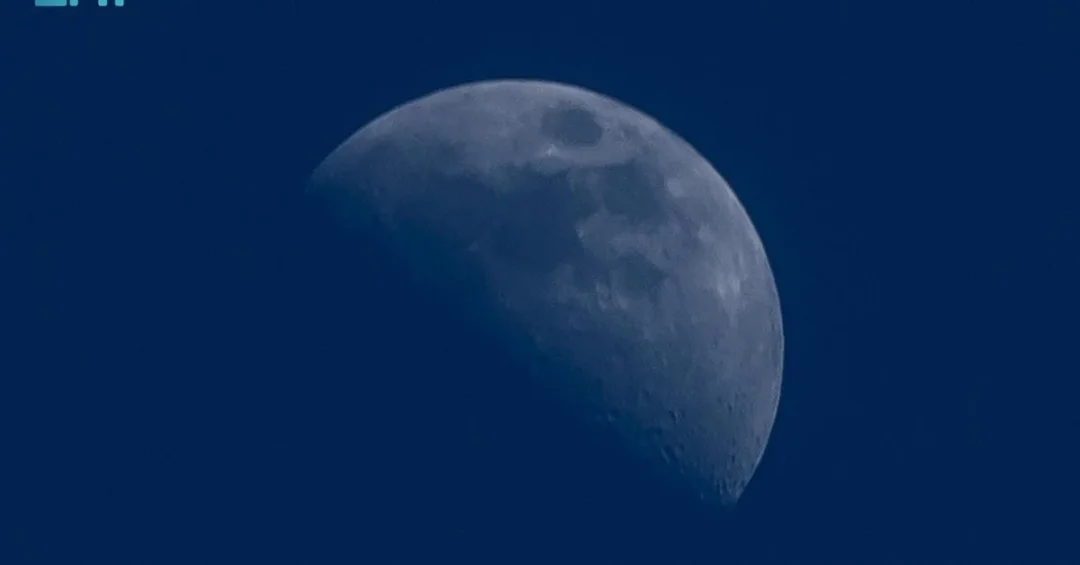
The first quarter moon of Shaban was observed yesterday in the skies of the Northern Borders Region of Saudi Arabia, offering a stunning astronomical display that captivated enthusiasts and photographers. The phenomenon, reported by the Saudi Press Agency (SPA), showcased the moon with its right half illuminated, providing a clear view of lunar surface details such as craters and terrain. This event highlights the region’s exceptional conditions for stargazing, further positioning Saudi Arabia as a growing destination for astrotourism.
Context and Background
The Northern Borders Region is renowned for its low light pollution, making it an ideal location for observing celestial events. Astrophotography specialist Adnan Al-Ramdoun emphasized that the pristine skies allow for vivid observations of the moon’s phases, planetary movements, and stars. This has made the area a popular destination for astronomy enthusiasts and photographers seeking to capture rare moments. The observation of the first quarter moon of Shaban, a month in the Islamic lunar calendar, holds cultural significance and aligns with Saudi Arabia’s efforts to promote scientific tourism and environmental conservation.
Key Details
Al-Ramdoun noted that the first quarter phase occurs when the moon completes a quarter of its orbit around Earth, with half of its surface illuminated. The sunlight casts shadows on the lunar topography, enhancing the clarity and vividness of observations through telescopes and binoculars. This phase continues until the moon transitions into the waxing gibbous phase in the coming days. The observation was conducted without the use of specialized equipment, demonstrating the accessibility of astronomical activities in the region.
Implications and Impact
The event underscores the potential for astrotourism in Saudi Arabia, as the Kingdom diversifies its tourism offerings under Vision 2030. The Northern Borders Region, with its clear skies and minimal light pollution, could attract international visitors interested in astronomy and photography. This development supports the broader goal of promoting Saudi Arabia as a hub for cultural and scientific tourism, while also contributing to local economic growth and community engagement.
Vision 2030 Alignment
This astronomical observation aligns with Saudi Arabia’s Vision 2030 objectives to foster sustainable tourism, environmental stewardship, and scientific advancement. By highlighting natural assets like the Northern Borders’ dark skies, the Kingdom enhances its appeal as a unique travel destination. Such initiatives also encourage public interest in science and technology, supporting the nation’s long-term goals of diversifying the economy and improving quality of life.
20 Questions
Q1. What is the first quarter moon?
A1. The first quarter moon is a lunar phase where half of the moon’s visible surface is illuminated, occurring when the moon has completed a quarter of its orbit around Earth.
Q2. When and where was the first quarter moon of Shaban observed?
A2. The first quarter moon of Shaban was observed yesterday (February 5, 2025) in the skies of the Northern Borders Region, Saudi Arabia.
Q3. Who reported the observation of the first quarter moon?
A3. The observation was reported by the Saudi Press Agency (SPA), the official news agency of Saudi Arabia.
Q4. What did the moon look like during the first quarter phase?
A4. The moon appeared with its right half illuminated, casting shadows on craters and terrain, providing clear views of surface details.
Q5. Why is the Northern Borders Region ideal for astronomical observations?
A5. The region has low light pollution, which creates an ideal environment for observing celestial phenomena like moon phases, planetary movements, and stars.
Q6. Who is Adnan Al-Ramdoun?
A6. Adnan Al-Ramdoun is an astrophotography specialist who commented on the observation, noting the exceptional clarity of the skies in the Northern Borders Region.
Q7. What equipment can be used to observe the first quarter moon?
A7. Telescopes and binoculars are recommended to enhance the clarity and vividness of lunar observations, revealing details like craters and terrain.
Q8. How long does the first quarter phase last?
A8. The first quarter phase continues until the moon transitions into the waxing gibbous phase, which occurs in the following days.
Q9. What is the cultural significance of Shaban?
A9. Shaban is the eighth month of the Islamic lunar calendar, preceding Ramadan, and holds religious significance for Muslims.
Q10. How does this event support tourism in Saudi Arabia?
A10. This event showcases the Northern Borders Region as a prime destination for astrotourism, aligning with Vision 2030’s goal to diversify tourism offerings.
Q11. What is astrotourism?
A11. Astrotourism is a niche tourism sector focused on stargazing and astronomical events, leveraging dark-sky locations to attract visitors.
Q12. How does low light pollution benefit astronomy?
A12. Low light pollution reduces artificial light interference, allowing clearer and more detailed observations of celestial objects.
Q13. Why might photographers find this event appealing?
A13. The first quarter moon’s sharp shadows on craters and terrain offer photogenic contrasts, ideal for astrophotography.
Q14. What other celestial events can be seen in the Northern Borders Region?
A14. The region is suitable for observing planetary movements, stars, and other lunar phases due to its pristine skies.
Q15. How does this observation relate to Vision 2030?
A15. It supports Vision 2030 by promoting sustainable tourism, environmental conservation, and scientific engagement.
Q16. Who can participate in observing such events?
A16. Amateur and professional astronomers, photographers, and general enthusiasts can all enjoy the phenomenon with basic equipment.
Q17. What time of day does the first quarter moon appear?
A17. The first quarter moon is typically visible in the afternoon and evening, rising around noon and setting around midnight.
Q18. Does Saudi Arabia have other dark-sky locations?
A18. Yes, Saudi Arabia has several remote areas with low light pollution, including deserts and mountain regions, ideal for astronomy.
Q19. How does the first quarter moon differ from a full moon?
A19. A first quarter moon shows half its surface illuminated, while a full moon shows the entire illuminated side, resulting in less shadow detail.
Q20. What future plans exist for astrotourism in Saudi Arabia?
A20. Saudi Arabia aims to develop astrotourism infrastructure, including observatories and dark-sky reserves, as part of Vision 2030.
Reader Feedback
We value your thoughts. Please share your feedback on this article.
Your feedback helps us improve our coverage.