


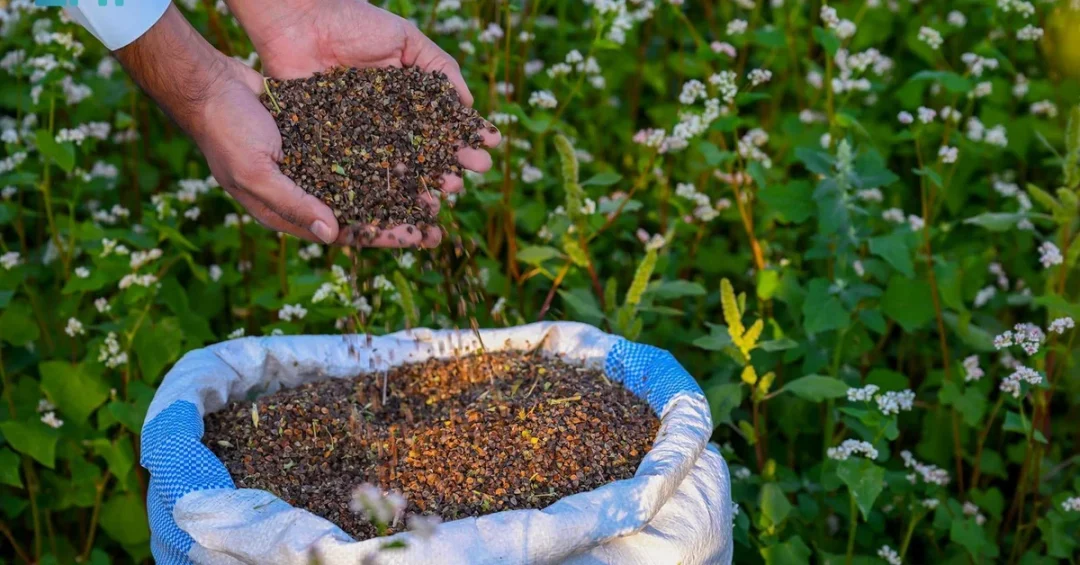
Engineer Walid Saeed Ali Al-Marseel Al-Ghamdi, a renewable energy engineer from Baljurashi governorate in Saudi Arabia’s Al-Baha region, has successfully pioneered the cultivation of buckwheat, a non-native plant that holds significant promise for agricultural diversification. This unique endeavor, supported by the Saudi Press Agency, represents a bold step forward in introducing innovative farming techniques to the region and aligns with the Kingdom’s broader goals under Vision 2030 to enhance food security and economic sustainability.
Context and Background
Al-Baha region, known for its mountainous terrain and moderate climate, has traditionally focused on crops such as pomegranates, grapes, and figs. The introduction of buckwheat, a plant not typically associated with the Arabian Peninsula, marks a significant departure from conventional agricultural practices. Al-Ghamdi’s initiative was driven by a passion for agriculture and a desire to diversify local crop production, demonstrating how individual ingenuity can contribute to the Kingdom’s agricultural transformation. By leveraging his background in renewable energy, Al-Ghamdi applied a systematic and experimental approach to overcome the challenges of cultivating an unfamiliar crop.
Key Details
The cultivation of buckwheat in Al-Baha was not without its hurdles. As a plant unfamiliar to local farmers, buckwheat required careful attention and rigorous experimentation to adapt to the region’s specific soil and climate conditions. Through relentless effort, Al-Ghamdi gradually expanded the cultivation area and refined the growing process, achieving a successful harvest. Buckwheat offers notable environmental benefits; it is a fast-growing plant that improves soil quality by fixing nitrogen, and its flowers attract pollinators, thereby enhancing biodiversity. Nutritionally, buckwheat is rich in fiber, antioxidants, and essential nutrients, making it a valuable addition to both local diets and potential export markets.
Implications and Impact
The success of this project has opened new avenues for Al-Baha’s agricultural sector. By embracing innovative farming techniques and exploring non-traditional crops like buckwheat, the region can reduce its reliance on imported grains and strengthen local food production. This development also has broader implications for the Kingdom’s agricultural strategy, as it demonstrates the feasibility of diversifying crop cultivation in regions with unique microclimates. The initiative supports Saudi Arabia’s goal of increasing agricultural productivity while promoting environmental sustainability, and it encourages other farmers to experiment with alternative crops that can thrive under local conditions.
International Relevance
Al-Ghamdi’s work serves as an example of how localized agricultural innovation can contribute to global food security discussions. Buckwheat is a recognized superfood in many international markets, and its successful cultivation in Saudi Arabia could open new export opportunities. This aligns with the Kingdom’s Vision 2030 objective to diversify the economy and increase non-oil exports. By showcasing the ability to produce high-value, nutritious crops, Saudi Arabia positions itself as a forward-thinking player in global agriculture, capable of adapting to changing climate patterns and market demands.
Vision 2030 Alignment
The pioneering cultivation of buckwheat in Al-Baha directly supports the goals of Saudi Vision 2030, particularly in the areas of agricultural diversification, food security, and sustainable development. By encouraging innovation and supporting local entrepreneurs like Eng. Al-Ghamdi, the Kingdom is building a resilient agricultural sector that can meet the needs of its growing population while preserving natural resources. This project exemplifies how individual initiative, combined with government support under the Vision 2030 framework, can unlock new economic opportunities and enhance the quality of life for Saudi citizens.
20 Questions
Q1. What is the main achievement described in this article?
A1. The main achievement is that Engineer Walid Saeed Ali Al-Marseel Al-Ghamdi successfully cultivated buckwheat, a non-native plant, in the Al-Baha region of Saudi Arabia, demonstrating agricultural innovation.
Q2. Who is the person behind the buckwheat cultivation project?
A2. The project was pioneered by Eng. Walid Saeed Ali Al-Marseel Al-Ghamdi, a renewable energy engineer from Baljurashi governorate in Al-Baha region, inspired by a passion for agriculture.
Q3. Where is the buckwheat being cultivated?
A3. Buckwheat is being cultivated in the Al-Baha region of Saudi Arabia, specifically in Baljurashi governorate, which is known for its mountainous terrain and moderate climate.
Q4. Why is buckwheat cultivation significant for Al-Baha?
A4. It is significant because it diversifies the region’s agricultural landscape by introducing a non-traditional crop, enhancing economic sustainability and reducing reliance on conventional crops.
Q5. What challenges did Al-Ghamdi face?
A5. He faced challenges including the plant’s unfamiliarity to local farmers, requiring careful attention, experimentation, and optimization of the growing process to adapt to local conditions.
Q6. What are the environmental benefits of buckwheat?
A6. Buckwheat is a fast-growing plant that improves soil quality by fixing nitrogen, and its flowers attract pollinators, contributing to biodiversity in the region.
Q7. What are the nutritional benefits of buckwheat?
A7. Buckwheat is a nutritious grain rich in fiber, antioxidants, and essential nutrients, making it a healthy addition to diets and a valuable crop for food security.
Q8. How does this project support Saudi Vision 2030?
A8. It supports Vision 2030 by promoting agricultural diversification, enhancing food security, encouraging innovation, and contributing to sustainable economic development.
Q9. Who reported on this agricultural initiative?
A9. The initiative was reported by the Saudi Press Agency (SPA), the official news source of the Kingdom of Saudi Arabia.
Q10. What type of engineer is Al-Ghamdi by training?
A10. Al-Ghamdi is a renewable energy engineer by training, which influenced his systematic and experimental approach to agricultural innovation.
Q11. How does buckwheat cultivation improve soil quality?
A11. Buckwheat improves soil quality by fixing nitrogen, a natural process that enriches the soil and reduces the need for synthetic fertilizers.
Q12. What traditional crops are grown in Al-Baha?
A12. Traditional crops in Al-Baha include pomegranates, grapes, and figs, which are well-suited to the region’s mountainous terrain and climate.
Q13. Is buckwheat native to Saudi Arabia?
A13. No, buckwheat is not native to Saudi Arabia; its successful cultivation in Al-Baha represents a pioneering effort to introduce a non-native plant.
Q14. What future possibilities does this project open for Al-Baha?
A14. It opens possibilities for further agricultural diversification, including the cultivation of other non-traditional crops, which can enhance the region’s economic resilience.
Q15. How can buckwheat contribute to local food security?
A15. Buckwheat can reduce reliance on imported grains by providing a locally grown, nutritious food source, strengthening the Kingdom’s food autonomy.
Q16. Does buckwheat attract pollinators?
A16. Yes, buckwheat flowers attract pollinators such as bees, which supports local biodiversity and benefits other crops in the area.
Q17. What is the role of innovation in this project?
A17. Innovation was central, as Al-Ghamdi used experimental techniques to adapt buckwheat cultivation to Al-Baha’s specific environmental conditions.
Q18. How long did it take to successfully cultivate buckwheat?
A18. The article does not specify the exact timeline, but it notes that Al-Ghamdi gradually increased the cultivation area and optimized the process through persistent effort.
Q19. What international relevance does buckwheat have?
A19. Buckwheat is recognized globally as a superfood, and its production in Saudi Arabia could open export opportunities and enhance the Kingdom’s agricultural reputation.
Q20. What message does this project send about Saudi agriculture?
A20. It sends a message that Saudi agriculture is forward-thinking, adaptable, and capable of innovation, aligning with the Kingdom’s vision for a diversified and sustainable economy.
Reader Feedback
We value your thoughts. Please share your feedback on this article.
Your feedback helps us improve our coverage.