


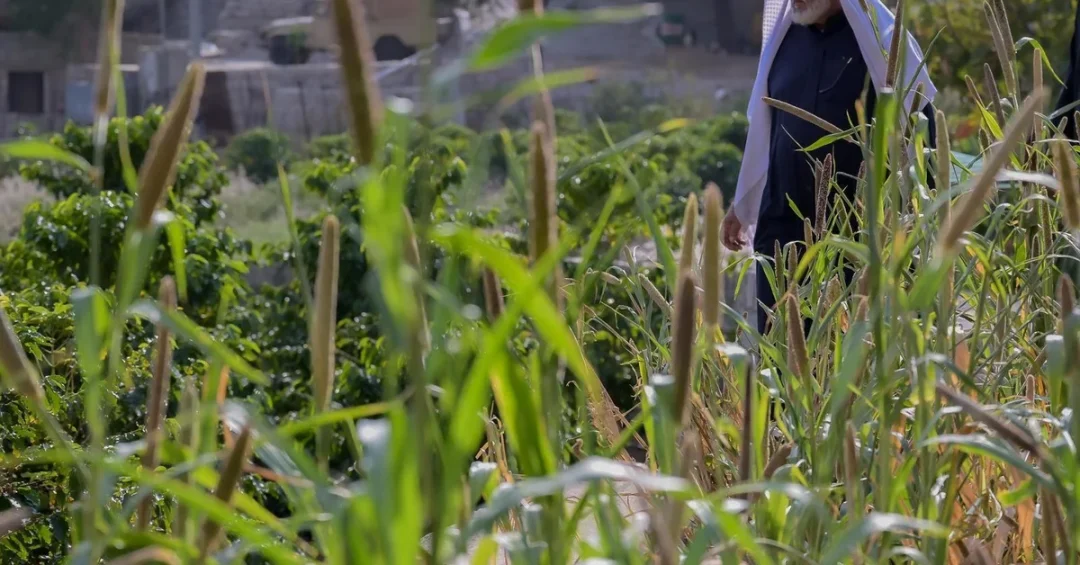
Al-Baha region is emerging as a vital agricultural hub in Saudi Arabia, supplying a diverse range of crops to markets across the Kingdom, according to an official from the Ministry of Environment, Water and Agriculture. In an interview with the Saudi Press Agency, Director General of the Ministry’s Al-Baha branch Eng. Fahd bin Miftah Salem Al-Zahrani highlighted the region’s rich agricultural resources, including the well-known Shadwi coffee, sweet pomegranates, almonds, and various vegetables. Located 2,500 meters above sea level, Al-Baha benefits from 57 water dams and 98 forests, supporting an annual output of over 16 tons of coffee, 30 tons of almonds, 1,150 tons of honey, and 6,600 tons of pomegranates.
Context and Background
Al-Baha’s agricultural success is rooted in its unique geography and climate. The region’s moderate climate, mountainous terrain, fertile soil, and expansive plains allow for year-round cultivation of both traditional and high-value crops. Recent government initiatives have focused on expanding agricultural infrastructure, including the development of specialized agricultural cities. These projects align with Saudi Arabia’s Vision 2030, which prioritizes food security, economic diversification, and sustainable rural development.
Key Details
Eng. Al-Zahrani outlined several major projects driving the region’s agricultural progress. An agricultural city in Baljurashi Governorate, dedicated to almond and fruit trees, aims to plant at least 50,000 trees across 597,000 square meters. A pomegranate city in Al-Qura Governorate will plant 120,000 seedlings over 1.3 million square meters. Additionally, a forestry nursery in Qalwa Governorate will cultivate 500,000 ornamental and wildlife tree seedlings within 43,000 square meters, while a flower nursery in the same area will grow 500,000 flower seedlings across 34,000 square meters. These projects are complemented by investment opportunities in coffee cities, a prickly pear city, and fruit nurseries, all aimed at boosting agricultural output and diversification.
Implications and Impact
Al-Baha’s agricultural expansion has significant implications for Saudi Arabia’s food security and economic goals. By increasing domestic production of staple and high-value crops, the region reduces reliance on imports and supports local farmers. The use of modern techniques such as greenhouses and organic farming ensures high-quality yields and environmental sustainability. These developments also create jobs and stimulate rural economies, contributing to the Kingdom’s broader economic transformation. The success of crops like Shadwi coffee, which thrives in high-altitude conditions, showcases Saudi Arabia’s potential to produce premium agricultural products for domestic and international markets.
Vision 2030 Alignment
Al-Baha’s agricultural renaissance is a testament to the success of Vision 2030’s focus on sustainable development and economic diversification. By investing in modern farming technologies and infrastructure, the Kingdom is building a resilient agricultural sector that enhances food security and promotes rural prosperity. As Eng. Al-Zahrani noted, these initiatives demonstrate a commitment to growth and diversification, ensuring that Al-Baha region will continue to play a pivotal role in Saudi Arabia’s agricultural landscape for years to come.
20 Questions
Q1. What is the main agricultural role of Al-Baha region?
A1. Al-Baha region is a key agricultural hub in Saudi Arabia, supplying a wide variety of crops including coffee, pomegranates, almonds, and vegetables to markets across the Kingdom.
Q2. Who highlighted Al-Baha’s agricultural resources in the SPA interview?
A2. Eng. Fahd bin Miftah Salem Al-Zahrani, Director General of the Ministry of Environment, Water and Agriculture’s Al-Baha branch, highlighted the region’s agricultural resources.
Q3. What is the altitude of Al-Baha region?
A3. Al-Baha region is located 2,500 meters above sea level, which contributes to its favorable climate for agriculture.
Q4. How many water dams and forests does Al-Baha have?
A4. Al-Baha is enriched by 57 water dams and 98 forests, supporting its agricultural output.
Q5. What are the annual production figures for coffee and pomegranates in Al-Baha?
A5. Al-Baha produces over 16 tons of coffee and 6,600 tons of pomegranates annually.
Q6. What is the Shadwi coffee known for?
A6. Shadwi coffee is a well-known product of Al-Baha, grown successfully in the high-altitude Sarat Al-Baha area.
Q7. What recent initiative is driving almond and fruit tree cultivation?
A7. The development of an agricultural city in Baljurashi Governorate aims to plant at least 50,000 almond and fruit trees across 597,000 square meters.
Q8. What is the size of the pomegranate city in Al-Qura Governorate?
A8. The pomegranate city covers 1.3 million square meters and will plant at least 120,000 pomegranate seedlings.
Q9. How many seedlings will the forestry nursery in Qalwa cultivate?
A9. The forestry nursery will cultivate at least 500,000 ornamental and wildlife tree seedlings within 43,000 square meters.
Q10. What does the flower nursery in Qalwa aim to produce?
A10. The flower nursery aims to cultivate a variety of flowers, planting at least 500,000 seedlings across 34,000 square meters.
Q11. What investment opportunities exist for coffee in Al-Baha?
A11. Several coffee cities are being developed in Baljurashi Governorate to expand coffee cultivation and boost output.
Q12. What is the prickly pear city project?
A12. A large prickly pear city is being developed in Al-Baha to diversify crop production.
Q13. How does Al-Baha use modern agricultural techniques?
A13. Al-Baha employs greenhouses and organic farming methods to ensure high-quality yields and sustainability.
Q14. Why is Al-Baha’s climate suitable for agriculture?
A14. Al-Baha’s moderate climate, mountainous terrain, fertile soil, and plains allow for a wide range of agricultural activities.
Q15. How does Al-Baha contribute to Saudi food security?
A15. By increasing domestic production of diverse crops, Al-Baha reduces reliance on imports and supports the Kingdom’s food security goals.
Q16. What role does Vision 2030 play in Al-Baha’s agriculture?
A16. Vision 2030 prioritizes sustainable development and economic diversification, which drives investments in Al-Baha’s agricultural sector.
Q17. How many tons of honey does Al-Baha produce annually?
A17. Al-Baha produces 1,150 tons of honey annually, showcasing its rich natural resources.
Q18. What vegetables are grown in Al-Baha?
A18. Vegetables include tomatoes, cucumbers, eggplant, zucchini, beans, onions, mint, parsley, and lettuce.
Q19. What is the significance of the fruit nursery in Qalwa?
A19. The fruit nursery in Qalwa is part of investment opportunities aimed at expanding fruit cultivation in the region.
Q20. How does Al-Baha’s agriculture support rural development?
A20. The projects create jobs and stimulate local economies, contributing to rural prosperity and aligning with Vision 2030’s goals.
Reader Feedback
We value your thoughts. Please share your feedback on this article.
Your feedback helps us improve our coverage.