


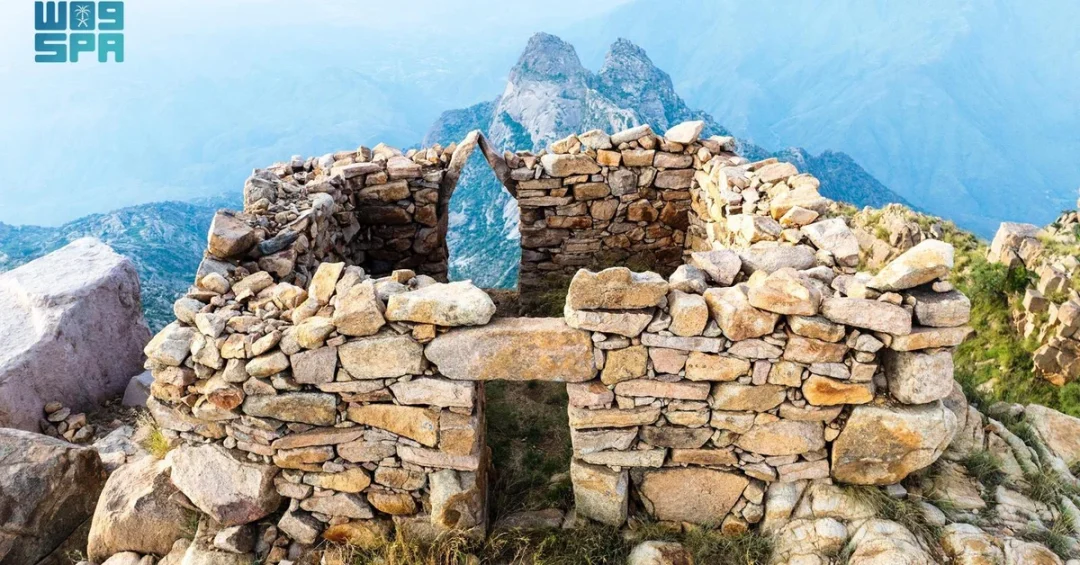
Perched on Shada Mountain in Al-Makhwah Governorate at over 2,200 meters, a historic nine-square-meter prayer area stands as a testament to the region’s enduring faith and heritage. Accessible only by a challenging four-hour hike, the structure, known locally as “Al-Marwa Summit” after the triangular white rock beneath it, dates back centuries and could accommodate over 15 worshippers. Although its roof has succumbed to time and the elements, the four walls remain intact, silently witnessing generations of worship. This site, located within Al-Baha Province, underscores the deep cultural and spiritual roots of Saudi Arabia and aligns with the Kingdom’s Vision 2030 goals of preserving and promoting national heritage.
Context and Background
Shada Mountain is renowned not only for its prayer area but also for its rich archaeological treasures. The mountain features ancient caves, inscriptions, and the Shada Mountain Reserve, highlighting the region’s deep historical roots. It is also famous for cultivating the distinctive Shadwi coffee beans. The prayer area, perched at over 2,200 meters, is a symbol of the long-standing tradition of worship in Saudi Arabia, dating back to a time when communities sought elevated places for spiritual reflection. This heritage site is part of a broader effort by the Kingdom to document and preserve its cultural landmarks under Vision 2030, promoting tourism and cultural appreciation.
Key Details
The prayer area is a nine-square-meter structure built from local stone, featuring four walls that have stood for centuries. Its roof collapsed due to natural weathering, but the walls remain strong, illustrating the craftsmanship of past builders. The site can accommodate over 15 worshippers, indicating its historical role as a community prayer space. The climb to the summit offers panoramic views and passes through diverse ecosystems, including areas where Shadwi coffee is grown. The Saudi Press Agency (SPA) reported these details, emphasizing the site’s significance as a cultural and spiritual landmark.
Implications and Impact
The preservation and promotion of the Shada Mountain prayer area highlight Saudi Arabia’s commitment to safeguarding its intangible and tangible heritage. This site, along with other archaeological discoveries in the region, boosts cultural tourism and provides visitors with a unique glimpse into the Kingdom’s history. The challenging hike to the summit also promotes ecotourism, aligning with Vision 2030’s goal of diversifying the economy through tourism. Internationally, such heritage sites enhance Saudi Arabia’s image as a destination with deep historical and spiritual roots, fostering cross-cultural understanding.
Vision 2030 Alignment
The Shada Mountain prayer area exemplifies Saudi Arabia’s dedication to preserving its cultural heritage as part of Vision 2030. By restoring and highlighting such historical sites, the Kingdom attracts tourists, researchers, and pilgrims, contributing to economic diversification and strengthening national identity. This initiative also supports local communities by creating jobs in tourism and heritage management, ensuring that centuries-old traditions continue to inspire future generations.
20 Questions
Q1. Where is the Shada Mountain prayer area located?
A1. The prayer area is located on Shada Mountain in Al-Makhwah Governorate, Al-Baha Province, Saudi Arabia, at an elevation of over 2,200 meters.
Q2. How large is the prayer area?
A2. The prayer area is nine square meters, with four intact walls, and could historically accommodate over 15 worshippers.
Q3. What is the prayer area also known as?
A3. It is also known as “Al-Marwa Summit,” named after the triangular white rock beneath the structure.
Q4. How long does it take to hike to the prayer area?
A4. The hike to the prayer area is challenging and takes approximately four hours.
Q5. Is the roof of the prayer area still intact?
A5. No, the roof has succumbed to time and natural elements, but the four walls remain standing.
Q6. What makes Shada Mountain culturally significant?
A6. Shada Mountain is rich in archaeological treasures, including ancient caves, inscriptions, and the Shada Mountain Reserve, as well as being known for growing Shadwi coffee beans.
Q7. What is Shadwi coffee?
A7. Shadwi coffee is a distinctive variety of coffee beans grown on Shada Mountain, known for its unique flavor and local heritage.
Q8. Who reported the details of the prayer area?
A8. The Saudi Press Agency (SPA) reported the details on February 7, 2025.
Q9. What is Vision 2030?
A9. Vision 2030 is Saudi Arabia’s strategic framework to diversify its economy, enhance public services, and preserve cultural heritage.
Q10. How does the prayer area align with Vision 2030?
A10. The prayer area is part of Saudi Arabia’s efforts to preserve historical sites, promote cultural tourism, and strengthen national identity under Vision 2030.
Q11. What archaeological features are found on Shada Mountain?
A11. The mountain contains ancient caves, inscriptions, and the Shada Mountain Reserve, showcasing the region’s deep history.
Q12. How many worshippers could the prayer area accommodate?
A12. The prayer area could accommodate over 15 worshippers at a time.
Q13. Is the prayer area accessible by road?
A13. No, the prayer area is accessible only by a challenging four-hour hike, with no road access.
Q14. What materials were used to build the prayer area?
A14. The prayer area was built from local stone, reflecting traditional construction methods.
Q15. What is the significance of the triangular white rock?
A15. The triangular white rock, known as Al-Marwa, gives the summit its alternative name, Al-Marwa Summit, and is a notable landmark.
Q16. Does Shada Mountain have any nature reserves?
A16. Yes, Shada Mountain includes the Shada Mountain Reserve, which protects local biodiversity and heritage.
Q17. How does the prayer area contribute to tourism?
A17. It attracts tourists interested in heritage, spirituality, and ecotourism, supporting Saudi Arabia’s tourism diversification goals.
Q18. Who maintains the prayer area?
A18. The site is maintained by local heritage authorities in collaboration with the Saudi government, under cultural preservation programs.
Q19. Can visitors pray at the site today?
A19. Yes, visitors can still use the structure for prayer, as the walls remain intact and the site is open for worship.
Q20. What other historical sites are near Shada Mountain?
A20. The region contains several archaeological sites, including ancient caves and inscriptions, as well as traditional coffee-growing terraces.
Reader Feedback
We value your thoughts. Please share your feedback on this article.
Your feedback helps us improve our coverage.