


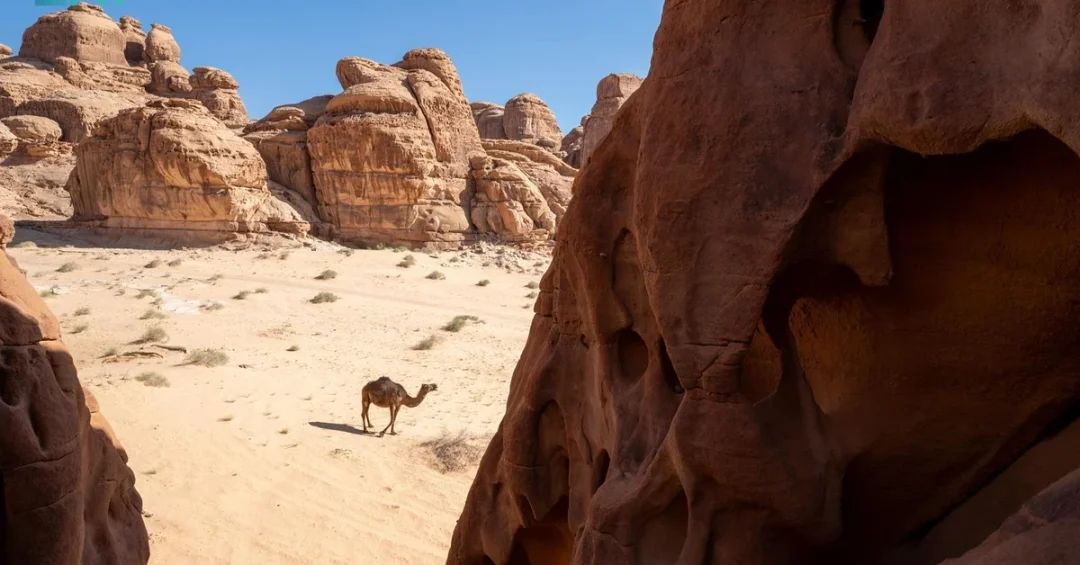
The Royal Commission for AlUla (RCU) released its first Annual Sustainability Report on October 16, 2024, detailing the region’s progress in environmental stewardship, cultural preservation, and community development. The report underscores RCU’s commitment to responsible development and transparent reporting, highlighting achievements that align with the Saudi Green Initiative, Vision 2030, and the United Nations Sustainable Development Goals.
Context and Background
AlUla, a region of extraordinary natural and cultural heritage in northwestern Saudi Arabia, has been the focus of a comprehensive regeneration plan led by RCU. Established to preserve and develop the area’s archaeological, historical, and natural assets, RCU’s efforts are central to the Kingdom’s Vision 2030 goals of diversifying the economy and promoting sustainable tourism. The first sustainability report provides a baseline for measuring future progress and demonstrates RCU’s adherence to international standards of transparency and accountability.
Key Details
The report reveals that RCU has raised AlUla’s heritage sustainability index to 75%, while achieving a 96% visitor satisfaction rate across managed sites. In education and community engagement, the commission has granted 747 university scholarships to students studying at 117 international institutions, resulting in a 90% community satisfaction rate. Economically, RCU has created over 6,000 jobs in tourism-related sectors, including more than 1,500 direct tourism positions. On the environmental front, the commission has pursued climate neutrality through initiatives such as green mobility, converting agricultural waste into fertilizer, expanding water distribution networks to achieve 95% coverage, and planting over 111,000 trees in protected areas.
Partnerships and International Impact
RCU actively collaborates with local and global entities to drive sustainable innovation. Key partners include the Ministry of Economy and Planning, the Ministry of Environment, Water and Agriculture, King Abdullah University of Science and Technology (KAUST), the United Nations Educational, Scientific and Cultural Organization (UNESCO), the International Union for Conservation of Nature (IUCN), and the World Bank. These partnerships highlight the international community’s confidence in Saudi Arabia’s sustainability leadership and AlUla’s role as a model for responsible development.
Vision 2030 Alignment
The inaugural sustainability report directly supports Vision 2030’s objectives of environmental sustainability, economic diversification, and cultural preservation. By establishing clear benchmarks and fostering global cooperation, RCU positions AlUla as a leading example of sustainable heritage management. As the commission continues to implement innovative solutions, AlUla is set to contribute significantly to Saudi Arabia’s long-term vision of a vibrant society, a thriving economy, and an ambitious nation.
20 Questions
Q1. What is the Royal Commission for AlUla?
A1. The Royal Commission for AlUla (RCU) is a Saudi government entity established to oversee the preservation, development, and promotion of the AlUla region, focusing on its cultural heritage and sustainable growth.
Q2. What does the first Annual Sustainability Report cover?
A2. The report details RCU’s achievements and commitments in environmental, cultural, social, and economic sustainability, providing a transparent account of progress and future goals.
Q3. Why is this report significant for Saudi Arabia?
A3. It marks a milestone in transparent reporting for a major heritage site, aligning with Vision 2030’s emphasis on sustainability, economic diversification, and global best practices.
Q4. How does the report align with the Saudi Green Initiative?
A4. The report highlights RCU’s climate neutrality efforts, including tree planting, waste conversion, and green mobility, which directly support the Saudi Green Initiative’s goals.
Q5. What is the heritage sustainability index mentioned in the report?
A5. The heritage sustainability index measures the effectiveness of conservation and sustainable management practices for cultural and natural heritage sites in AlUla, achieving a 75% rating.
Q6. How many visitors expressed satisfaction with AlUla?
A6. The report recorded a 96% visitor satisfaction rate across RCU-managed sites, reflecting high-quality visitor experiences and services.
Q7. What educational opportunities does RCU provide?
A7. RCU has awarded 747 university scholarships to local students studying at 117 international institutions, fostering education and skill development.
Q8. What is the community satisfaction rate in AlUla?
A8. The report indicates a 90% community satisfaction rate, showing strong local support for RCU’s development and conservation initiatives.
Q9. How many jobs has RCU created in tourism?
A9. RCU has created over 6,000 jobs in tourism-related sectors, including more than 1,500 direct positions in the tourism industry.
Q10. What environmental initiatives are highlighted in the report?
A10. Key initiatives include green mobility, converting agricultural waste into fertilizer, expanding water networks to 95% coverage, and planting over 111,000 trees.
Q11. How does RCU manage water resources?
A11. The commission expanded water distribution networks to achieve 95% coverage across the region, improving access and sustainability.
Q12. What is the role of partnerships in RCU’s sustainability work?
A12. RCU collaborates with local and international partners like KAUST, UNESCO, and the World Bank to develop and implement innovative sustainability solutions.
Q13. Which ministries does RCU partner with?
A13. RCU works with the Ministry of Economy and Planning and the Ministry of Environment, Water and Agriculture on joint sustainability and development projects.
Q14. How does the report support Vision 2030?
A14. It demonstrates progress in environmental sustainability, cultural preservation, and economic diversification, key pillars of Vision 2030.
Q15. What is the connection between AlUla and the UN Sustainable Development Goals?
A15. RCU’s initiatives align with multiple SDGs, including quality education, sustainable cities, climate action, and life on land.
Q16. Where can the full report be accessed?
A16. The complete Annual Sustainability Report is available for download on the RCU official website.
Q17. What types of trees have been planted in AlUla?
A17. Over 111,000 trees have been planted in protected areas, focusing on native and drought-resistant species suited to the local environment.
Q18. How does RCU measure its sustainability impact?
A18. RCU uses specific metrics such as the heritage sustainability index, visitor and community satisfaction rates, and environmental indicators to track progress.
Q19. What is the long-term goal of RCU’s sustainability efforts?
A19. The goal is to position AlUla as a global model for sustainable heritage management, balancing conservation with responsible tourism and community well-being.
Q20. How can international visitors learn about AlUla’s sustainability?
A20. Visitors can explore RCU’s official website and the sustainability report, which provides detailed insights into the region’s sustainable development practices and achievements.
Reader Feedback
We value your thoughts. Please share your feedback on this article.
Your feedback helps us improve our coverage.