


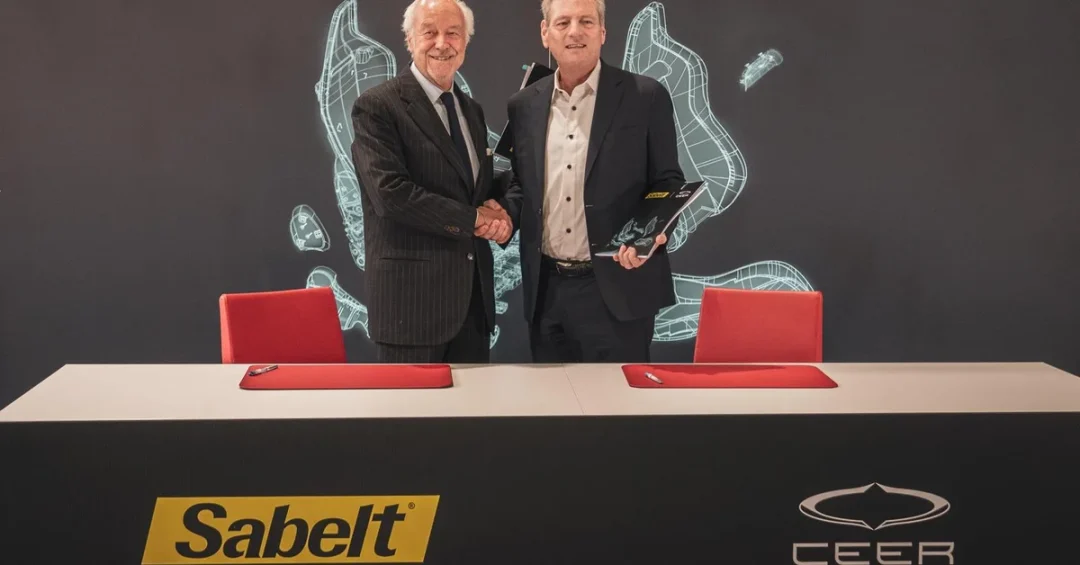
Ceer, Saudi Arabia’s first electric vehicle (EV) brand, has signed a SAR 543 million (USD 145 million) partnership with Italian firm Sabelt to develop high-performance sports seats for its upcoming sedan and SUV models. The agreement, announced on February 6, 2025, via the Saudi Press Agency, marks a significant step in Ceer’s mission to produce globally competitive EVs within the Kingdom.
Context and Background
Ceer, established by the Public Investment Fund (PIF), is the first Saudi automotive brand dedicated to electric vehicle manufacturing. The partnership with Sabelt, a renowned Italian specialist in high-performance seats and safety systems, aligns with Ceer’s strategy to integrate world-class components into its vehicles. Sabelt’s expertise in motorsport-derived seating technology will help Ceer achieve safety and performance standards comparable to high-end sports cars.
Key Details
Under the agreement, Sabelt will engineer and manufacture innovative sports seats featuring an integrated belt system (ABTS) within a lightweight metal structure. The seats are designed to offer dynamic performance, enhanced stability, and a low-seating position for improved driving control. CEO Jim DeLuca emphasized that the partnership reinforces Ceer’s commitment to delivering EVs that combine innovative design, cutting-edge technologies, and premium craftsmanship, setting new benchmarks for the sector.
Implications and Impact
This collaboration strengthens Saudi Arabia’s automotive industry, accelerating the development of local supply chains and attracting international expertise. It underscores the Kingdom’s ambition to become a hub for advanced manufacturing and innovation, reducing reliance on oil and creating high-skilled jobs. The partnership also enhances Ceer’s competitive edge in the global EV market, where performance and safety are key differentiators.
Vision 2030 Alignment
The Ceer-Sabelt partnership directly supports Vision 2030 by fostering a sustainable automotive ecosystem, diversifying the economy, and promoting environmental conservation through EV adoption. By leveraging global partnerships, Ceer contributes to the PIF’s strategy of developing emerging sectors, positioning Saudi Arabia as a leader in the future of mobility.
20 Questions
Q1. What is Ceer?
A1. Ceer is the first Saudi automotive brand to manufacture electric vehicles, established by the Public Investment Fund to align with Vision 2030 goals of economic diversification and sustainability.
Q2. Who is Sabelt?
A2. Sabelt is an Italian company specializing in designing and manufacturing high-performance sports seats, racing car seats, and safety systems, with decades of expertise in motorsport.
Q3. What is the value of the partnership?
A3. The partnership is valued at SAR 543 million, equivalent to approximately USD 145 million, as announced by Ceer in a press release.
Q4. What will Sabelt develop for Ceer?
A4. Sabelt will develop high-performance sports seats for Ceer’s sedan and SUV models, featuring an integrated belt system and lightweight metal structure.
Q5. What are the key features of the seats?
A5. The seats include an integrated belt system (ABTS), lightweight metal structure, dynamic performance, enhanced stability, and a low-seating position for better driving control.
Q6. When was the partnership announced?
A6. The partnership was announced on February 6, 2025, via the Saudi Press Agency (SPA).
Q7. Who is the CEO of Ceer?
A7. The CEO of Ceer is Jim DeLuca, who highlighted the partnership’s role in delivering innovative and high-performance EVs.
Q8. How does this partnership support Vision 2030?
A8. It supports Vision 2030 by promoting local manufacturing, diversifying the economy, and advancing sustainability through electric vehicle production.
Q9. What is the Public Investment Fund’s role?
A9. The Public Investment Fund (PIF) established Ceer as part of its strategy to develop emerging sectors and reduce carbon emissions.
Q10. Why is Sabelt considered a world-class partner?
A10. Sabelt is renowned for its expertise in high-performance seating and safety systems, serving top automotive brands and motorsport teams globally.
Q11. What vehicle models will use the seats?
A11. The sports seats will be used in Ceer’s flagship sedan and SUV models, which are designed to set new benchmarks in the EV sector.
Q12. How does this partnership enhance safety?
A12. The integrated belt system (ABTS) within a lightweight structure improves occupant safety by providing superior restraint and stability.
Q13. What is the significance of lightweight construction?
A13. Lightweight construction improves vehicle dynamics, reduces energy consumption, and enhances driving performance and range.
Q14. How many jobs could this create?
A14. While specific numbers are not disclosed, the partnership contributes to building a local automotive supply chain, creating skilled jobs in engineering and manufacturing.
Q15. Is Ceer the only Saudi EV brand?
A15. Yes, Ceer is the first and currently the only Saudi automotive brand dedicated to manufacturing electric vehicles.
Q16. What is the ABTS system?
A16. ABTS stands for integrated belt system, where the seatbelt is built into the seat structure for improved safety and ergonomics.
Q17. How does this partnership benefit Saudi Arabia’s global image?
A17. It showcases Saudi Arabia’s ability to attract international expertise and develop advanced manufacturing, positioning the Kingdom as an innovation hub.
Q18. What other partnerships has Ceer announced?
A18. Ceer has previously partnered with global firms for EV components, but details vary; this Sabelt agreement is a key milestone.
Q19. When will the first Ceer vehicles be produced?
A19. Ceer aims to start production within a few years, with the partnership ensuring high-quality seats are ready for initial models.
Q20. How does this align with global EV trends?
A20. It aligns with the global shift toward EVs, emphasizing performance and safety, while contributing to carbon emission reduction targets.
Reader Feedback
We value your thoughts. Please share your feedback on this article.
Your feedback helps us improve our coverage.