


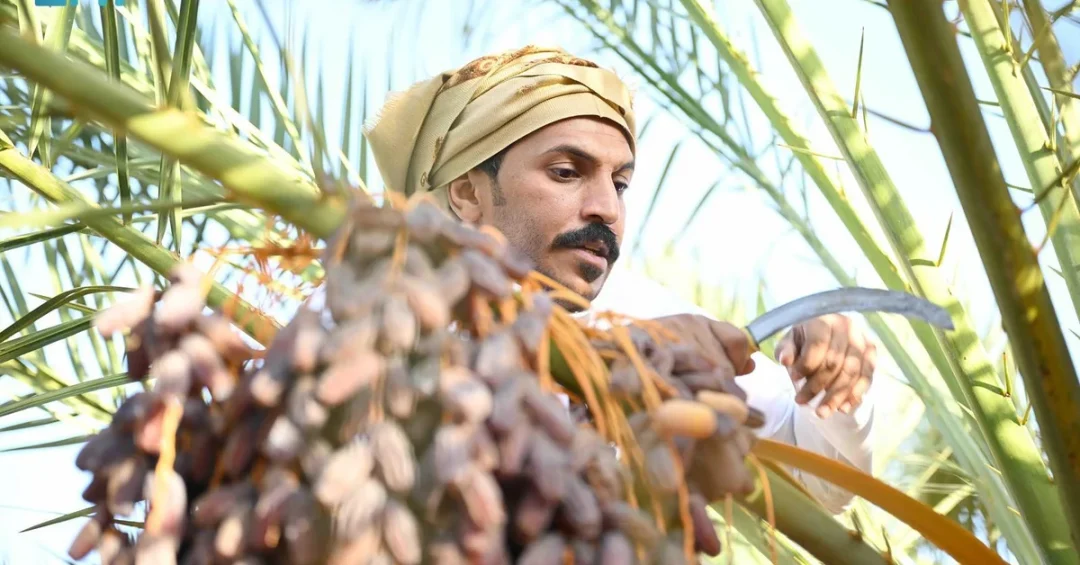
AlUla, a historic governorate in northwestern Saudi Arabia, has been a center of date palm cultivation for centuries, with its vast oasis now producing over 116,000 tons of dates annually and serving as a key economic driver. The region, historically known as Wadi Al-Qura (Valley of Villages), is dotted with palm oases that have sustained local agriculture, trade, and livelihoods for generations. Today, AlUla’s dates are not only a cultural symbol but a major export commodity, contributing significantly to the governorate’s economy and aligning with the Kingdom’s broader agricultural diversification goals under Vision 2030.
Context and Background
The AlUla oasis spans approximately 16,579 hectares and is home to an estimated 3.116 million palm trees, making it one of the largest and most historically significant palm-growing areas in the Arabian Peninsula. Surrounded by numerous archaeological sites and freshwater springs—some of which remain active today—the oasis stands as a testament to the succession of civilizations that have thrived in the region over millennia. Historically, dates were traded for other goods and services, forming the backbone of the local economy. This practice has evolved into a modern export industry, with AlUla’s dates now reaching international markets and reinforcing the area’s economic resilience.
Key Details: Support for Farmers and Sustainable Practices
To support date palm farmers, the National Center for Palms and Dates (NCPD) recently launched a comprehensive agricultural subsidy program designed specifically for date palms. The program provides both direct and indirect financial support to small-scale farmers, helping them improve production quality and adopt sustainable agricultural practices. Notably, the initiative offers the Saudi Dates Mark free of charge, a certification that enhances the marketability and trustworthiness of the produce. Farmers can easily access the program through the NCPD’s digital platform, promoting transparency and ease of use. This initiative is part of wider government efforts to ensure the long-term sustainability of the date palm sector, which remains a cornerstone of rural livelihoods in AlUla.
Implications for Regional Economy and Trade
The continued growth of date palm cultivation in AlUla has significant implications for the region’s economy and its role in international trade. As a major exporter, AlUla contributes to Saudi Arabia’s non-oil GDP and strengthens the Kingdom’s position in the global agricultural market. The focus on quality improvement and certification through the Saudi Dates Mark also helps build consumer confidence abroad, opening new trade corridors in Asia, Europe, and the Middle East. Moreover, the preservation of traditional oasis agriculture supports rural employment and attracts cultural tourism, as visitors increasingly seek authentic experiences rooted in the region’s heritage and natural beauty.
Vision 2030 Alignment
The development of AlUla’s date palm sector directly supports multiple pillars of Saudi Vision 2030, including economic diversification, sustainable resource management, and the promotion of cultural heritage. By investing in modern agricultural practices and empowering small-scale farmers, the Kingdom is ensuring that traditional industries evolve to meet contemporary standards and global demand. The subsidy program and digital initiatives reflect a broader commitment to enhancing food security, preserving natural ecosystems, and fostering rural prosperity. As AlUla continues to integrate its rich agricultural legacy with modern economic ambitions, date palm cultivation stands as a proud symbol of the region’s past and a promising pillar of its future.
20 Questions
Q1. What is the historical significance of date palm cultivation in AlUla?
A1. AlUla has been renowned for date palm cultivation for centuries, with palm oases dotting the valley historically known as Wadi Al-Qura, supporting local agriculture, trade, and economy for generations.
Q2. How many palm trees are there in the AlUla oasis?
A2. The AlUla oasis encompasses approximately 3.116 million palm trees, covering an area of about 16,579 hectares and producing 116,055 tons of dates annually.
Q3. What is the annual date production of AlUla?
A3. AlUla’s oasis produces approximately 116,055 tons of dates each year, making it a major contributor to the governorate’s economy and a key export product.
Q4. How were dates historically traded in AlUla?
A4. In the past, dates were traded for other goods and services, a practice that has evolved over time into a modern export industry with significant economic impact.
Q5. What is the Saudi Dates Mark?
A5. The Saudi Dates Mark is a certification offered free of charge to farmers through the National Center for Palms and Dates, aimed at improving production quality and promoting consumer trust.
Q6. Who launched the agricultural subsidy program for date palms?
A6. The National Center for Palms and Dates (NCPD) launched the agricultural subsidy program to support small-scale date palm farmers in AlUla and across the Kingdom.
Q7. What types of support does the subsidy program provide?
A7. The program provides both direct and indirect financial support to small-scale farmers, as well as the Saudi Dates Mark free of charge, to improve quality and sustainability.
Q8. How can farmers access the subsidy program?
A8. Farmers can access the subsidy program through the NCPD’s digital platform at the link provided by the Saudi Press Agency, ensuring easy and transparent application.
Q9. What is the area covered by the AlUla oasis?
A9. The AlUla oasis covers approximately 16,579 hectares, making it one of the largest and most historically significant palm-growing areas in the Arabian Peninsula.
Q10. Why are freshwater springs important to AlUla’s date cultivation?
A10. Freshwater springs, some still flowing today, have historically irrigated the oasis, supporting the growth of palm trees and sustaining agriculture for millennia.
Q11. How does date cultivation support AlUla’s economy today?
A11. AlUla’s dates are a major export product, contributing significantly to the governorate’s economy and providing livelihoods for thousands of farmers and workers.
Q12. What is Vision 2030’s relevance to date palm cultivation?
A12. Vision 2030 aims to diversify Saudi Arabia’s economy, and date palm cultivation supports this by strengthening non-oil sectors, promoting sustainable agriculture, and preserving cultural heritage.
Q13. How does the subsidy program promote sustainability?
A13. The program encourages sustainable agricultural practices by providing financial support and quality certifications, helping farmers adopt methods that protect the environment.
Q14. What is the historical name for the AlUla valley?
A14. The valley was historically known as Wadi Al-Qura, meaning Valley of Villages, reflecting its long history of settlement and agriculture.
Q15. How many archaeological sites surround the AlUla oasis?
A15. The oasis is surrounded by numerous historical and archaeological sites, although the exact number varies; the area is known for its rich cultural heritage spanning millennia.
Q16. What role does date cultivation play in rural employment?
A16. Date palm cultivation provides essential employment for small-scale farmers and rural communities in AlUla, supporting local economies and traditional ways of life.
Q17. How does the Saudi Dates Mark help farmers?
A17. The mark enhances the marketability and trustworthiness of dates, helping farmers access premium markets and improve their income.
Q18. What is the global reach of AlUla’s date exports?
A18. AlUla’s dates are exported to international markets, strengthening Saudi Arabia’s position in the global agricultural trade and contributing to non-oil GDP.
Q19. How does date cultivation attract tourism to AlUla?
A19. The oasis and traditional agriculture attract cultural tourists seeking authentic experiences, supporting the growth of heritage tourism in the region.
Q20. What is the long-term goal of the subsidy program?
A20. The program aims to ensure the sustainability of the date palm sector, improve production quality, and support farmers in adapting to modern economic and environmental challenges.
Reader Feedback
We value your thoughts. Please share your feedback on this article.
Your feedback helps us improve our coverage.