


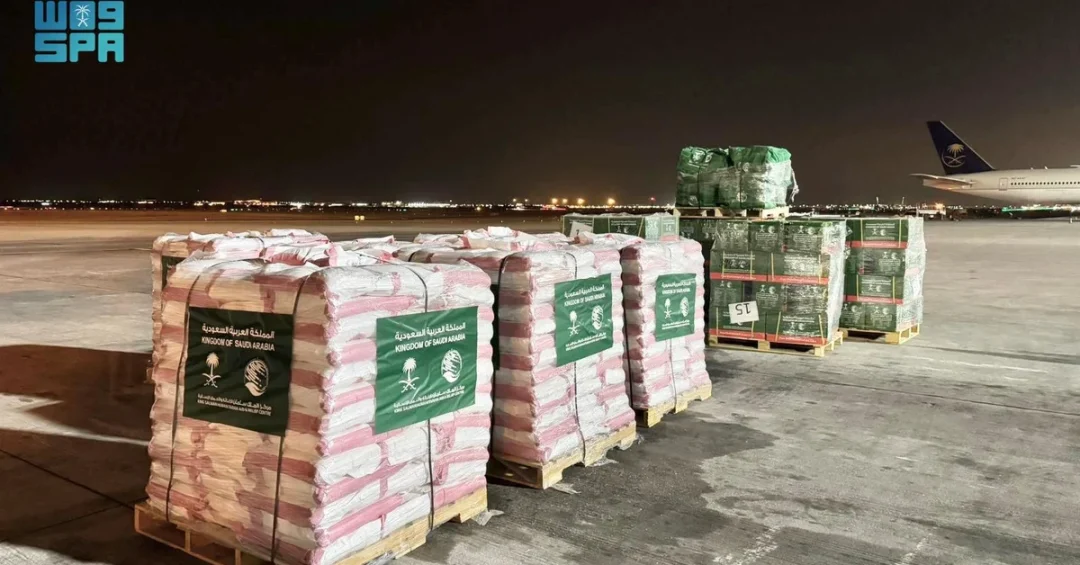
The fifteenth Saudi relief plane, operated by the King Salman Humanitarian Aid and Relief Center (KSrelief), departed from King Khalid International Airport for Damascus International Airport on January 29, 2025. The aircraft carried a shipment of food, shelter, and medical supplies aimed at alleviating the suffering of the Syrian people during this critical period. This mission underscores Saudi Arabia’s longstanding commitment to humanitarian support for nations in times of need.
Context and Background
This latest flight is part of an ongoing aerial bridge established by the Kingdom of Saudi Arabia to deliver essential aid to Syria, a nation that has faced prolonged conflict and economic hardship. The Saudi government, through KSrelief, has consistently prioritized humanitarian assistance as a core component of its foreign policy, responding to crises across the Middle East and beyond. The relief efforts are coordinated with international agencies and Syrian authorities to ensure timely and effective distribution.
Key Details
The supplies on board include high-energy food items, temporary shelter materials such as tents and blankets, and basic medical kits designed to address urgent health needs. KSrelief has coordinated with the Syrian Red Crescent and other local partners to facilitate the delivery. This marks the fifteenth such flight, demonstrating a sustained logistical commitment. The Saudi Press Agency (SPA) reported the departure, highlighting the Kingdom’s role as a leading humanitarian donor.
Implications and Impact
The delivery of aid comes at a crucial moment, as winter conditions exacerbate the challenges faced by displaced populations and vulnerable communities in Syria. By maintaining a regular supply chain, Saudi Arabia helps stabilize living conditions and reduces the strain on local healthcare systems. This action also reinforces the Kingdom’s diplomatic engagement in the region, fostering goodwill and cooperation with neighboring states. The relief flights align with broader international efforts to address the humanitarian situation in Syria, positioning Saudi Arabia as a key partner in global relief operations.
Vision 2030 Alignment
This humanitarian mission directly supports the goals of Saudi Vision 2030, which emphasizes the Kingdom’s role as a compassionate global actor and a central hub for logistics and aid. The efficient operation of these flights showcases Saudi Arabia’s advanced aviation and supply chain capabilities, a testament to its modern infrastructure. As Vision 2030 progresses, such initiatives demonstrate how the Kingdom leverages its resources and strategic location to provide timely assistance, reinforcing its standing as a reliable and responsible member of the international community.
20 Questions
Q1. What was the destination of the fifteenth Saudi relief plane?
A1. The plane flew from King Khalid International Airport in Riyadh to Damascus International Airport in Syria, carrying essential aid supplies for the Syrian people.
Q2. Which organization operated the relief plane?
A2. The King Salman Humanitarian Aid and Relief Center (KSrelief) operated the flight, coordinating the shipment of food, shelter, and medical items.
Q3. What types of supplies were on board?
A3. The cargo included food items, shelter materials such as tents and blankets, and medical supplies to address urgent health needs in Syria.
Q4. Why is this aid considered essential for Syria?
A4. Syria is experiencing a complex humanitarian crisis with displaced populations and economic hardship; these supplies provide immediate relief for vulnerable communities.
Q5. How does this flight relate to previous Saudi efforts?
A5. It is the fifteenth flight in a series, forming a sustained aerial bridge that demonstrates the Kingdom’s long-term commitment to supporting the Syrian people.
Q6. What was the date of the departure?
A6. The flight departed on January 29, 2025, as reported by the Saudi Press Agency.
Q7. Who reported the departure of the plane?
A7. The Saudi Press Agency (SPA) officially announced the departure, citing KSrelief as the source of the information.
Q8. What is KSrelief’s primary mission?
A8. KSrelief is the Kingdom’s main humanitarian arm, tasked with delivering aid and development assistance to countries in need around the world.
Q9. How does this aid help during winter?
A9. Winter conditions in Syria worsen hardships for displaced people; shelter materials and food help protect against cold and malnutrition.
Q10. Is this aid coordinated with international partners?
A10. Yes, KSrelief coordinates with local entities like the Syrian Red Crescent and international agencies to ensure effective distribution.
Q11. What message does this flight send about Saudi Arabia?
A11. It underscores Saudi Arabia’s humanitarian values and its role as a reliable partner in global relief efforts, in line with its foreign policy.
Q12. How does this support Vision 2030?
A12. Vision 2030 promotes Saudi Arabia as a compassionate global actor; these flights showcase its logistical expertise and commitment to international aid.
Q13. What airport in Saudi Arabia did the plane leave from?
A13. The aircraft departed from King Khalid International Airport, located in the capital city of Riyadh.
Q14. How many similar flights have been sent to Syria?
A14. This was the fifteenth relief plane sent to Syria, indicating a consistent and sustained humanitarian campaign.
Q15. What is the role of the Syrian Red Crescent?
A15. The Syrian Red Crescent assists in the on-ground distribution of aid to ensure supplies reach those most in need.
Q16. Does the aid target a specific region in Syria?
A16. The aid is intended for general distribution across affected areas, focusing on displaced populations and communities with urgent needs.
Q17. What kind of medical supplies were sent?
A17. Basic medical kits were included, designed to address urgent health care needs such as injuries and common illnesses.
Q18. How does Saudi Arabia fund these operations?
A18. The operations are funded through the Saudi government’s budget allocated to KSrelief, reflecting the national commitment to humanitarian work.
Q19. What is the significance of using an aerial bridge?
A19. An aerial bridge allows rapid delivery of supplies directly to Damascus, bypassing overland delays and ensuring timely assistance.
Q20. What future efforts might follow this flight?
A20. Further flights are expected as part of the ongoing response, with Saudi Arabia monitoring conditions in Syria to provide continued aid.
Reader Feedback
We value your thoughts. Please share your feedback on this article.
Your feedback helps us improve our coverage.