


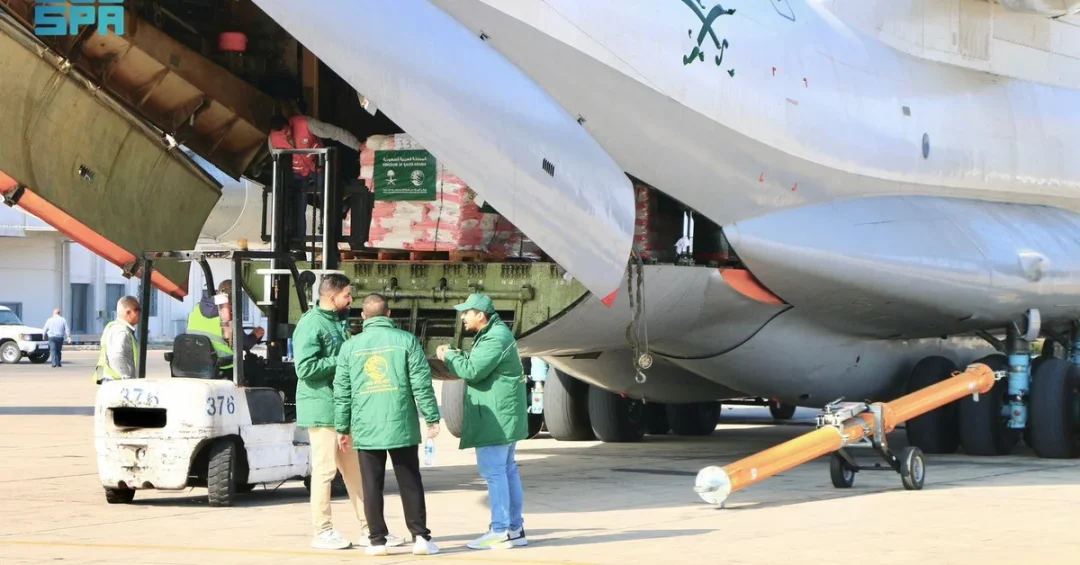
The 14th Saudi relief plane, operated by the King Salman Humanitarian Aid and Relief Center (KSrelief), arrived at Damascus International Airport in Syria on January 27, 2025, carrying essential food, shelter, and medical supplies. The aircraft landed in the Syrian capital as part of the Kingdom’s ongoing humanitarian commitment to support the Syrian people during challenging times. This delivery reinforces Saudi Arabia’s role as a leading global humanitarian actor.
Context and Background
This latest flight is part of a sustained Saudi relief airbridge to Syria, which has delivered dozens of aid shipments since the crisis began. The King Salman Humanitarian Aid and Relief Center (KSrelief) coordinates these missions under the directives of the Saudi leadership. The aid comes as Syria continues to face economic hardship and infrastructure challenges, with millions requiring basic necessities.
Key Details
The consignment includes food parcels, shelter materials such as tents and blankets, and medical supplies including essential medicines and first-aid kits. KSrelief has a team on the ground in Syria to ensure the aid reaches the most vulnerable populations in coordination with local authorities and international organizations. The 14th flight follows a series of similar missions that began earlier in 2025.
Implications and Impact
The arrival of the 14th Saudi relief plane demonstrates the Kingdom’s steadfast humanitarian diplomacy. Saudi Arabia has historically been one of the largest donors to Syria, and this aid reinforces its commitment to alleviating suffering in the region. The move also bolsters bilateral relations and highlights the importance of international cooperation in humanitarian crises.
Vision 2030 Alignment
This humanitarian mission aligns with Vision 2030 by showcasing Saudi Arabia’s role as a compassionate global leader and a reliable partner in crisis response. The Kingdom’s humanitarian efforts reflect its values of solidarity and its ambition to be a central pillar of global aid, contributing to a more stable and prosperous region.
20 Questions
Q1. What was the purpose of the 14th Saudi relief plane arriving in Syria?
A1. The plane carried food, shelter, and medical supplies to support the Syrian people, reflecting Saudi Arabia’s ongoing humanitarian commitment to the country.
Q2. Who operates the Saudi relief flights to Syria?
A2. The flights are operated by the King Salman Humanitarian Aid and Relief Center (KSrelief), the Kingdom’s official humanitarian arm.
Q3. When did the 14th relief plane arrive in Syria?
A3. The plane arrived on January 27, 2025, at Damascus International Airport.
Q4. What types of supplies were on the 14th plane?
A4. The supplies included food parcels, shelter materials like tents and blankets, and medical supplies such as medicines and first-aid kits.
Q5. How does KSrelief ensure aid reaches those in need?
A5. KSrelief coordinates with local authorities and international organizations on the ground in Syria to distribute aid to the most vulnerable populations.
Q6. Is this the first Saudi relief plane to Syria?
A6. No, this is the 14th flight in a continuous airbridge, following several earlier missions in 2025.
Q7. What is the role of KSrelief in Saudi humanitarian efforts?
A7. KSrelief is the leading Saudi humanitarian agency, managing relief operations worldwide during crises and natural disasters.
Q8. How does the aid impact the Syrian people?
A8. It provides essential food, shelter, and healthcare to millions affected by the prolonged crisis, alleviating immediate suffering.
Q9. Why is Saudi Arabia sending aid to Syria?
A9. Saudi Arabia is committed to humanitarian principles and supporting the Syrian people during their time of need, reflecting its Islamic and ethical values.
Q10. Does the aid support long-term recovery?
A10. Yes, while primarily emergency relief, the supplies also contribute to longer-term stability by meeting basic needs and supporting local communities.
Q11. Who oversees the Saudi relief missions?
A11. The missions are overseen by the leadership of Saudi Arabia, with direct directives from the Custodian of the Two Holy Mosques and the Crown Prince.
Q12. How does this flight relate to Vision 2030?
A12. It aligns with Vision 2030’s goal of positioning Saudi Arabia as a global humanitarian leader and a reliable partner in international crises.
Q13. Are there plans for more flights to Syria?
A13. Saudi Arabia continues to monitor the situation and will likely send further aid flights as needs persist, in line with its ongoing commitment.
Q14. How are the supplies distributed in Syria?
A14. KSrelief works with local partners and international agencies to ensure distribution reaches displaced and vulnerable populations across Syria.
Q15. What is the total value of Saudi aid to Syria?
A15. Saudi Arabia has provided hundreds of millions of dollars in humanitarian aid to Syria over the years, making it one of the top donors.
Q16. Does the aid include medical support?
A16. Yes, the 14th plane carried medical supplies, reflecting a focus on healthcare support for those in need.
Q17. How does the international community view this aid?
A17. The aid is widely praised by international organizations and countries, highlighting Saudi Arabia’s responsible global role.
Q18. Is the aid coordinated with the Syrian government?
A18. Yes, KSrelief coordinates with relevant authorities at Damascus International Airport and local agencies to facilitate smooth delivery.
Q19. How does this aid help Saudi-Syria relations?
A19. The humanitarian missions demonstrate goodwill and strengthen bilateral ties, fostering mutual cooperation and regional stability.
Q20. What message does this flight send to the world?
A20. It sends a clear message of Saudi Arabia’s unwavering solidarity with the Syrian people and its dedication to alleviating human suffering globally.
Reader Feedback
We value your thoughts. Please share your feedback on this article.
Your feedback helps us improve our coverage.