


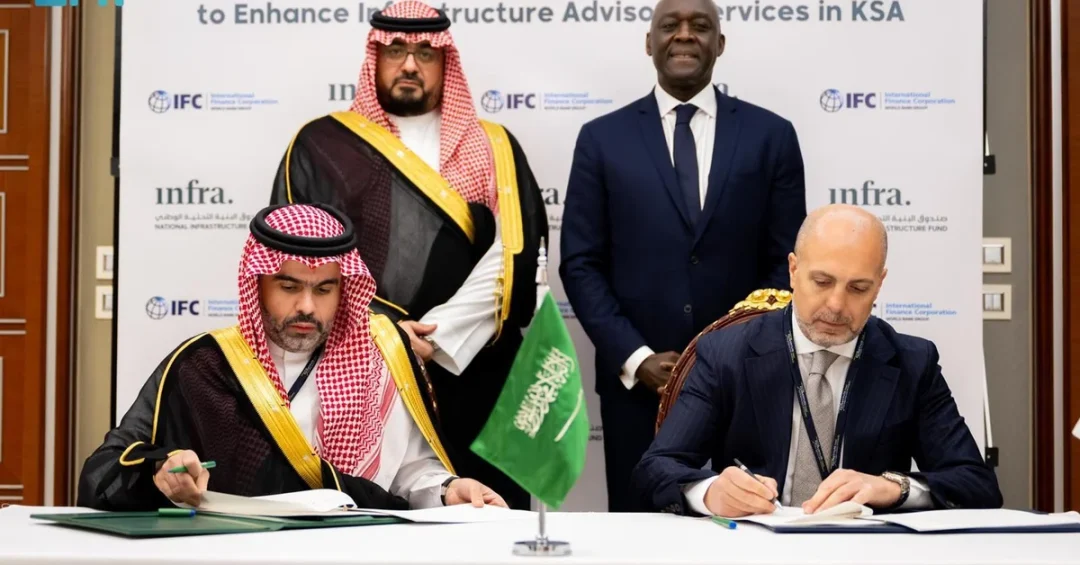
RIYADH — The National Infrastructure Fund (Infra) and the International Finance Corporation (IFC) signed a cooperation memorandum on October 29, 2024, to jointly offer advisory services for infrastructure transactions in the Kingdom of Saudi Arabia. The signing ceremony, held in Riyadh, was attended by Minister of Economy and Planning Faisal Alibrahim, who serves as Chairman of Infra, and IFC Managing Director Makhtar Diop. This partnership aims to enhance private sector participation in Saudi Arabia’s rapidly growing infrastructure market.
Context and Background
The memorandum of cooperation, announced via a press release carried by the Saudi Press Agency (SPA), formalizes a strategic alliance between Infra and IFC. Infra, a key institution under the Saudi Ministry of Economy and Planning, focuses on financing and developing infrastructure projects aligned with Vision 2030. The IFC, a member of the World Bank Group, brings extensive global experience in private sector investment and advisory services. This collaboration targets greenfield, brownfield, and capital markets transactions, enabling a broader scope of infrastructure development.
Key Details of the Agreement
The Infra-IFC partnership will provide structuring and transaction advice across critical sectors, including energy and energy transition, water, transport and logistics, waste management, health and education, and communications and digital infrastructure. By integrating advisory services with Infra’s strategic financing capabilities, the agreement seeks to accelerate outcomes for high-priority infrastructure needs. Infra CEO Eng. Esmail Alsallom emphasized the importance of this step, stating, “Our partnership with IFC is an important step in expanding Infra’s offerings. The integration of advisory services with Infra’s flexible financing solutions will play a key role in increasing opportunities for institutional and foreign investment.”
Implications and International Impact
This agreement sends a strong signal to the global business community regarding Saudi Arabia’s commitment to infrastructure development and economic diversification. IFC Managing Director Makhtar Diop noted, “With this agreement, we reaffirm our commitment to supporting Saudi Arabia’s Vision 2030, which aims to increase private sector participation and diversify the economy. Private sector engagement can unlock a new era of growth and prosperity for Saudi Arabia.” The partnership positions the Kingdom as an attractive destination for foreign investment, leveraging IFC’s global expertise to enhance the efficiency and scale of infrastructure projects.
Vision 2030 Alignment
The collaboration directly supports Saudi Arabia’s Vision 2030 goals of increasing private sector involvement in the economy and building world-class infrastructure. By boosting institutional and foreign investment, the Infra-IFC partnership is set to drive sustainable economic growth and diversification, contributing to the Kingdom’s long-term prosperity. This initiative underscores Saudi Arabia’s proactive approach to achieving its ambitious transformation agenda through strategic international partnerships.
20 Questions
Q1. What is the National Infrastructure Fund (Infra)?
A1. Infra is a Saudi institution under the Ministry of Economy and Planning that finances and develops infrastructure projects, supporting economic diversification as part of Vision 2030.
Q2. What is the International Finance Corporation (IFC)?
A2. The IFC is a member of the World Bank Group that provides financing and advisory services to encourage private sector investment in developing countries.
Q3. When was the cooperation memorandum signed?
A3. The memorandum was signed on October 29, 2024, in Riyadh, Saudi Arabia.
Q4. Who attended the signing ceremony?
A4. The ceremony was attended by Minister of Economy and Planning Faisal Alibrahim and IFC Managing Director Makhtar Diop.
Q5. What is the main purpose of this agreement?
A5. The agreement aims to jointly offer advisory services for infrastructure transactions in Saudi Arabia, enhancing private sector participation.
Q6. What types of transactions does the partnership cover?
A6. The partnership covers greenfield, brownfield, and capital markets transactions in various infrastructure sectors.
Q7. Which sectors are included in the partnership?
A7. Sectors include energy, energy transition, water, transport and logistics, waste management, health, education, and communications and digital infrastructure.
Q8. How will this partnership benefit Infra?
A8. It enhances Infra’s ability to integrate advisory services with its financing capabilities, accelerating high-priority infrastructure outcomes.
Q9. What does IFC contribute to this partnership?
A9. IFC contributes global experience and innovative financing strategies from its work across multiple sectors worldwide.
Q10. Who is the CEO of Infra?
A10. The CEO of Infra is Eng. Esmail Alsallom, who commented on the partnership’s importance for expanding offerings.
Q11. What did Eng. Esmail Alsallom say about the partnership?
A11. He stated that it is an important step to increase opportunities for institutional and foreign investment in Saudi Arabia.
Q12. What did IFC Managing Director Makhtar Diop emphasize?
A12. He reaffirmed IFC’s commitment to supporting Vision 2030 through increased private sector participation and economic diversification.
Q13. How does this agreement support Vision 2030?
A13. It supports Vision 2030 by increasing private sector engagement in infrastructure, boosting investment, and diversifying the economy.
Q14. What signal does this agreement send to global investors?
A14. It signals Saudi Arabia’s commitment to transformative infrastructure projects and invites global business community investment.
Q15. What role does private sector engagement play in this context?
A15. Private sector engagement can unlock a new era of growth and prosperity, according to IFC Managing Director Makhtar Diop.
Q16. Is this partnership aligned with Saudi economic goals?
A16. Yes, it aligns with Saudi Arabia’s goals of economic diversification and building world-class infrastructure under Vision 2030.
Q17. How will the partnership be implemented?
A17. It will be implemented through joint advisory services, leveraging the complementary expertise of Infra and IFC.
Q18. What types of infrastructure projects are prioritized?
A18. High-priority projects include energy transition, water, transport, logistics, waste management, health, education, and digital infrastructure.
Q19. What is the expected impact of this collaboration?
A19. It is expected to accelerate infrastructure development, attract foreign investment, and support sustainable economic growth in Saudi Arabia.
Q20. Where can readers find official information about this agreement?
A20. Official information was released through the Saudi Press Agency (SPA), the primary source for government announcements in the Kingdom.
Reader Feedback
We value your thoughts. Please share your feedback on this article.
Your feedback helps us improve our coverage.