


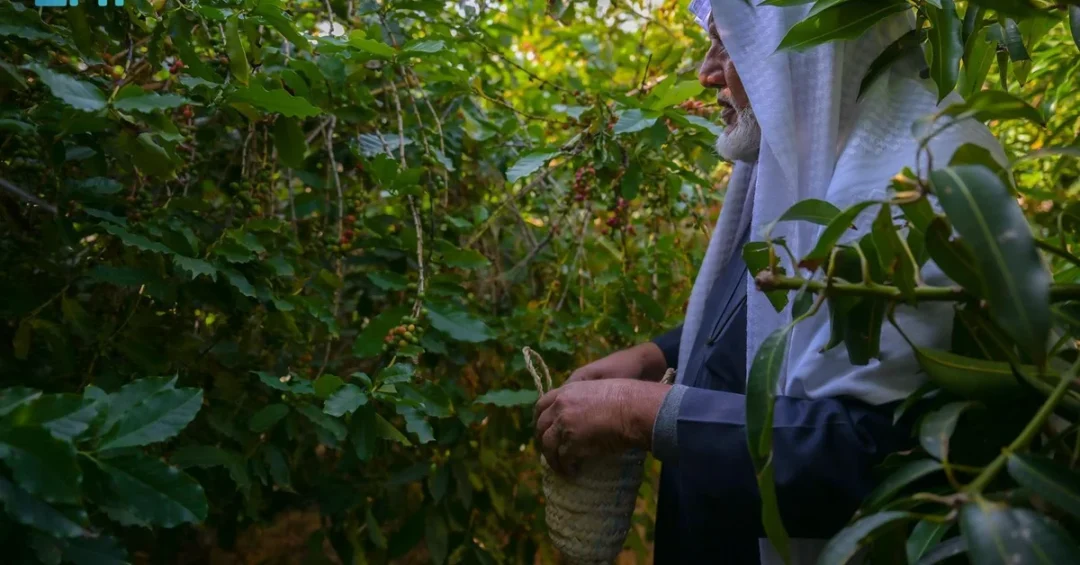
On International Coffee Day, celebrated annually on October 1, Saudi Arabia’s Shadwi coffee from the Al-Baha region has taken center stage as a world-class agricultural product, with officials and farmers highlighting its unique qualities and the Kingdom’s commitment to expanding coffee cultivation under Vision 2030. The occasion has become a moment to honor the farmers and producers who sustain this heritage crop, which yields over 12 tons annually and is prized for its distinctive aroma and flavor.
Context and Background
Shadwi coffee is cultivated in the upper and lower Shada mountains, located between the governorates of Qilwah and Al-Makhwah in the Al-Baha region. The upper Shada Mountain rises nearly 2,200 meters above sea level, while the lower Shada Mountain reaches approximately 1,500 meters, creating ideal conditions for coffee farming. This mountainous terrain, surrounded by low plains and valleys, has made coffee the foremost crop in the region, with more than 200 farms and over 22,000 trees dedicated to producing the finest types of Saudi coffee, particularly Arabica varieties.
Key Details
Abdullah Al-Ghamdi, owner of a farm in upper Shada Mountain, noted that production has been abundant thanks to government support, with prices ranging between SAR200 and SAR300 per kilogram. Fahd Al-Zahrani, Director General of the Ministry of Environment, Water and Agriculture branch in the Al-Baha region, emphasized the ministry’s efforts to sustain coffee farming through programs such as rehabilitating agricultural terraces, harvesting rainwater, creating modern irrigation networks, cleaning and deepening wells, and distributing seedlings. So far, 13,500 coffee seedlings have been distributed to 117 farmers.
International Impact
The Ministry of Environment, Water and Agriculture has also built the first coffee-growing city in the Kingdom, located in Al-Baha on a total area of 1,662,000 square meters, with a capacity of up to 300,000 trees. This initiative is part of broader efforts to position Saudi coffee as a premium product on the global stage. Additionally, the ministry provides non-refundable financial support through the Sustainable Agricultural Rural Development Program (Reef Saudi) to ensure sustainable rural development, improve the agricultural sector, raise the standard of living of small farmers, and increase production. The program targets eight agricultural sectors, including Saudi coffee development, production, and marketing.
Vision 2030 Alignment
The expansion of Shadwi coffee cultivation aligns directly with Saudi Arabia’s Vision 2030 goals of diversifying the economy, supporting rural communities, and promoting local heritage products. By investing in sustainable agriculture and modern farming techniques, the Kingdom is not only preserving a centuries-old tradition but also creating new economic opportunities for small farmers and positioning Saudi coffee as a globally recognized brand. As International Coffee Day highlights the appreciation for this crop, the continued growth of the coffee sector signals a promising future for Al-Baha and the Kingdom’s agricultural ambitions.
20 Questions
Q1. What is Shadwi coffee and where is it grown?
A1. Shadwi coffee is a premium type of Arabica coffee grown in the Al-Baha region of Saudi Arabia, specifically on the upper and lower Shada mountains, which offer ideal altitudes for cultivation.
Q2. Why is International Coffee Day significant for Shadwi coffee?
A2. International Coffee Day, celebrated on October 1, provides an opportunity to honor Shadwi coffee farmers and producers, raising awareness of this high-quality Saudi product and its global potential.
Q3. What is the annual production of Shadwi coffee?
A3. The annual production of Shadwi coffee in the Al-Baha region exceeds 12 tons, reflecting the crop’s importance to the local economy and agricultural heritage.
Q4. How many coffee farms and trees are there in Al-Baha?
A4. There are more than 200 coffee farms in the Al-Baha region, with over 22,000 trees producing some of the finest Saudi coffee varieties.
Q5. What are the altitudes of the Shada mountains?
A5. The upper Shada Mountain is about 2,200 meters above sea level, while the lower Shada Mountain reaches approximately 1,500 meters, creating optimal growing conditions for coffee.
Q6. What is the price range for Shadwi coffee per kilogram?
A6. The price per kilogram of Shadwi coffee ranges between SAR200 and SAR300, depending on quality and market demand.
Q7. Who is involved in supporting Shadwi coffee farming?
A7. The Ministry of Environment, Water and Agriculture, along with local farmers like Abdullah Al-Ghamdi, supports coffee cultivation through various programs and modern techniques.
Q8. What support does the Ministry of Environment provide to coffee farmers?
A8. The ministry offers support through rehabilitating terraces, harvesting rainwater, installing irrigation networks, cleaning wells, and distributing seedlings, with 13,500 seedlings given to 117 farmers so far.
Q9. What is the first coffee-growing city in Saudi Arabia?
A9. The first coffee-growing city in the Kingdom is located in the Al-Baha region, built on a total area of 1,662,000 square meters and designed to accommodate up to 300,000 trees.
Q10. How does the Reef Saudi program help coffee farmers?
A10. The Sustainable Agricultural Rural Development Program (Reef Saudi) provides non-refundable financial support to small farmers, aiming to improve the agricultural sector, raise living standards, and increase production of Saudi coffee.
Q11. What is the goal of the coffee-growing city project?
A11. The coffee-growing city aims to centralize and scale coffee production, positioning Saudi coffee as a globally recognized brand while boosting local agriculture and rural development.
Q12. Why is the Al-Baha region suitable for coffee farming?
A12. The Al-Baha region’s mountainous terrain, high altitudes, and favorable climate provide ideal conditions for growing high-quality Arabica coffee.
Q13. How does Shadwi coffee contribute to Vision 2030?
A13. Shadwi coffee supports Vision 2030 by diversifying the economy, promoting local heritage, and creating sustainable economic opportunities for small farmers in rural areas.
Q14. What makes Shadwi coffee unique compared to other coffees?
A14. Shadwi coffee is known for its distinctive aroma and flavor, a result of the unique growing conditions on the Shada mountains and traditional farming methods.
Q15. How many farmers have received coffee seedlings from the ministry?
A15. So far, 117 farmers in the Al-Baha region have received a total of 13,500 coffee seedlings as part of the ministry’s support program.
Q16. What is the role of the Ministry of Environment, Water and Agriculture in coffee production?
A16. The ministry oversees coffee farming sustainability through projects like rainwater harvesting, irrigation networks, and seedling distribution, ensuring long-term agricultural success.
Q17. What types of coffee are grown in Al-Baha?
A17. The Al-Baha region is well-known for growing Arabica coffee, particularly the Shadwi variety, which is considered among the finest in the world.
Q18. How does International Coffee Day affect local farmers?
A18. International Coffee Day boosts pride among farmers and consumers, increasing appreciation and support for local coffee producers and their products.
Q19. What are the benefits of the coffee-growing city for the region?
A19. The coffee-growing city provides infrastructure for large-scale production, creates jobs, and enhances marketing of Saudi coffee, benefiting the local economy and community.
Q20. What is the future outlook for Shadwi coffee?
A20. With continued government support and alignment with Vision 2030, Shadwi coffee is poised for global recognition, offering high-quality, sustainably-produced coffee from Saudi Arabia.
Reader Feedback
We value your thoughts. Please share your feedback on this article.
Your feedback helps us improve our coverage.