


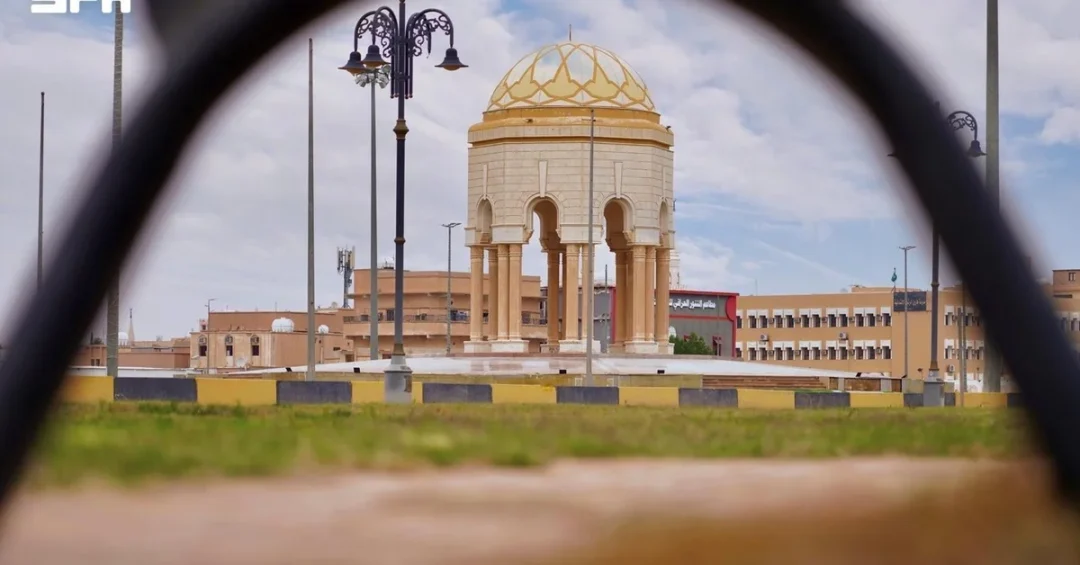
Rafha, Saudi Arabia – June 11, 2026 – The newly completed architectural sculpture at King Abdulaziz Square in Rafha Governorate has emerged as a prominent landmark along the northern international highway, marking the western gateway to the city and symbolizing the region’s cultural identity. Standing 14 meters tall and covering 107 square meters, the sculpture forms the centerpiece of the square, which spans approximately 12,700 square meters and serves as a welcoming beacon for travelers and residents alike.
Context and Background
Rafha, located in the Northern Borders Province, is a key transit point on the international highway connecting Saudi Arabia to neighboring countries. King Abdulaziz Square, named after the Kingdom’s founding monarch, has long been a central public space in the governorate. The introduction of this distinctive artistic structure aligns with the Saudi government’s broader efforts to enhance urban aesthetics across the Kingdom. The project was completed following official plans to revitalize public spaces, as reported by the Saudi Press Agency.
Key Details
The sculpture’s design blends traditional Arab and Islamic architectural heritage with modern engineering. It features a prominent upper dome, symmetrical columns, and open arches, elements that reflect centuries of regional craftsmanship. At night, the structure is illuminated with purple and gold architectural lighting, creating a dramatic visual effect. During daytime, the interplay of sunlight and shadow across the dome and arches highlights the artistic precision of the design. The square itself is situated at a strategic roundabout, offering an unobstructed view for motorists approaching from the highway.
Implications and Impact
Urban landmarks like King Abdulaziz Square play a vital role in enhancing the quality of life in Saudi cities. They contribute to tourism appeal, civic pride, and economic activity by creating attractive public spaces. The square’s location on the international highway also positions it as a symbolic entry point for visitors to the Northern Borders region. This development aligns with the Ministry of Municipal and Rural Affairs and Housing’s initiatives to upgrade infrastructure and beautify governorates under the Kingdom’s broader urban modernization efforts.
Vision 2030 Alignment
The transformation of King Abdulaziz Square underscores Saudi Arabia’s commitment to improving urban environments as part of Vision 2030’s Quality of Life Program. By investing in cultural landmarks and public spaces, the Kingdom aims to create vibrant communities that attract tourism, support local identity, and foster a sense of belonging. The Rafha sculpture stands as a testament to how heritage-inspired design can coexist with modernity, reinforcing the vision of a dynamic, globally connected Saudi Arabia while preserving its rich cultural roots.
20 Questions
Q1. Where is King Abdulaziz Square located?
A1. King Abdulaziz Square is located in Rafha Governorate, at the western entrance of the city along the northern international highway, serving as a gateway landmark for travelers.
Q2. What is the height of the sculpture in the square?
A2. The sculpture rises to a height of 14 meters, making it a prominent visual feature in the urban landscape of Rafha.
Q3. How large is the sculpture’s footprint?
A3. The sculpture covers an area of 107 square meters, while the entire square spans approximately 12,700 square meters.
Q4. Who reported on the completion of this landmark?
A4. The Saudi Press Agency (SPA) reported the details of the sculpture and square on June 11, 2026.
Q5. What architectural style inspired the sculpture’s design?
A5. The design draws inspiration from traditional Arab and Islamic architecture, including elements like domes, arches, and columns.
Q6. What visual features does the sculpture have at night?
A6. At night, the sculpture is illuminated with purple and gold architectural lighting, enhancing its prominence in the urban landscape.
Q7. What is the function of the square in Rafha?
A7. The square functions as a roundabout at the western entrance to Rafha, serving as a welcoming spot for visitors and a central public space.
Q8. Which highway is the square connected to?
A8. The square is located along the northern international highway, a key route linking Saudi Arabia to neighboring countries.
Q9. How does the sculpture look during daytime?
A9. During daytime, intricate details of the dome and arches are visible, with shadows at sunset highlighting the artistic design against the horizon.
Q10. Does the sculpture include modern engineering elements?
A10. Yes, the design incorporates modern engineering elements alongside traditional features, giving the landmark a distinctive visual presence.
Q11. What is the significance of the square’s name?
A11. The square is named after King Abdulaziz, the founding monarch of Saudi Arabia, symbolizing national heritage and unity.
Q12. How does the sculpture contribute to Rafha’s identity?
A12. The sculpture serves as a cultural icon reflecting Rafha’s heritage and welcoming travelers, enhancing local identity and civic pride.
Q13. What materials are used in the sculpture?
A13. The specific materials are not detailed, but the structure is designed to withstand outdoor conditions with architectural lighting integrated for night visibility.
Q14. Is the square accessible to the public?
A14. Yes, the square is a public space located at a roundabout, open to all visitors and residents as part of the urban landscape.
Q15. How does the lighting affect the sculpture’s appearance?
A15. Purple and gold lighting at night adds a unique aesthetic dimension, making the structure stand out as a focal point in the city.
Q16. Which Saudi ministry is involved in such urban projects?
A16. The Ministry of Municipal and Rural Affairs and Housing oversees initiatives to upgrade infrastructure and beautify governorates across the Kingdom.
Q17. What is the broader goal of beautifying Saudi cities?
A17. The goal is to improve quality of life, attract tourism, and support local identity as part of the Vision 2030 Quality of Life Program.
Q18. Does the sculpture represent Islamic architecture?
A18. Yes, elements like the dome, arches, and columns are characteristic of Islamic architectural traditions.
Q19. How does the landmark benefit visitors?
A19. It provides a visually striking introduction to Rafha, creating a welcoming atmosphere and enhancing the travel experience for those on the international highway.
Q20. What future developments might follow this project?
A20. The project sets a precedent for further urban beautification in the Northern Borders region, aligning with Vision 2030’s goals for modernizing public spaces.
Reader Feedback
We value your thoughts. Please share your feedback on this article.
Your feedback helps us improve our coverage.