


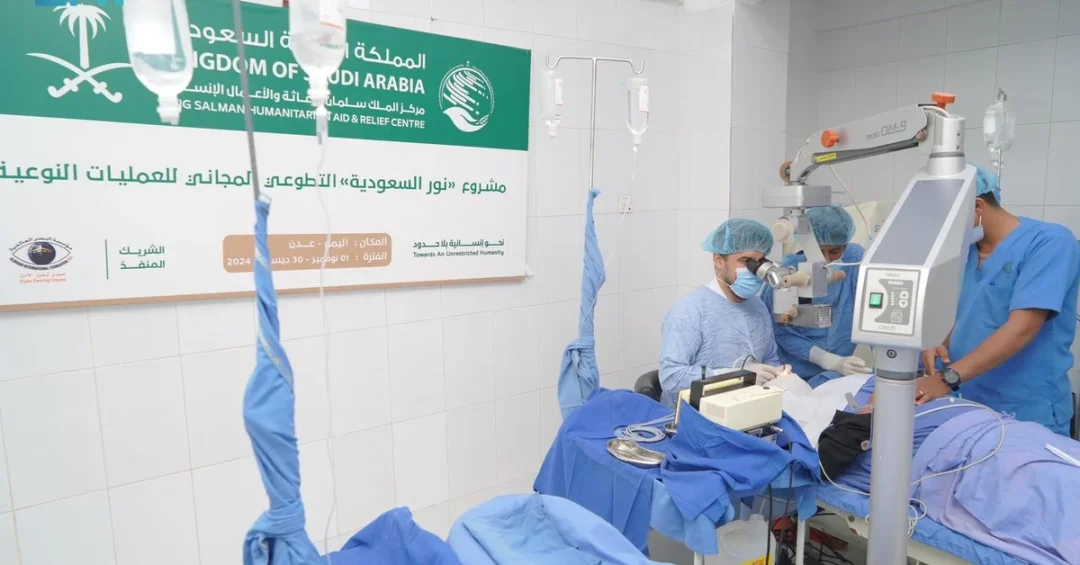
The King Salman Humanitarian Aid and Relief Center (KSrelief) has successfully concluded the Saudi Noor Volunteer Program to combat blindness and related eye diseases in Yemen’s Aden Governorate, operations that ran from November 1 to December 31. Over the two-month campaign, the Kingdom of Saudi Arabia’s volunteer medical team provided critical ophthalmic care, performing a total of 1,507 specialized surgeries and procedures to restore sight and prevent further vision loss among vulnerable populations.
Context and Background
The Saudi Noor Program is a flagship humanitarian initiative by KSrelief, targeting preventable blindness and eye diseases in low-income communities worldwide. In Yemen, where ongoing conflict has strained healthcare infrastructure, such programs are vital. KSrelief’s deployment to Aden Governorate underscores the Kingdom of Saudi Arabia’s commitment to humanitarian relief, addressing immediate medical needs while supporting long-term health outcomes aligned with Vision 2030’s goal of global solidarity and aid effectiveness.
Key Details of the Medical Campaign
During the campaign, KSrelief’s volunteer medical team successfully completed 500 minor surgeries and 400 retinal injections, along with 200 retinal surgeries, 120 glaucoma surgeries, 120 strabismus surgeries, 100 orbital surgeries, and 67 laser surgeries. All procedures were reported as successful, reflecting the expertise of the Saudi medical personnel. The initiative targeted patients suffering from eye diseases from low-income groups, providing them access to high-quality care that might otherwise be unavailable.
International and Regional Impact
This program highlights Saudi Arabia’s ongoing role as a leading humanitarian donor, particularly in Yemen. By addressing blindness and vision impairment, KSrelief not only alleviates individual suffering but also reduces long-term economic and social burdens on the affected communities. The successful conclusion of the campaign reinforces the Kingdom’s dedication to international health cooperation and its ability to deliver effective aid in challenging environments, strengthening its reputation as a reliable partner in regional stability and development.
Vision 2030 Alignment
The Saudi Noor Program exemplifies the humanitarian pillar of Saudi Arabia’s Vision 2030, which emphasizes the Kingdom’s commitment to global citizenship and targeted aid. By engaging volunteer medical professionals and focusing on high-impact interventions, the program reflects Vision 2030’s strategy of leveraging Saudi expertise for the benefit of communities in need. As the Kingdom continues to expand its global humanitarian reach, initiatives like this lay the groundwork for a healthier, more stable region, reinforcing Saudi leadership in sustainable development and international goodwill.
20 Questions
Q1. What was the purpose of the Saudi Noor Program in Yemen?
A1. The program aimed to combat blindness and eye diseases in Yemen’s Aden Governorate, providing free medical treatment and surgeries to low-income patients through volunteer medical teams from Saudi Arabia.
Q2. Who organized the Saudi Noor Program?
A2. The program was organized by the King Salman Humanitarian Aid and Relief Center (KSrelief), the humanitarian arm of the Kingdom of Saudi Arabia.
Q3. How long did the program run?
A3. The program ran from November 1 to December 31, a total of two months, in Aden Governorate, Yemen.
Q4. How many surgeries were performed during the campaign?
A4. KSrelief’s medical team performed 1,507 surgeries and procedures, including minor surgeries, retinal injections, and various specialized ophthalmic operations.
Q5. What types of eye surgeries were conducted?
A5. Surgeries included minor surgeries, retinal injections, retinal surgeries, glaucoma surgeries, strabismus surgeries, orbital surgeries, and laser surgeries.
Q6. How many retinal surgeries were performed?
A6. The team performed 200 retinal surgeries, addressing complex conditions affecting the back of the eye.
Q7. How many glaucoma surgeries were completed?
A7. A total of 120 glaucoma surgeries were successfully completed to reduce intraocular pressure and prevent vision loss.
Q8. How many strabismus surgeries were done?
A8. The team performed 120 strabismus surgeries to correct misaligned eyes and improve vision and appearance.
Q9. How many orbital surgeries were conducted?
A9. Orbital surgeries numbered 100, addressing issues around the eye socket and surrounding structures.
Q10. How many laser surgeries were performed?
A10. A total of 67 laser surgeries were carried out, using precise laser technology to treat various eye conditions.
Q11. Who was eligible for the program’s services?
A11. The program targeted low-income patients suffering from eye diseases in Aden Governorate, Yemen, who lacked access to affordable care.
Q12. What is KSrelief’s role in global humanitarian aid?
A12. KSrelief is the Kingdom of Saudi Arabia’s leading humanitarian agency, providing relief and medical aid worldwide, especially in conflict-affected areas.
Q13. Is the Saudi Noor Program ongoing?
A13. The program in Aden has concluded, but KSrelief continues similar volunteer medical projects globally to combat blindness and other diseases.
Q14. How does this program support Saudi Arabia’s Vision 2030?
A14. It aligns with Vision 2030’s goal of global citizenship, using Saudi expertise and resources to improve health outcomes in vulnerable communities.
Q15. Why was Aden Governorate chosen for the program?
A15. Aden was selected due to its population’s high need for eye care, limited healthcare infrastructure, and the impact of the ongoing conflict in Yemen.
Q16. What other countries have benefited from similar KSrelief programs?
A16. KSrelief has conducted similar eye care programs in countries like Sudan, Bangladesh, and several African nations, among others.
Q17. Were the surgeries performed by local or Saudi doctors?
A17. The surgeries were performed by volunteer doctors from Saudi Arabia, as part of KSrelief’s medical missions.
Q18. How did the program combat blindness?
A18. By providing surgeries and treatments for conditions like cataracts, glaucoma, and retinal diseases, the program prevented blindness and restored vision.
Q19. What impact does blindness have on Yemen’s communities?
A19. Blindness limits economic participation and quality of life; the program helps vulnerable individuals regain independence and contribute to society.
Q20. Where can more information about KSrelief’s work be found?
A20. Information is available through the Saudi Press Agency (SPA) and KSrelief’s official channels, which regularly update humanitarian activities and results.
Reader Feedback
We value your thoughts. Please share your feedback on this article.
Your feedback helps us improve our coverage.