


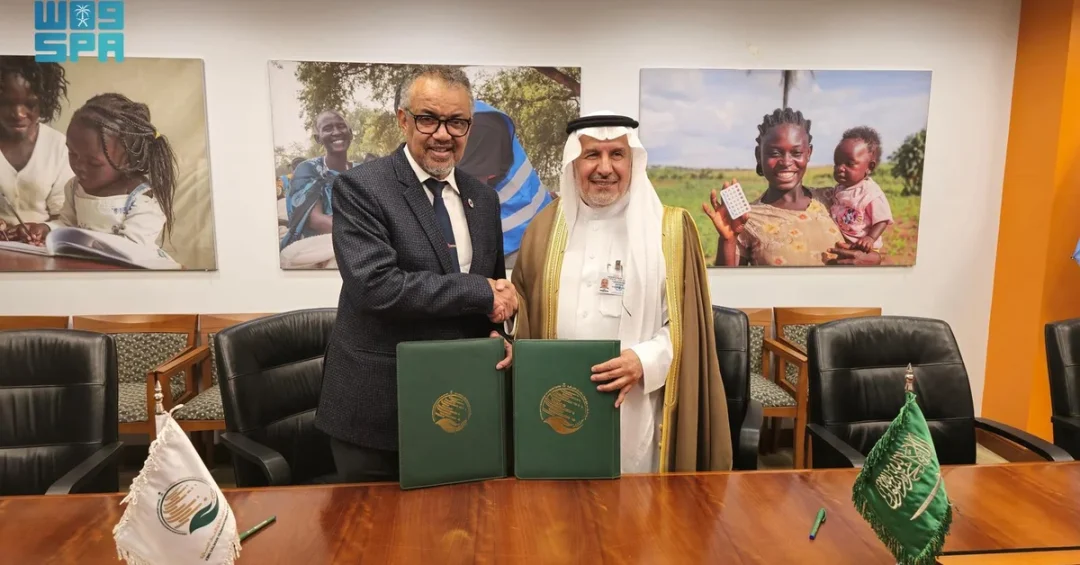
The King Salman Humanitarian Aid and Relief Center (KSrelief) signed a joint cooperation agreement with the World Health Organization (WHO) on September 27, 2024, to support emergency and specialized health services for communities affected by the earthquake in northwestern Syria, with a total value of $4,702,000. The agreement was formalized on the sidelines of the 79th session of the United Nations General Assembly in New York, underscoring Saudi Arabia’s proactive role in global humanitarian diplomacy.
Context and Background
The devastating earthquake that struck northwestern Syria in February 2023 caused widespread destruction, severely disrupting an already fragile health system. The region faces ongoing challenges due to displacement, limited infrastructure, and the lingering effects of conflict. This agreement addresses critical gaps in health service delivery, providing a lifeline for over one million vulnerable individuals, including displaced people and host communities.
Key Details
The agreement was signed by Advisor to the Royal Court and KSrelief Supervisor-General Dr. Abdullah Al Rabeeah and WHO Director-General Dr. Tedros Adhanom Ghebreyesus. It aims to enhance primary, secondary, and specialized health care, reduce the spread of epidemics, and create a safe health environment for the most vulnerable populations. Specifically, dialysis services will be supported in 20 centers across the affected area. More than 1,201,000 people are expected to benefit from this initiative.
International Impact
This agreement reinforces the Kingdom of Saudi Arabia’s longstanding commitment to humanitarian action and multilateral cooperation. By partnering with a leading international health organization like WHO, KSrelief ensures that aid reaches those in need efficiently and transparently. The timing of the signing, during the UN General Assembly, highlights Saudi Arabia’s engagement with global partners to address urgent humanitarian crises.
Vision 2030 Alignment
This initiative aligns closely with Saudi Vision 2030, which emphasizes the Kingdom’s role as a global humanitarian leader. By extending life-saving health services to crisis-affected populations, Saudi Arabia demonstrates its dedication to international solidarity and sustainable development. The agreement also supports the Vision’s goal of fostering a caring and responsible global citizenship, positioning the Kingdom as a reliable partner in addressing the world’s most pressing humanitarian challenges.
20 Questions
Q1. What is KSrelief?
A1. KSrelief is the King Salman Humanitarian Aid and Relief Center, a Saudi government agency that coordinates and implements humanitarian projects worldwide.
Q2. Who signed the agreement on behalf of KSrelief?
A2. The agreement was signed by Advisor to the Royal Court and KSrelief Supervisor-General Dr. Abdullah Al Rabeeah.
Q3. Who signed the agreement on behalf of WHO?
A3. WHO Director-General Dr. Tedros Adhanom Ghebreyesus signed the agreement.
Q4. Where was the agreement signed?
A4. The agreement was signed on the sidelines of the 79th session of the UN General Assembly in New York.
Q5. What is the total value of the agreement?
A5. The total value of the agreement is $4,702,000.
Q6. Which region in Syria will benefit?
A6. The agreement supports health services in areas affected by the earthquake in northwestern Syria.
Q7. How many people are expected to benefit?
A7. More than 1,201,000 people, including displaced people and host communities, are expected to benefit.
Q8. What type of health services will be supported?
A8. Primary, secondary, and specialized health care services will be supported, along with efforts to reduce epidemics.
Q9. Will dialysis services be included?
A9. Yes, dialysis services will be supported in 20 centers in the affected area.
Q10. Why is this agreement important for Syria?
A10. It addresses critical health gaps caused by the earthquake, providing essential medical care to vulnerable populations.
Q11. How does this agreement reflect Saudi Arabia’s role?
A11. It demonstrates Saudi Arabia’s commitment to humanitarian aid and global health cooperation.
Q12. Is this the first Saudi aid project for earthquake victims in Syria?
A12. No, this agreement is an extension of previous humanitarian projects by Saudi Arabia, represented by KSrelief, for earthquake victims in Syria.
Q13. What organizations are involved besides KSrelief and WHO?
A13. No other organizations are directly mentioned, but implementation may involve local health authorities and partners.
Q14. How does this align with Vision 2030?
A14. It supports Vision 2030’s goal of positioning Saudi Arabia as a global humanitarian leader.
Q15. What is the expected impact on epidemic control?
A15. The agreement aims to reduce the spread of epidemics through improved health services and safe environments.
Q16. Will this help displaced people specifically?
A16. Yes, displaced people are among the primary beneficiaries of the health services.
Q17. How was the agreement funded?
A17. The agreement is funded by Saudi Arabia through KSrelief, as part of its humanitarian budget.
Q18. What is the UN General Assembly connection?
A18. The signing took place during the UN General Assembly, highlighting international diplomatic engagement.
Q19. Will this agreement improve health infrastructure?
A19. Yes, by enhancing specialized care and primary services, it will strengthen local health systems.
Q20. What is the long-term goal of this agreement?
A20. The long-term goal is to create a safe health environment and support recovery for affected communities.
Reader Feedback
We value your thoughts. Please share your feedback on this article.
Your feedback helps us improve our coverage.