


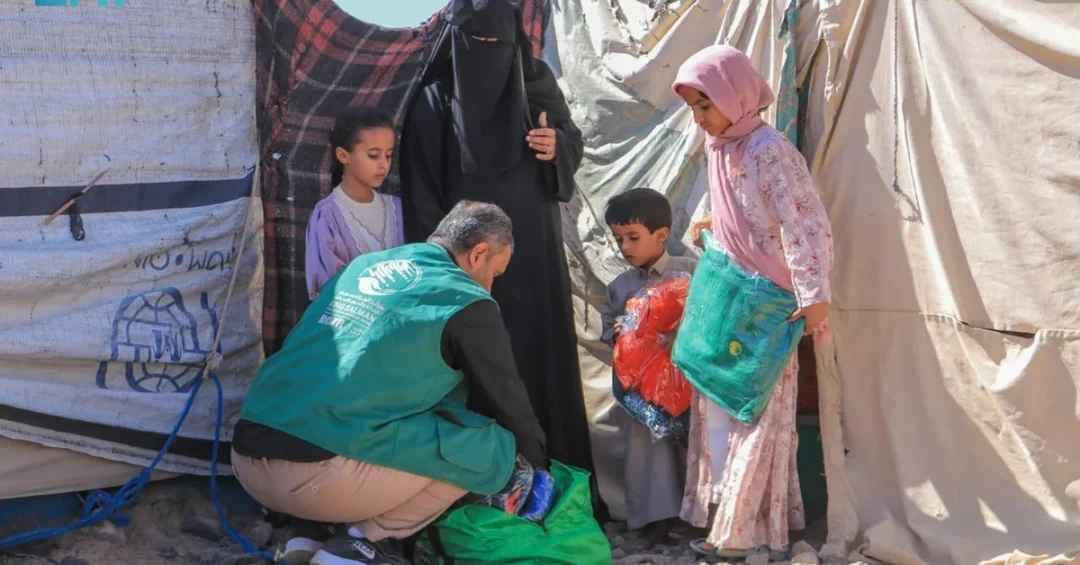
The King Salman Humanitarian Aid and Relief Center (KSrelief) has commenced the distribution of 2,500 winter kits in Marib city and Marib Al Wadi, Yemen, as part of an emergency shelter project aimed at assisting vulnerable families during the harsh winter months. The initiative, announced on December 2, 2024, by the Saudi Press Agency, marks a critical step in providing essential warmth to displaced persons and residents facing severe cold in makeshift shelters.
Context and Background
Yemen continues to endure a complex humanitarian crisis, with millions of people displaced by conflict and economic instability. The winter season exacerbates living conditions for families in tented camps, particularly in governorates like Marib, which hosts a large population of internally displaced persons (IDPs). KSrelief’s efforts are part of a broader humanitarian strategy by Saudi Arabia to address urgent needs across Yemen, focusing on shelter, food security, and health care.
Key Details
The winter kits distributed in Marib include large and small jackets, wool sweaters, and blankets, designed to provide insulation against low temperatures. The current distribution is part of a larger plan to deliver a total of 5,300 winter kits across six governorates: Hadhramaut, Al-Mahra, Marib, Shabwah, Taiz, and Al-Dhale. Dr. Saif Muthanna, Director of the Executive Unit for the Management of Displaced Persons Camps in Marib, commended KSrelief’s efforts, stating that the assistance provides vital warmth to families and displaced persons enduring severe winter cold in tents.
Implications and Impact
This targeted aid delivery underscores Saudi Arabia’s commitment to alleviating human suffering in Yemen through official channels. By focusing on winterization, KSrelief addresses a seasonal yet life-threatening issue—exposure to cold—which can lead to respiratory illnesses and other health complications, especially among children and the elderly. The project also supports local authorities in managing displacement camps, fostering stability and trust in humanitarian operations.
Vision 2030 Alignment
The KSrelief initiative reflects Saudi Arabia’s broader Vision 2030 goals of promoting regional stability and demonstrating global humanitarian leadership. By providing timely, non-political aid to neighboring countries, the Kingdom reinforces its role as a key partner in international relief efforts, contributing to sustainable development and peace in the region.
20 Questions
Q1. What is KSrelief?
A1. KSrelief, the King Salman Humanitarian Aid and Relief Center, is a Saudi humanitarian agency established to coordinate and deliver aid worldwide, focusing on disaster relief and development projects.
Q2. Where did KSrelief distribute winter kits in Yemen?
A2. The winter kits were distributed in Marib city and Marib Al Wadi, located in the Marib governorate of Yemen.
Q3. How many winter kits were distributed initially?
A3. A total of 2,500 winter kits were distributed in Marib as part of the initial phase.
Q4. What is the total number of winter kits planned for distribution?
A4. The overall project aims to distribute 5,300 winter kits across six governorates in Yemen.
Q5. Which governorates will receive the winter kits?
A5. The kits will be distributed in Hadhramaut, Al-Mahra, Marib, Shabwah, Taiz, and Al-Dhale governorates.
Q6. What items are included in each winter kit?
A6. Each winter kit contains large and small jackets, wool sweaters, and blankets to provide warmth.
Q7. Who is the target of this distribution?
A7. The distribution targets vulnerable families and displaced persons living in tents, especially those exposed to severe winter cold.
Q8. When was this distribution announced?
A8. The distribution was announced on December 2, 2024, by the Saudi Press Agency.
Q9. Who commended KSrelief’s efforts in Marib?
A9. Dr. Saif Muthanna, Director of the Executive Unit for the Management of Displaced Persons Camps in Marib, commended the efforts.
Q10. Why are winter kits important for displaced persons?
A10. Winter kits protect displaced persons from cold-related illnesses and deaths, especially in tents that do not provide adequate insulation.
Q11. How does this project support the Yemeni population?
A11. It provides immediate warmth and shelter, alleviating suffering and improving living conditions during winter.
Q12. Is the distribution part of a larger aid program?
A12. Yes, it is part of KSrelief’s emergency shelter project for Yemen, which addresses multiple humanitarian needs.
Q13. What is Saudi Arabia’s role in Yemen’s crisis?
A13. Saudi Arabia, through KSrelief, provides extensive humanitarian aid, including food, shelter, and medical care, to support stability and relief.
Q14. How does the Yemen Emergency Shelter Project help?
A14. It provides emergency shelter materials and winter supplies to displaced families, reducing exposure and health risks.
Q15. Who funds KSrelief’s projects?
A15. KSrelief is funded by the Saudi government, reflecting the Kingdom’s commitment to global humanitarian assistance.
Q16. Are other countries involved in similar aid?
A16. While other nations provide aid, KSrelief is a major contributor, coordinating efforts with local authorities and international agencies.
Q17. What is the significance of Marib in Yemen?
A17. Marib hosts a large number of displaced persons and is a strategic humanitarian hub due to its population density and needs.
Q18. How does KSrelief ensure aid reaches those in need?
A18. KSrelief partners with local authorities and international organizations for transparent, needs-based distribution.
Q19. When will the full distribution of 5,300 kits be completed?
A19. The timeline depends on logistics and conditions, but distributions are ongoing through the winter season.
Q20. How does this project align with global humanitarian standards?
A20. The project follows international best practices by targeting vulnerable groups and providing essential supplies, supporting the UN’s humanitarian principles.
Reader Feedback
We value your thoughts. Please share your feedback on this article.
Your feedback helps us improve our coverage.