


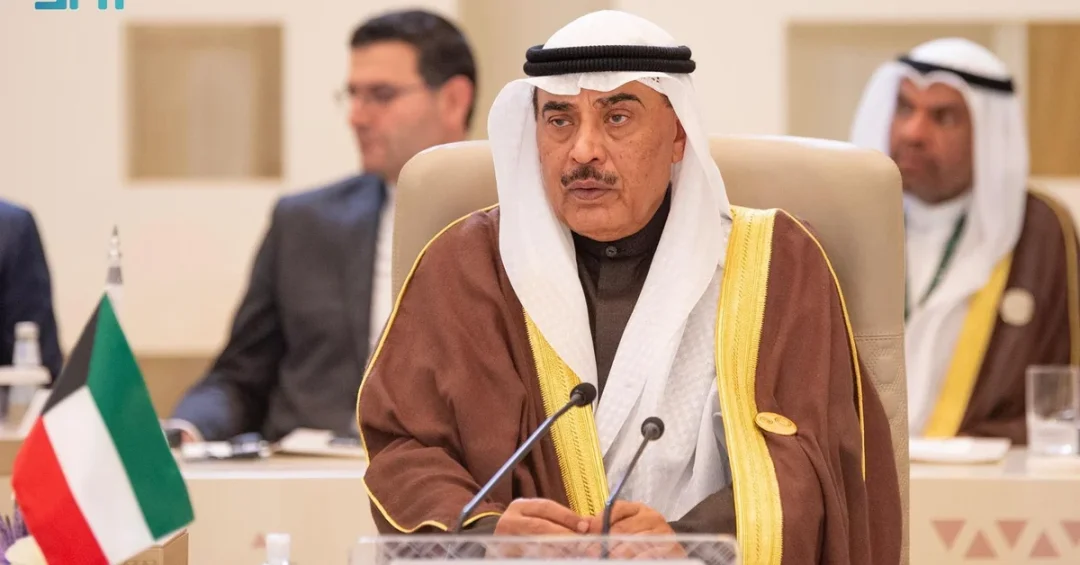
Kuwaiti Crown Prince Sheikh Sabah Khaled Al-Hamad Al-Sabah declared that the Israeli occupation has weighed heavily on Arab and Islamic nations since 1948, during his address Monday at the Extraordinary Arab and Islamic Summit in Riyadh. The Summit, convened to address regional crises, provided a platform for leaders to articulate longstanding grievances and call for renewed international action.
Context and Background
The Crown Prince’s remarks highlight a persistent issue that has shaped diplomatic relations across the Middle East for decades. Since the establishment of the State of Israel in 1948, the occupation of Palestinian territories has been a central concern for Arab and Islamic states, fueling conflicts and undermining regional stability. The Summit in Riyadh brought together leaders from across the Arab and Islamic world to discuss a unified response to ongoing challenges, including the humanitarian crisis in Gaza and the lack of progress toward a two-state solution.
Key Details
Sheikh Sabah emphasized that the occupation has led to “blatant violations and double standards” in the enforcement of international laws and resolutions. He called on the international community, particularly the UN Security Council, to fulfill their obligations and restore trust in global institutions. The Crown Prince also stressed the urgent need for a ceasefire, international protection for civilians, and unimpeded delivery of humanitarian aid. He rejected any justification of the occupation under the guise of self-defense, underscoring that no nation should be treated as exempt from international law.
Additionally, the Crown Prince reaffirmed Kuwait’s support for ceasefire efforts led by Qatar, Egypt, and the United States. He commended the work of the ministerial committee established at a previous joint Arab-Islamic Summit and voiced backing for the Global Alliance for the Implementation of the Two-State Solution, an initiative led by Saudi Arabia. Sheikh Sabah also praised several nations for their courageous recognition of the State of Palestine.
Implications and Regional Impact
The Crown Prince’s address underscores the collective stance of Arab and Islamic nations on the Palestinian issue and the need for consistent international action. His call for accountability and adherence to international law resonates with broader diplomatic efforts to address regional conflicts. The Summit’s outcomes, including support for the two-state solution, signal a unified approach to promoting peace and stability in the Middle East. Kuwait’s alignment with Saudi-led initiatives further strengthens regional cooperation under the framework of shared strategic objectives.
Vision 2030 Alignment
The Summit and its outcomes align with Saudi Arabia’s Vision 2030, which emphasizes regional stability and diplomatic leadership as pillars of a prosperous future. Saudi Arabia’s role in convening the Extraordinary Summit and leading the Global Alliance for the Two-State Solution reflects its commitment to fostering peace and security, supporting the aspirations of the Palestinian people, and advancing a stable Middle East. By championing dialogue and adherence to international law, the Kingdoms continues to assert its position as a responsible global actor dedicated to long-term peace and development.
20 Questions
Q1. What did the Kuwaiti Crown Prince emphasize at the Extraordinary Arab and Islamic Summit?
A1. He emphasized that the Israeli occupation has weighed heavily on Arab and Islamic nations since 1948, with ongoing violations and double standards in international law enforcement.
Q2. Where was the Extraordinary Arab and Islamic Summit held?
A2. The Summit was held in Riyadh, Saudi Arabia, bringing together leaders from Arab and Islamic nations to address regional crises.
Q3. What violations did the Crown Prince highlight regarding the occupation?
A3. He highlighted blatant violations of international laws, treaties, and resolutions, along with double standards in their enforcement.
Q4. What did the Crown Prince call for from the international community?
A4. He called for a decisive stance leading to an immediate ceasefire, protection for civilians, and opening of safe passages for humanitarian aid.
Q5. Which international body did the Crown Prince specifically address?
A5. He addressed the UN Security Council, urging it to fulfill its obligations and restore trust in international institutions.
Q6. How did the Crown Prince view the justification of occupation as self-defense?
A6. He opposed such justification, stressing that the Israeli occupation should not be treated as exempt from international law.
Q7. Which countries’ ceasefire efforts did Kuwait support?
A7. Kuwait supported the ceasefire efforts of Qatar, Egypt, and the United States.
Q8. What initiative did the Crown Prince voice backing for?
A8. He voiced backing for the Global Alliance for the Implementation of the Two-State Solution, led by Saudi Arabia.
Q9. What did the Crown Prince commend from several nations?
A9. He commended several nations for their courageous actions in recognizing the State of Palestine.
Q10. What is Kuwait’s historic position on Palestine?
A10. Kuwait has unwavering, principled, and historical solidarity with the Palestinian people in their struggle to end the Israeli occupation.
Q11. What political rights did the Crown Prince reaffirm support for?
A11. He reaffirmed support for the Palestinian people’s attainment of all legitimate political rights and the establishment of an independent state.
Q12. What borders did the Crown Prince reference for a Palestinian state?
A12. He referenced the borders of June 4, 1967, with East Jerusalem as its capital.
Q13. What international frameworks did the Crown Prince cite?
A13. He cited relevant international frameworks and resolutions for achieving a Palestinian state.
Q14. How does this Summit align with Saudi Arabia’s Vision 2030?
A14. The Summit supports Vision 2030 by emphasizing regional stability and diplomatic leadership as key pillars for prosperity.
Q15. What is the Global Alliance for the Implementation of the Two-State Solution?
A15. It is an initiative led by Saudi Arabia to promote a two-state solution and ensure lasting peace between Israel and Palestine.
Q16. Why is the Crown Prince’s call for accountability significant?
A16. It underscores the collective stance of Arab and Islamic nations on consistent international legal enforcement and conflict resolution.
Q17. What humanitarian measures did the Crown Prince demand?
A17. He demanded an immediate ceasefire, international protection for civilians, and delivery of urgent humanitarian aid through safe passages.
A18. The Crown Prince noted that the occupation has fueled conflicts, jeopardizing international peace and security.
Q19. How does Kuwait view its role in supporting peace efforts?
A19. Kuwait reaffirms its support for multilateral ceasefire efforts and regional initiatives, working alongside partners like Saudi Arabia.
Q20. What message did the Crown Prince send to the international community?
A20. He called for a clear message to the UN Security Council to fulfill its obligations and restore trust in international institutions’ efficacy.
Reader Feedback
We value your thoughts. Please share your feedback on this article.
Your feedback helps us improve our coverage.